
Find your pellet stove in Floyd County.
Consistent, low-maintenance heat for New Albany, Georgetown, Greenville, and the rest of Floyd County—matched with a trusted local dealer who sizes the hopper and vent correctly for your home.
Every Project Starts From One of These Five Situations
Steady heat without the woodpile.
Floyd County sits in climate zone 4A along the Ohio River, with roughly 4,141 heating degree days a year and winter lows averaging 26°F—a moderate cold-climate load, nowhere near what a Fargo ND or Madison WI household deals with, but enough to make sustained heat worth planning for from November through March. Floyd County has no listed air quality non-attainment issues, so pellet appliances don't run into the burn-curtailment restrictions you'd see in a western inversion-prone basin—one less thing to worry about here.
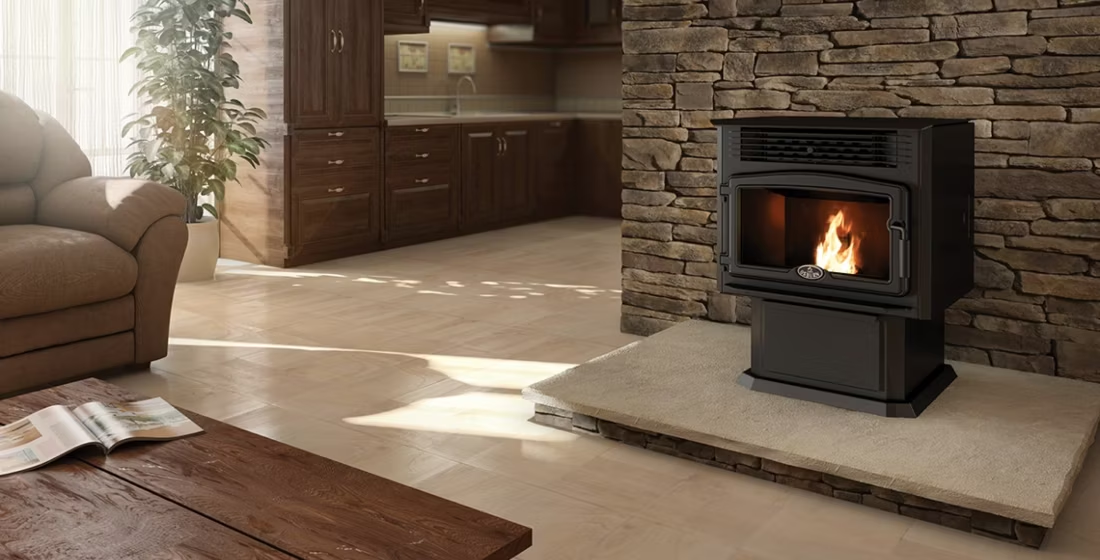
That moderate heating load is exactly where pellet stoves earn their keep: thermostatically controlled output, an auger that feeds itself, and a hopper that only needs refilling every 24 to 48 hours rather than every few hours like a wood stove. Regional pellet supply runs through Indeck Energy Services, Lignetics, and Somerset Pellet Fuel, so bags are generally easy to find at local hardware and farm stores rather than something you have to special-order. For New Albany homeowners in older housing stock near downtown, or newer builds out toward Georgetown and Greenville, a pellet insert or freestanding stove offers a cleaner, more hands-off alternative to cutting and stacking cordwood from the county's oak, hickory, and maple hardwoods.
Three steps. No salesperson until you're ready.
Tell us about your project
Your zip code, your situation, and the fuel you're leaning toward—or let the answers point you to one.
See what's actually available
The brands dealers within 100 miles genuinely carry—real options, never a catalog mirage.
Get your dealer & Project Guide
A trusted local dealer, plus the free Project Guide & Parts List that names every component of the job.
Frequently Asked Questions
How much does a pellet stove installation cost in Floyd County?
Pellet stove and insert installations in Floyd County typically run in the range hearth retailers quote for the region, generally landing higher for insert conversions that need a liner run up an existing masonry chimney and lower for a freestanding stove with a simple wall-through vent kit. The main cost drivers are the venting path, whether you need electrical work for the auger and blower (pellet units require standard household power), and any hearth pad changes needed for clearance. A local dealer will confirm a firm number after seeing your chimney or wall configuration in person.
Do I need electricity for a pellet stove, and what happens if the power goes out?
Yes—pellet stoves rely on an electric auger to feed pellets and a blower to distribute heat, so they stop running without power. This is worth weighing against wood stoves for Floyd County homes concerned about winter outages along the Ohio River corridor, where ice storms occasionally take down lines. Some homeowners pair a pellet stove with a small battery backup or generator rated for the unit's modest wattage draw; others keep a wood-burning option as backup. Ask a local dealer about the specific amperage draw on any model you're considering.
How often do I need to refill the hopper?
Most residential pellet stoves in Floyd County's 4A climate need a refill every 24 to 48 hours during normal winter operation, depending on hopper capacity and how hard the stove is running. On the coldest nights of the year—when temperatures dip toward the county's 26°F average winter low—expect to be on the shorter end of that range. Larger hopper models (60+ lb capacity) extend the interval and suit homeowners who don't want to think about the stove daily; smaller units are fine for supplemental heat in one room.
Where can I buy pellets locally in Floyd County?
Regional supply runs through Indeck Energy Services, Lignetics, and Somerset Pellet Fuel, and bags from these producers are typically stocked at local hardware stores and farm supply retailers around New Albany rather than requiring special ordering. Buying a full season's supply—usually 2 to 3 tons for a primary-heat home—early in fall avoids the price bump and stock shortages that can hit in January during a cold snap. Premium hardwood pellets burn cleaner and leave less ash than lower-grade softwood blends, which matters for the size of the ash pan you'll be emptying.
What's the difference between a pellet stove and a pellet insert?
A pellet stove is a freestanding unit that vents through an exterior wall or existing chimney and can go almost anywhere with proper clearances—a common choice for Floyd County homes without an existing fireplace. A pellet insert is built to slide into an existing masonry fireplace opening, using a liner run up the current chimney, which makes it the better fit for New Albany's older homes that already have a traditional fireplace and want to convert it into a more efficient, controllable heat source without losing the mantel and surround.
Do I need a permit to install a pellet stove in Floyd County?
Most pellet stove and insert installations require a building permit through the applicable local jurisdiction, whether that's the City of New Albany or Floyd County directly for unincorporated areas. Electrical work for the auger and blower circuit may also need a separate electrical permit depending on your existing panel capacity. Local hearth dealers who install regularly in the area typically handle the permitting paperwork as part of the job, so you're not tracking down inspectors yourself.
How often should a pellet stove be cleaned and serviced?
Plan on a full annual service before the start of heating season—typically September or October—covering the burn pot, auger, exhaust venting, and glass. Between professional visits, homeowners should empty the ash pan every few days during heavy use and vacuum the hopper and burn pot area weekly. Because pellet stoves burn cleaner than cordwood and produce far less creosote, the venting itself needs less frequent professional inspection than a wood chimney, but the mechanical components (auger motor, blower, igniter) benefit from a yearly check to catch wear before it causes a mid-winter breakdown.
What size pellet stove do I need for my Floyd County home?
Sizing depends on square footage, insulation, and whether the stove is your primary or supplemental heat source. In a 4A climate with Floyd County's moderate 4,141 heating degree days, a small stove (rated for up to roughly 1,000-1,300 sq ft) suits a single room or open living area, while a medium-to-large unit is appropriate for whole-home heating in a well-insulated ranch or two-story home. Older, leakier housing stock closer to downtown New Albany may need a slightly larger unit than the square footage alone would suggest. A local dealer can size this properly during an in-home visit rather than relying on a generic chart.
Pellet stove vs. wood stove—which is right for my home?
Wood stoves burn cordwood from the county's abundant oak, hickory, maple, and beech, work with no electricity at all (a real advantage during an Ohio River valley ice storm), and offer the lowest ongoing fuel cost if you're cutting your own wood. Pellet stoves trade that self-sufficiency for convenience—thermostatic control, an auger that self-feeds for a day or two at a time, less ash, and no splitting or stacking, but they do need power and pellet bags from regional suppliers like Lignetics or Somerset Pellet Fuel. For Floyd County homeowners without easy access to a woodlot or who don't want the daily labor of tending a fire, pellet is usually the better fit; for backup heat during outages, wood still has the edge.
Why is my open fireplace making my house colder?
Open fireplaces suck—literally. As the fire burns, it consumes air your furnace already paid to heat and pulls it out through the chimney, so the house is actually colder after the fire goes out than before you lit it. An insert fixes this: it seals the chimney, puts fixed glass across the front, and turns that hole in your house into a real heat source.
What's the difference between an insert and a zero-clearance fireplace?
An insert is a fireplace that slides into a pre-existing wood-burning fireplace—if you don't have one, there's nothing to insert it into. A zero-clearance fireplace is built into a framed wall, which makes it the answer for remodels and new construction. Simple test: existing masonry fireplace means insert; blank or framed wall means zero-clearance.
Can a fireplace actually lower my heating bill?
Yes—by creating a comfort zone. A furnace heats every square foot of the house just to warm the one room you're in; a gas fireplace on low burns roughly a sixth of the gas a typical furnace does. Set the furnace around 55–60 degrees as a baseline, then heat the rooms your family actually uses. Families who heat this way commonly save $20–$60 a month.
Does a fireplace add value to my home?
On average, a fireplace adds back to the home about the same amount you spent installing it. Add the monthly savings from heating the rooms you actually use instead of the whole house—often hundreds of dollars a year—and the value case is strong before you even count what a fire does for how your family uses the room.
Stove and Fireplace Dealers in Floyd County
Pellet Brands Stocked Around Floyd County
Manufacturers will point you to the nearest stocking dealer.
Get matched with a Floyd County pellet dealer.
Tell us about your home and we'll match you with a trusted local dealer and send over a free Project Guide & Parts List—the exact parts, including the vent kit, for your pellet project in Floyd County.
Find Your Fireplace →