
Steady Gas Heat for Lake Michigan Winters.
East Chicago sits on the Lake Michigan shoreline in the Calumet Region, where lake-effect wind and a winter heating load on par with Chicago make instant, reliable heat worth having. Find the right gas fireplace or insert, and get matched with a trusted local dealer.
Every Project Starts From One of These Five Situations
Built for a dense, industrial lakefront city.
East Chicago is a compact, densely built city in Lake County's Calumet Region, with much of its housing stock dating to the early-to-mid 20th century steel and oil-refining boom that built this stretch of the Indiana shoreline. Winters here run cold—average lows near 15°F, with lake-effect wind off Lake Michigan adding real bite—and the city's winter heating load puts it in the same range as Chicago proper, just a few miles northwest. Older rowhouse-style homes and narrow city lots mean firewood storage and traditional wood-burning setups are impractical for most residents, which is part of why gas has become the standard choice for supplemental and zone heat here.
Nearly every home in East Chicago's tight urban grid already has natural gas plumbed in for a furnace or water heater, courtesy of NIPSCO (Northern Indiana Public Service Company), which serves the region for both gas and electric. That existing infrastructure makes adding a gas fireplace or insert straightforward—no propane tank, no wood storage, no chimney maintenance. A direct-vent gas insert or fireplace delivers instant, even heat at the flip of a switch, which matters in a city where older housing often runs drafty and a dependable secondary heat source is worth having on the coldest nights.
Three steps. No salesperson until you're ready.
Tell us about your project
Your zip code, your situation, and the fuel you're leaning toward—or let the answers point you to one.
See what's actually available
The brands dealers within 100 miles genuinely carry—real options, never a catalog mirage.
Get your dealer & Project Guide
A trusted local dealer, plus the free Project Guide & Parts List that names every component of the job.
Frequently Asked Questions
How much does a gas fireplace installation cost in East Chicago?
Most gas fireplace and insert installations in East Chicago run somewhere between $3,500 and $9,500, with the low end covering a direct-vent insert into an existing masonry fireplace where a gas line is already nearby, and the high end covering a new built-in gas fireplace that requires framing, venting, and a fresh gas line run. Because most East Chicago homes already have NIPSCO natural gas service for a furnace or water heater, tying in a fireplace is often simpler and cheaper here than in areas without existing gas infrastructure. A local dealer will give you a firm number after seeing your home.
Can I convert an existing wood fireplace to gas?
Yes, and it's a common project in East Chicago's older housing stock, much of which was built during the city's early steel and refining industry growth and still has original masonry fireplaces. A gas insert typically slides into that existing firebox, using a stainless liner run up the old chimney for venting. It preserves the look of the original fireplace while eliminating the ash, smoke, and wood storage that don't fit well on East Chicago's smaller urban lots. Since gas service already reaches nearly every home in the city, the added gas line work is usually minor.
Do I need natural gas, or should I use propane?
Natural gas is the default choice in East Chicago. NIPSCO serves the city with gas as well as electric, and because the housing grid is dense and largely built out, most homes already have a gas line for a furnace, water heater, or range—adding a fireplace is usually a simple tie-in. Propane is rare here and mostly shows up in a handful of properties on the edge of the service area or in detached garages and outbuildings. If you already pay a NIPSCO gas bill, sticking with natural gas is almost always the simpler and cheaper path.
Will my gas fireplace still work if the power goes out?
Most modern gas fireplaces will. Units with IPI (intermittent pilot ignition) run on battery backup that kicks in automatically when the power drops, so the fireplace lights and operates normally off the batteries until utility power is restored—worth having given how lake-effect storms off Lake Michigan can knock out power in the Calumet Region. Valor fireplaces take a different approach: their pilot assembly generates its own electricity through the thermocouple, so there's no battery to replace or forget about, ever. Ask your local dealer about the ignition system on any model you're considering.
What's the difference between a gas fireplace, gas insert, and gas stove?
A gas fireplace is a fully built-in unit, framed into a wall—the right call for new construction or a remodel. A gas insert is built to drop into an existing masonry firebox, using your current chimney as the vent path, which is the more common project in East Chicago's older housing. A gas stove is a freestanding cast-iron or steel unit that sits on the floor like a wood stove but burns gas—a good option for a room without any existing fireplace and limited space for framing. Most East Chicago homeowners with an original masonry fireplace end up choosing an insert.
Do I need a permit to install a gas fireplace in East Chicago?
Yes—a building permit and a gas line permit are both required for a new gas fireplace or insert installation through the City of East Chicago's building department, and the gas line connection itself needs to be run or verified by a licensed gas-fitter. Most established hearth dealers handle this paperwork as part of the installation, coordinating the permit, the gas hookup, and the final inspection so you're not managing separate trades yourself.
Should I get a vented or a vent-free gas fireplace?
Vented (direct-vent) gas fireplaces pull combustion air from outside and exhaust it back outside through a sealed pipe—they're the cleanest option and code-compliant everywhere, including Indiana. Vent-free units burn directly into the room without external venting; they're legal in Indiana but come with strict room-size and ventilation requirements, since they release some combustion byproducts indoors. For East Chicago's older homes, which often have less airtight construction than new builds, direct-vent units are the more common and generally recommended choice—they deliver strong heat output without any indoor air quality trade-offs. Your local dealer can walk you through both if you're weighing the decision.
How often does a gas fireplace need to be serviced?
Plan on an annual inspection, ideally before the start of the heating season. A certified technician checks the burner, pilot assembly, venting, and gas connections, and cleans the glass and interior—a much shorter visit than a wood chimney sweep, but still important for safe operation. Local gas appliance technicians in the area typically charge in the range of $150 to $250 for this annual service.
Why is gas so much more common than wood in East Chicago?
Wood-burning stoves and fireplaces are genuinely uncommon here, and for good reason—East Chicago's housing stock sits on tight urban lots left over from its industrial-era growth, with little room for firewood storage, and much of the city's original masonry chimney infrastructure has aged out of safe wood-burning use. Since NIPSCO natural gas service already reaches nearly every home for the furnace or water heater, a gas fireplace or insert is the far more practical path to real supplemental heat. A small number of homeowners with detached garages or larger lots still keep a wood stove for backup or ambiance, but for most East Chicago households, gas is the realistic choice.
Is my gas fireplace wasting gas?
If it was installed more than 15 years ago, probably. Older gas fireplaces keep a standing pilot light burning all the time, and that little flame can cost a couple hundred dollars a year. Newer models use pilot-on-demand ignition—the pilot lights only when you use the fireplace and goes out when you turn it off.
Can I put a TV above my fireplace?
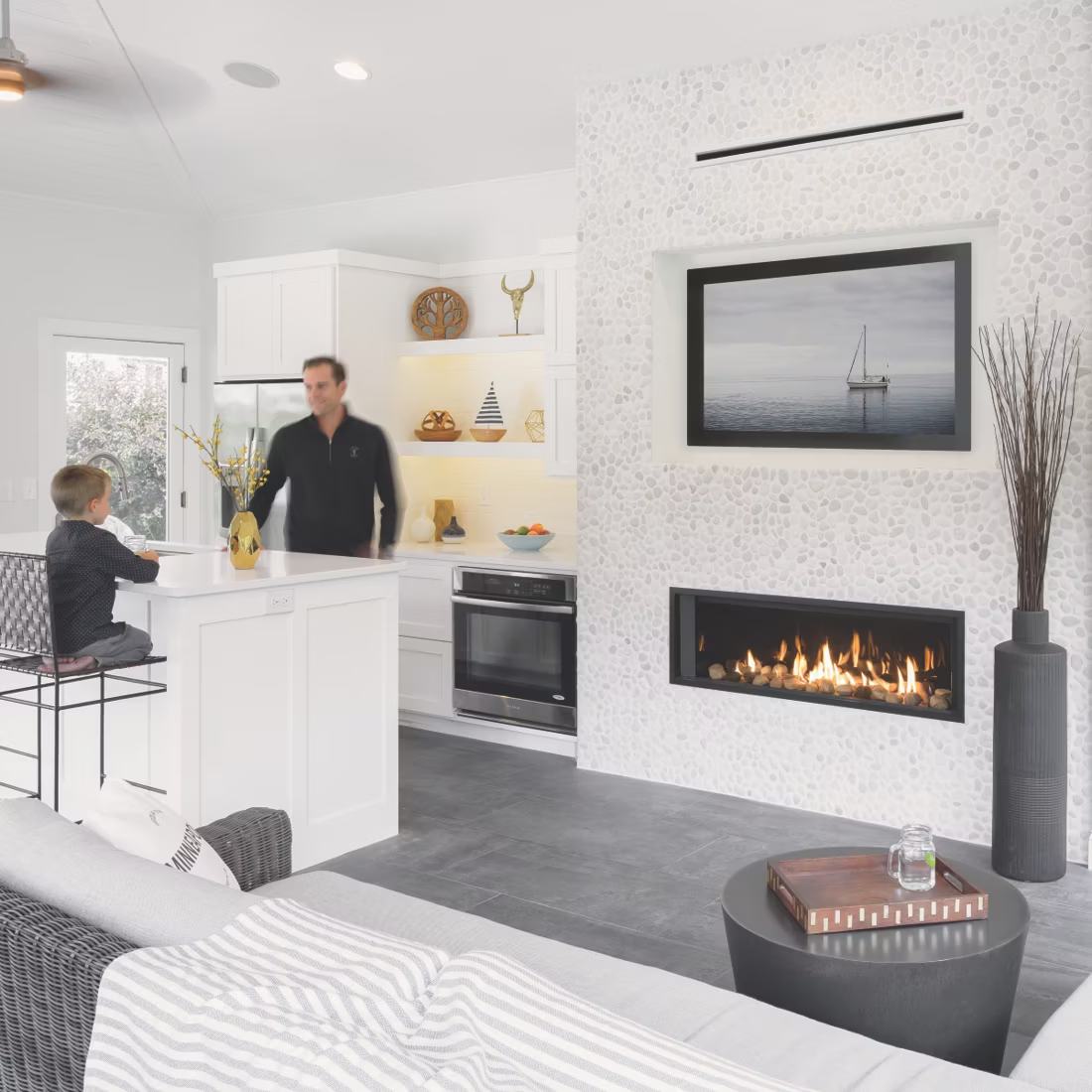
Yes—with an asterisk. Fireplaces are hot and TVs don't like heat. Either put a mantel between them to deflect rising warmth, or choose a fireplace with heat-management technology that creates a cool zone on the wall above—the wall stays around 125 degrees, barely warm, while the room still gets full heat. If you like clean lines and don't want a mantel, heat management is the answer.
Can I install a fireplace myself?
If you're putting a fire in your house on purpose, it's best to work with an expert. Unless you're genuinely experienced in framing, gas line, vent pipe, and the national code on clearances to combustibles, have a professional do it—and ideally the same company that sells you the fireplace, so warranty, service, and liability all live under one roof.
What is an in-home preview and do I need one?
It's a visit where a hearth professional measures your space, confirms the model you picked actually works in your home, and walks the specs—framing, gas line, venting, finish work—before anything is ordered. Some details you just can't know until you see the house. Never make a down payment without one; it's the single most-skipped step that burns buyers.
Nearby Dealers
Hearth shops serving East Chicago and the surrounding area.
Find your gas fireplace in East Chicago.
Tell us a bit about your home and we'll put together a free Project Guide & Parts List—the right gas fireplace or insert, the vent kit it needs, and a trusted local dealer in East Chicago who can install it.
Find Your Fireplace →