
Find a pellet stove built for Dearborn County's hardwood hills.
Thermostat-controlled heat for the rolling, oak-and-hickory hills along the Ohio River—from Lawrenceburg to Aurora to West Harrison. Find the right pellet stove or insert, and connect with a trusted local dealer.
Every Project Starts From One of These Five Situations
Consistent, thermostat-controlled heat without the woodpile.
Dearborn County sits in the hilly southeastern corner of Indiana along the Ohio River, with Lawrenceburg as the county seat and Aurora, Greendale, West Harrison, Guilford, and Moores Hill spread across the ridges and hollows around it. Winters here are moderately cold rather than brutal—Climate Zone 4A, an average winter low around 19°F, and a solid six-to-seven-month heating season. That's enough cold to matter for six or seven months a year, but not the kind of sustained sub-zero stretch that demands the most extreme cold-climate hardware. Oak, hickory, maple, and beech blanket the county's wooded ridgelines, and plenty of Dearborn County households still burn cordwood—but a growing number are choosing pellet stoves and inserts instead, for the simple reason that they don't require splitting, stacking, or hauling wood up a hillside driveway in February.
Dearborn County has no non-attainment air quality designation and no winter burn curtailment periods, so there's nothing stopping a pellet appliance from running whenever you want heat—no yellow or red burn-ban days to track. Regional pellet brands including Indeck Energy Services, Lignetics, and Somerset Pellet Fuel are sold through farm and hardware retailers around Lawrenceburg, Aurora, and Greendale, which means restocking bags through the winter is usually a short drive rather than a special order. For commuters heading into Cincinnati, retirees on a fixed woodpile budget, or anyone who wants steady, even heat without tending a fire every few hours, a pellet stove hits a sweet spot between wood's radiant warmth and gas's convenience.
Three steps. No salesperson until you're ready.
Tell us about your project
Your zip code, your situation, and the fuel you're leaning toward—or let the answers point you to one.
See what's actually available
The brands dealers within 100 miles genuinely carry—real options, never a catalog mirage.
Get your dealer & Project Guide
A trusted local dealer, plus the free Project Guide & Parts List that names every component of the job.
Frequently Asked Questions
How much does a pellet stove installation cost in Dearborn County?
Pellet stove installations in Dearborn County typically run $2,500 to $5,500, depending on whether you're installing a freestanding stove with a simple through-wall vent kit or a pellet insert into an existing masonry fireplace that needs a stainless liner. A freestanding unit with a straightforward exterior wall vent sits on the lower end; an insert replacing an old wood-burning fireplace, with liner work up the existing chimney, runs higher. Because pellet appliances vent through a small-diameter pipe rather than a full masonry chimney, installed cost generally lands below a comparable wood stove project. A local dealer serving Lawrenceburg, Aurora, or the West Harrison area can give you a firm number after seeing your fireplace or wall layout in person.
What size pellet stove do I need for a Dearborn County home?
With an average winter low near 19°F and a solid six-to-seven-month heating season, most Dearborn County homes fall into the mid-size pellet stove category—units rated for 1,200 to 2,000 square feet cover a typical living area or main floor comfortably. Older farmhouses and homes on the exposed ridgetops around Guilford or Moores Hill, where wind exposure adds to heat loss, often do better sizing up a step and looking for a larger hopper (60 to 80 pounds) so the stove can run overnight or through a cold stretch without a refill. Homes tucked into the river-bottom hollows near Aurora or West Harrison, which tend to be a bit more sheltered, can often get by with a standard-size unit. A local dealer will size the stove to your actual square footage and insulation rather than a rule of thumb.
What's the difference between a pellet stove and a pellet insert?
A pellet stove is a freestanding appliance that sits on its own hearth pad and vents through an exterior wall or a short vertical run—it can go almost anywhere with the right clearances. A pellet insert is built to slide into an existing masonry fireplace opening, using a stainless liner run up your existing chimney as the vent path. For Dearborn County homes with an old open wood fireplace that's rarely used, an insert is often the better fit—it keeps the existing brick surround and dramatically improves the actual heat output of that fireplace. Homes without an existing fireplace, including many of the newer builds around Greendale, are usually better suited to a freestanding stove.
Where can I find certified pellet stove installers near me?
Look for installers with NFI (National Fireplace Institute) hearth certification, and for insert projects specifically, CSIA-trained technicians who know venting and liner work. Local hearth dealers covering Dearborn County typically handle both the sale and the installation, which keeps warranty coverage and code compliance under one roof. If you're outside the immediate Lawrenceburg-Aurora corridor—out toward Moores Hill or St. Leon—expect a modest travel charge on the install quote. Avoid having a general handyman install a pellet appliance; correct vent-pipe slope and clearance-to-combustibles work is what keeps these units safe and code-compliant.
Do I need a permit to install a pellet stove in Dearborn County?
Yes—a new solid-fuel appliance installation requires a building permit through the Dearborn County Building Department, whether the home is in Lawrenceburg, Aurora, or one of the unincorporated townships. Most local dealers handle the permit paperwork as part of the installation, so it's rarely something you have to manage yourself. Unlike counties with winter air-quality non-attainment status, Dearborn County has no curtailment periods or burn-ban restrictions, so once your stove is installed and inspected, there's no seasonal limit on when you can run it.
What's the best pellet stove for Dearborn County's climate?
Because Dearborn County's winters are moderately cold rather than extreme—Zone 4A, average lows around 19°F—most homeowners don't need the most aggressive cold-climate model on the market. A mid-size pellet stove with a 40- to 60-pound hopper handles the bulk of the season fine. The bigger consideration locally is winter ice storms, which occasionally knock out power along the river bluffs and rural roads; since pellet stoves rely on electricity to run the auger and combustion blower, pairing your unit with a small battery backup or an inverter generator is worth discussing with your dealer if reliable heat during outages matters to you.
Where can I buy pellet fuel in Dearborn County?
Regional pellet brands including Indeck Energy Services, Lignetics, and Somerset Pellet Fuel are commonly stocked at farm supply and hardware retailers around Lawrenceburg, Aurora, and Greendale, especially in the fall as heating season approaches. Pricing tends to run in the $230 to $300 per ton range regionally, though it can shift with demand—buying a season's supply early, before the first cold snap, usually means better selection and avoids the scramble that happens once temperatures drop. Most Dearborn County households burn 1 to 3 tons per season depending on whether the stove is primary or supplemental heat.
Will my pellet stove work during a power outage?
Not without a backup power source. Pellet stoves rely on an electric auger to feed fuel and a blower to distribute heat and exhaust combustion gases, so a standard unit shuts down the moment the power does. For a county where ice storms occasionally take down rural power lines for a day or more, that's worth planning around—a small battery backup unit or a portable generator sized for the stove's draw will keep it running through most outages. If uninterrupted heat during storms is your top priority, a wood stove burning locally abundant oak or hickory is the more storm-proof option, and some Dearborn County homes end up with both.
Pellet stove vs. wood stove—which is right for my home?
Wood stoves burn cordwood cut from the oak, hickory, maple, and beech that cover much of Dearborn County's ridgeline forest, work with zero electricity, and appeal to households with the space to stack a few cords and the willingness to tend a fire. Pellet stoves trade that hands-on ritual for thermostat-style convenience—load the hopper, set the dial, and let the auger do the rest—with less ash and no splitting or stacking. They do need electricity to run, which matters during storm outages. For in-town homes around Lawrenceburg or Greendale without room to store cordwood, or for anyone who wants steady heat without daily fire-tending, pellet is usually the better fit. For rural properties with existing woodlots and a taste for self-sufficiency, wood often still wins.
How often does a pellet stove need cleaning?
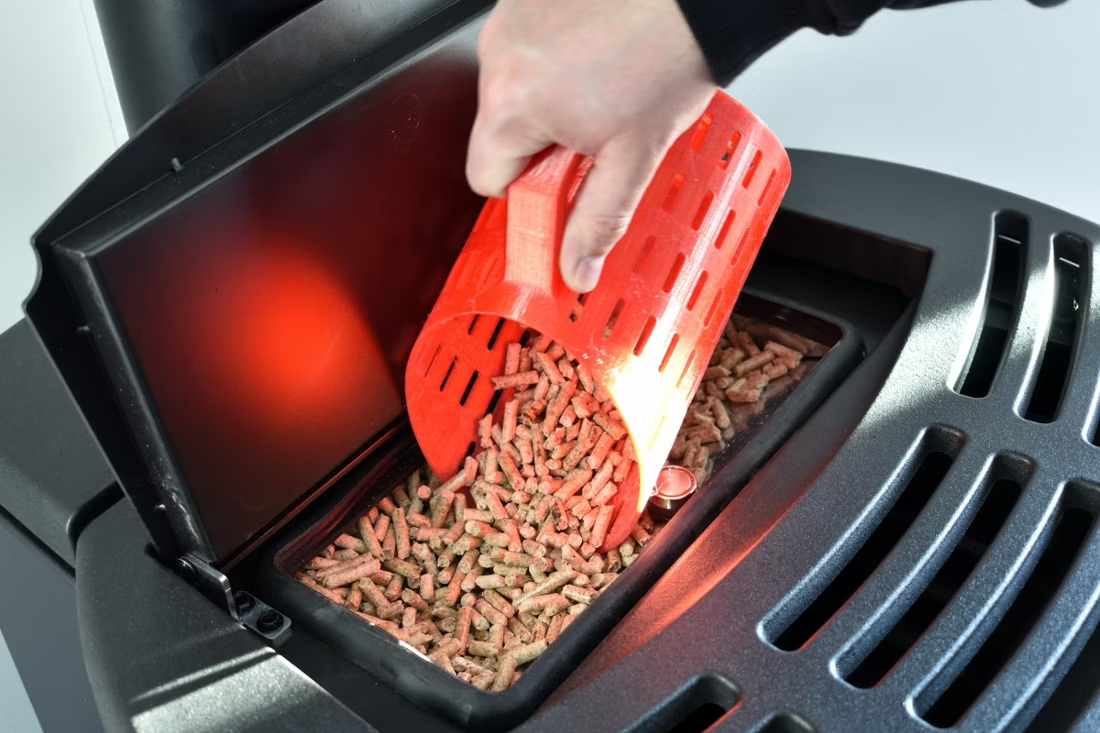
A clean pellet stove is a happy pellet stove. Plan on cleaning the burn pot about once a week when you're burning regularly—ash and clinkers gum up the air holes just like a pellet barbecue. Most pellet stove problems trace back to skipped cleaning that nobody explained up front. Some designs make it easy with a trapdoor burn pot: pull a lever and the gunk drops into the ash pan.
Why is my open fireplace making my house colder?
Open fireplaces suck—literally. As the fire burns, it consumes air your furnace already paid to heat and pulls it out through the chimney, so the house is actually colder after the fire goes out than before you lit it. An insert fixes this: it seals the chimney, puts fixed glass across the front, and turns that hole in your house into a real heat source.
What is an in-home preview and do I need one?
It's a visit where a hearth professional measures your space, confirms the model you picked actually works in your home, and walks the specs—framing, gas line, venting, finish work—before anything is ordered. Some details you just can't know until you see the house. Never make a down payment without one; it's the single most-skipped step that burns buyers.
Can a fireplace actually lower my heating bill?
Yes—by creating a comfort zone. A furnace heats every square foot of the house just to warm the one room you're in; a gas fireplace on low burns roughly a sixth of the gas a typical furnace does. Set the furnace around 55–60 degrees as a baseline, then heat the rooms your family actually uses. Families who heat this way commonly save $20–$60 a month.
Stove and Fireplace Dealers in Dearborn County
Pellet Brands Stocked Around Dearborn County
Manufacturers will point you to the nearest stocking dealer.
Get matched with a pellet stove dealer in Dearborn County.
Tell us a bit about your home and we'll match you with a trusted local dealer and send over a free Project Guide & Parts List—a plan for your pellet stove or insert project in Dearborn County, including the exact parts, vent kit, and our recommended installer.
Find Your Fireplace →