
Add real warmth and ambiance without a chimney in Crawford County.
From farmhouses outside English to rental cabins near Marengo and Wyandotte Caves, electric is the fastest way to add a real-looking fire to a home or property that was never built with a flue. Find the right unit and connect with a trusted local dealer.
Every Project Starts From One of These Five Situations
The simplest upgrade for old farmhouses, cabins, and rentals.
Crawford County is one of Indiana's smallest and most rural counties—about 3,400 people spread across steep, wooded terrain along the Ohio River and inside the Hoosier National Forest. The housing stock reflects that: older farmhouses without existing chimneys, mobile and modular homes, and a growing number of short-term rental cabins built near Marengo Cave and Wyandotte Caves for tourists drawn to the county's karst topography. Climate zone 4A means real winter—cold, damp, gray stretches typical of the Ohio Valley—but nothing near the extremes of a Duluth or Fargo winter, so most homes here don't need a whole-house wood or gas system just to get through January.
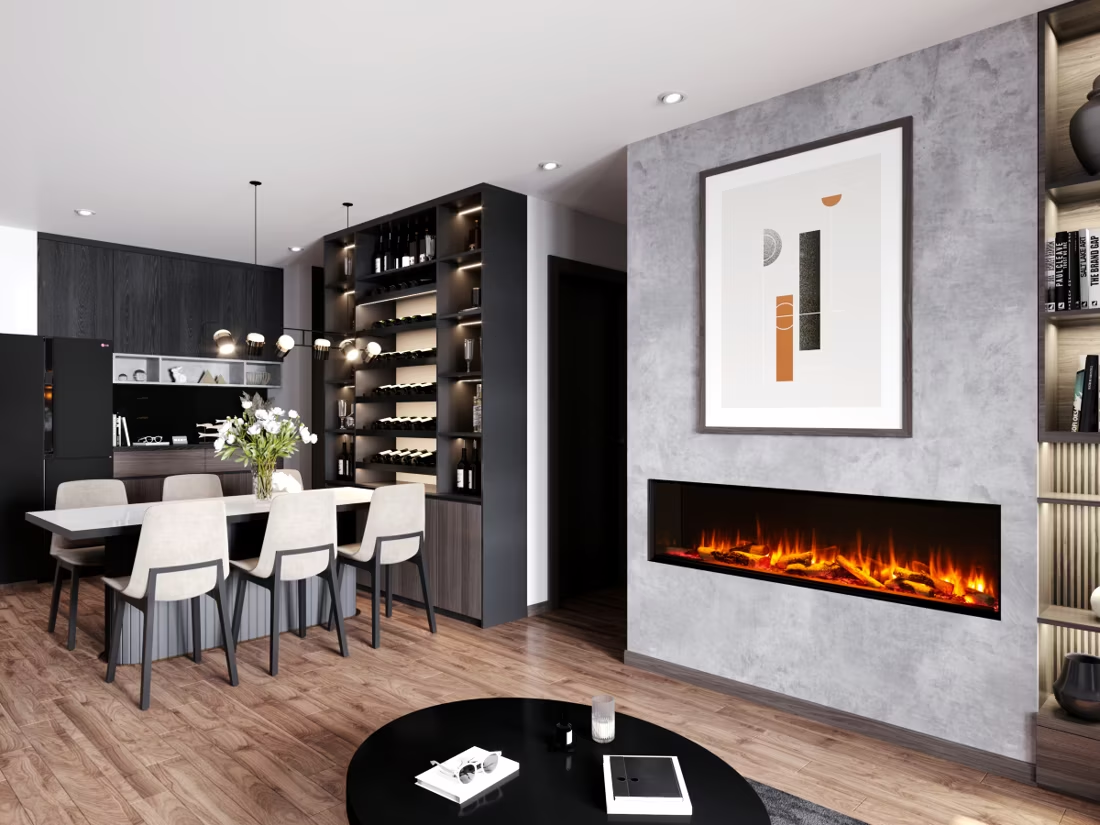
That's exactly where electric fireplaces fit. A plug-in unit needs no chimney, no gas line, and no Crawford County Building Department permit in most cases—it goes wherever there's a standard outlet. For the county's cabin and rental market especially, electric is often the practical choice: insurance carriers and property managers favor units with no open flame, guests get the ambiance without any fire-tending know-how, and owners avoid the liability of an unattended wood stove in a property they don't live in full-time. Local hardwoods like oak, hickory, maple, and beech still fuel plenty of wood stoves in this county, but for a rental unit, a drafty upstairs bedroom, or a home with no existing flue, electric solves the problem without touching the roofline.
Three steps. No salesperson until you're ready.
Tell us about your project
Your zip code, your situation, and the fuel you're leaning toward—or let the answers point you to one.
See what's actually available
The brands dealers within 100 miles genuinely carry—real options, never a catalog mirage.
Get your dealer & Project Guide
A trusted local dealer, plus the free Project Guide & Parts List that names every component of the job.
Frequently Asked Questions
How much does an electric fireplace installation cost in Crawford County?
A plug-in electric fireplace or insert that runs on a standard 120-volt outlet typically costs $400 to $1,200 installed, including the unit and any surround or mantel work. A larger built-in unit that requires a dedicated 240-volt circuit—common for bigger great-room installations in newer construction near English or along State Road 62—runs closer to $1,200 to $2,000 once an electrician is involved. Because Crawford County is served by South Central Indiana REMC (headquartered right in English), any new circuit work should account for the co-op's standard residential service specs; your installer will confirm before running new wire.
Do I need a permit to install an electric fireplace in Crawford County?
Most plug-in electric fireplaces and inserts don't require a permit since there's no gas line, venting, or structural chimney work involved—you're essentially adding an appliance to an existing outlet. If your installation requires a new dedicated circuit, an electrical permit through the Crawford County Building Department is typically needed, and a licensed electrician should pull it. For rental cabins near the caves, some property owners also check with their insurance carrier before installation, since a certified electric unit is usually viewed more favorably than an open-flame appliance in a short-term rental.
What's the best electric fireplace for a rental cabin near Marengo or Wyandotte Caves?
For rental properties in the caves tourism corridor, look for units with a sealed heating element, no visible open flame, and a remote or app-based control so cleaning crews and property managers can operate it without training guests. Wall-mounted linear units work well in modern cabin builds with open floor plans, while a mantel-package insert fits better in older farmhouse-style rentals that already have a fireplace opening to fill. Because these units generate ambiance independent of heat output, many owners run the flame effect year-round for photos and guest appeal, with heat engaged only in colder months—a flexibility wood and gas units don't offer.
Electric vs. wood—which makes more sense for my Crawford County home?
Wood remains a strong option here given the abundance of local oak, hickory, maple, and beech, and it works without power during outages, which matters in a rural county with long line runs for South Central Indiana REMC. But wood requires a chimney, ongoing fuel handling, and annual sweeps—real commitments for a second home, rental cabin, or a house you don't want to retrofit with venting. Electric skips all of that: no chimney needed, no ash, no permit in most cases, and it's the far simpler choice for supplemental heat in a bonus room, finished basement, or rental unit where convenience matters more than self-sufficiency.
Will an electric fireplace actually heat my room, or is it just for looks?
Most electric fireplaces produce around 4,600 to 5,000 BTUs—enough to comfortably supplement heat in a single room of 300 to 400 square feet, but not enough to replace central heat in a Crawford County winter. They're best used as zone heat: warming the room you're actually sitting in so you can turn the thermostat down elsewhere, or adding comfort to a drafty add-on room in an older farmhouse. The flame effect itself runs independently of the heater, so you can enjoy the visual any time of year without running the heating element at all—useful for cabins that see summer rental traffic too.
What types of electric fireplaces are available for Crawford County homes?
The main categories are inserts (sized to slide into an existing fireplace opening, common in older county farmhouses), wall-mount linear units (popular in newer cabin and modular construction for a modern look), freestanding stoves (a plug-in option that mimics a wood stove's shape without any venting), and mantel packages that bundle a surround with an insert for a finished built-in look. A local dealer can walk you through which format fits your existing opening, wall structure, and whether you're outfitting a primary residence or a rental cabin.
How much does it cost to run an electric fireplace day-to-day?
Most electric fireplaces draw about 1,500 watts on the heat setting, which works out to roughly 15 cents per hour of heated use at typical South Central Indiana REMC residential rates—though your exact rate will vary by billing period. Run in flame-only mode with the heater off, the draw drops to just a few watts, essentially the cost of a light bulb. For rental cabin owners, that makes leaving the flame effect on for guest ambiance a negligible cost compared to the appeal it adds to listings.
How long does an electric fireplace installation take?
A plug-in insert or freestanding unit can often be installed the same day it arrives—it's largely a matter of fitting the unit and any surround trim. A built-in wall-mount requiring new electrical work takes longer, typically a half-day to a full day once an electrician runs a dedicated circuit and the unit is mounted and trimmed out. Local dealers serving Crawford County can usually schedule a straightforward plug-in install within a week or two of your order; larger built-in projects with electrical work may run a bit longer depending on the electrician's schedule.
Electric vs. pellet stove—which is right for my situation?
Pellet stoves are a real option in this region—brands like Lignetics and Somerset Pellet Fuel supply pellets throughout the broader area—and they offer genuine heat output plus the visual of an actual flame, but they need venting, a hopper to load, and occasional ash cleanup, plus electricity to run the auger and blower. Electric fireplaces need none of that: no venting, no fuel deliveries, no combustion byproducts, and full function anywhere there's an outlet. For a primary residence where you want real supplemental heat and don't mind the upkeep, pellet is worth considering. For a rental cabin, a room without venting access, or anyone who wants ambiance with zero maintenance, electric is the simpler answer.
Can I put a TV above my fireplace?
Yes—with an asterisk. Fireplaces are hot and TVs don't like heat. Either put a mantel between them to deflect rising warmth, or choose a fireplace with heat-management technology that creates a cool zone on the wall above—the wall stays around 125 degrees, barely warm, while the room still gets full heat. If you like clean lines and don't want a mantel, heat management is the answer.
Do electric fireplaces actually produce heat?
Yes—most put out around 4,800–5,000 BTUs from a standard outlet, which comfortably warms a bedroom, office, or den as a comfort-zone heater. What they won't do is carry a whole house the way wood, gas, or pellet can. Think of electric as ambiance-first with honest supplemental heat: flames on with no heat in July, flames plus warmth in January.
Can a fireplace actually lower my heating bill?
Yes—by creating a comfort zone. A furnace heats every square foot of the house just to warm the one room you're in; a gas fireplace on low burns roughly a sixth of the gas a typical furnace does. Set the furnace around 55–60 degrees as a baseline, then heat the rooms your family actually uses. Families who heat this way commonly save $20–$60 a month.
Does a fireplace add value to my home?
On average, a fireplace adds back to the home about the same amount you spent installing it. Add the monthly savings from heating the rooms you actually use instead of the whole house—often hundreds of dollars a year—and the value case is strong before you even count what a fire does for how your family uses the room.
Find your electric fireplace in Crawford County.
Tell us a bit about your home or rental property and we'll match you with the right electric fireplace or insert, plus a free Project Guide & Parts List with the exact parts and your recommended local dealer.
Find Your Fireplace →