
Heat Your Home in Crawford County's Ohio River Hill Country.
Wood, gas, pellet, and electric fireplace resources for every town and hollow in Crawford County—from English to Marengo, Milltown, Leavenworth, and Alton. Find the right unit and connect with a trusted local hearth dealer.
Every Project Starts From One of These Five Situations
Heating a Small, Rugged County Along the Ohio River.
With just over 3,300 residents, Crawford County is one of Indiana's least populated counties—a landscape of steep wooded ridges, limestone caves, and narrow hollows tucked between the Hoosier National Forest and the Ohio River. Sitting in climate zone 4A, winters here are real but milder than the deep-freeze stretches of places like Duluth, MN or Fargo, ND—expect a solid heating season with periodic cold snaps rather than months of sustained sub-zero cold. What the county lacks in population it makes up for in hardwood: oak, hickory, maple, and beech blanket the ridgelines, and these dense, high-BTU species are exactly what a wood stove or insert is built to burn—long, hot fires that hold overnight without constant reloading.
What you'll find on this hub: hearth retailers, service technicians, and fuel suppliers covering every corner of Crawford County—from the county seat in English down to Leavenworth on the Ohio River bluffs, west to Marengo and Milltown, and out to Alton. Because the county's population is so small, many of the dealers who install and service equipment here are based in nearby hubs like Corydon or Paoli and travel in for the job—that's normal for a county this size, not a red flag. There are no air quality non-attainment issues or wood-burning curtailment days on record here, so burning wood is generally straightforward. Pick your fuel below for local dealers, installation costs, and recommended units.
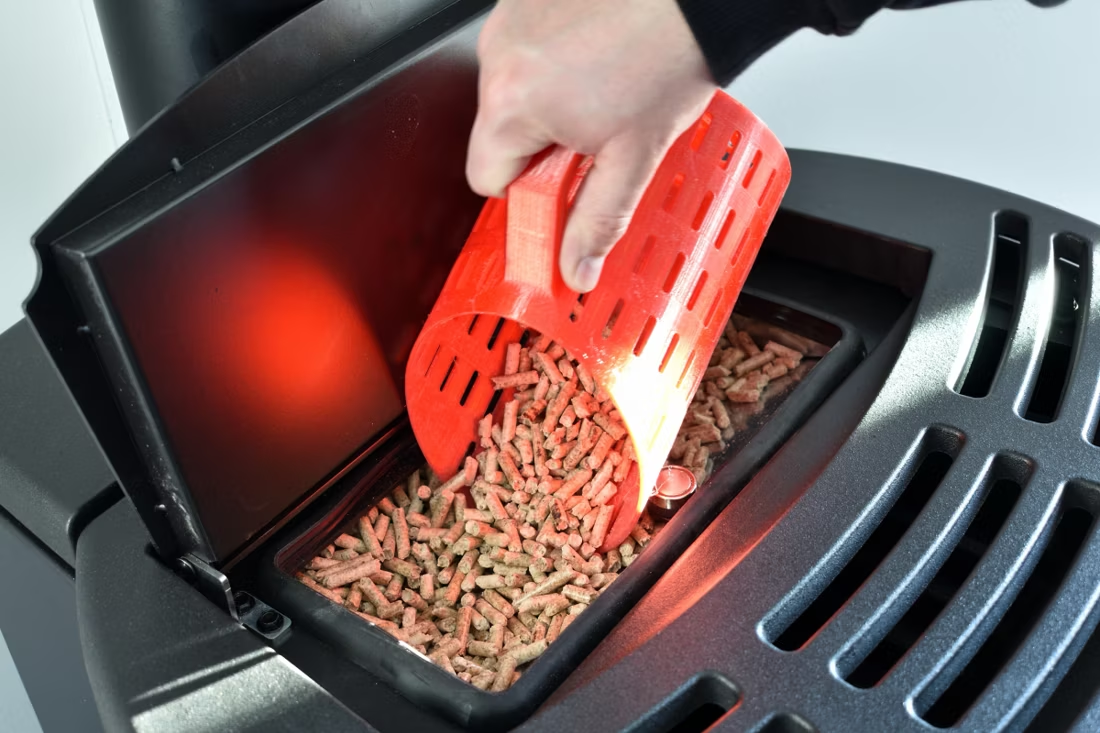
Four fuels. One honest answer for Crawford County.
Three steps. No salesperson until you're ready.
Tell us about your project
Your zip code, your situation, and the fuel you're leaning toward—or let the answers point you to one.
See what's actually available
The brands dealers within 100 miles genuinely carry—real options, never a catalog mirage.
Get your dealer & Project Guide
A trusted local dealer, plus the free Project Guide & Parts List that names every component of the job.
Frequently Asked Questions
Which fuel works best in Crawford County?
It depends on your property and how remote it is. Wood is a natural fit here—oak, hickory, maple, and beech grow throughout the county's ridges and hollows, and these dense hardwoods burn long and hot, which matters if you're heating an older farmhouse in a valley that holds cold air overnight. Gas is the convenience option, but piped natural gas is limited in rural Crawford County, so most gas installs here run on propane rather than a utility line—your dealer can tell you what's available at your address. Pellet stoves are a solid middle ground: regional supply from brands like Indeck Energy Services, Lignetics, and Somerset Pellet Fuel keeps fuel accessible even though the county itself is sparsely populated. Electric fireplaces work well as supplemental heat in bedrooms or additions but aren't a primary heat source through a full southern Indiana winter. Many homes here run wood or propane as primary heat with electric in secondary rooms.
Do I need a permit to install a fireplace in Crawford County?
In most cases, yes. New wood stoves, wood inserts, gas fireplaces, gas inserts, gas stoves, and pellet stoves typically require a building permit through the Crawford County Building Department, and any propane line work should be handled by a licensed installer as part of that process. New wood-burning appliances sold today are already built to current EPA emissions standards, so certification usually isn't the sticking point—the permit is mostly about verifying clearances, venting, and hearth protection are done correctly. Electric fireplaces plugged into an existing outlet generally don't need a permit; built-in electric units that require new wiring do. Most local hearth retailers pull the permit as part of the installation, so you're rarely doing this paperwork yourself.
Are there any wood-burning restrictions in Crawford County?
No—Crawford County has no air quality non-attainment designation and no history of winter inversion advisories or mandatory burn curtailment days, unlike some western basin counties. That means wood burning here is largely unrestricted from a regulatory standpoint. That said, the county's narrow hollows and valleys can trap smoke locally on still winter nights, so it's worth being considerate of close neighbors, especially in tighter settlements like Milltown or Leavenworth. A newer EPA-certified stove burning well-seasoned oak or hickory produces a fraction of the smoke of an old smoke-dragon unit, which is worth factoring in if you're replacing an aging stove.
Can one local retailer handle all four fuel types in a county this small?
Given Crawford County's population of around 3,400, you won't find a hearth showroom on every corner—most of the dealers serving this area are based in larger nearby towns like Corydon or Paoli and drive in for consultations and installs. Several of those regional dealers do carry all four fuel types—wood, gas, pellet, and electric—which is useful if you're still comparing options. Others specialize, particularly in wood and pellet given how common hardwood heating is throughout the ridges of this part of southern Indiana. Ask any dealer directly which fuels they stock and service before you commit; coverage varies more county to county here than in denser markets.
How does installation and service work on Crawford County's rural, hilly roads?
Expect technicians to factor in travel time—Crawford County's terrain is steep and winding, with gravel roads common off the main routes through English, Marengo, and Alton, and some hollows near the Ohio River bluffs near Leavenworth can be tight for larger service trucks. It's worth asking upfront whether a travel fee applies for your address. Scheduling annual chimney sweeps or gas inspections in late summer or early fall, before the first hard cold snap, is easier than trying to book a technician during a mid-winter emergency. Because power outages do happen in this hilly, rural county, a good number of homeowners keep a wood stove as backup heat even if their primary system runs on propane or electric.
What's the typical cost range for fireplace installation across fuel types in Crawford County?
Costs run in line with typical rural Midwest pricing, though travel from a neighboring town may add a bit to labor. Wood stove or insert installation: roughly $3,800–$8,000 depending on chimney condition and whether a full liner is needed. Gas fireplace, insert, or stove: roughly $4,000–$9,500, with propane tank and line work affecting the higher end since piped natural gas is limited here. Pellet stove or insert: roughly $4,000–$6,500 for a typical install. Electric fireplace: $200–$2,500 for the unit itself, plus $300–$1,000 in labor for anything beyond a simple plug-in wall unit. Ask your local dealer for a firm quote once they've seen your chimney, venting path, and fuel access.
Can I install a fireplace myself?
If you're putting a fire in your house on purpose, it's best to work with an expert. Unless you're genuinely experienced in framing, gas line, vent pipe, and the national code on clearances to combustibles, have a professional do it—and ideally the same company that sells you the fireplace, so warranty, service, and liability all live under one roof.
How much should I budget for a fireplace?
For an average home—covering the fireplace, the vent pipe, and basic installation—a budget between $3,900 and $5,500 gives you a lot of options across wood, gas, and pellet. By the time you add finish work, gas line, and electrical, the average complete installation lands between $5,000 and $12,000 all-in. In a remodel or new build, a good rule is to put about 2.5% of the total project cost toward the fireplace.
Does a fireplace add value to my home?
On average, a fireplace adds back to the home about the same amount you spent installing it. Add the monthly savings from heating the rooms you actually use instead of the whole house—often hundreds of dollars a year—and the value case is strong before you even count what a fire does for how your family uses the room.
Should the dealer who sells my fireplace also install it?
Ideally, yes. A fireplace project involves vent pipe, gas line, electrical, and often tile or stone. Hire three or four separate trades and you own the liability and the game of telephone between them. One company selling and installing means one accountable party, start to finish—ask about factory training, on-time completion records, and what happens if an inspection fails.
Stove and Fireplace Dealers in Crawford County
Listings include WhyFire partner dealers, dealers we have verified as authorized for the brands we recommend, and established local businesses that carry hearth products. Every listing shows which one it is. The ones marked Preferred run on WhyFire's software, so they can show you real pricing and book your appointment right here. No manufacturer pays for placement. How we verify dealers →
Lost River Fireplaces And More
Marshall Sales Co., Inc.
Coffman's Chimney Sweeps
Find your fireplace in Crawford County.
Pick your fuel below and we'll match you with a trusted local dealer and send you a free Project Guide & Parts List—a clear plan for your project with the exact parts, including the vent kit, and the dealer we recommend for your part of Crawford County.
Find Your Fireplace →