
Find your pellet stove in Brown County.
Convenient, thermostat-controlled heat for the wooded hills around Nashville and Brown County State Park—without the daily chore of splitting and stacking. Find the right unit and get matched with a trusted local dealer.
Every Project Starts From One of These Five Situations
Convenient heat for the wooded hills around Nashville.
Brown County is home to just over 3,150 year-round residents, but its ridges and hollows—anchored by Brown County State Park and bordering the Hoosier National Forest—draw far more visitors every fall for the color change. Sitting in climate zone 4A with roughly 5,281 heating degree days and average winter lows near 21°F, the heating season here runs steady but not brutal—colder than most of Tennessee, considerably milder than a place like Duluth or Fargo. Wood heat runs deep in the county: oak, hickory, maple, and beech cover the hills, and plenty of longtime residents still burn cordwood in a woodstove or fireplace. But for the weekend cabins, artist studios, and rental properties scattered through the hills around Nashville, a pellet stove has become the practical alternative—no splitting, no stacking, and heat you can set and leave.
Brown County carries no listed air-quality nonattainment concerns, so there's no seasonal burn curtailment to work around here the way there is in some counties—pellet appliances (and wood stoves, for that matter) can run whenever the temperature calls for it. Regional suppliers including Indeck Energy Services, Lignetics, and Somerset Pellet Fuel keep bagged pellets stocked at feed stores and hardware retailers across the region, so fuel supply is rarely the bottleneck it can be with self-cut firewood. The real tradeoff is electricity: a pellet stove needs power to run its auger and combustion blower, which matters in a hilly, heavily wooded county where ice and downed limbs off those same oak and hickory stands can take out power for a day or more each winter.
Three steps. No salesperson until you're ready.
Tell us about your project
Your zip code, your situation, and the fuel you're leaning toward—or let the answers point you to one.
See what's actually available
The brands dealers within 100 miles genuinely carry—real options, never a catalog mirage.
Get your dealer & Project Guide
A trusted local dealer, plus the free Project Guide & Parts List that names every component of the job.
Frequently Asked Questions
How much does a pellet stove installation cost in Brown County?
Cost depends on whether you're installing a freestanding pellet stove venting through an exterior wall or a pellet insert dropped into an existing masonry fireplace—common in Brown County's older farmhouses and log cabins. Vent-kit length, hopper size, and whether a dedicated electrical circuit is needed for the auger and blower all factor into the total. Rather than guess at a number that doesn't fit your house, a local dealer will walk your home and give you a firm quote—which is exactly what our free Project Guide & Parts List is built to deliver: the exact parts, including the vent kit, plus a recommended local installer.
What size pellet stove do I need for a Brown County home or cabin?
Sizing depends on square footage, insulation, and whether the stove is your primary heat or a supplement to a furnace. With winter lows averaging around 21°F and roughly 5,281 heating degree days, most Brown County homes don't need the largest hopper capacities you'd see in a much colder climate—a mid-size unit handles most main living areas. Smaller units work well for the seasonal cabins and weekend places common near Brown County State Park, where you're heating one or two rooms rather than a full house. A local dealer can size the unit correctly during an in-home visit rather than relying on a rough online chart.
Where can I buy pellets in Brown County?
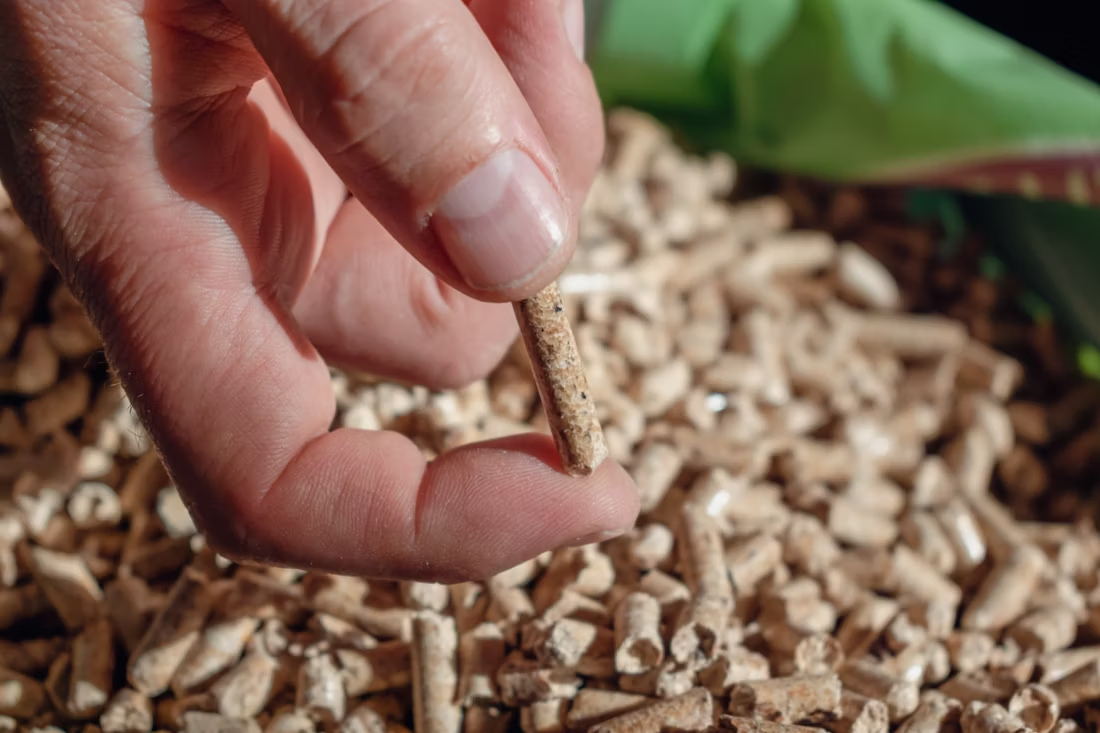
Regional producers including Indeck Energy Services, Lignetics, and Somerset Pellet Fuel supply bagged pellets that show up at hardware stores and farm supply retailers throughout south-central Indiana. Pellets are sold by the 40-pound bag or by the ton, and it pays to buy early in the fall before cold weather drives up local demand—a lesson a lot of Brown County cabin owners learn the first winter after they buy a stove. Your dealer can usually point you to the closest stocked retailer when you buy your unit.
Are pellet stoves affected by air quality restrictions in Brown County?
No—Brown County has no listed air-quality nonattainment areas or winter burn curtailment periods, unlike some more urban or industrial counties in the Midwest. That means there's no seasonal restriction on running a pellet stove (or a wood stove, for that matter) here. Pellet appliances still burn considerably cleaner than open wood fires, which is a nice bonus for the tourist cabins and rentals around Nashville where guests notice smoke smell and haze.
Do pellet stoves work during power outages in Brown County?
Not on their own—a pellet stove's auger and combustion blower both run on standard household electricity, so a power outage stops the stove along with everything else. That's a real consideration in a hilly, heavily wooded county like Brown, where ice storms and falling limbs off the oak and hickory stands can knock out power for a day or longer. Homeowners who want pellet convenience but also need backup heat during outages often pair the stove with a small battery backup or generator, or keep a wood-burning option in reserve given how common oak and hickory firewood already is locally.
What's the difference between a pellet stove and a pellet insert?
A pellet stove is a freestanding unit that vents through a wall or existing chimney and can go almost anywhere in a room with proper clearances. A pellet insert is built to slide into an existing masonry fireplace opening, which is a common upgrade path in Brown County's older log cabins and farmhouses that already have a fireplace but want more efficient, hands-off heat. For a home without an existing fireplace, a freestanding stove is usually the simpler install.
Do I need a permit to install a pellet stove in Brown County?
Most pellet stove installations require a building permit, and if the install involves new electrical work for the auger and blower circuit, an electrical permit as well. Check with the Brown County building department before work starts, though in practice most established local hearth dealers handle the permitting process as part of the installation so you're not tracking down paperwork yourself.
How much maintenance does a pellet stove need?
Plan on emptying the ash pan and cleaning the burn pot roughly weekly during heavy winter use, given a heating season that runs from around October through April at this HDD level. A full annual service—checking the auger motor, exhaust blower, and venting—is worth scheduling once a year, typically before the season starts. It's noticeably less hands-on than a wood stove, which is a big part of why pellet appeals to owners of the weekend cabins and rental properties scattered around Nashville and the state park.
Pellet vs. wood—which is right for my Brown County home?
Wood has deep roots here—oak, hickory, maple, and beech are all abundant locally, wood stoves need no electricity to run, and there's a real cost advantage if you're cutting or sourcing your own firewood. Pellet stoves trade some of that self-sufficiency for convenience: load the hopper, set the thermostat, and walk away, with far less ash and no splitting or stacking. For full-time residents in wooded, self-sufficient parts of the county, wood often wins. For the weekend cabins, artist studios, and rental properties around Nashville where low-maintenance heat matters more than tending a fire, pellet is usually the better fit.
Why is a fireplace insert so efficient?
An insert does two things: it seals the chimney completely, so you stop losing air you already paid to heat, and it radiates warmth into the room through the firebox and glass. Most add a heat-exchange fan that pulls cool room air underneath, wraps it around the hot firebox, and pushes it back out warm. Your home is more efficient before you've even lit the first fire.
Why is my open fireplace making my house colder?
Open fireplaces suck—literally. As the fire burns, it consumes air your furnace already paid to heat and pulls it out through the chimney, so the house is actually colder after the fire goes out than before you lit it. An insert fixes this: it seals the chimney, puts fixed glass across the front, and turns that hole in your house into a real heat source.
How much should I budget for a fireplace?
For an average home—covering the fireplace, the vent pipe, and basic installation—a budget between $3,900 and $5,500 gives you a lot of options across wood, gas, and pellet. By the time you add finish work, gas line, and electrical, the average complete installation lands between $5,000 and $12,000 all-in. In a remodel or new build, a good rule is to put about 2.5% of the total project cost toward the fireplace.
Can a fireplace actually lower my heating bill?
Yes—by creating a comfort zone. A furnace heats every square foot of the house just to warm the one room you're in; a gas fireplace on low burns roughly a sixth of the gas a typical furnace does. Set the furnace around 55–60 degrees as a baseline, then heat the rooms your family actually uses. Families who heat this way commonly save $20–$60 a month.
Pellet Brands Stocked Around Brown County
Manufacturers will point you to the nearest stocking dealer.
Find your pellet stove in Brown County.
Tell us a bit about your home or cabin and we'll match you with the right pellet stove or insert, plus a free Project Guide & Parts List—the exact parts, including the vent kit, and a recommended local dealer.
Find Your Fireplace →