
Consistent, thermostat-controlled heat for Benton County winters.
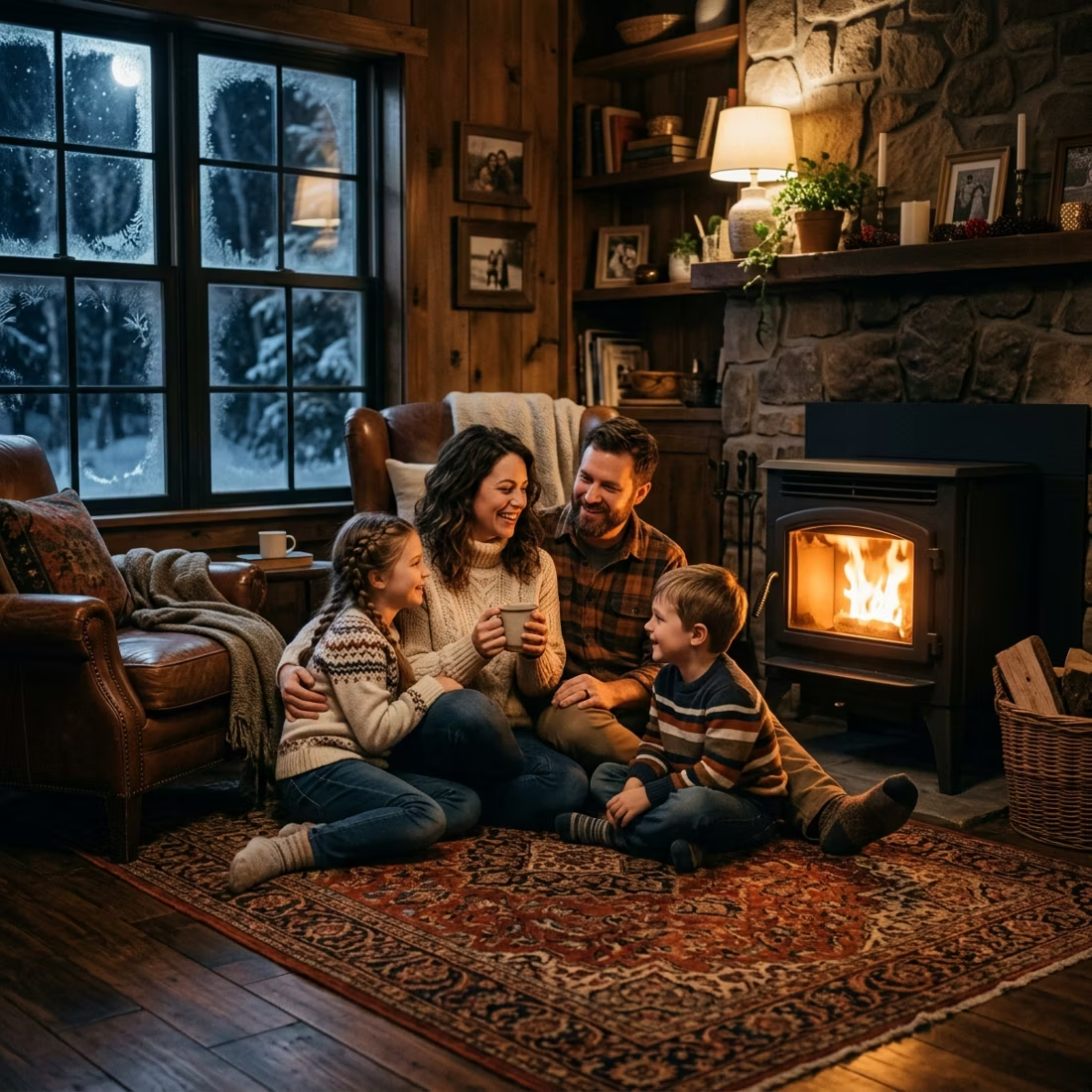
From Fowler to Earl Park, Benton County homes see real cold—averaging 15°F on a winter night and a long, demanding heating season. Pellet heat delivers steady, automated warmth without the daily wood-hauling. Find the right stove or insert and connect with a trusted local dealer.
Every Project Starts From One of These Five Situations
Automated warmth built for Midwest farm country.
Benton County sits in the flat, wind-swept Grand Prairie of west-central Indiana—home to the Meadow Lake Wind Farm, one of the largest wind installations in the Midwest, a fitting backdrop for a landscape with almost nothing to break a January wind. With roughly 5,200 residents spread across Fowler, Boswell, Earl Park, Oxford, and Ambia, this is farm country: older farmhouses, outbuildings, and homes where someone is usually out managing livestock or equipment before daylight, not tending a fire. Winters here run comparable to Madison, Wisconsin in total heating demand, with a long, cold heating season and average lows near 15°F.
That's exactly the profile pellet stoves are built for. Load the hopper, set the thermostat, and the auger and blower handle the rest—no overnight reloading, no splitting oak or hickory from the woodlots that line the county's fields. Regional pellet brands including Indeck Energy Services, Lignetics, and Somerset Pellet Fuel supply much of the Midwest hardwood pellet market, and many Benton County homeowners pick up bagged pellets seasonally from farm supply retailers like Rural King in addition to ordering by the ton. Most rural Benton County homes are served by electric cooperatives such as Tipmont REMC—worth knowing, since a pellet stove's auger and blower need continuous power to run.
Three steps. No salesperson until you're ready.
Tell us about your project
Your zip code, your situation, and the fuel you're leaning toward—or let the answers point you to one.
See what's actually available
The brands dealers within 100 miles genuinely carry—real options, never a catalog mirage.
Get your dealer & Project Guide
A trusted local dealer, plus the free Project Guide & Parts List that names every component of the job.
Frequently Asked Questions
How much does a pellet stove installation cost in Benton County?
A typical pellet stove or insert installation runs roughly $3,500 to $6,500 in Benton County, depending on the unit, whether it's a freestanding stove or an insert going into an existing fireplace, and how much venting work is needed. Pellet stoves vent through a smaller-diameter pipe than wood stoves and can often exit through a side wall rather than requiring a full chimney, which keeps installation more affordable than a comparable wood-burning setup. Older farmhouses without an existing fireplace typically land toward the higher end once wall penetration and exterior venting are factored in.
What size pellet stove do I need for a Benton County farmhouse?
Sizing depends on square footage, ceiling height, and how well-insulated the home is—and a lot of Benton County's housing stock is older farmhouses with less insulation than newer construction, which pushes sizing up. As a rough guide: smaller units (around 40,000 BTU) handle a single large room or a well-sealed 1,000-1,500 sq ft space, while larger units (50,000+ BTU) are needed to keep an older two-story farmhouse comfortable through a stretch of single-digit nights. A local dealer will size the unit based on an in-home look at your insulation and layout—oversizing wastes fuel and undersizing leaves you cold on the worst nights of the year.
Do I need a permit to install a pellet stove in Benton County?
Yes—new pellet stove and insert installations require a building permit, which in Benton County is handled through the Benton County Area Plan Commission for unincorporated areas and the local town office for installations within Fowler, Boswell, Earl Park, Oxford, or Ambia. The permit process confirms proper clearances to combustibles, correct venting termination, and code-compliant hearth pad requirements. Most established local dealers handle this paperwork as part of the installation, so you generally won't need to file it yourself.
Where can I buy pellets in Benton County?
Regional pellet manufacturers including Indeck Energy Services, Lignetics, and Somerset Pellet Fuel supply much of the hardwood pellet market across Indiana and the surrounding Midwest, and local hearth dealers typically stock at least one of these brands. Farm supply retailers like Rural King also carry bagged pellets seasonally, which is convenient for topping off supply mid-winter. Buying by the ton ahead of the season is usually the most economical route and guarantees you have fuel on hand before the first cold snap—dry, off-the-ground storage in a barn, garage, or shed keeps pellets from absorbing moisture that hurts burn quality.
Will my pellet stove work during a power outage?
Not without a backup power source. Pellet stoves rely on an electric auger to feed fuel and a blower to distribute heat, so they shut down when the power does. This matters in Benton County, where much of the rural grid runs through electric cooperatives like Tipmont REMC and winter ice or high-wind events can knock out power for hours at a time—ironic in a county known for its wind turbines, but rural distribution lines are still vulnerable to storm damage. A small battery backup unit or a portable generator sized for a few hundred watts is enough to keep most pellet stoves running through a typical outage; ask your local dealer about compatible backup options when you buy.
Pellet stove or wood stove—which makes more sense for Benton County?
Both are solid choices here. Wood is genuinely abundant—Benton County's woodlots and fencerows are full of oak, hickory, maple, and beech, and many rural households already have access to firewood. Wood stoves also keep working without electricity, which matters for backup heat during storm outages. Pellet stoves trade that off for convenience: no splitting or stacking, longer burn times per load, more even heat output, and cleaner operation with far less ash. For a working farm household where nobody has time to feed a fire every few hours, pellet often wins. For a rural property that wants guaranteed heat regardless of grid status, wood remains the more resilient option. Some Benton County homes run one of each.
How much maintenance does a pellet stove need?
Pellet stoves need more routine attention than a furnace but far less than a wood stove. Plan to empty the ash pan every few days during regular use, clean the burn pot weekly to keep the fire burning efficiently, and have the unit professionally serviced once a year—typically in late summer before heating season starts—to clean the venting, check the auger motor, and inspect gaskets and seals. Skipping the annual service is the most common reason pellet stoves start jamming or losing efficiency partway through a Benton County winter.
What pellet stove brands are available through Benton County dealers?
Local hearth dealers serving Benton County typically carry established pellet stove manufacturers such as Harman, Englander, and Quadra-Fire, alongside regional fuel supply from Indeck Energy Services, Lignetics, and Somerset Pellet Fuel. Availability varies by dealer, so it's worth asking specifically which stove lines a given retailer stocks and services locally—a dealer who both sells and services the brand is generally a safer bet than ordering a unit online with no local support for warranty repairs.
Are there rebates or tax credits for installing a pellet stove?
High-efficiency biomass stoves—including most modern pellet stoves rated at 75% efficiency or higher—currently qualify for a federal tax credit covering 30% of the cost of the unit and installation, up to $2,000 per year, under the same incentive that covers wood stoves and other biomass heating equipment. Manufacturers typically list a unit's efficiency rating and tax credit eligibility on their spec sheets, and your local dealer can confirm which models in stock qualify before you buy. Indiana does not currently add a separate state-level rebate on top of the federal credit, so the federal program is the main incentive to check.
What's the difference between an insert and a zero-clearance fireplace?
An insert is a fireplace that slides into a pre-existing wood-burning fireplace—if you don't have one, there's nothing to insert it into. A zero-clearance fireplace is built into a framed wall, which makes it the answer for remodels and new construction. Simple test: existing masonry fireplace means insert; blank or framed wall means zero-clearance.
Why is a fireplace insert so efficient?
An insert does two things: it seals the chimney completely, so you stop losing air you already paid to heat, and it radiates warmth into the room through the firebox and glass. Most add a heat-exchange fan that pulls cool room air underneath, wraps it around the hot firebox, and pushes it back out warm. Your home is more efficient before you've even lit the first fire.
Can a fireplace actually lower my heating bill?
Yes—by creating a comfort zone. A furnace heats every square foot of the house just to warm the one room you're in; a gas fireplace on low burns roughly a sixth of the gas a typical furnace does. Set the furnace around 55–60 degrees as a baseline, then heat the rooms your family actually uses. Families who heat this way commonly save $20–$60 a month.
Does a fireplace add value to my home?
On average, a fireplace adds back to the home about the same amount you spent installing it. Add the monthly savings from heating the rooms you actually use instead of the whole house—often hundreds of dollars a year—and the value case is strong before you even count what a fire does for how your family uses the room.
Pellet Brands Stocked Around Benton County
Manufacturers will point you to the nearest stocking dealer.
Find your pellet stove in Benton County.
Tell us about your home and heating goals, and we'll match you with a trusted local dealer plus a free Project Guide & Parts List—the exact parts, vent kit, and recommended installer for your Benton County pellet project.
Find Your Fireplace →