
Steady, clean heat for Adams County's long winters.
From Decatur to Berne to Geneva, Adams County sees winters comparable to Madison, Wisconsin and winter lows around 18°F. A pellet stove or insert delivers thermostat-steady heat without the wood-splitting—find the right unit and connect with a trusted local dealer.
Every Project Starts From One of These Five Situations
Consistent, low-maintenance heat for flat, cold northeast Indiana.
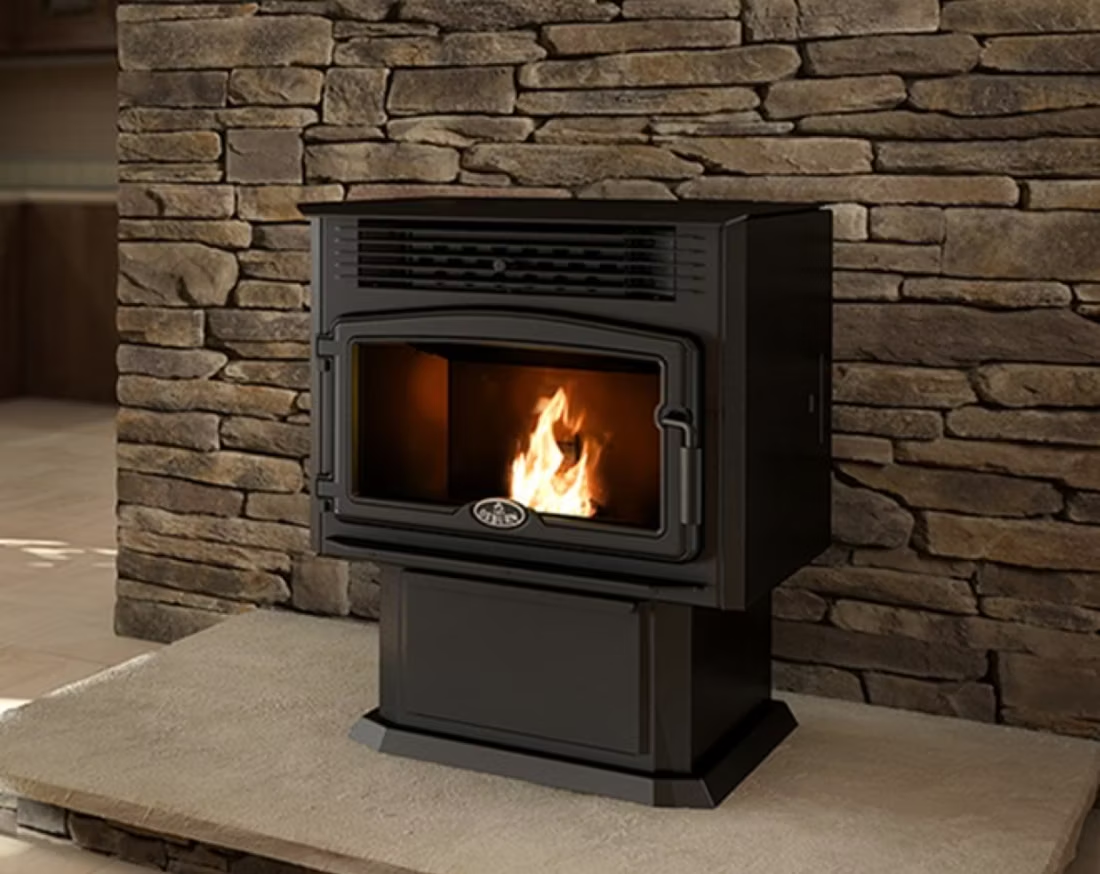
Adams County sits in the flat farm country of northeast Indiana, home to Decatur, the Swiss-heritage town of Berne, and Geneva to the south. With winters comparable to Madison, Wisconsin and average winter lows near 18°F, winters here run long, gray, and steady rather than brutally extreme. That's a climate where a pellet stove's set-it-and-forget-it heat output shines: no splitting, no stacking, no tending a fire every few hours through a January cold snap.
Adams County has no air quality non-attainment designations or winter burn restrictions, so pellet appliances run without curtailment concerns here—though many homeowners still choose pellet specifically for the cleaner burn and near-total absence of ash and creosote compared to cordwood from the county's abundant oak, hickory, maple, and beech. Regional pellet brands including Indeck Energy Services, Lignetics, and Somerset Pellet Fuel are commonly stocked by dealers serving this part of Indiana, and Adams County's sizable rural and Amish/Mennonite population means a mix of homes—some fully on-grid, some with limited electric service—which is worth discussing with a local installer before committing to a pellet appliance, since every pellet stove depends on electricity to run its auger and blower.
Three steps. No salesperson until you're ready.
Tell us about your project
Your zip code, your situation, and the fuel you're leaning toward—or let the answers point you to one.
See what's actually available
The brands dealers within 100 miles genuinely carry—real options, never a catalog mirage.
Get your dealer & Project Guide
A trusted local dealer, plus the free Project Guide & Parts List that names every component of the job.
Frequently Asked Questions
How much does a pellet stove installation cost in Adams County?
A freestanding pellet stove installation in Adams County typically runs $3,500 to $6,500 depending on the unit, venting length, and whether you need a new hearth pad for clearance. A pellet insert converting an existing wood-burning fireplace usually falls in a similar or slightly lower range, since it often reuses existing masonry and requires less new construction. Homes in Decatur or Berne with straightforward wall-vent access tend to land on the lower end; rural properties needing longer pellet-vent runs or electrical work for the appliance's power draw can run higher. A local dealer will give you a firm number after an in-home look at your chimney or wall situation.
What size pellet stove do I need for my Adams County home?
Sizing depends on square footage, insulation, and whether the stove is your primary heat or a supplement to a furnace. In a climate like Adams County's—with winters comparable to Madison, Wisconsin and winter lows near 18°F—a small pellet stove (under 1,000 sq ft) suits a single room or a farmhouse addition, while a medium unit (1,000–1,800 sq ft) covers most main living areas in the older farmhouses and ranch homes common around Decatur and Geneva. Poorly insulated older homes, which are common in this part of rural Indiana, often need to size up a notch from what the square footage alone would suggest. A local dealer will walk your home and size it properly rather than guessing off a chart.
Where can I buy pellets locally in Adams County?
Regional pellet brands including Indeck Energy Services, Lignetics, and Somerset Pellet Fuel are commonly available through hearth dealers and farm supply stores serving northeast Indiana, and most stock premium hardwood or softwood blends by the ton or by the 40-pound bag. Buying by the ton ahead of the heating season is typically the better value and ensures you're not scrambling for bags mid-winter when demand spikes during a cold stretch. Your local dealer can tell you which brands they carry and whether they offer delivery to rural addresses outside Decatur and Berne.
Will my pellet stove work during a power outage?
No—pellet stoves require electricity to run the auger that feeds pellets into the burn pot and the blower that distributes heat, so a standard pellet stove will shut down in a power outage. This matters in a rural county like Adams, where ice storms and downed lines can knock out power for hours at a time during the coldest stretches of winter. Homeowners who want backup heat security sometimes pair a pellet stove with a small battery backup or generator, or choose a wood stove instead for a fuel source that doesn't depend on the grid. Ask your local dealer about battery backup options if outage resilience is a priority for your household.
Do I need a permit to install a pellet stove in Adams County?
Most new pellet stove and insert installations require a building permit through the Adams County Building Department, particularly when new venting penetrates a wall or roof. Most local dealers handle the permitting and inspection scheduling as part of the installation, so it's rarely something homeowners need to coordinate themselves. Because pellet stoves vent horizontally through a wall in most installations—rather than requiring a full masonry chimney—the permitting and inspection process is often simpler and faster than a wood stove install.
How often does a pellet stove need to be cleaned and serviced?
Pellet stoves need more frequent ash removal than a furnace but far less than a wood stove—expect to empty the ash pan every few days to weekly during regular winter use, depending on burn hours and pellet quality. A full annual service, including cleaning the burn pot, exhaust venting, and combustion blower, is recommended before each heating season starts, typically in early fall ahead of Adams County's cold stretch. Skipping the annual service is the most common cause of poor burns and error codes mid-winter, so it's worth scheduling with your dealer before the first hard freeze.
Pellet stove vs. wood stove—which is right for my Adams County home?
Wood stoves burn cordwood from local hardwoods like oak, hickory, maple, and beech, work without electricity, and offer the lowest ongoing fuel cost if you have access to a wood lot or self-cut supply—a real advantage during grid outages in a rural county like Adams. Pellet stoves are more convenient: load the hopper, set the thermostat, and walk away, with a cleaner burn and far less ash than cordwood. For farmhouses and rural properties where a backup, no-electricity heat source matters, wood often wins. For in-town homes in Decatur or Berne prioritizing convenience and consistent, low-maintenance heat, pellet is usually the better fit.
Pellet stove vs. gas fireplace—which should I choose?
Gas fireplaces offer instant on-off operation with no fuel storage or loading required, which suits homeowners who want zero-hassle daily use—but they depend on either natural gas service or a propane tank. Pellet stoves require loading a hopper every day or two and periodic ash removal, but burn a renewable, often locally-available fuel and typically cost less to run per BTU than propane in rural parts of Adams County where natural gas service isn't available. If your home already has natural gas, a gas fireplace may be simpler; if you're on propane or want a fuel source you can stockpile ahead of winter, pellet is worth a serious look.
What's the best pellet stove for Adams County's climate?
For a climate with winters comparable to Madison, Wisconsin and winter lows near 18°F, look for a pellet stove with a large hopper capacity—40 to 60 pounds—so it can run overnight and through a cold day without a refill. Higher-efficiency units with variable-speed feed systems adjust output automatically as outdoor temperatures swing, which is common through an Adams County winter that alternates between mild stretches and hard cold snaps off the plains. Ask your local dealer to match hopper size and BTU output to your specific square footage and insulation level rather than picking based on price alone.
Why is a fireplace insert so efficient?
An insert does two things: it seals the chimney completely, so you stop losing air you already paid to heat, and it radiates warmth into the room through the firebox and glass. Most add a heat-exchange fan that pulls cool room air underneath, wraps it around the hot firebox, and pushes it back out warm. Your home is more efficient before you've even lit the first fire.
Are pellet stoves loud?
They make some noise—there are two fans running plus an auger motor that turns as it feeds pellets. But there's a real range: premium models are engineered quiet, and the best offer a whisper-quiet mode you can comfortably watch TV next to. If noise matters in your room, ask to hear a stove running before you buy—it's a five-minute test that saves years of annoyance.
Does a fireplace add value to my home?
On average, a fireplace adds back to the home about the same amount you spent installing it. Add the monthly savings from heating the rooms you actually use instead of the whole house—often hundreds of dollars a year—and the value case is strong before you even count what a fire does for how your family uses the room.
Can I install a fireplace myself?
If you're putting a fire in your house on purpose, it's best to work with an expert. Unless you're genuinely experienced in framing, gas line, vent pipe, and the national code on clearances to combustibles, have a professional do it—and ideally the same company that sells you the fireplace, so warranty, service, and liability all live under one roof.
Pellet Brands Stocked Around Adams County
Manufacturers will point you to the nearest stocking dealer.
Find your pellet stove in Adams County.
Tell us a bit about your home and we'll match you with a trusted local dealer and send over a free Project Guide & Parts List—a plan for your pellet project in Adams County, including the exact parts and vent kit you'll need.
Find Your Fireplace →