
Zone Heat That Installs in an Afternoon, No Chimney Needed.
Clean, instant zone heat for Wood Dale's DuPage County homes—no chimney, no gas line, no venting. Find the right unit and connect with a trusted local dealer.
Every Project Starts From One of These Five Situations
The simplest way to add heat where you actually live.
Wood Dale sits in DuPage County just west of O'Hare Field, in climate zone 5A with a winter heating season on par with places like Chicago, and winter lows that average 19°F—cold enough that a supplemental heat source matters, but nowhere near the extremes of Madison, Wisconsin or International Falls, Minnesota, where wood stoves and pellet appliances dominate the hearth market. Much of Wood Dale's housing stock is postwar ranch, split-level, and multi-family construction built without masonry chimneys or the clearances a wood-burning appliance requires, which is a big part of why electric and gas—not cordwood or pellets—are the fuels people actually shop for here.
Commonwealth Edison serves the city at a residential rate of about 13.4 cents per kWh, which keeps electric fireplaces cheap to run as zone heat in a family room, basement, or bedroom rather than as a whole-house furnace replacement. Because electric units don't need a flue, gas line, or masonry chimney, most installations in Wood Dale are limited to running a dedicated circuit—a job most local electricians finish in an afternoon, without the multi-week permitting timeline a wood or gas hearth project can involve.
Three steps. No salesperson until you're ready.
Tell us about your project
Your zip code, your situation, and the fuel you're leaning toward—or let the answers point you to one.
See what's actually available
The brands dealers within 100 miles genuinely carry—real options, never a catalog mirage.
Get your dealer & Project Guide
A trusted local dealer, plus the free Project Guide & Parts List that names every component of the job.
Frequently Asked Questions
How much does an electric fireplace installation cost in Wood Dale?
Electric fireplace inserts that slide into an existing frame typically run $300 to $1,500 for the unit, with installation adding little more than an outlet check. Built-in, wall-mounted linear models—increasingly common in DuPage County remodels—run $1,000 to $3,500 installed, including a dedicated 20-amp circuit run by a licensed electrician. Because there's no venting, gas line, or chimney work involved, electric is consistently the least expensive hearth option available to Wood Dale homeowners.
Do I need a permit to install an electric fireplace in Wood Dale?
In most cases, no separate hearth permit is required—electric fireplaces don't burn fuel on-site, so they fall outside the building code triggers that apply to wood and gas appliances. If your installation requires a new dedicated circuit, your electrician will typically pull an electrical permit through the Village of Wood Dale as a routine part of the job. There's no chimney inspection, no gas-fitter, and no venting plan to coordinate.
What does it cost to run an electric fireplace in Wood Dale?
At Commonwealth Edison's residential rate of about 13.4 cents per kWh, a typical 1,500-watt electric fireplace running on high costs roughly 20 cents an hour to operate—about $1.60 for an 8-hour evening of use. Most units let you run the flame effect without the heater engaged, so you can enjoy the ambiance for pennies an hour even when supplemental heat isn't needed. Over a full winter of evening use, that puts total operating costs well below what a comparable gas or propane appliance would run.
What's the best electric fireplace for Wood Dale's winters?
For Wood Dale's climate zone 5A winters, look for units with a true heating element rated around 4,600–5,000 BTU (roughly 1,500 watts) rather than purely decorative models—that's enough to comfortably supplement a 300–400 sq ft room on the coldest days near the 19°F average low. Wall-mounted linear models from brands like Napoleon and Dimplex are popular in DuPage County remodels for their slim profile in newer great-room layouts, while insert-style units work well retrofitted into the existing fireplace openings found in Wood Dale's older ranch and split-level homes.
Why isn't wood heat more common in Wood Dale?
Wood Dale's air quality isn't the limiting factor—DuPage County has no non-attainment or wood-smoke restrictions in effect. The bigger issue is the housing stock: much of the city is postwar ranch, split-level, and attached multi-family construction built without masonry chimneys, and there's no local cutting-permit infrastructure the way there is near national forest land. Local oak, hickory, walnut, and maple grow throughout DuPage County's forest preserves, but there's no established firewood-permit system tied to those preserves for residential heating. A small number of homeowners with existing masonry fireplaces still burn wood occasionally, but electric and gas are the practical choices for most Wood Dale homes.
Electric vs. gas fireplace—which is right for my Wood Dale home?
Gas fireplaces provide more heat output—enough to serve as genuine supplemental heat during Wood Dale's coldest stretches near 19°F—and can run during a power outage if properly equipped, but they require a gas line and venting plan, with installations typically running well into the thousands. Electric fireplaces cost less upfront, install in an afternoon with no venting, and are the simplest option for the condos, townhomes, and apartments common around Wood Dale—but they won't function during a power outage and produce less raw heat per unit. For a primary living space that needs real heat, gas often wins; for bedrooms, basements, rentals, or homes where simplicity matters most, electric is usually the better fit.
What's the difference between an electric insert and a wall-mounted electric fireplace?
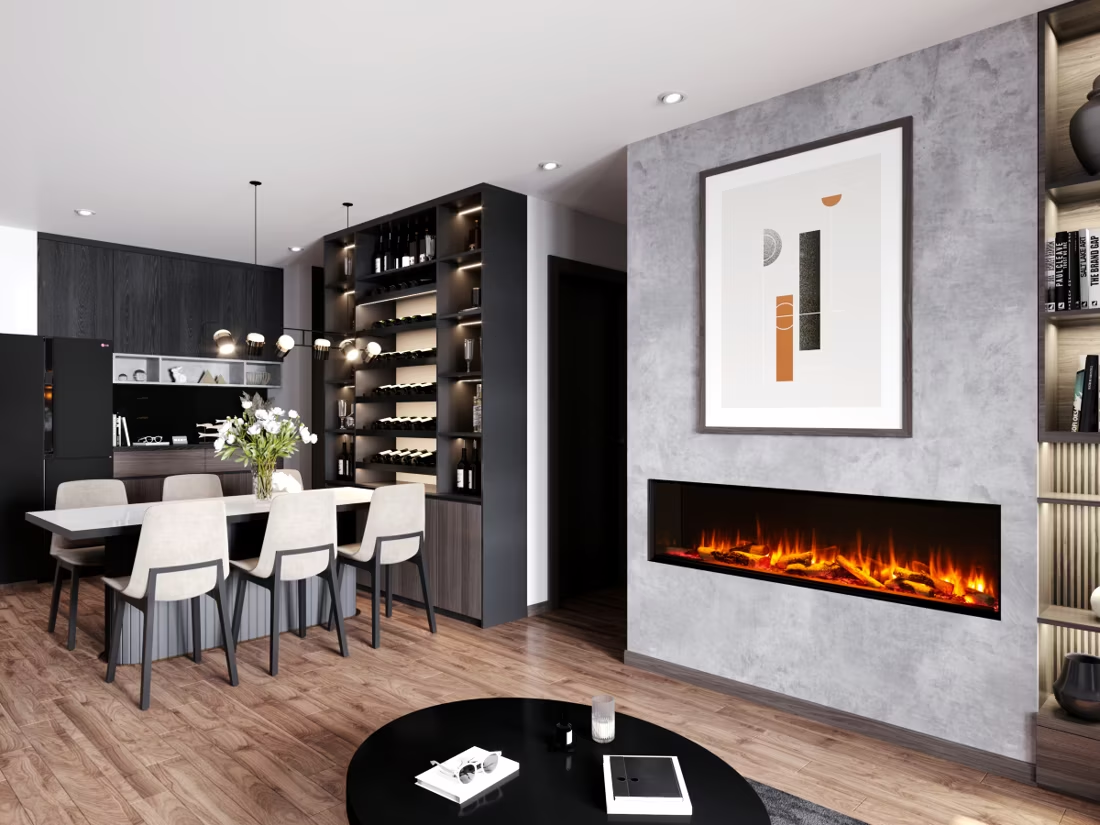
An electric insert is built to slide into an existing fireplace opening—masonry or a builder-grade zero-clearance box—and is the most common upgrade in Wood Dale's older ranch homes that already have a fireplace footprint. A wall-mounted or built-in electric fireplace is a slimmer unit designed to be recessed into a wall or hung like a piece of art, which is more common in newer construction and condo remodels where there's no existing fireplace opening to work with. Both plug into a standard or dedicated circuit and produce comparable heat output—the choice mostly comes down to whether you're retrofitting an existing space or building one from scratch.
Are electric fireplaces safe for homes with kids or pets?
Yes—electric fireplaces are generally considered the safest hearth option for households with children or pets, since the glass front stays cool to the touch on most models, unlike gas or wood units that can exceed 400°F on the glass. There's no open flame, no combustion byproducts, and no ash or embers to manage. Some models do include a heating element that can get warm during operation, so it's still worth checking a specific unit's surface temperature rating if that's a priority for your household.
Will my electric fireplace work during a power outage?
No—electric fireplaces require power to run both the flame effect and any heating element, so they'll go dark along with everything else during an outage. This is worth factoring into your decision if you're in a part of Wood Dale prone to ComEd outages during winter storms; homeowners who want heat that survives a power loss typically pair an electric fireplace in the main living space with a smaller backup source, or consider a gas unit with a battery-backup ignition system for their primary hearth instead.
Can I put a TV above my fireplace?
Yes—with an asterisk. Fireplaces are hot and TVs don't like heat. Either put a mantel between them to deflect rising warmth, or choose a fireplace with heat-management technology that creates a cool zone on the wall above—the wall stays around 125 degrees, barely warm, while the room still gets full heat. If you like clean lines and don't want a mantel, heat management is the answer.
Does an electric fireplace need a vent or chimney?
No—that's its superpower. An electric fireplace needs a wall and an outlet, period. No vent pipe, no gas line, no clearances to design around, which is why it works in bedrooms, offices, apartments, and walls where venting a gas or wood unit would be impractical or impossible. Installation is typically the simplest and least expensive of any fireplace type.
Can a fireplace actually lower my heating bill?
Yes—by creating a comfort zone. A furnace heats every square foot of the house just to warm the one room you're in; a gas fireplace on low burns roughly a sixth of the gas a typical furnace does. Set the furnace around 55–60 degrees as a baseline, then heat the rooms your family actually uses. Families who heat this way commonly save $20–$60 a month.
What is an in-home preview and do I need one?
It's a visit where a hearth professional measures your space, confirms the model you picked actually works in your home, and walks the specs—framing, gas line, venting, finish work—before anything is ordered. Some details you just can't know until you see the house. Never make a down payment without one; it's the single most-skipped step that burns buyers.
Nearby Dealers
Hearth shops serving Wood Dale and the surrounding area. Every listing shows whether it is a WhyFire partner, a dealer we have verified as authorized for the brands we recommend, or a local business carrying hearth products. No manufacturer pays for placement. How we verify dealers →
Ember Glow
General Masonry Supply
A Cozy Fireplace
A Fireplace Store And More
Urban Rooftops
Fireplaces Plus
Smokin' Deal Bbq
Jhb Group, Inc.
Electric Service in Wood Dale
An electric fireplace's heater draws about 1,500 watts—pennies per hour at local rates.
Commonwealth Edison Co
Find your electric fireplace in Wood Dale.
Tell us a bit about your home and we'll match you with the right electric fireplace or insert—and connect you with a trusted local dealer who'll hand you a free Project Guide & Parts List for your project.
Find Your Fireplace →