
Reliable heat for Wilmette's lake-effect winters.
With a heating season nearly as long and demanding as Buffalo, NY's and winter lows averaging 16°F—closer to Buffalo's heating season than most of the Midwest realizes—a lot of Wilmette homeowners want a fireplace that starts at the flip of a switch. I'll match you with a trusted local dealer who knows the venting, the gas line work, and what's actually installable in your home.
Every Project Starts From One of These Five Situations
The default heat source on tight North Shore lots.
Wilmette sits right on Lake Michigan at 629 feet, and the lake doesn't do winter any favors—average lows of 16°F and a heating season that runs long put this suburb's winter heating load on par with Buffalo's, even though it's technically the same climate zone as much of Wisconsin. Homes here, whether it's a 1920s Colonial near Michigan Avenue or a newer build off Lake Avenue, need a heat source that can carry a room reliably through a long Illinois winter, not just look nice on a mantel.
North Shore Gas Company serves nearly all of Wilmette, which is a big reason gas has become the default fireplace fuel in the village—wood-burning setups are uncommon here given lot sizes, local ordinances, and a housing stock where most original masonry fireplaces are candidates for a gas insert conversion rather than active woodpiles. For homes where running a gas line isn't practical, an electric fireplace on Commonwealth Edison's grid, at roughly 13.4 cents per kWh, is the usual fallback—it costs more to run continuously than gas but skips venting and gas line work entirely, which matters in condos and additions near downtown Wilmette.
Three steps. No salesperson until you're ready.
Tell us about your project
Your zip code, your situation, and the fuel you're leaning toward—or let the answers point you to one.
See what's actually available
The brands dealers within 100 miles genuinely carry—real options, never a catalog mirage.
Get your dealer & Project Guide
A trusted local dealer, plus the free Project Guide & Parts List that names every component of the job.
Frequently Asked Questions
How much does a gas fireplace installation cost in Wilmette?
Most Wilmette installs land somewhere between $4,500 and $10,000, and the biggest cost driver is whether you already have an existing masonry fireplace to work with. A gas insert dropped into an original firebox in one of the village's older Colonials or Tudors near Michigan Avenue—using a liner run through the existing chimney—tends to land on the lower end. A new direct-vent fireplace for a remodel or addition, especially one that needs a fresh gas line run from the meter, sits toward the top of that range. A local dealer will quote firm numbers once they've seen your gas service location and the wall or chase you're working with.
Can I convert my existing wood-burning fireplace to gas?
Yes, and it's one of the more common projects in Wilmette given how many homes on streets like Lake Avenue and Forest Avenue still have the original masonry wood fireplace from when the house was built decades ago. Since wood-burning is rarely practical on today's tighter North Shore lots, a gas insert with a stainless liner run through the existing flue is a straightforward retrofit—you keep the chimney and mantel, lose the ash and the need to source oak or hickory, and gain a fireplace that starts with a remote. Expect the conversion itself to run in the $4,500-$8,500 range depending on gas line access.
Do I need a permit to install a gas fireplace in Wilmette?
Yes. You'll need a building permit through the Village of Wilmette Building Department, and the gas connection itself has to be run by a licensed plumber or gas fitter as a separate step. If your property falls within one of Wilmette's designated historic districts—a handful of blocks near the downtown business district and along parts of Sheridan Road—any exterior venting change may also need a quick look from the Historic Preservation Commission. Most established local dealers coordinate the building permit, the gas hookup, and the final inspection together, so you're not chasing separate approvals yourself.
Does everyone in Wilmette have access to natural gas, or is propane common?
Natural gas service through North Shore Gas Company reaches essentially all of Wilmette, so propane setups are the exception here rather than the norm—unlike more rural parts of Cook County where line access is patchy. If your address already has gas for the furnace, water heater, or range, adding a fireplace is usually a matter of tapping an existing line rather than extending new service. Propane only tends to come up for detached structures like a pool house or a garage conversion that's too far from the main gas run to extend economically.
Will my gas fireplace still work if the power goes out?
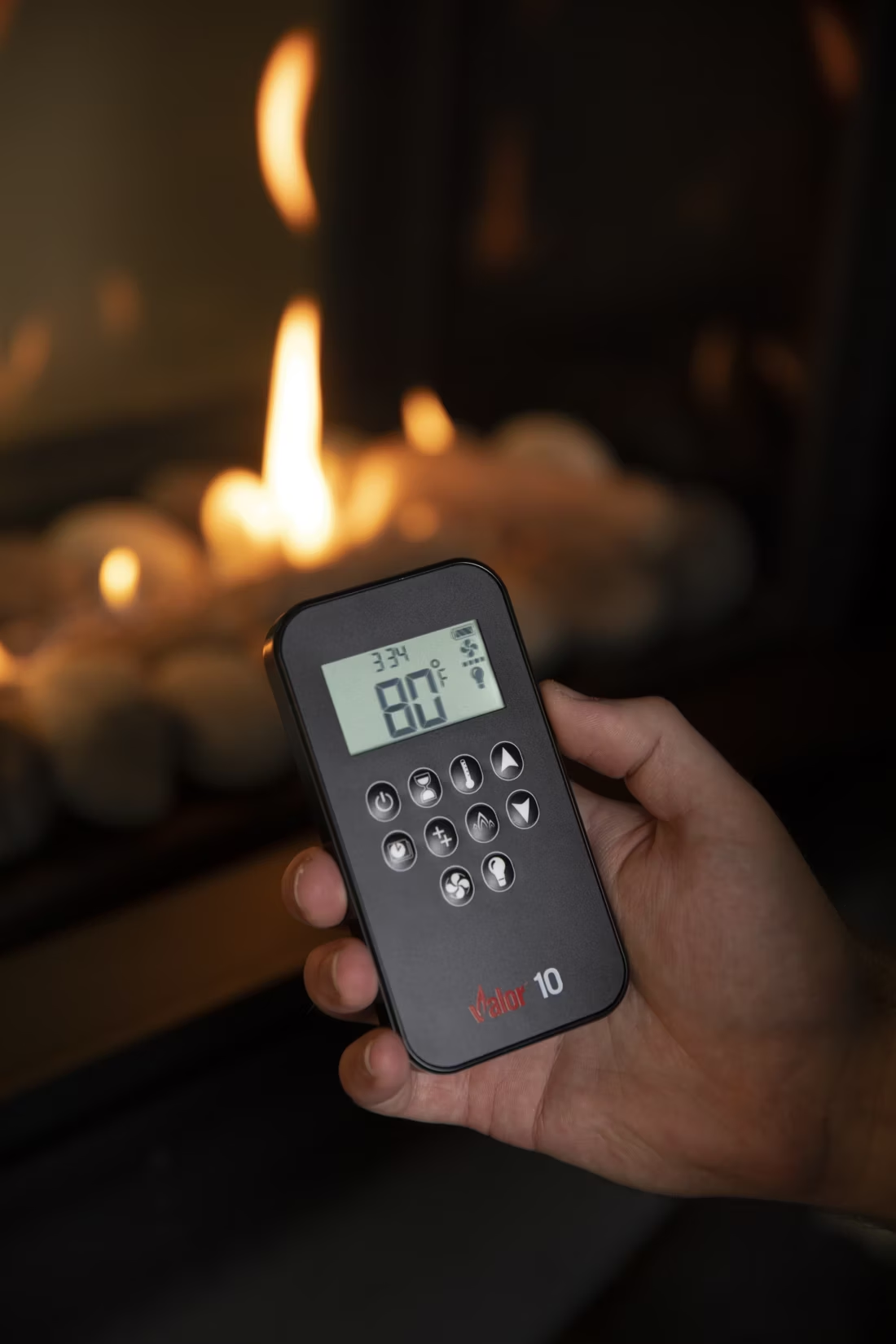
Most modern units will, which is worth knowing given how Lake Michigan storms occasionally knock out ComEd service along the North Shore. Fireplaces with IPI (intermittent pilot ignition) run on AA battery backup that kicks in automatically the moment the power drops. Older standing-pilot units don't need electricity to keep the pilot lit at all, though most homeowners upgrading today choose IPI for the efficiency. Ask your local dealer which ignition system is on any model you're considering if outage backup matters to your household.
Should I get a vented or vent-free gas fireplace?
Vented, direct-vent units draw combustion air from outside and exhaust it back outside through sealed pipe—they're the standard choice for a reason, and it's what most Wilmette dealers install by default. Vent-free units burn directly into the room and are permitted under Illinois code in limited settings, but not in bedrooms, and the Village Building Department will size the room carefully before approving one. Since Wilmette has no air quality non-attainment concerns to speak of, the decision here comes down more to safety and comfort than emissions—and direct-vent is the more forgiving option for older homes with lower ceilings.
How often does a gas fireplace need servicing?
Plan on an annual check, ideally in September or October before the first genuinely cold stretch hits—and in Wilmette, with a long, demanding heating season, that stretch runs long. A technician inspects the burner, pilot assembly, and gas connections, checks the venting, and cleans the glass. It's a lighter service than a wood chimney sweep, but skipping it on a unit that runs daily through a Wilmette winter is how an ignition problem shows up on the coldest night of the year instead of during a routine visit. Budget roughly $150-$250 for a standard appointment.
What size gas fireplace do I need for a Wilmette home?
With winter lows averaging 16°F and a heating season on par with Buffalo's, undersizing is the more common regret in this climate. A lot of Wilmette's older homes have generously sized formal living rooms with higher ceilings, especially the Colonials and Tudors near the lakefront, which call for a mid-to-large direct-vent unit sized in the 30,000-40,000 BTU range rather than a compact 20,000 BTU model meant for a smaller condo living room. A local dealer will size the unit against your actual room volume and insulation rather than square footage alone, since a lot of North Shore homes have less modern insulation than newer construction.
Gas vs. electric—which fireplace makes more sense in Wilmette?
Gas wins on running cost and heat output for a home that's actually trying to warm a room through a long Illinois winter—North Shore Gas Company service is nearly universal here, so most single-family homes have an easy path to a gas line. Electric fireplaces, drawing off Commonwealth Edison at roughly 13.4 cents per kWh, cost more to run for real supplemental heat but skip venting entirely, which makes them the practical choice for condos, finished basements, or additions where running gas line or a chimney chase isn't realistic. Given that wood-burning setups are essentially not viable on Wilmette's tighter lots, the real decision for most homeowners here is gas versus electric rather than gas versus wood.
Why is a fireplace insert so efficient?
An insert does two things: it seals the chimney completely, so you stop losing air you already paid to heat, and it radiates warmth into the room through the firebox and glass. Most add a heat-exchange fan that pulls cool room air underneath, wraps it around the hot firebox, and pushes it back out warm. Your home is more efficient before you've even lit the first fire.
Is my gas fireplace wasting gas?
If it was installed more than 15 years ago, probably. Older gas fireplaces keep a standing pilot light burning all the time, and that little flame can cost a couple hundred dollars a year. Newer models use pilot-on-demand ignition—the pilot lights only when you use the fireplace and goes out when you turn it off.
What is an in-home preview and do I need one?
It's a visit where a hearth professional measures your space, confirms the model you picked actually works in your home, and walks the specs—framing, gas line, venting, finish work—before anything is ordered. Some details you just can't know until you see the house. Never make a down payment without one; it's the single most-skipped step that burns buyers.
Does a fireplace add value to my home?
On average, a fireplace adds back to the home about the same amount you spent installing it. Add the monthly savings from heating the rooms you actually use instead of the whole house—often hundreds of dollars a year—and the value case is strong before you even count what a fire does for how your family uses the room.
Nearby Dealers
Hearth shops serving Wilmette and the surrounding area.
Fireside Collection By Fireplaces Plus
Get your free Project Guide & Parts List for a gas fireplace in Wilmette.
Tell me about your home and gas access and I'll match you with a trusted local dealer serving Wilmette, then send a free Project Guide & Parts List with the exact vent kit and parts your project needs.
Find Your Fireplace →