
Real Ambiance, No Chimney Required.
Zone heat and instant ambiance for Westmont's condos, townhomes, and ranch homes—no venting, no masonry, no permit headaches. Find the right unit and connect with a trusted local dealer.
Every Project Starts From One of These Five Situations
The easiest heat upgrade in a no-chimney home.
Westmont sits in DuPage County a few miles west of Chicago, in climate zone 5A with a long, cold heating season—a winter profile closer to Madison, WI than to the mild suburbs people imagine when they think 'Chicagoland.' Average winter lows hover around 17°F, and a lot of the housing stock here—condos, townhomes, and post-war ranch homes—was never built with a masonry chimney or flue. That's exactly where electric fireplaces fit best.
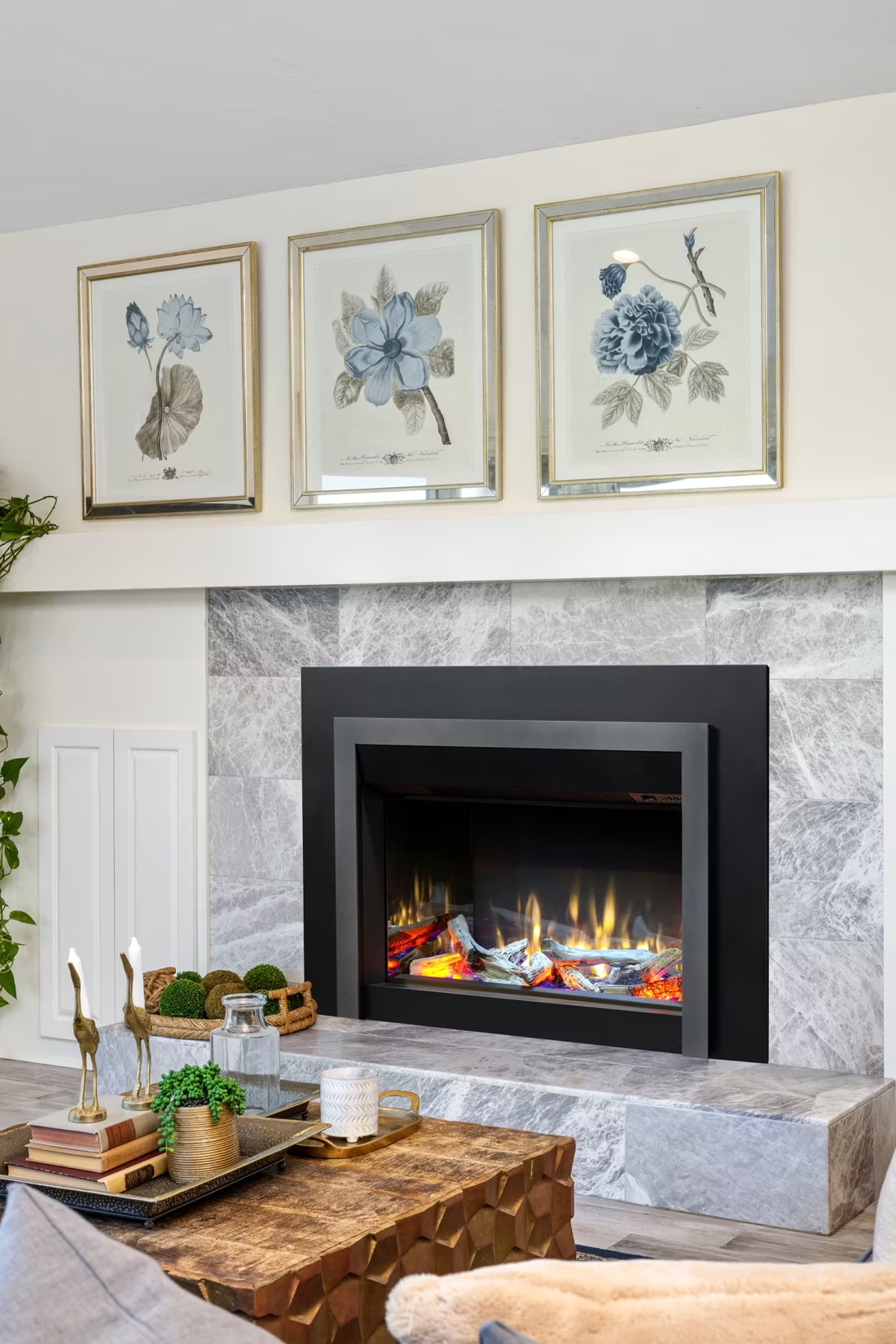
Commonwealth Edison serves Westmont at a residential rate of about $0.134 per kWh, which keeps supplemental zone heating affordable for a bedroom, den, or basement family room. An electric fireplace, insert, or wall-mounted unit plugs into a standard outlet or ties into a dedicated circuit, needs no gas line, no chimney, and in most cases no venting whatsoever—which also makes it one of the few hearth options condo associations in DuPage County will approve without a fight. It won't replace your furnace on a January night, but it delivers real supplemental warmth and the look of a fire with none of the structural work.
Three steps. No salesperson until you're ready.
Tell us about your project
Your zip code, your situation, and the fuel you're leaning toward—or let the answers point you to one.
See what's actually available
The brands dealers within 100 miles genuinely carry—real options, never a catalog mirage.
Get your dealer & Project Guide
A trusted local dealer, plus the free Project Guide & Parts List that names every component of the job.
Frequently Asked Questions
How much does an electric fireplace installation cost in Westmont?
Most electric fireplace projects in Westmont run $400 to $1,500. A plug-in insert or freestanding stove-style unit sits at the low end and typically needs no electrical work beyond an existing outlet. A built-in wall unit or a linear electric fireplace set into cabinetry or a stud wall costs more once you factor in framing, a dedicated 20-amp circuit, and finish carpentry. Local dealers can walk you through both paths during an in-home visit—there's no venting or gas line to price out, which keeps electric installs well below wood or gas project costs.
Do I need a permit to install an electric fireplace in Westmont?
For a plug-in unit that uses an existing standard outlet, no permit is required—it's treated like any other appliance. If you're having a built-in unit hardwired to a new dedicated circuit, that electrical work needs to be pulled through the Village of Westmont Building Division and performed by a licensed electrician. Most reputable dealers coordinate that permit as part of the installation, so it's worth asking upfront whether your chosen unit needs new wiring or just an outlet.
How much does it cost to run an electric fireplace in Westmont?
At ComEd's residential rate of roughly $0.134 per kWh, a typical 1,500-watt electric fireplace running its heater for 8 hours a day costs about $1.60 a day, or roughly $48 a month of steady use. Most homeowners don't run the heater element that long—many use the flame effect alone (which draws only 30–50 watts) for ambiance and switch on the heat only when they're actually in the room. That flexibility is one of the bigger advantages over a wood or gas unit, where you're either burning fuel or you're not.
Will an electric fireplace actually heat a room in a Westmont winter?
Yes, but with real limits. Most electric fireplace inserts top out around 5,000–5,200 BTUs, enough to comfortably warm a single room of 400–1,000 square feet, not a whole house. With average winter lows around 17°F and a long, cold heating season each year, Westmont homes still need a working furnace as the primary heat source. Electric units are best used as zone heat—supplementing a chilly bedroom, finished basement, or home office—or for ambiance on evenings when you don't want to run the whole HVAC system.
What's the difference between an electric insert, a wall-mounted unit, and a freestanding electric stove?
An electric insert is built to slot into an existing fireplace opening—a common choice if a Westmont home has an old masonry fireplace it isn't using for wood or gas anymore. A wall-mounted or linear electric fireplace hangs on or is recessed into a wall, popular in newer townhomes and remodels for a modern, low-profile look. A freestanding electric stove is a self-contained unit that looks like a traditional wood stove but plugs into an outlet, which works well for renters or condo owners who need something they can take with them when they move. All three run off standard household power.
Can I install an electric fireplace in a condo or apartment in Westmont?
In most cases, yes, and it's one of the few hearth appliances condo and townhome associations in DuPage County readily approve, since there's no venting, gas line, or exterior penetration involved. A plug-in electric insert or freestanding stove requires no structural modification at all. If you're considering a built-in wall unit that requires cutting into drywall or running new wiring, check your HOA's alteration policy first—most associations treat that similarly to installing a built-in shelf or cabinet.
What's the best electric fireplace for a home in Westmont's climate?
For supplemental heat in a 5A climate like DuPage County's, look for units with a true 5,000-plus BTU heater rating and a thermostat rather than a simple high/low switch—that lets the unit cycle on and off to hold a set temperature instead of running full blast constantly. Brands like Dimplex and Amantii are widely available through local dealers and offer both realistic flame technology and BTU output suited to zone heating a bedroom or family room through a Chicago-area winter.
Electric vs. gas fireplace—which makes more sense for a Westmont home?
Gas fireplaces put out real heat—typically 20,000 to 40,000 BTUs—and can meaningfully offset furnace use on cold DuPage County nights, but they require a gas line and, in most cases, venting work, which adds cost and complexity. Electric fireplaces install in an afternoon, need no venting, and cost far less upfront, but they're realistically a zone-heat and ambiance solution rather than a serious heat source. For a primary living room where you want visible, radiant heat output, gas is usually the better long-term fit. For a bedroom, basement, condo, or a home where a chimney or gas line isn't practical, electric is the simpler and more flexible answer.
Why don't I see more wood-burning fireplace options for Westmont?
Wood-burning fireplaces and stoves are uncommon in Westmont—most of the housing stock here was built without masonry chimneys, and DuPage County's suburban density plus HOA rules in many condo and townhome developments make wood installs impractical for the average homeowner. A small number of older single-family homes with existing masonry fireplaces can still accommodate a wood insert, but for most residents, electric or gas are the realistic paths to a working fireplace. If you do have an existing wood-burning fireplace and want to explore options, a local dealer can tell you what your chimney will support.
Can I put a TV above my fireplace?
Yes—with an asterisk. Fireplaces are hot and TVs don't like heat. Either put a mantel between them to deflect rising warmth, or choose a fireplace with heat-management technology that creates a cool zone on the wall above—the wall stays around 125 degrees, barely warm, while the room still gets full heat. If you like clean lines and don't want a mantel, heat management is the answer.
Does an electric fireplace need a vent or chimney?
No—that's its superpower. An electric fireplace needs a wall and an outlet, period. No vent pipe, no gas line, no clearances to design around, which is why it works in bedrooms, offices, apartments, and walls where venting a gas or wood unit would be impractical or impossible. Installation is typically the simplest and least expensive of any fireplace type.
How much should I budget for a fireplace?
For an average home—covering the fireplace, the vent pipe, and basic installation—a budget between $3,900 and $5,500 gives you a lot of options across wood, gas, and pellet. By the time you add finish work, gas line, and electrical, the average complete installation lands between $5,000 and $12,000 all-in. In a remodel or new build, a good rule is to put about 2.5% of the total project cost toward the fireplace.
What is an in-home preview and do I need one?
It's a visit where a hearth professional measures your space, confirms the model you picked actually works in your home, and walks the specs—framing, gas line, venting, finish work—before anything is ordered. Some details you just can't know until you see the house. Never make a down payment without one; it's the single most-skipped step that burns buyers.
Nearby Dealers
Hearth shops serving Westmont and the surrounding area. Every listing shows whether it is a WhyFire partner, a dealer we have verified as authorized for the brands we recommend, or a local business carrying hearth products. No manufacturer pays for placement. How we verify dealers →
A Fireplace Store And More
Ember Glow
A Cozy Fireplace
Urban Rooftops
A Cozy Fireplace
General Masonry Supply
Electric Service in Westmont
An electric fireplace's heater draws about 1,500 watts—pennies per hour at local rates.
Commonwealth Edison Co
Find your electric fireplace in Westmont.
Tell us a bit about your home and we'll match you with the right electric fireplace, insert, or wall unit—plus a free Project Guide & Parts List and a trusted local dealer to install it.
Find Your Fireplace →