
Instant Heat for Lake County's Long, Cold Winters.
With winter lows averaging 14°F and a long, demanding heating season each year, Vernon Hills homes need more than a furnace alone. Find the right gas fireplace or insert and get matched with a trusted local dealer.
Every Project Starts From One of These Five Situations
Convenient heat built for Chicago-suburb winters.
Vernon Hills sits at roughly 684 feet in Lake County, with a heating load—a long, demanding heating season—that puts it in the same cold-climate territory as Madison, WI. Winter lows average 14°F, and the stretch from December through February is long enough that a lot of local homeowners want a heat source they can flip on without loading wood or hauling ash. Because Vernon Hills largely developed as a planned community starting in the 1970s, most homes were built with forced-air furnaces and, if anything, a gas fireplace or log set—not a masonry wood-burning fireplace with a chimney. Wood-burning inserts and stoves are genuinely uncommon here; there's rarely an existing chimney to work with, and most subdivisions weren't built around wood heat the way older Midwest housing stock was.
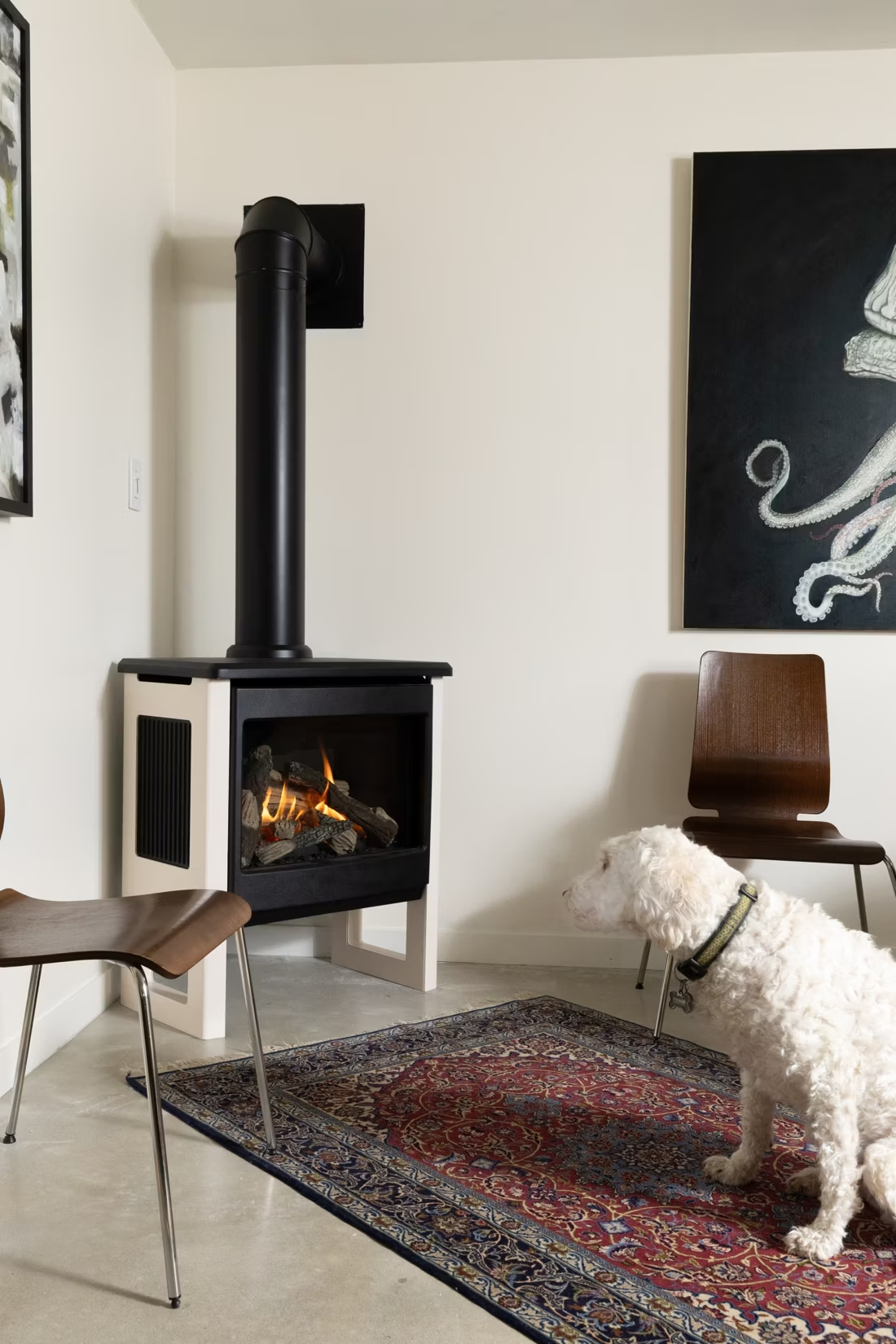
That makes gas the default choice for supplemental and zone heat in Vernon Hills. A direct-vent gas fireplace or insert gives you real, instant warmth in a family room or basement without touching your furnace, and modern units with intermittent pilot ignition can still light during a Commonwealth Edison power outage as long as you keep the battery backup fresh. Pellet stoves are similarly rare in town—between the lack of existing chimneys and the convenience gas already offers, there's little demand—but a properly sized, professionally vented gas fireplace fits Vernon Hills' housing stock and climate well.
Three steps. No salesperson until you're ready.
Tell us about your project
Your zip code, your situation, and the fuel you're leaning toward—or let the answers point you to one.
See what's actually available
The brands dealers within 100 miles genuinely carry—real options, never a catalog mirage.
Get your dealer & Project Guide
A trusted local dealer, plus the free Project Guide & Parts List that names every component of the job.
Frequently Asked Questions
How much does a gas fireplace installation cost in Vernon Hills?
Most gas fireplace and insert installations in the Vernon Hills area run roughly $3,500 to $9,000, depending on the unit, the venting path, and whether new gas line work is needed. A direct-vent gas insert or fireplace in a home already plumbed for natural gas sits toward the lower end. Projects that require running a new gas line, framing a new chase for venting, or upgrading an older gas meter to handle the additional load push toward the higher end. Because so few Vernon Hills homes have an existing masonry fireplace to convert, many installs are new direct-vent units built into a framed wall—your local dealer will quote based on the actual venting run to an exterior wall or roof.
Can I convert my wood fireplace to gas in Vernon Hills?
It's possible, but less common here than in older Midwest cities, simply because a lot of Vernon Hills homes were never built with a masonry wood-burning fireplace in the first place—the community largely developed after 1970 with forced-air heat as the standard. If your home does have an existing wood-burning fireplace, a gas insert can usually be installed using the existing chimney with a stainless liner, similar to how it's done anywhere else. If you don't have an existing fireplace or chimney, your local dealer will more likely recommend a new direct-vent gas fireplace built into an interior or exterior wall, which is the more typical project in this part of Lake County.
Do I need natural gas service, or can I use propane?
Most homes within Vernon Hills proper are already connected to natural gas service, which makes adding a gas fireplace straightforward if you have an existing gas water heater or furnace. Propane is more of a fallback option for properties on the fringes of Lake County that aren't on the natural gas grid. Nearly all gas fireplace models can be configured for either fuel—the orifice and regulator are matched to whichever gas source you have—so fuel type rarely limits which fireplace you can choose.
Will my gas fireplace still work if the power goes out?
Most modern gas fireplaces with intermittent pilot ignition (IPI) include a battery backup—typically a set of AA batteries in the unit—that lets the fireplace light and run normally even when ComEd service is interrupted. That matters in Vernon Hills, where winter ice storms occasionally knock out power for hours at a time. Some brands, like Valor, go a step further and generate their own electricity through the pilot's thermocouple, so there's no battery to remember at all. If backup heat during outages is a priority, ask your local dealer which ignition system a given model uses before you buy.
What's the difference between a gas fireplace, gas insert, and gas stove?
A gas fireplace is a fully built-in unit framed into a wall—the typical choice for new construction or a remodel, and the most common option in Vernon Hills given how much of the housing stock lacks an existing chimney. A gas insert is designed to slide into an existing masonry fireplace opening, which applies mainly to the town's older homes that do have one. A gas stove is a freestanding cast-iron or steel unit that sits on the floor and vents through a wall or ceiling, useful in a basement or room without any existing fireplace opening at all. Your local dealer can walk your space to figure out which of the three actually fits your framing.
Do I need a permit to install a gas fireplace in Vernon Hills?
Yes—a building permit through the Village of Vernon Hills is required for a new gas fireplace installation, and any new gas line run needs to be done by a licensed gas-fitter and inspected. Most hearth dealers who install gas fireplaces in this area handle the permit application and inspection scheduling as part of the job, so you're not coordinating separate trades yourself. It's worth confirming permit handling is included before you sign a contract.
Should I get a vented or vent-free gas fireplace?
Vented (direct-vent) gas fireplaces draw combustion air from outside and exhaust it back outside through sealed venting—they're the standard, code-friendly choice everywhere, including Illinois. Vent-free units burn gas directly into the room without exterior venting; they're legal in Illinois but come with strict room-size and ventilation requirements, and some homeowners simply prefer not to introduce combustion byproducts into a sealed, well-insulated home—which describes most newer Vernon Hills construction. Given how tight modern Vernon Hills homes are built for energy efficiency, direct-vent units are the more common and generally recommended choice locally.
How often should a gas fireplace be serviced?
Plan on an annual inspection, ideally before the heating season starts in the fall. A technician checks the burner, pilot assembly, venting, and gas connections, and cleans the glass and interior—a much lighter job than chimney sweeping but still important, since a dirty pilot or degraded gasket is a common cause of ignition problems mid-winter. Expect to pay roughly $150 to $250 for a standard annual service call from a local hearth or HVAC company that handles gas appliances.
Should I consider a wood-burning fireplace instead of gas?
For most Vernon Hills homes, no—and it's worth being upfront about that. Wood-burning fireplaces and inserts are genuinely uncommon in town, mainly because most houses here were built without a masonry chimney to begin with; retrofitting one is a major structural project, not a simple appliance swap. Gas gives you instant, thermostat-controlled heat without any wood storage, ash cleanup, or chimney sweeping, and it pairs naturally with the forced-air furnace most Vernon Hills homes already have. If you specifically want the ambiance of a real wood fire, a small number of homeowners do pursue a full wood-burning fireplace build, but it's the exception here, not the norm—talk to a local dealer about what your home's structure can realistically support.
Is my gas fireplace wasting gas?
If it was installed more than 15 years ago, probably. Older gas fireplaces keep a standing pilot light burning all the time, and that little flame can cost a couple hundred dollars a year. Newer models use pilot-on-demand ignition—the pilot lights only when you use the fireplace and goes out when you turn it off.
What do I measure to size a fireplace insert?
Four numbers tell you what fits: the front width, the front height, the back width, and the overall depth of your existing fireplace opening. Grab a tape measure, jot those down, and snap a photo of the wall—those two things do more to move your project forward than anything else you can do today.
How much should I budget for a fireplace?
For an average home—covering the fireplace, the vent pipe, and basic installation—a budget between $3,900 and $5,500 gives you a lot of options across wood, gas, and pellet. By the time you add finish work, gas line, and electrical, the average complete installation lands between $5,000 and $12,000 all-in. In a remodel or new build, a good rule is to put about 2.5% of the total project cost toward the fireplace.
Can I install a fireplace myself?
If you're putting a fire in your house on purpose, it's best to work with an expert. Unless you're genuinely experienced in framing, gas line, vent pipe, and the national code on clearances to combustibles, have a professional do it—and ideally the same company that sells you the fireplace, so warranty, service, and liability all live under one roof.
Nearby Dealers
Hearth shops serving Vernon Hills and the surrounding area. Every listing shows whether it is a WhyFire partner, a dealer we have verified as authorized for the brands we recommend, or a local business carrying hearth products. No manufacturer pays for placement. How we verify dealers →
Fireplaces Plus
Smokin' Deal Bbq
General Masonry Supply
Fireplace And Patio
Jhb Group, Inc.
Ember Glow
Find your gas fireplace in Vernon Hills.
Tell us a bit about your home and we'll match you with a trusted local dealer and send over a free Project Guide & Parts List—a plan for your gas fireplace project in Vernon Hills, including the exact parts and venting you'll need.
Find Your Fireplace →