
Pellet heat that keeps up with Vermilion County winters.
From Danville to Hoopeston, pellet stoves and inserts deliver clean, thermostat-controlled heat through Vermilion County's five-month heating season—with sizing and installation handled by a trusted local dealer, not a big-box guess.
Every Project Starts From One of These Five Situations
Convenient heat for a working county that doesn't stop for weather.
Vermilion County sits in east-central Illinois along the Indiana border, in climate zone 5A with a solid Midwest winter heating load and average winter lows around 20°F. That's a real Midwest heating season—four to five months where a home needs consistent, dependable warmth, though the county isn't in the same deep-freeze territory as places like Fargo, ND or International Falls, MN. For farm families in Rossville, Fithian, and Georgetown as much as households in Danville and Hoopeston, that translates to a straightforward calculus: heat has to work every day, without drama, for a long stretch of the year.
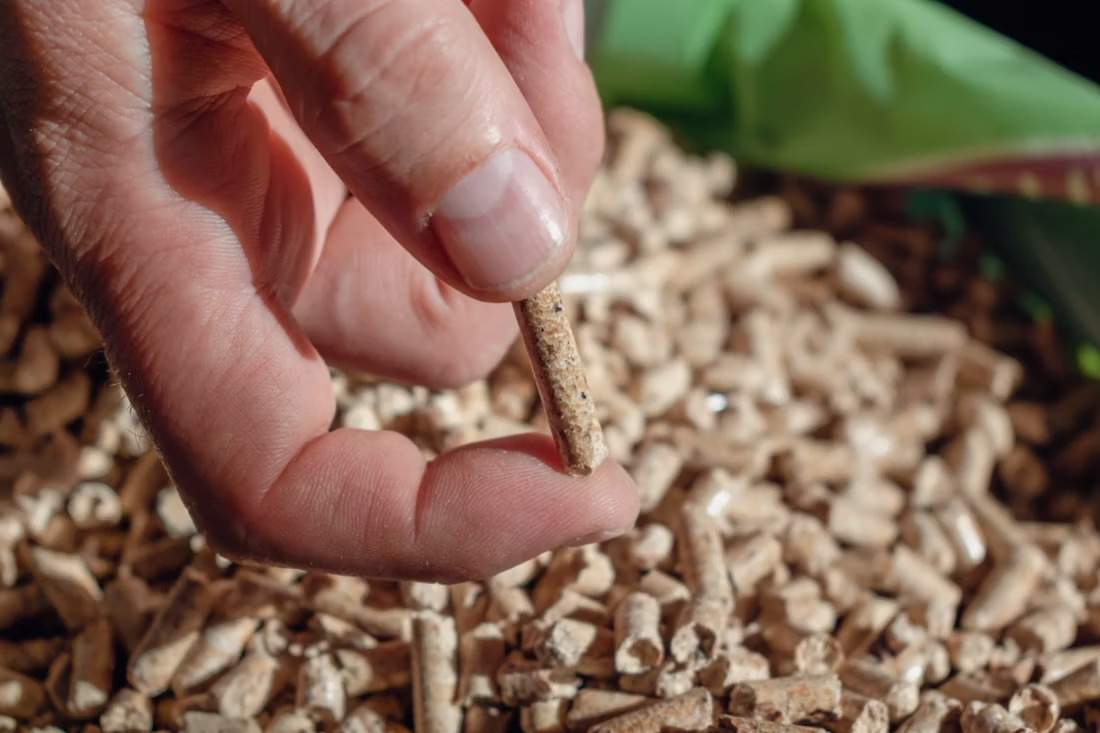
Pellet stoves fit that calculus well. There's no local air quality non-attainment status or wood-burning ordinance complicating things here, so the appeal of pellet heat in Vermilion County comes down to convenience and consistency rather than regulation—load the hopper, set the thermostat, and let the auger do the work. Pellet fuel is also easy to source regionally: Indeck Energy Services operates biomass energy facilities right here in Illinois, and national suppliers like Lignetics and Somerset Pellet Fuel distribute through area hearth and farm-supply retailers. That regional supply chain matters—it's the difference between driving across the state for pellets and picking up a pallet a few miles from home.
Three steps. No salesperson until you're ready.
Tell us about your project
Your zip code, your situation, and the fuel you're leaning toward—or let the answers point you to one.
See what's actually available
The brands dealers within 100 miles genuinely carry—real options, never a catalog mirage.
Get your dealer & Project Guide
A trusted local dealer, plus the free Project Guide & Parts List that names every component of the job.
Frequently Asked Questions
How much does a pellet stove installation cost in Vermilion County?
A typical pellet stove or insert installation in Vermilion County runs between roughly $3,800 and $6,800, depending on the unit, whether it's a freestanding stove or an insert going into an existing masonry fireplace, and how much venting work is involved. Pellet stoves vent through a smaller-diameter pipe than wood stoves and can often exit through a side wall rather than requiring a full chimney, which keeps costs down compared to a wood installation. Installs into an existing fireplace opening with a liner already in decent shape sit at the lower end; new venting runs, electrical work for the auger and blower, or hearth pad upgrades push toward the higher end.
Pellet stove vs. wood stove—which makes more sense for my Vermilion County home?
Wood stoves burn oak, hickory, walnut, and maple—all common species in this part of Illinois—and keep working during a power outage, which matters if you're out past Rossville or Fithian where outages can run longer than in town. Pellet stoves need electricity to run the auger and blower, so they go dark when the power does unless you've got a battery backup or generator. In exchange, pellet stoves offer more consistent, thermostat-controlled heat, less daily tending, and a cleaner burn with far less ash. For most in-town households in Danville, Hoopeston, or Georgetown who want steady background heat without cutting and stacking wood, pellet wins. For rural households where power reliability is a real concern, a lot of homeowners end up keeping wood as backup even if pellet is the primary heat.
Do I need a permit to install a pellet stove in Vermilion County?
Most municipalities and the county building department require a permit for a new pellet stove installation, covering appliance clearances, the venting path, and any electrical work for the unit's auger and blower. Requirements can vary slightly between Danville, Hoopeston, and unincorporated parts of the county, so it's worth confirming with your local jurisdiction before work starts. In practice, most local hearth dealers handle the permit application as part of the installation, so it's rarely something the homeowner has to manage directly.
What size pellet stove do I need for my home?
Sizing depends on square footage, ceiling height, insulation, and whether the stove is your primary heat or a supplemental source. As a rough guide for Vermilion County's climate—a solid Midwest winter heating load and winter lows around 20°F—a small pellet stove (up to around 1,000 square feet) suits a single room or a modest ranch, a medium unit (1,000–2,000 square feet) covers most main living areas in the county's typical single-family homes, and a larger unit handles a well-insulated whole house. Older farmhouses outside Danville and Hoopeston often run drafty, so it's common to size up slightly rather than run a stove at full output all winter. A local dealer will size the unit correctly during an in-home visit—that's a service worth using rather than guessing off a box label.
Where do I buy pellets in Vermilion County, and what do they cost?
Wood pellets in this part of Illinois typically run somewhere in the $230 to $300 per ton range, sold in 40-pound bags by the pallet (usually 50 bags, or one ton, per pallet). Indeck Energy Services, which operates biomass energy facilities in Illinois, supports regional pellet supply, and national brands like Lignetics and Somerset Pellet Fuel are distributed through area hearth shops and farm-supply retailers. A typical heating season for a primary-heat home runs two to three tons; supplemental users burn less. Buying a season's worth in late summer or early fall, before demand picks up, is the most reliable way to avoid running short mid-winter.
Will my pellet stove work during a power outage?
Not without a backup power source. Pellet stoves rely on electricity to run the auger that feeds fuel and the blower that distributes heat, so a standard unit shuts down when the power does. Some homeowners in Vermilion County pair a pellet stove with a small battery backup or portable generator specifically to keep it running through storm-related outages, which happen occasionally across east-central Illinois in winter. If uninterrupted heat during outages is a priority—especially for households in more rural areas like Rossville or Fithian—a wood stove or a pellet unit paired with a generator plan is worth discussing with your dealer.
What's the best pellet stove for Vermilion County's climate?
For a heating season with a solid Midwest winter heating load and winter lows around 20°F, most Vermilion County homes do well with a mid-size pellet stove or insert rated for the 1,500–2,000 square foot range, which covers the typical single-family footprint in Danville, Hoopeston, and the surrounding towns. Look for a unit with a larger hopper capacity if you want longer stretches between refills overnight, and confirm the stove is rated for continuous, cold-weather operation rather than just occasional ambiance use. A local dealer can match hopper size, BTU output, and venting configuration to your specific floor plan.
How much maintenance does a pellet stove need?
Pellet stoves need more routine attention than a gas fireplace but less than a wood stove's annual chimney sweep. Plan on emptying the ash pan every few days during heavy use, cleaning the burn pot weekly, and running a full inspection and deep clean of the exhaust fan, hopper, and venting once a year—typically before the season starts in early fall. Because pellet stoves vent through a smaller pipe rather than a full masonry chimney, the annual service is usually quicker and less expensive than a wood chimney sweep. Local hearth dealers offer this service and can also handle any auger or igniter issues that come up mid-season.
Pellet vs. gas—which is right for my home?
Gas fireplaces offer instant on-off operation with no fuel storage and, with the right ignition system, can run during a power outage. Pellet stoves burn a renewable, often locally sourced fuel, produce a more traditional flame appearance, and typically cost less per BTU to run than propane in areas without natural gas service. Vermilion County has natural gas service in and around Danville and other towns, so a straight cost comparison depends on whether you're on natural gas, propane, or considering pellet as an alternative to either. Households drawn to a real flame with less daily maintenance than a wood stove tend to land on pellet; those prioritizing zero-maintenance, flip-a-switch convenience often choose gas.
What's the difference between an insert and a zero-clearance fireplace?
An insert is a fireplace that slides into a pre-existing wood-burning fireplace—if you don't have one, there's nothing to insert it into. A zero-clearance fireplace is built into a framed wall, which makes it the answer for remodels and new construction. Simple test: existing masonry fireplace means insert; blank or framed wall means zero-clearance.
Why is my open fireplace making my house colder?
Open fireplaces suck—literally. As the fire burns, it consumes air your furnace already paid to heat and pulls it out through the chimney, so the house is actually colder after the fire goes out than before you lit it. An insert fixes this: it seals the chimney, puts fixed glass across the front, and turns that hole in your house into a real heat source.
What is an in-home preview and do I need one?
It's a visit where a hearth professional measures your space, confirms the model you picked actually works in your home, and walks the specs—framing, gas line, venting, finish work—before anything is ordered. Some details you just can't know until you see the house. Never make a down payment without one; it's the single most-skipped step that burns buyers.
Can a fireplace actually lower my heating bill?
Yes—by creating a comfort zone. A furnace heats every square foot of the house just to warm the one room you're in; a gas fireplace on low burns roughly a sixth of the gas a typical furnace does. Set the furnace around 55–60 degrees as a baseline, then heat the rooms your family actually uses. Families who heat this way commonly save $20–$60 a month.
Stove and Fireplace Dealers in Vermilion County
Pellet Brands Stocked Around Vermilion County
Manufacturers will point you to the nearest stocking dealer.
Find your pellet stove in Vermilion County.
Tell us a bit about your home and we'll match you with the right pellet stove or insert, plus a free Project Guide & Parts List—the exact parts, vent kit, and recommended local dealer for your Vermilion County installation.
Find Your Fireplace →