
Pellet Stoves Are Rare in South Beloit—But Not Ruled Out.
South Beloit sees a long, demanding winter season and winter lows near 11°F, but almost nobody here heats primarily with pellets. For the handful who want one—for a workshop, a cabin, or backup heat—we'll match you with a dealer who actually stocks and services them.
Every Project Starts From One of These Five Situations
Natural gas, not pellets, heats most of South Beloit.
South Beloit sits in climate zone 5A on the Illinois-Wisconsin border, just north of Rockford, with a long, demanding winter season and average winter lows around 11°F—genuinely cold winters that call for serious heat. But despite the climate, this is gas-furnace country. Between natural gas service and the two local electric utilities, Commonwealth Edison and Rock Energy Cooperative, most South Beloit homes are already set up with central heat that doesn't involve hauling fuel of any kind. Wood-burning appliances are similarly rare here, even with oak, hickory, walnut, and maple all common in the surrounding Winnebago County woodlots—this just isn't a solid-fuel heating market the way it is farther north or west.
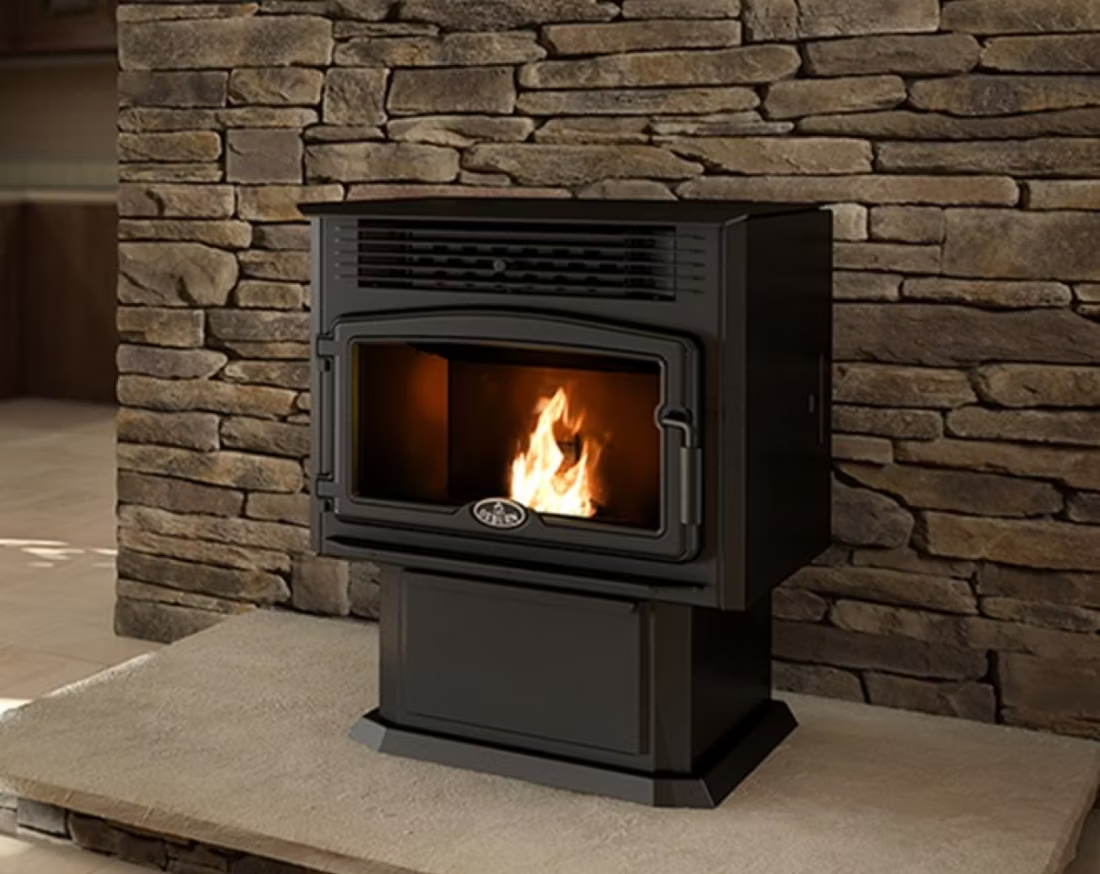
That doesn't mean pellet fuel is unavailable. Regional producers including Indeck Energy Services, Lignetics, and Somerset Pellet Fuel supply the broader Illinois-Wisconsin corridor, so bagged pellets are easy enough to find if you own a stove. What's thin is the local installer and dealer base—most hearth retailers in this market are set up to sell and service gas fireplaces and electric units, not pellet appliances. If you're one of the South Beloit homeowners who wants a pellet stove for a detached workshop, a secondary residence, or as backup heat that doesn't depend on the ComEd or Rock Energy Cooperative grid, the honest first step is finding a dealer who genuinely carries and installs them rather than assuming the nearest big-box hearth shop does. That's exactly the matching problem Find My Fireplace exists to solve.
Three steps. No salesperson until you're ready.
Tell us about your project
Your zip code, your situation, and the fuel you're leaning toward—or let the answers point you to one.
See what's actually available
The brands dealers within 100 miles genuinely carry—real options, never a catalog mirage.
Get your dealer & Project Guide
A trusted local dealer, plus the free Project Guide & Parts List that names every component of the job.
Frequently Asked Questions
Are pellet stoves actually available in South Beloit, or is this a dead end?
They're available, just not common. South Beloit and the surrounding Winnebago County area are overwhelmingly heated with natural gas and electric service, and most local hearth retailers stock gas fireplaces and inserts as their bread and butter. Pellet stove installs do happen—usually in homes without gas access, detached workshops, or as a secondary heat source—but you'll likely need to go through a dealer who serves the wider Rockford metro rather than a shop right in South Beloit. We can point you to one that actually installs and services pellet units rather than just orders one for you and disappears.
What does a pellet stove installation cost in South Beloit?
Because pellet installs are infrequent here, there isn't a deep well of local pricing data the way there is for gas. Nationally, a typical freestanding pellet stove install runs about $3,000 to $6,000 depending on the unit, whether you need a new through-wall vent kit, and any electrical work for the auger and blower circuit. A pellet insert into an existing masonry fireplace tends to land in a similar range. Given how few local dealers handle this fuel, get a firm, in-home quote before assuming a number—it can swing based on how far the installer has to travel and what venting your home already has.
Where can I actually buy pellet fuel near South Beloit?
Bagged pellets from producers like Indeck Energy Services, Lignetics, and Somerset Pellet Fuel circulate throughout the Illinois-Wisconsin corridor, and farm supply stores and hardware retailers around the Rockford metro typically stock them seasonally, especially in fall. Because pellet stoves are uncommon in South Beloit specifically, don't expect every hardware store in town to carry them—calling ahead or checking with a Rockford-area dealer before winter is the safer move than assuming shelf stock in October.
Is a pellet stove a good backup heat source if the power goes out?
Not really, and this matters more than people expect. Pellet stoves need electricity to run the auger that feeds fuel and the blower that circulates heat—no power, no fire, regardless of how many bags of pellets you have on hand. If backup heat during a Commonwealth Edison or Rock Energy Cooperative outage is your main goal, a small battery backup or generator sized for the stove's draw is worth budgeting for, or you may want to look at a gas option with battery-backed ignition instead, since gas service in South Beloit tends to stay reliable through most outages that knock out electricity.
What size pellet stove do I need for a South Beloit home?
With a long, demanding winter season each year, South Beloit's winters are genuinely demanding, so undersizing is the bigger risk here compared to milder climates. As a rough guide, a small unit (up to 1,000 sq ft) suits a single room, workshop, or cabin; a medium unit (1,000–1,800 sq ft) covers most living areas; and anything larger needs a bigger-hopper stove sized by someone who's actually seen your home's insulation and layout. Because so few local dealers install pellet units regularly, an in-home sizing visit from whichever dealer we match you with is worth insisting on rather than guessing off a chart.
Do I need a permit to install a pellet stove in South Beloit?
Yes—a new solid-fuel or pellet-burning appliance typically requires a building permit through the City of South Beloit building department, or the Winnebago County building office if your property falls outside city limits. The permit process is meant to confirm proper venting clearances and electrical work for the stove's blower and auger, not to discourage the install. Most dealers who actually handle pellet installs in this area will pull the permit as part of the job, which is one more reason to work with someone who does this regularly rather than a generalist contractor.
Pellet stove vs. gas fireplace—which makes more sense in South Beloit?
For most South Beloit homes, gas wins on practicality alone: natural gas infrastructure is already in place for most households, gas fireplaces and inserts have a mature local dealer network, and instant on-off operation fits how most people actually use a secondary heat source. Pellet stoves make more sense in specific situations—a detached workshop or outbuilding without gas service, a homeowner who wants to burn a renewable fuel, or a household that specifically wants a stove-style unit rather than a built-in fireplace. If you're simply looking for supplemental warmth in a main living space, start by exploring gas options; if you have one of those specific pellet use cases, we'll route you to a dealer who can actually deliver on it.
Pellet stove vs. electric heater—which is the better backup here?
Electric heat has the edge on simplicity: Commonwealth Edison and Rock Energy Cooperative both serve the area at residential rates of roughly 13.4 to 14.5 cents per kWh, and a plug-in electric heater or installed electric fireplace insert needs no fuel storage, no venting in many cases, and far less maintenance than a pellet appliance. Pellet stoves cost more upfront and require you to store and haul bags of fuel, but they produce more usable heat per dollar in a genuinely cold winter and give you a real flame. If convenience and low install cost matter most, electric is the easier path in South Beloit; if you want real heat output and don't mind the fuel handling, pellet is worth the extra step of finding the right dealer.
If wood and pellet are both uncommon here, what do most South Beloit homeowners actually install?
The honest answer is gas and electric. Natural gas fireplaces and inserts are the standard secondary heat source in this market, and electric fireplaces and heaters fill in wherever gas isn't practical or a homeowner wants something simpler to operate. Solid-fuel appliances—wood or pellet—are the exception rather than the rule around South Beloit, even with a cold climate and long heating season that would support them. If you land on this page because you specifically want pellet heat, that's a legitimate choice for the right situation, but go in knowing you're outside the mainstream local market, and lean on a matched dealer who has real experience with the fuel rather than one who rarely touches it.
Why is my open fireplace making my house colder?
Open fireplaces suck—literally. As the fire burns, it consumes air your furnace already paid to heat and pulls it out through the chimney, so the house is actually colder after the fire goes out than before you lit it. An insert fixes this: it seals the chimney, puts fixed glass across the front, and turns that hole in your house into a real heat source.
Are pellet stoves loud?
They make some noise—there are two fans running plus an auger motor that turns as it feeds pellets. But there's a real range: premium models are engineered quiet, and the best offer a whisper-quiet mode you can comfortably watch TV next to. If noise matters in your room, ask to hear a stove running before you buy—it's a five-minute test that saves years of annoyance.
Can I install a fireplace myself?
If you're putting a fire in your house on purpose, it's best to work with an expert. Unless you're genuinely experienced in framing, gas line, vent pipe, and the national code on clearances to combustibles, have a professional do it—and ideally the same company that sells you the fireplace, so warranty, service, and liability all live under one roof.
Can a fireplace actually lower my heating bill?
Yes—by creating a comfort zone. A furnace heats every square foot of the house just to warm the one room you're in; a gas fireplace on low burns roughly a sixth of the gas a typical furnace does. Set the furnace around 55–60 degrees as a baseline, then heat the rooms your family actually uses. Families who heat this way commonly save $20–$60 a month.
Nearby Dealers
Hearth shops serving South Beloit and the surrounding area. Every listing shows whether it is a WhyFire partner, a dealer we have verified as authorized for the brands we recommend, or a local business carrying hearth products. No manufacturer pays for placement. How we verify dealers →
Janesville Brick & Tile
The Fireworks Store
Al Beyers Indoor Comfort Systems
Advanced Chimney Systems
R & W Heating
Pellet Brands Stocked Around South Beloit
Manufacturers will point you to the nearest stocking dealer.
Find your pellet stove match in South Beloit.
Tell us about your home, your workshop, or your backup-heat goals, and we'll match you with a local dealer who genuinely stocks and installs pellet appliances—plus a free Project Guide & Parts List with the exact vent kit and parts your install needs.
Find Your Fireplace →