
Electric Heat That Fits Any Rolling Meadows Home.
No chimney, no gas line, no permit headaches—just plug in and add warmth. Find the right unit for your Rolling Meadows condo, townhome, or single-family home, and connect with a trusted local dealer.
Every Project Starts From One of These Five Situations
The plug-in alternative for condos, townhomes, and busy households.
Rolling Meadows sits in Cook County's dense northwest suburbs, in climate zone 5A with a heating season that runs long and cold, with winter lows that average around 18°F—a heating demand in the same ballpark as Madison, WI. But wood and pellet heat never really took hold here the way they have in more rural parts of the Midwest: there's no nearby public cutting land, lots are tight, and most homes were built without masonry chimneys. Wood stoves and pellet appliances are essentially not part of the local hearth market.
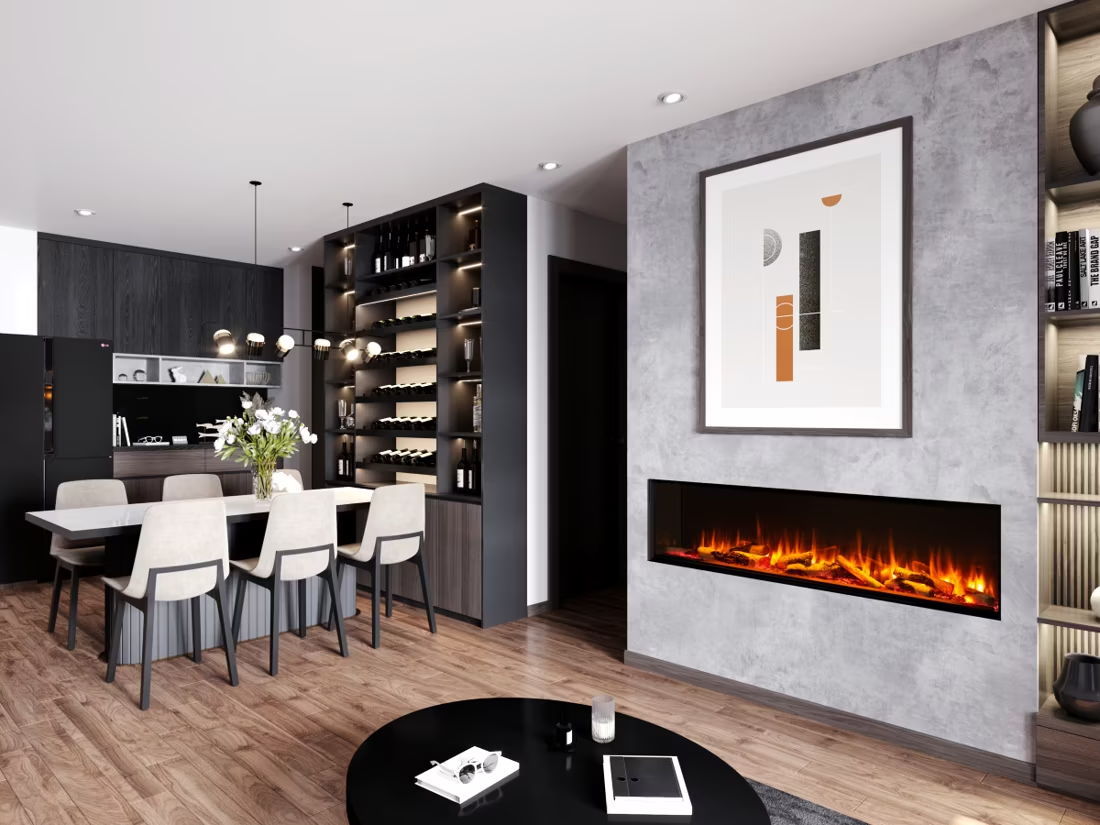
Electric fireplaces fill that gap well. They run on standard household current through Commonwealth Edison, require no venting or gas line, and satisfy the no-open-flame rules that many Rolling Meadows condo associations and townhome HOAs enforce. Whether it's a wall-mounted unit in a living room, a built-in linear fireplace in a remodel, or a freestanding insert in an existing fireplace opening, electric heat gives you real ambiance and useful zone heat without a permit fight or a chimney sweep on the calendar.
Three steps. No salesperson until you're ready.
Tell us about your project
Your zip code, your situation, and the fuel you're leaning toward—or let the answers point you to one.
See what's actually available
The brands dealers within 100 miles genuinely carry—real options, never a catalog mirage.
Get your dealer & Project Guide
A trusted local dealer, plus the free Project Guide & Parts List that names every component of the job.
Frequently Asked Questions
How much does an electric fireplace installation cost in Rolling Meadows?
Plug-in electric fireplaces and inserts that use a standard 120V outlet typically run $300 to $1,200 installed, since there's often no electrical work beyond mounting. Built-in linear units or larger wall installations that require a dedicated circuit, in-wall wiring, or drywall and framing work usually land between $1,500 and $3,500 once an electrician is involved. Because Rolling Meadows has a mix of 1960s-70s ranch homes and newer townhome and condo construction, the electrical panel capacity varies a lot from property to property—a local installer will check your panel before quoting a built-in unit.
Do I need a permit to install an electric fireplace in Rolling Meadows?
Most plug-in electric fireplaces need no permit at all—they're treated like any other appliance you plug into an existing outlet. If your project involves running a new dedicated circuit, adding an outlet behind a mantel, or doing any wall framing for a built-in unit, that electrical work falls under the City of Rolling Meadows Building Division and requires a licensed electrician to pull an electrical permit. Condo and townhome owners should also check with their HOA, since some associations require sign-off on any interior wall modification even when no city permit is needed.
How much does it cost to run an electric fireplace with ComEd rates?
Commonwealth Edison's residential rate in the Rolling Meadows area runs about $0.1339 per kWh. A typical 1,500-watt electric fireplace on high heat costs roughly 20 cents an hour to run, or about $1.60 for an 8-hour evening of use. Most electric fireplaces let you run the flame effect alone (a few watts) without the heater engaged, so you can get the ambiance for pennies a day and save the heat setting for when you actually want the warmth.
Can an electric fireplace actually heat a room in a Chicago-area winter?
Yes, as supplemental zone heat—not as your only heat source. A 1,500-watt unit puts out around 5,100 BTUs, enough to noticeably warm a single room (roughly 300-400 sq ft) but not enough to replace a furnace when outdoor temps drop into the teens, which happens routinely in a Rolling Meadows winter. Most homeowners here use electric fireplaces to take the edge off a chilly family room or bonus space while the furnace handles the rest of the house, or to add heat to a converted basement or sunroom that's on its own thermostat zone.
Why isn't wood or pellet heat common in Rolling Meadows?
Rolling Meadows is fully built-out suburban Cook County—there's no public forest land nearby for cutting permits, most homes were built without wood-burning chimneys, and lot sizes leave little room for cordwood or pellet storage. A handful of older homes in the area do have factory-built wood fireplaces from their original construction, but new wood or pellet installations are rare here compared to more rural parts of Illinois. Electric fireplaces and gas units have effectively become the standard choice for homeowners who want a fireplace feature.
Electric vs. gas fireplace—which makes more sense for my Rolling Meadows home?
Gas fireplaces deliver more real heat output and work during power outages if paired with a battery-backup ignition system, but they require a gas line and venting work, plus a building and gas permit through the city. Electric fireplaces skip all of that—no gas line, no venting, and installation that a plug-in unit can complete in an afternoon—but they're supplemental heat only and stop working if the power goes out. For condo and townhome owners where running new gas lines isn't practical or allowed, electric is usually the simpler path. For single-family homeowners doing a fireplace remodel who want serious heat output, gas is often worth the extra installation complexity.
How long does an electric fireplace installation take?
A plug-in freestanding or insert-style electric fireplace can usually be installed the same day you buy it—it's mount-and-plug-in work with no inspection required. A built-in wall unit or linear fireplace that needs a new circuit, an electrician, and possibly drywall patching typically takes one to two weeks from consultation to finished install, once you account for scheduling the electrician and any permit sign-off through the city.
Are there any ComEd rebates for electric fireplaces?
ComEd's energy efficiency programs periodically offer rebates on ENERGY STAR-qualified electric heating appliances and smart thermostats, though standalone electric fireplaces aren't always a featured category since they're a supplemental rather than primary heat source. It's worth checking ComEd's current residential rebate catalog before you buy, and asking your local dealer whether the specific model you're considering qualifies—rebate lists change from year to year.
What size electric fireplace do I need for my room?
Electric fireplace sizing is more about visual fit than raw heat output, since the heater component is usually 1,500 watts regardless of the unit's size. As a rule of thumb, a 30-40 inch wide unit suits a smaller room or bedroom, a 50-60 inch linear unit fits a standard living room wall, and 70+ inch units work for great rooms or as a focal point above a TV mount in an open-concept space common in newer Rolling Meadows townhomes. A local dealer can walk through your wall dimensions and mounting height during a quick consultation.
Does an electric fireplace need a vent or chimney?
No—that's its superpower. An electric fireplace needs a wall and an outlet, period. No vent pipe, no gas line, no clearances to design around, which is why it works in bedrooms, offices, apartments, and walls where venting a gas or wood unit would be impractical or impossible. Installation is typically the simplest and least expensive of any fireplace type.
Can I put a TV above my fireplace?
Yes—with an asterisk. Fireplaces are hot and TVs don't like heat. Either put a mantel between them to deflect rising warmth, or choose a fireplace with heat-management technology that creates a cool zone on the wall above—the wall stays around 125 degrees, barely warm, while the room still gets full heat. If you like clean lines and don't want a mantel, heat management is the answer.
Does a fireplace add value to my home?
On average, a fireplace adds back to the home about the same amount you spent installing it. Add the monthly savings from heating the rooms you actually use instead of the whole house—often hundreds of dollars a year—and the value case is strong before you even count what a fire does for how your family uses the room.
Can a fireplace actually lower my heating bill?
Yes—by creating a comfort zone. A furnace heats every square foot of the house just to warm the one room you're in; a gas fireplace on low burns roughly a sixth of the gas a typical furnace does. Set the furnace around 55–60 degrees as a baseline, then heat the rooms your family actually uses. Families who heat this way commonly save $20–$60 a month.
Nearby Dealers
Hearth shops serving Rolling Meadows and the surrounding area.
Fireside Collection By Fireplaces Plus
Electric Service in Rolling Meadows
An electric fireplace's heater draws about 1,500 watts—pennies per hour at local rates.
Commonwealth Edison Co
Find your electric fireplace in Rolling Meadows.
Tell us a bit about your home and we'll match you with the right electric fireplace or insert, plus a free Project Guide & Parts List and a trusted local dealer to install it.
Find Your Fireplace →