
A Niche Heat Source for Quad Cities Homes.
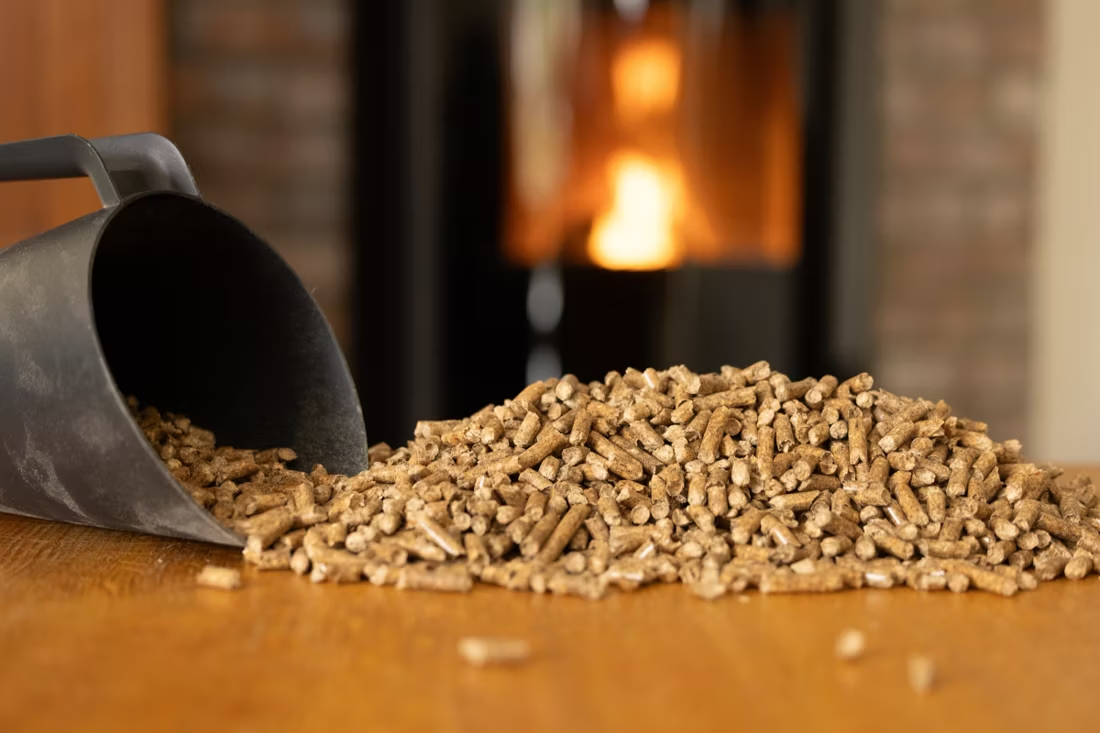
Pellet stoves aren't the default choice in Rock Island, but for the right home—off-grid cabins, allergy-sensitive burners, or anyone wanting hopper-fed convenience—they still make sense. We'll help you find out if one fits yours.
Every Project Starts From One of These Five Situations
Gas dominates the Quad Cities hearth market.
Rock Island sits along the Mississippi in the heart of the Quad Cities, at just 623 feet of elevation but with a real winter—a long, cold heating season and average lows around 15°F, a climate profile not far off from Madison, WI. That's cold enough that supplemental heat matters in a lot of homes. But unlike forested corners of the upper Midwest where wood and pellet stoves are a household fixture, Rock Island's building stock leans heavily on natural gas, and pellet appliances remain a minority choice—flagged as a niche fit here rather than a mainstream one.
That's a little counterintuitive given the region: Rock Island County's river-bottom hardwoods—oak, hickory, walnut, maple—would make for excellent firewood, and Illinois is actually home to pellet producers like Indeck Energy Services and Somerset Pellet Fuel, with Lignetics also distributing regionally. So the pellets themselves are available. What's missing locally is broad installer demand—with no air-quality mandates pushing homeowners toward cleaner-burning appliances, and natural gas infrastructure reaching most of the city, most Rock Island homeowners solve their hearth needs with a gas insert or fireplace instead. Pellet stoves still show up in specific situations: rural properties without natural gas access, homeowners who want the visual of a real flame without cordwood handling, or backup heat for outages when paired with a small battery source for the auger and blower.
Three steps. No salesperson until you're ready.
Tell us about your project
Your zip code, your situation, and the fuel you're leaning toward—or let the answers point you to one.
See what's actually available
The brands dealers within 100 miles genuinely carry—real options, never a catalog mirage.
Get your dealer & Project Guide
A trusted local dealer, plus the free Project Guide & Parts List that names every component of the job.
Frequently Asked Questions
Are pellet stoves actually available in Rock Island, or is this a rare install?
Pellet stoves are installed in Rock Island, but they're genuinely uncommon compared to gas inserts and fireplaces, which dominate the local hearth market. You won't find pellet units on every hearth showroom floor here the way you would in, say, rural Wisconsin or Minnesota. If you want one, plan to work with a dealer who explicitly stocks and services pellet appliances rather than assuming any hearth shop in the Quad Cities carries them—we'll match you with one who does.
How much does a pellet stove installation cost in Rock Island?
In markets where pellet stoves are a standard offering, installations typically run $3,500 to $6,500 depending on the unit, hopper size, and whether venting through an exterior wall or existing chimney is needed. In Rock Island, expect a bit more variability than that since fewer dealers stock pellet units regularly—get a firm, in-home quote from whichever local hearth retailer actually carries and services pellet appliances rather than assuming a flat regional price.
Where do I buy pellets in Rock Island?
Pellet fuel itself isn't hard to source even though the stoves are less common—Illinois has regional producers including Indeck Energy Services and Somerset Pellet Fuel, and Lignetics distributes widely through the Midwest. Most owners buy by the ton (roughly 50 forty-pound bags) from farm supply stores, hardware chains, or direct from a distributor, with local delivery available seasonally. Because demand is lower here than in pellet-heavy regions, it's worth confirming stock ahead of the first cold stretch rather than waiting until January.
Should I get a pellet stove or a gas insert in Rock Island?
For most Rock Island homes, gas wins on convenience and availability—natural gas service reaches most of the city, and local hearth dealers are set up to sell, install, and service gas units routinely. Pellet stoves make more sense in specific cases: homes without gas access, owners who want a real flame and the smell of a wood fire without cordwood handling, or anyone who likes the idea of a hopper that only needs refilling every day or two rather than hourly tending. If your main goal is set-it-and-forget-it heat with minimal fuss, a gas insert is the more common local answer.
Will a pellet stove work if the power goes out?
Not on its own—pellet stoves rely on electricity to run the auger that feeds fuel and the blower that circulates heat, so a standard unit stops working in an outage. Homeowners who want pellet heat as backup during Quad Cities ice storms typically pair the stove with a small battery backup or generator; at MidAmerican Energy's residential rate of roughly $0.11/kWh, running a pellet stove's fan and auger off a battery inverter is inexpensive once you have the hardware. If outage-proof heat is the priority, a wood stove or a gas unit with battery-backed ignition is usually the more reliable choice.
Do I need a permit to install a pellet stove in Rock Island?
Most likely yes—new hearth appliance installations typically require a building permit, and because pellet stoves vent similarly to wood stoves (through a wall or existing chimney), your installer will need to meet clearance and venting code. Confirm specifics with the City of Rock Island's building department before work starts. Because pellet installs are less routine here than gas, it's worth choosing a dealer who has actually pulled pellet-stove permits locally before, rather than one guessing at the process.
What size pellet stove do I need for a Rock Island winter?
Rock Island's long, cold heating season and average winter lows around 15°F put it in a climate similar to Madison, WI—cold enough that a pellet stove sized only for mild-weather ambiance will fall short on the coldest nights. As a rough guide, stoves rated for 1,000 to 1,500 square feet suit a single room or supplemental setup, while 2,000+ square foot ratings are needed for whole-home heating in an older, less-insulated house. Because pellet dealers are scarcer here, lean on the retailer's in-home consultation to size correctly rather than guessing from a box rating.
How often does a pellet stove need cleaning and service?
Pellet stoves need more frequent attention than a gas unit but less than a wood stove: the ash pan should be emptied every few days of regular use, the burn pot cleaned weekly, and the exhaust venting and hopper inspected at least once a season by a technician. Because service techs specializing in pellet appliances are less common in Rock Island than gas technicians, ask your dealer upfront whether they handle ongoing service or only the initial sale and install—that distinction matters more here than in pellet-dense markets.
Why are both wood and pellet stoves rare in Rock Island when the region has plenty of hardwood?
It's a fair contradiction—Rock Island County's oak, hickory, walnut, and maple would make fine firewood, and pellets are even manufactured regionally. But local demand for wood-burning and pellet appliances stays low mainly because natural gas infrastructure covers most of the city and there's no air-quality mandate here pushing households toward cleaner-burning alternatives, unlike Western wildfire-smoke regions where pellet stoves get an extra push. The result is a hearth market built around gas, with wood and pellet appliances serving a smaller set of homeowners—often rural properties, cabins, or people specifically choosing the experience of a real flame.
What's the difference between an insert and a zero-clearance fireplace?
An insert is a fireplace that slides into a pre-existing wood-burning fireplace—if you don't have one, there's nothing to insert it into. A zero-clearance fireplace is built into a framed wall, which makes it the answer for remodels and new construction. Simple test: existing masonry fireplace means insert; blank or framed wall means zero-clearance.
Why is a fireplace insert so efficient?
An insert does two things: it seals the chimney completely, so you stop losing air you already paid to heat, and it radiates warmth into the room through the firebox and glass. Most add a heat-exchange fan that pulls cool room air underneath, wraps it around the hot firebox, and pushes it back out warm. Your home is more efficient before you've even lit the first fire.
Can a fireplace actually lower my heating bill?
Yes—by creating a comfort zone. A furnace heats every square foot of the house just to warm the one room you're in; a gas fireplace on low burns roughly a sixth of the gas a typical furnace does. Set the furnace around 55–60 degrees as a baseline, then heat the rooms your family actually uses. Families who heat this way commonly save $20–$60 a month.
How much should I budget for a fireplace?
For an average home—covering the fireplace, the vent pipe, and basic installation—a budget between $3,900 and $5,500 gives you a lot of options across wood, gas, and pellet. By the time you add finish work, gas line, and electrical, the average complete installation lands between $5,000 and $12,000 all-in. In a remodel or new build, a good rule is to put about 2.5% of the total project cost toward the fireplace.
Nearby Dealers
Hearth shops serving Rock Island and the surrounding area.
Pellet Brands Stocked Around Rock Island
Manufacturers will point you to the nearest stocking dealer.
Get your Rock Island pellet stove Project Guide & Parts List.
Tell us about your home and we'll match you with a local dealer who actually stocks and services pellet stoves in the Quad Cities—plus a free Project Guide & Parts List covering your exact vent kit and parts.
Find Your Fireplace →