
Instant Heat for Quincy's Historic Homes—Any Room, Any Outlet.
No chimney, no gas line, no exterior venting—just plug-in warmth for the bluff-top homes and newer builds of Quincy. Find the right unit and connect with a trusted local dealer.
Every Project Starts From One of These Five Situations
Zone heating without the venting headaches.
Quincy sits on the bluffs above the Mississippi River in west-central Illinois, at a modest 633 feet of elevation but with a real winter—average lows around 19°F and a long heating season that puts it in the same general cold-climate range as southern Wisconsin cities like Madison. Many homes in the East End and Downtown Quincy Historic District are Victorian and early-1900s construction, often with fireplace openings that no longer have a working flue, or with additions and sunporches that were never built with a chimney at all.
That's where electric fireplaces fill a real gap. Because they need no venting, chimney, or gas line, they work in rooms where a wood or gas retrofit would mean tearing into a historic facade or running new gas piping. Ameren Illinois serves most of the city and Adams Electric Cooperative covers the surrounding rural county, both at a residential rate around $0.1176 per kWh—inexpensive enough that running one for supplemental evening heat in a single room rarely shows up as a noticeable bump on the bill.
Three steps. No salesperson until you're ready.
Tell us about your project
Your zip code, your situation, and the fuel you're leaning toward—or let the answers point you to one.
See what's actually available
The brands dealers within 100 miles genuinely carry—real options, never a catalog mirage.
Get your dealer & Project Guide
A trusted local dealer, plus the free Project Guide & Parts List that names every component of the job.
Frequently Asked Questions
How much does an electric fireplace installation cost in Quincy?
Costs in Quincy typically range from $300 to $2,500 depending on the type of unit. A basic plug-in freestanding electric stove or mantel package needs no electrician and no permit—just an outlet—and lands on the low end. A wall-mounted linear fireplace or a zero-clearance built-in unit set into a framed wall usually calls for a dedicated 120-volt or 240-volt circuit, which adds an electrician's time and pushes cost toward $1,500 to $2,500. Electric inserts sized to slide into an existing masonry firebox—common in the East End and Downtown historic homes—generally fall in the middle, around $600 to $1,500 installed.
Do I need a permit to install an electric fireplace in Quincy?
In most cases, no. A plug-in electric fireplace or insert that runs off a standard household outlet doesn't require a building or electrical permit in Quincy or unincorporated Adams County. If your installation calls for a new dedicated circuit—common with larger built-in linear units—that electrical work typically needs a permit through the City of Quincy Building & Zoning Department and should be pulled by a licensed electrician. Because there's no venting, chimney, or gas line involved, electric installations skip the multi-trade permitting that wood or gas projects require.
Electric vs. gas—which is right for my Quincy home?
Quincy sits in a natural gas service area, and gas fireplaces remain a solid choice for whole-room heat, especially in homes already piped for a furnace or water heater. But electric has real advantages in specific situations: rentals and apartments where gas line work isn't an option, additions or bonus rooms without existing venting, and historic homes in the East End or Downtown Quincy Historic District where exterior venting could compromise a protected facade. Electric units also cost far less to install since there's no gas line or flue to run. For primary heat output in a drafty older home, gas usually wins; for supplemental zone heat or ambiance without construction, electric is often the simpler answer.
How much of my home can an electric fireplace actually heat?
Most electric fireplaces are built for zone heating, not whole-house heat—typically rated for 400 to 1,000 square feet, depending on the unit's wattage (usually 1,500 watts, standard for a 120-volt model). With Quincy's winter lows averaging 19°F and a heating season that logs roughly 5,350 degree days a year, an electric fireplace works well as a supplement to central heat in a single room—a living room, bedroom, or converted sunporch—but it isn't sized to replace a furnace on the coldest nights.
What will it cost to run an electric fireplace in Quincy?
Running costs are easy to pencil out. Most electric fireplaces draw about 1,500 watts on the heat setting. At Ameren Illinois' typical residential rate of roughly $0.1176 per kWh, that's about 18 cents an hour—under $1.50 for a five-hour evening of use. Customers served by Adams Electric Cooperative in the rural parts of the county will see a similar rate. Zone-heating one occupied room with an electric fireplace is usually cheaper than running a furnace to warm the whole house on a night when you only need one space comfortable.
Built-in, insert, wall-mount, or freestanding—which style should I choose?
It depends on what you're starting with. A freestanding electric stove is the simplest option—plug it in and it can move with you. An electric insert is built to slide into an existing masonry or prefab firebox, common in older Quincy homes that still have a fireplace opening but no working chimney. A wall-mount linear unit hangs flush like a piece of art and suits newer construction or remodels. A full built-in unit gets recessed into a framed wall for the most seamless look but takes the most carpentry and usually a dedicated circuit. A local dealer can walk your specific room and tell you which fits best.
Can an electric fireplace serve as my main heat source during a Quincy winter?
Not reliably as a whole-house solution. With average lows around 19°F and a heating season that runs from October through April, most Quincy homes still need a furnace or gas system for whole-house heat. Electric fireplaces excel at zone heating—keeping one room comfortable without running the whole system—but a standard 1,500-watt unit won't heat a 2,000-square-foot house on its own. Where electric units do earn their keep is during ice-storm power outages, when a portable model plugged into a generator can keep one room livable, but that's a different job than day-to-day primary heat.
What's the best electric fireplace for an older Quincy home?
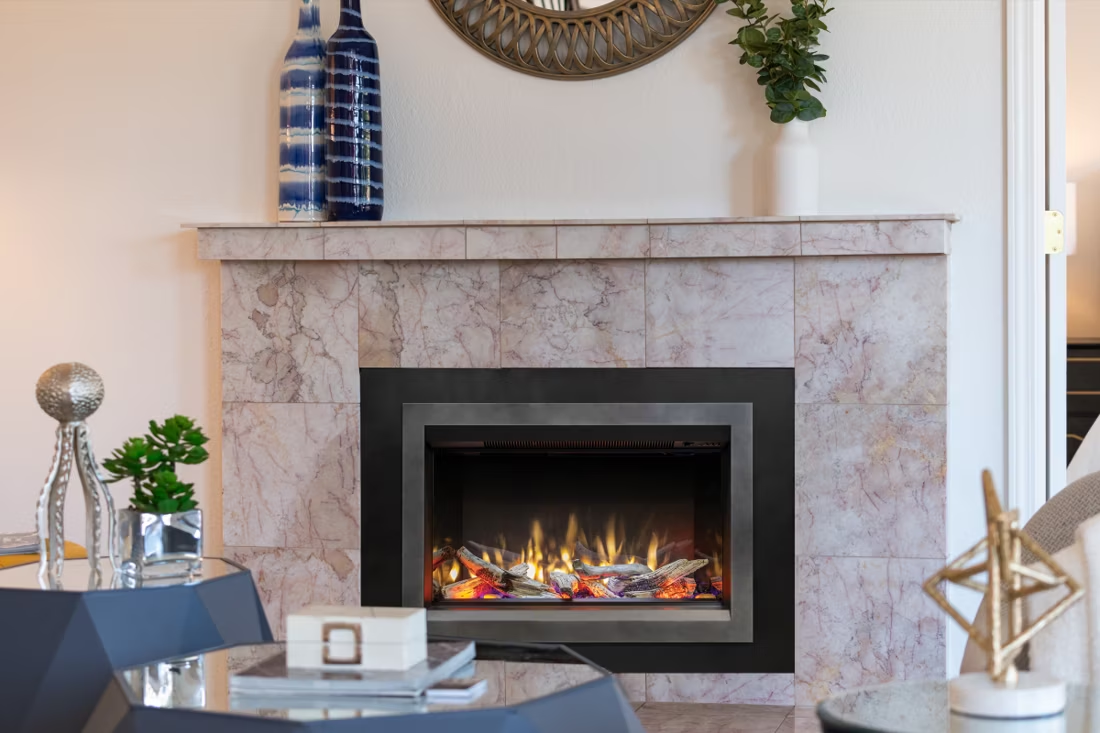
For homes in Quincy's historic districts with an existing but unused masonry fireplace, an electric insert is usually the cleanest fit—it slides into the firebox opening with no exterior venting or facade changes, which matters if the home falls under historic preservation guidelines. Look for models with realistic LED log sets styled after the hardwoods common to west-central Illinois—oak, hickory, walnut, and maple—for a flame effect that reads as a real wood fire even though nothing is actually burning. Dimplex and ClassicFlame are two brands with strong flame-realism track records and are widely stocked by regional hearth dealers.
Why don't more Quincy homes use wood or pellet stoves?
Solid-fuel appliances are less common in Quincy than in more rural or heavily forested parts of the Midwest, largely because most in-town housing sits on smaller lots where clearances, chimney access, and fuel storage are harder to accommodate, and natural gas service through Ameren Illinois is already well established. That's not to say wood heat doesn't exist here—some outlying Adams County properties still burn oak and hickory cordwood—but within city limits, gas and electric are the two fuels local dealers install most often. If you're weighing the two, electric is the lower-cost, lower-maintenance option for supplemental heat, while gas delivers more whole-room output.
Can I put a TV above my fireplace?
Yes—with an asterisk. Fireplaces are hot and TVs don't like heat. Either put a mantel between them to deflect rising warmth, or choose a fireplace with heat-management technology that creates a cool zone on the wall above—the wall stays around 125 degrees, barely warm, while the room still gets full heat. If you like clean lines and don't want a mantel, heat management is the answer.
Does an electric fireplace need a vent or chimney?
No—that's its superpower. An electric fireplace needs a wall and an outlet, period. No vent pipe, no gas line, no clearances to design around, which is why it works in bedrooms, offices, apartments, and walls where venting a gas or wood unit would be impractical or impossible. Installation is typically the simplest and least expensive of any fireplace type.
What is an in-home preview and do I need one?
It's a visit where a hearth professional measures your space, confirms the model you picked actually works in your home, and walks the specs—framing, gas line, venting, finish work—before anything is ordered. Some details you just can't know until you see the house. Never make a down payment without one; it's the single most-skipped step that burns buyers.
Does a fireplace add value to my home?
On average, a fireplace adds back to the home about the same amount you spent installing it. Add the monthly savings from heating the rooms you actually use instead of the whole house—often hundreds of dollars a year—and the value case is strong before you even count what a fire does for how your family uses the room.
Nearby Dealers
Hearth shops serving Quincy and the surrounding area.
Electric Service in Quincy
An electric fireplace's heater draws about 1,500 watts—pennies per hour at local rates.
Ameren Illinois Company
Adams Electric Coop
Find your electric fireplace in Quincy.
Tell us a bit about your home and we'll match you with a trusted local dealer and send over a free Project Guide & Parts List—the right electric fireplace or insert for your Quincy space, plus your recommended installer.
Find Your Fireplace →