
Find the right gas fireplace for your Pulaski County home.
From Mound City to Villa Ridge to the rural stretches along the Cache River, Pulaski County homeowners are turning to gas for clean, instant heat. We'll match you with a trusted local dealer who can size, permit, and install it right.
Every Project Starts From One of These Five Situations
Convenient heat for southern Illinois winters.
Pulaski County sits at the southern tip of Illinois, in climate zone 4A—winters here are milder than in the northern half of the state, but still cold enough that a supplemental heat source matters, especially during the ice storms that occasionally roll through the Ohio and Mississippi River confluence area. With a population under 3,500 spread across small towns like Mound City, Ullin, and Villa Ridge, most homes here are older housing stock or modest single-family construction, where a gas fireplace or insert is often the most practical upgrade to an existing masonry hearth.
Whether your home already has natural gas service or relies on propane out in the county's more rural stretches, a direct-vent gas fireplace delivers heat at the flip of a switch—no wood splitting, no ash cleanup, and no risk of a cold, smoky start on a January morning. For a county without major air quality restrictions on burning, the appeal of gas here comes down to convenience and lower-maintenance heat rather than any regulatory push away from wood.
Three steps. No salesperson until you're ready.
Tell us about your project
Your zip code, your situation, and the fuel you're leaning toward—or let the answers point you to one.
See what's actually available
The brands dealers within 100 miles genuinely carry—real options, never a catalog mirage.
Get your dealer & Project Guide
A trusted local dealer, plus the free Project Guide & Parts List that names every component of the job.
Frequently Asked Questions
How much does a gas fireplace installation cost in Pulaski County?
Costs vary depending on whether you're converting an existing masonry fireplace, installing new construction venting, or extending a gas line from a propane tank. A straightforward direct-vent insert into an existing chimney with gas already run to the room tends to land on the lower end of the typical range; a new-build installation with framing and a fresh gas or propane line runs higher. Given Pulaski County's smaller population and rural geography, expect a slightly longer wait for scheduling and a possible modest travel charge if you're out toward the county line. A local dealer will give you a firm number after an in-home look at your chimney and gas access.
Can I convert my existing wood fireplace to gas?
Yes, and it's a common project for the older masonry fireplaces found throughout Mound City and the surrounding towns. A gas insert slides into the existing firebox and vents through the chimney using a stainless liner, so you keep the look of your existing hearth while gaining instant, consistent heat. The main cost variable locally is whether the home already has a gas line nearby—homes on propane will need tank placement or a line extension considered as part of the quote.
Do I need natural gas, or can I use propane?
Either works, and which one you use likely comes down to where in Pulaski County you live. Homes closer to town in Mound City or Villa Ridge may have natural gas access; homes further out in the county's rural areas typically rely on propane, either from an existing tank or a new tank set by a local propane supplier. Most gas fireplace models can be configured for either fuel with the correct orifice and regulator—your installer handles that setup regardless of which fuel you're on.
Will my gas fireplace still work if the power goes out?
Most modern gas fireplaces will, which matters in a county that sees occasional ice storms and downed lines along the river bottoms. Units with intermittent pilot ignition (IPI) run on a battery backup that kicks in the moment power drops, so the fireplace lights and operates normally. Valor fireplaces go a step further—their pilot generates its own electricity through a thermocouple, so there are no batteries to remember at all. If backup heat during outages is a priority for your home, ask your local dealer about the ignition system on any unit you're considering.
What's the difference between a gas fireplace, insert, and stove?
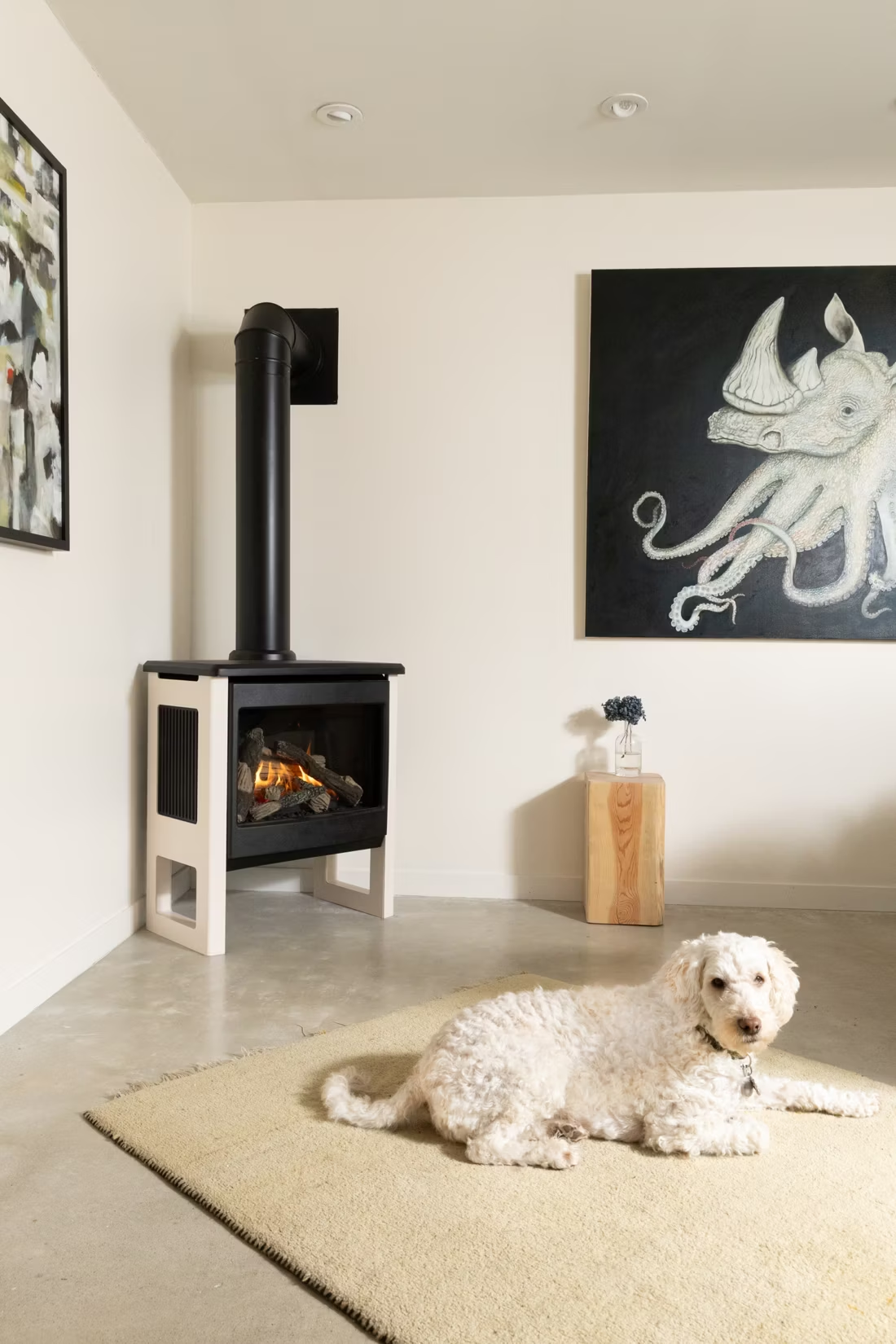
A gas fireplace is a fully built-in unit, framed into a wall—the right call for new construction or a remodel without an existing hearth. A gas insert fits into an existing masonry fireplace and uses the chimney as its vent path, which suits the older homes common throughout Pulaski County. A gas stove is a freestanding cabinet-style unit that sits on the floor, similar in footprint to a wood stove but running on gas. For most homeowners here upgrading a fireplace that's already in the house, an insert is the straightforward answer.
Do I need a permit to install a gas fireplace in Pulaski County?
Gas line work requires a licensed gas-fitter, and most jurisdictions require a permit for new gas appliance installations and any gas line modifications. Given the small scale of local government here, permitting can move faster than in larger counties, but it still needs to happen—and a certified local dealer will typically handle the permit and inspection coordination as part of the install rather than leaving you to sort it out with multiple trades.
What's the difference between vented and vent-free gas fireplaces?
Vented (direct-vent) fireplaces pull combustion air from outside and exhaust gases back outside through a sealed system—they're the safer, more universally code-compliant choice, and by far the most common option installed in southern Illinois homes. Vent-free units burn fuel directly into the room without external venting; they're legal in Illinois but come with strict room-sizing and ventilation requirements, and some homeowners are uncomfortable with byproducts released indoors. For Pulaski County homes, direct-vent units are what most local dealers will steer you toward, though it's worth asking about both if you're weighing the tradeoffs.
How often should my gas fireplace be serviced?
An annual inspection is the standard recommendation for any gas fireplace or insert. A technician checks the burner, pilot assembly, venting, and gas connections, and cleans the glass and interior—a quick job compared to a wood chimney sweep, but still important for safe operation. With Pulaski County's smaller population, there may be fewer service providers close by than in a larger county, so it's worth scheduling your annual service early in the fall before demand picks up.
Gas vs. wood—which is right for my Pulaski County home?
Wood is deeply practical here—oak, hickory, walnut, and maple are all common locally, and a wood stove or fireplace insert keeps running with no dependence on gas lines or electricity, which matters during ice storms. Gas offers instant, consistent heat with none of the splitting, stacking, or ash cleanup, and it's often the easier upgrade for an existing masonry fireplace in an older home. Since Pulaski County has no air quality restrictions pushing homeowners away from wood, the choice here really comes down to convenience versus the self-sufficiency of a wood-burning setup. Plenty of local homes end up with both.
Can I put a TV above my fireplace?
Yes—with an asterisk. Fireplaces are hot and TVs don't like heat. Either put a mantel between them to deflect rising warmth, or choose a fireplace with heat-management technology that creates a cool zone on the wall above—the wall stays around 125 degrees, barely warm, while the room still gets full heat. If you like clean lines and don't want a mantel, heat management is the answer.
What's the difference between an insert and a zero-clearance fireplace?
An insert is a fireplace that slides into a pre-existing wood-burning fireplace—if you don't have one, there's nothing to insert it into. A zero-clearance fireplace is built into a framed wall, which makes it the answer for remodels and new construction. Simple test: existing masonry fireplace means insert; blank or framed wall means zero-clearance.
How much should I budget for a fireplace?
For an average home—covering the fireplace, the vent pipe, and basic installation—a budget between $3,900 and $5,500 gives you a lot of options across wood, gas, and pellet. By the time you add finish work, gas line, and electrical, the average complete installation lands between $5,000 and $12,000 all-in. In a remodel or new build, a good rule is to put about 2.5% of the total project cost toward the fireplace.
Does a fireplace add value to my home?
On average, a fireplace adds back to the home about the same amount you spent installing it. Add the monthly savings from heating the rooms you actually use instead of the whole house—often hundreds of dollars a year—and the value case is strong before you even count what a fire does for how your family uses the room.
Get your free Project Guide & Parts List for a gas fireplace in Pulaski County.
Tell us about your home and we'll match you with a trusted local dealer, plus a free Project Guide & Parts List—the exact parts, vent kit, and recommended installer for your project.
Find Your Fireplace →