
Wood, Gas, Pellet, or Electric—Find What Works in Pulaski County.
From Mound City to Karnak, Grand Chain to Ulin, this hub covers every fuel type and every town in Illinois's southernmost county—connect with a trusted local dealer who knows what actually works here.
Every Project Starts From One of These Five Situations
Southern Illinois heat at the meeting of two rivers.
Pulaski County sits at the very tip of Illinois, where the Ohio River meets the Mississippi. With roughly 3,249 residents, it's the least populous county in the state, spread across small towns—Mound City (the county seat), Mounds, Karnak, Grand Chain, Villa Ridge, Ulin, Pulaski, and Olmsted. The climate here is mixed-humid, Zone 4A: winters are real, with lows regularly dipping into the 20s, but nothing close to the sustained sub-zero stretches homeowners deal with in Duluth or Burlington. Heating season generally runs November through March. Oak, hickory, walnut, and maple—hardwoods pulled from the surrounding Shawnee National Forest and the bottomland forests near the Cache River wetlands—are the wood species most local burners split and stack.
Because the county's population is so small, the hearth trade here looks different than in a bigger metro area. Retailers, chimney sweeps, and fuel suppliers often cover a wide radius—some based in the county, others traveling in from nearby Metropolis, Marion, or across the river in Paducah, Kentucky. This hub rolls up what's actually available for every fuel type and every town in Pulaski County, so you can see your real options before you start calling around.
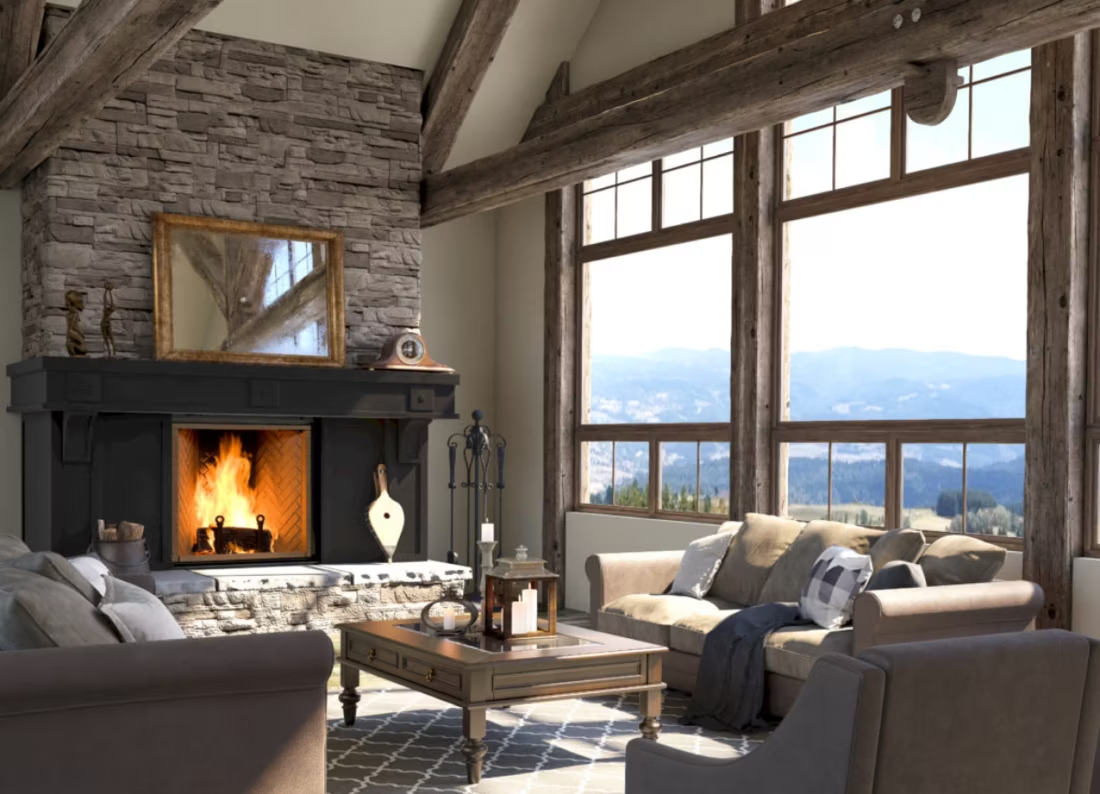
Four fuels. One honest answer for Pulaski County.
Three steps. No salesperson until you're ready.
Tell us about your project
Your zip code, your situation, and the fuel you're leaning toward—or let the answers point you to one.
See what's actually available
The brands dealers within 100 miles genuinely carry—real options, never a catalog mirage.
Get your dealer & Project Guide
A trusted local dealer, plus the free Project Guide & Parts List that names every component of the job.
Frequently Asked Questions
Which fuel works best in Pulaski County?
It comes down to what's realistically available where you live. Wood remains a strong option here—oak, hickory, and walnut are abundant locally thanks to the Shawnee National Forest and the bottomland hardwoods along the Cache River, and a lot of longtime residents already cut and split their own. Gas is workable but uneven: natural gas lines don't reach every part of the county, so many rural homes run on propane instead, which still gives you instant heat and modern controls without a chimney to maintain. Pellet is a solid middle ground—steady, thermostat-controlled heat, with regional supply from brands like Indeck Energy Services and Lignetics keeping fuel reasonably accessible. Electric works well as a supplemental option—zone heat for a bedroom or den—but given Pulaski County's moderate Zone 4A winters, it's rarely anyone's sole heat source. Most homes here end up pairing wood or propane as the primary with electric for shoulder-season convenience.
Do I need a permit to install a fireplace in Pulaski County?
In most cases, yes, though the process is simpler here than in larger jurisdictions. In unincorporated parts of the county, building permits for new wood stoves, inserts, gas appliances, and pellet stoves generally go through the Pulaski County zoning and building office. Within incorporated towns like Mound City or Mounds, the town itself typically handles permitting. Gas installations also require licensed gas-fitter work for the line connection, separate from the appliance permit. Electric fireplaces usually don't need a permit unless you're doing a built-in with new wiring. Given how small and rural the county is, a local hearth retailer or installer who's pulled permits here before is worth more than any amount of research—they already know which office to call.
Are there air quality restrictions on wood burning in Pulaski County?
No—Pulaski County doesn't have the winter inversion or nonattainment issues you'd see in a basin community out West, and there are no local burn curtailment programs to plan around. That said, an EPA-certified stove or insert still burns cleaner, uses less wood for the same heat output, and produces less creosote buildup in the chimney—worth choosing on efficiency and safety grounds even without a regulatory mandate pushing you there.
Can I find a dealer that carries all four fuel types nearby?
With a population under 3,500 spread across several small towns, Pulaski County itself doesn't support a large number of dedicated hearth retailers. Homeowners here often end up working with a dealer based in Marion, Metropolis, or across the Ohio River in Paducah, Kentucky, who covers Pulaski County as part of a wider service area and can typically show working displays across wood, gas, pellet, and electric. That's not unusual for a county this size—the tradeoff is a slightly longer drive for a showroom visit, but the same install quality and permitting experience you'd get in a bigger market.
How does service and maintenance work in a county this rural?
Most chimney sweeps and gas technicians serving Pulaski County are based outside it—commonly in Marion, Herrin, or Paducah—and travel in to cover Mound City, Mounds, Karnak, Grand Chain, Villa Ridge, Ulin, and Olmsted. Expect to schedule a bit further ahead than you would in a denser market, and a small trip fee for the more remote stretches of the county isn't unusual. The best move is booking annual service in late summer or early fall, before the pre-winter rush hits the technicians who cover this whole corner of southern Illinois.
What's the typical cost range for fireplace installation across fuel types in Pulaski County?
Costs here track close to regional southern Illinois and western Kentucky pricing. Wood stove or insert installation: roughly $3,800–$8,000, depending on chimney condition and whether new liner or masonry work is needed. Gas fireplace, insert, or stove: $4,000–$9,500, with propane conversions often running toward the lower end if a tank and line are already in place. Pellet stove or insert: $3,800–$7,000 for a typical install. Electric fireplace: $200–$2,500 for the unit itself, plus $300–$1,000 in labor for anything beyond a simple plug-in placement. Because fewer local retailers means more variation in travel costs, get a written quote from whichever dealer covers your specific town before comparing numbers.
Does a fireplace add value to my home?
On average, a fireplace adds back to the home about the same amount you spent installing it. Add the monthly savings from heating the rooms you actually use instead of the whole house—often hundreds of dollars a year—and the value case is strong before you even count what a fire does for how your family uses the room.
How much should I budget for a fireplace?
For an average home—covering the fireplace, the vent pipe, and basic installation—a budget between $3,900 and $5,500 gives you a lot of options across wood, gas, and pellet. By the time you add finish work, gas line, and electrical, the average complete installation lands between $5,000 and $12,000 all-in. In a remodel or new build, a good rule is to put about 2.5% of the total project cost toward the fireplace.
Wood, gas, pellet, or electric—how do I choose?
Match the fuel to your life, not the other way around. Wood: lowest fuel cost and total power-outage independence, but you're hauling and stacking. Gas: press a button, set a thermostat, no maintenance to speak of. Pellet: wood economics with automatic feeding, in exchange for weekly cleaning and a need for electricity. Electric: plugs in anywhere with honest supplemental heat. Nobody regrets the fuel that fits how they actually live.
Can I install a fireplace myself?
If you're putting a fire in your house on purpose, it's best to work with an expert. Unless you're genuinely experienced in framing, gas line, vent pipe, and the national code on clearances to combustibles, have a professional do it—and ideally the same company that sells you the fireplace, so warranty, service, and liability all live under one roof.
Stove and Fireplace Dealers in Pulaski County
Listings include WhyFire partner dealers, dealers we have verified as authorized for the brands we recommend, and established local businesses that carry hearth products. Every listing shows which one it is. The ones marked Preferred run on WhyFire's software, so they can show you real pricing and book your appointment right here. No manufacturer pays for placement. How we verify dealers →
Russell Electric
The Fireplace Center
Find your fireplace in Pulaski County.
Tell us your fuel and your town, and we'll match you with a trusted local dealer and send over a free Project Guide & Parts List—the parts, the vent kit, and the recommended installer for your Pulaski County project.
Find Your Fireplace →