
Set It, Forget It—Even When the Lake Wind Bites.
Thermostat-controlled, hardwood-pellet heat for Lake County's long, damp winters. Find the right stove or insert, and connect with a trusted local dealer.
Every Project Starts From One of These Five Situations
Automated warmth built for a lake-effect winter.
Park City sits low and flat at 714 feet in Lake County, just a few miles off Lake Michigan, where the lake effect keeps winters damp and grinding rather than dry-cold. With a heating season that rivals Madison, Wisconsin and an average winter low of 16°F, the heating load here is closer to Madison, Wisconsin than to central Illinois—not as brutal as Fargo or Duluth, but a real cold-climate season that runs from November into March. Homeowners in this part of Lake County have plenty of oak, hickory, walnut, and maple around them, but hauling and stacking cordwood isn't for everyone, and that's exactly the gap pellet appliances fill.
A pellet stove or insert loads from a bag instead of a woodpile, holds a consistent burn on a thermostat, and burns cleaner than cordwood—a real advantage given how routinely ComEd's service territory sees winter storm outages that leave people scrambling for heat. Regional pellet suppliers including Indeck Energy Services, Lignetics, and Somerset Pellet Fuel keep bagged fuel reasonably priced and available throughout the Chicago area, so running a pellet appliance all winter here doesn't mean chasing scarce fuel. Park City has no local air-quality burn restrictions, which means no curtailment days to plan around—your pellet stove runs on your schedule, not the county's.
Three steps. No salesperson until you're ready.
Tell us about your project
Your zip code, your situation, and the fuel you're leaning toward—or let the answers point you to one.
See what's actually available
The brands dealers within 100 miles genuinely carry—real options, never a catalog mirage.
Get your dealer & Project Guide
A trusted local dealer, plus the free Project Guide & Parts List that names every component of the job.
Frequently Asked Questions
How much does a pellet stove installation cost in Park City?
Most pellet stove and insert installations in the Park City area run between $3,500 and $6,800, depending on the unit, whether you're venting through an existing masonry chimney or need a new through-wall pellet vent kit, and whether an electrical outlet needs to be added near the hearth for the auger and blower. Inserts going into an existing fireplace tend toward the lower end since the masonry opening and chimney chase are already in place. Freestanding stoves in a new location—say, a basement rec room without an existing flue—run higher once venting and a dedicated circuit are factored in. A local dealer will give you a firm number after seeing the installation site.
What size pellet stove do I need for a Lake County winter?
With a heating season on par with Madison, Wisconsin and winter lows regularly in the teens, Park City homes need more heating capacity than a mild-climate stove size chart would suggest. A small hopper unit rated for 1,000–1,200 square feet is fine for a supplemental setup in one room, but if you're trying to offset your furnace's runtime across an open living area, look at mid-size stoves rated for 1,800–2,200 square feet with at least a 40-pound hopper—that gets you through a cold overnight without a 2 a.m. refill. A local dealer will walk your space and account for ceiling height, insulation age, and window count before recommending a model.
Where can I find certified pellet stove installers near Park City?
Look for installers with NFI (National Fireplace Institute) pellet-specialist certification, which covers the electrical, venting, and clearance requirements specific to pellet appliances—different from wood stove or gas installs. In the Chicago suburbs, most hearth shops that carry pellet lines also employ their own certified installers, which keeps warranty coverage and code sign-off with one accountable party rather than splitting the job between a retailer and a separate contractor. Ask any dealer directly whether the person doing your install holds current NFI pellet certification.
What's the difference between a pellet stove and a pellet insert?
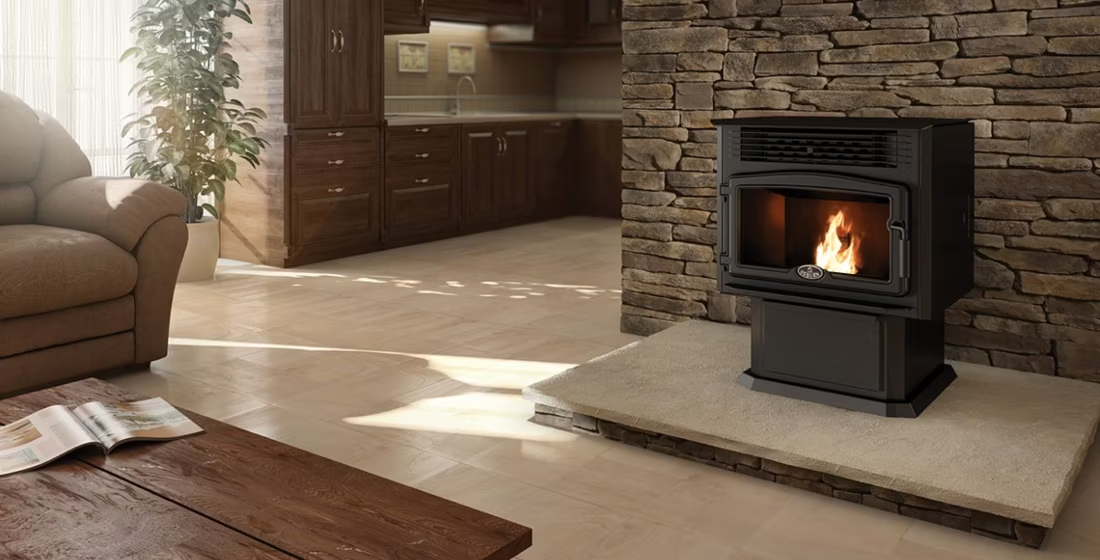
A pellet stove is a freestanding cabinet unit that sits on a hearth pad and vents through a wall or existing chimney—it can go almost anywhere with access to an outlet and a vent path. A pellet insert is built to slide into an existing masonry fireplace opening, using a vent kit routed up your existing chimney flue. For Park City's older homes with a traditional wood-burning fireplace already in place, an insert is usually the cleaner upgrade since it reuses the masonry opening and chimney chase you already have. Homes without an existing fireplace—including many of the ranch and split-level houses common in this part of Lake County—are better suited to a freestanding stove.
Will my pellet stove still work if the power goes out?
Not without help—this is the biggest thing to plan around. Pellet stoves rely on an electric auger to feed fuel and a blower to distribute heat, so a standard unit shuts down the moment ComEd service drops, which happens periodically during Lake County ice storms and high-wind events off the lake. The workaround is a small battery backup or inverter generator sized for the stove's low wattage draw (most pellet stoves use well under 500 watts running)—plenty of local owners keep one on hand specifically for this. If uninterrupted heat during outages is a priority for you, ask your dealer about backup power options at the time of purchase rather than after the first outage.
What's the best pellet stove for Park City's climate?
For a heating load on par with Madison, Wisconsin, prioritize a stove with a larger hopper (40+ pounds) and a firebox rated for continuous, not just occasional, use—brands like Harman and Lopi build pellet stoves designed for daily heavy-duty burning through a full Midwest winter rather than occasional weekend ambiance. A larger hopper matters more here than in a milder climate, since burn rates climb on the coldest nights and nobody wants to refill fuel at 3 a.m. when it's 10°F outside. A local dealer can match hopper size and BTU output to your specific square footage and insulation level.
Where do I buy pellet fuel in the Park City area, and what does it cost?
Bagged hardwood pellets are readily available through hearth retailers and home improvement stores throughout the Chicago suburbs, with regional brands like Lignetics and Somerset Pellet Fuel widely stocked, plus Indeck Energy Services—an Illinois-based producer—often available at a slight cost advantage due to shorter shipping distances. Expect to pay roughly $260 to $320 per ton depending on brand and whether you buy by the pallet (typically 50 forty-pound bags) in bulk during the fall pre-season sales versus mid-winter as-needed. Buying a season's supply—usually 2 to 3 tons for a home using pellet heat as a primary source—in September or October before demand peaks is the most reliable way to keep costs down.
Do I need a permit to install a pellet stove in Park City?
Yes—a new pellet stove or insert installation typically requires a building permit through the local building department, since it involves through-wall venting and often new electrical work for the outlet powering the auger and blower. Most hearth dealers in the area handle the permit application and inspection scheduling as part of the installation package, so you're not coordinating that separately. Because pellet appliances are far less restricted by air-quality rules than wood stoves—Park City has no burn-ban ordinance to navigate—the permitting process is mainly about venting placement and electrical safety rather than emissions compliance.
Pellet stove vs. wood stove—which makes more sense for my home?
Wood stoves burn free or low-cost cordwood—plentiful here given the local oak, hickory, walnut, and maple—and keep working through a power outage since they need no electricity to operate. Pellet stoves trade that off-grid reliability for real convenience: load a hopper instead of splitting and stacking wood, get a steadier thermostat-controlled burn, and produce far less ash and creosote to manage. For a Park City homeowner without the space, time, or interest in processing cordwood, pellet is usually the easier day-to-day choice, provided you also plan for a small battery backup to cover the area's occasional winter power outages. Homeowners who want heat that works no matter what the grid is doing tend to lean wood instead.
How often does a pellet stove need cleaning?
A clean pellet stove is a happy pellet stove. Plan on cleaning the burn pot about once a week when you're burning regularly—ash and clinkers gum up the air holes just like a pellet barbecue. Most pellet stove problems trace back to skipped cleaning that nobody explained up front. Some designs make it easy with a trapdoor burn pot: pull a lever and the gunk drops into the ash pan.
Why is a fireplace insert so efficient?
An insert does two things: it seals the chimney completely, so you stop losing air you already paid to heat, and it radiates warmth into the room through the firebox and glass. Most add a heat-exchange fan that pulls cool room air underneath, wraps it around the hot firebox, and pushes it back out warm. Your home is more efficient before you've even lit the first fire.
What is an in-home preview and do I need one?
It's a visit where a hearth professional measures your space, confirms the model you picked actually works in your home, and walks the specs—framing, gas line, venting, finish work—before anything is ordered. Some details you just can't know until you see the house. Never make a down payment without one; it's the single most-skipped step that burns buyers.
Can I install a fireplace myself?
If you're putting a fire in your house on purpose, it's best to work with an expert. Unless you're genuinely experienced in framing, gas line, vent pipe, and the national code on clearances to combustibles, have a professional do it—and ideally the same company that sells you the fireplace, so warranty, service, and liability all live under one roof.
Nearby Dealers
Hearth shops serving Park City and the surrounding area. Every listing shows whether it is a WhyFire partner, a dealer we have verified as authorized for the brands we recommend, or a local business carrying hearth products. No manufacturer pays for placement. How we verify dealers →
Fireplaces Plus
Smokin' Deal Bbq
General Masonry Supply
Fireplace And Patio
Alaskan Fireplace Co
Jhb Group, Inc.
Pellet Brands Stocked Around Park City
Manufacturers will point you to the nearest stocking dealer.
Find your pellet stove in Park City.
Tell us about your home and heating goals, and we'll match you with a trusted local dealer and send over a free Project Guide & Parts List—the exact stove or insert, vent kit, and install plan for your Park City home.
Find Your Fireplace →