
Real Flame Look, Zero Venting, Any Room in Oak Forest.
No chimney, no gas line, no permit headaches—just real-flame ambiance and supplemental warmth for any room in your Oak Forest home. Find the right unit and connect with a trusted local dealer.
Every Project Starts From One of These Five Situations
The no-permit, no-vent path to real fire ambiance.
Oak Forest sits in Cook County's south suburbs at about 635 feet elevation, with a long, cold heating season and winter lows averaging 15°F—a climate closer to Madison, WI than to the rest of Illinois. Most homes here rely on natural gas furnaces for primary heat, and dense suburban lot sizes mean wood-burning fireplaces and pellet stoves are rarely installed—there's often nowhere for a chimney to safely vent, and many blocks have covenants or setback rules that discourage wood smoke near neighboring homes.
Electric fireplaces fill a real gap for that reason. With ComEd serving virtually every household in Oak Forest at roughly 13.4 cents per kWh, an electric unit gives you instant, controllable warmth and a realistic flame in a finished basement, a condo along 159th Street, a primary bedroom, or any room where running a gas line or chimney isn't practical. No venting means no permit for the unit itself in most cases, no annual chimney sweep, and installation that's typically finished in an afternoon rather than a multi-day project.
Three steps. No salesperson until you're ready.
Tell us about your project
Your zip code, your situation, and the fuel you're leaning toward—or let the answers point you to one.
See what's actually available
The brands dealers within 100 miles genuinely carry—real options, never a catalog mirage.
Get your dealer & Project Guide
A trusted local dealer, plus the free Project Guide & Parts List that names every component of the job.
Frequently Asked Questions
How much does an electric fireplace installation cost in Oak Forest?
Electric fireplace projects in Oak Forest generally split into two tiers. Plug-in units need no installation beyond an existing outlet and typically run $200 to $1,500 for the unit itself. Built-in inserts and wall-mounted units that require a dedicated 120V or 240V circuit, in-wall mounting, or minor drywall work usually run $1,000 to $3,000 including electrician labor. Because there's no chimney, gas line, or venting involved, electric is consistently the least expensive and fastest hearth upgrade available to Oak Forest homeowners.
What's the difference between a plug-in electric fireplace and a built-in insert?
A plug-in electric fireplace is a freestanding or mantel unit you set in place and plug into a standard outlet—no electrician needed, and you can take it with you if you move out of your Oak Forest home. A built-in insert or linear wall-mount unit is recessed into a wall or existing fireplace opening and typically needs a dedicated circuit run by a licensed electrician for a cleaner, more permanent look. For renters or homeowners who want flexibility, plug-in is the easier route. For a finished look in a remodel or new build, built-in units are usually worth the extra electrical work.
Do I need a permit for an electric fireplace in Oak Forest?
Most plug-in electric fireplaces need no permit since they run off a standard outlet already in the room. If you're installing a built-in insert wired to a new dedicated circuit, or having an electrician add an outlet behind a wall-mounted unit, that wiring work does need to go through Oak Forest's building department and must be performed by a licensed electrician. Local dealers who install built-in units typically pull this permit as part of the job, so you're not coordinating it yourself.
How much does it cost to run an electric fireplace with ComEd rates?
At ComEd's typical residential rate of about 13.4 cents per kWh, a standard 1,500-watt electric fireplace heater costs roughly 20 cents an hour to run on heat mode. Used for six hours a day during Oak Forest's colder months, that's around $1.20 a day, or about $36 a month—far less than most people expect for supplemental heat, and it drops to nearly nothing when you run the flame effect alone without the heater engaged.
Can an electric fireplace actually heat a room in Oak Forest's climate?
An electric fireplace can comfortably supplement heat in a single room—most units are rated for 400 to 1,000 square feet—but with winter lows averaging 15°F and a long, cold heating season each year, it's not a substitute for your furnace on the coldest nights. Think of it the way homeowners in Madison, WI or Minneapolis use theirs: a finished basement, a bedroom, or a den gets noticeably warmer and more comfortable, while the gas furnace still carries the whole-house load.
Is wood or gas a better fit than electric for a Cook County home?
Wood-burning fireplaces and pellet stoves are uncommon in Oak Forest—lot sizes, proximity to neighboring homes, and local ordinances make chimney venting impractical for most properties, so few dealers even stock them here. Gas is the standard alternative for homeowners who want higher heat output and a more traditional fireplace feel, since most Oak Forest homes are already piped for natural gas. Electric remains the right call when you want ambiance and modest supplemental warmth without venting, gas line work, or a chimney—think secondary rooms, condos, and basements rather than a whole-home heat source.
What's the best electric fireplace for a basement or condo in Oak Forest?
For finished basements and condos, a recessed linear electric fireplace or a wall-mounted unit tends to work best—they don't eat up floor space and many models can be trimmed flush into a wall for a built-in look. Brands like Dimplex, Amantii, and Touchstone are commonly carried by hearth dealers in the Chicago south suburbs and offer realistic flame technology with adjustable heat output, which matters in a smaller condo unit where you don't want to overheat the room. A local dealer can size the unit to your square footage during a walkthrough.
How long do electric fireplaces last, and do they need maintenance?
Most electric fireplaces last 10 to 20 years with normal use. The heating element and LED flame lights are the main wear parts, and both are typically replaceable rather than requiring a whole new unit. There's no chimney to sweep and no combustion byproducts to worry about, so maintenance is limited to occasional dusting of the vents and, on some models, changing the flame bulb every several years—a fraction of the upkeep a wood or gas installation requires.
Electric vs. gas—which is right for my Oak Forest home?
Gas fireplaces put out real heat—often 20,000 to 40,000 BTUs—and can meaningfully offset your furnace on cold days, but they require venting and, in most Oak Forest homes, connecting to your existing natural gas line, with installs commonly running well into the thousands of dollars. Electric fireplaces cost a fraction of that to install, need no venting, and give you real flame appearance and modest supplemental heat, but they won't carry a room the way gas can on a 15-degree night. For a primary living space where you want daily heat, gas is usually the stronger fit. For a bedroom, condo, or finished basement where ambiance and easy installation matter more, electric is often the better call.
Can I put a TV above my fireplace?
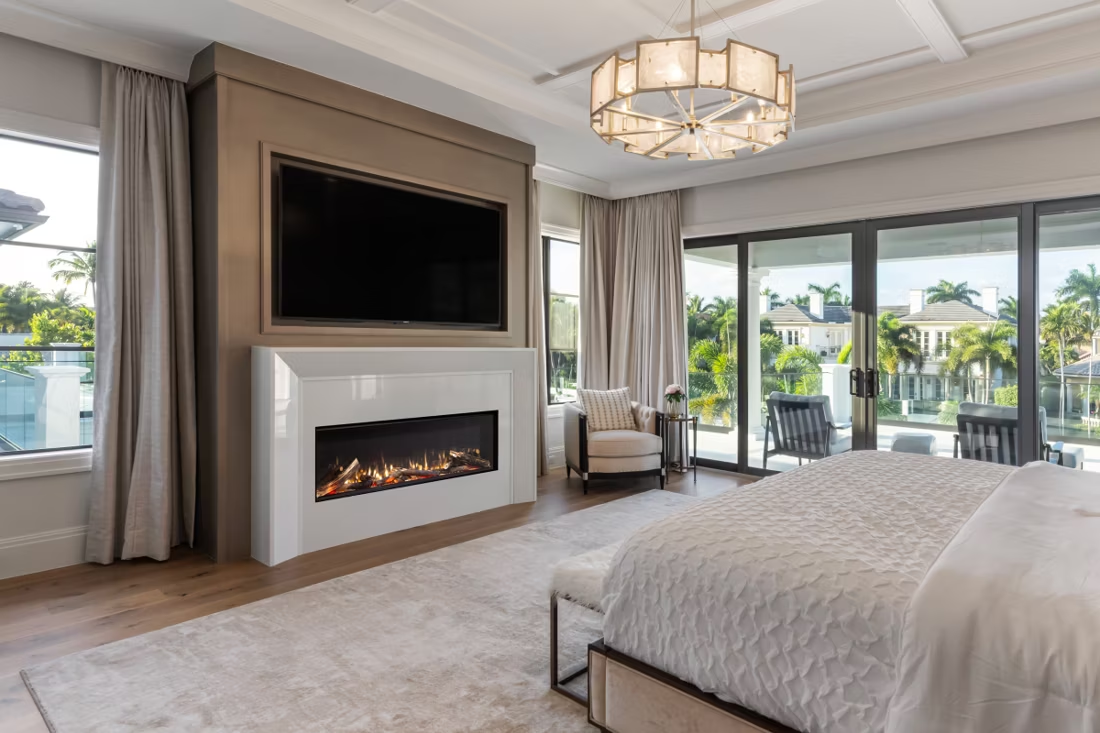
Yes—with an asterisk. Fireplaces are hot and TVs don't like heat. Either put a mantel between them to deflect rising warmth, or choose a fireplace with heat-management technology that creates a cool zone on the wall above—the wall stays around 125 degrees, barely warm, while the room still gets full heat. If you like clean lines and don't want a mantel, heat management is the answer.
Does an electric fireplace need a vent or chimney?
No—that's its superpower. An electric fireplace needs a wall and an outlet, period. No vent pipe, no gas line, no clearances to design around, which is why it works in bedrooms, offices, apartments, and walls where venting a gas or wood unit would be impractical or impossible. Installation is typically the simplest and least expensive of any fireplace type.
How much should I budget for a fireplace?
For an average home—covering the fireplace, the vent pipe, and basic installation—a budget between $3,900 and $5,500 gives you a lot of options across wood, gas, and pellet. By the time you add finish work, gas line, and electrical, the average complete installation lands between $5,000 and $12,000 all-in. In a remodel or new build, a good rule is to put about 2.5% of the total project cost toward the fireplace.
Can a fireplace actually lower my heating bill?
Yes—by creating a comfort zone. A furnace heats every square foot of the house just to warm the one room you're in; a gas fireplace on low burns roughly a sixth of the gas a typical furnace does. Set the furnace around 55–60 degrees as a baseline, then heat the rooms your family actually uses. Families who heat this way commonly save $20–$60 a month.
Nearby Dealers
Hearth shops serving Oak Forest and the surrounding area.
Fireside Collection By Fireplaces Plus
Electric Service in Oak Forest
An electric fireplace's heater draws about 1,500 watts—pennies per hour at local rates.
Commonwealth Edison Co
Find your electric fireplace in Oak Forest.
Tell us a bit about your home and we'll match you with a trusted local dealer and send over a free Project Guide & Parts List—the right electric fireplace or insert for your space, with the exact parts and a recommended installer near Oak Forest.
Find Your Fireplace →