
Add real warmth to your Oak Brook home without a chimney.
No gas line, no venting, no masonry work—just a clean install that fits Oak Brook's newer builds, condos, and HOA communities. Find the right unit and connect with a trusted local dealer.
Every Project Starts From One of These Five Situations
The cleanest way to add a fireplace to a modern home.
Oak Brook sits in DuPage County in climate zone 5A, with average winter lows around 17°F and a long, cold heating season—colder than Chicago proper but nowhere near the extremes of Madison, WI or Duluth, MN. That's a climate where a fireplace earns its keep as supplemental zone heat and everyday ambiance rather than a home's primary heat source.
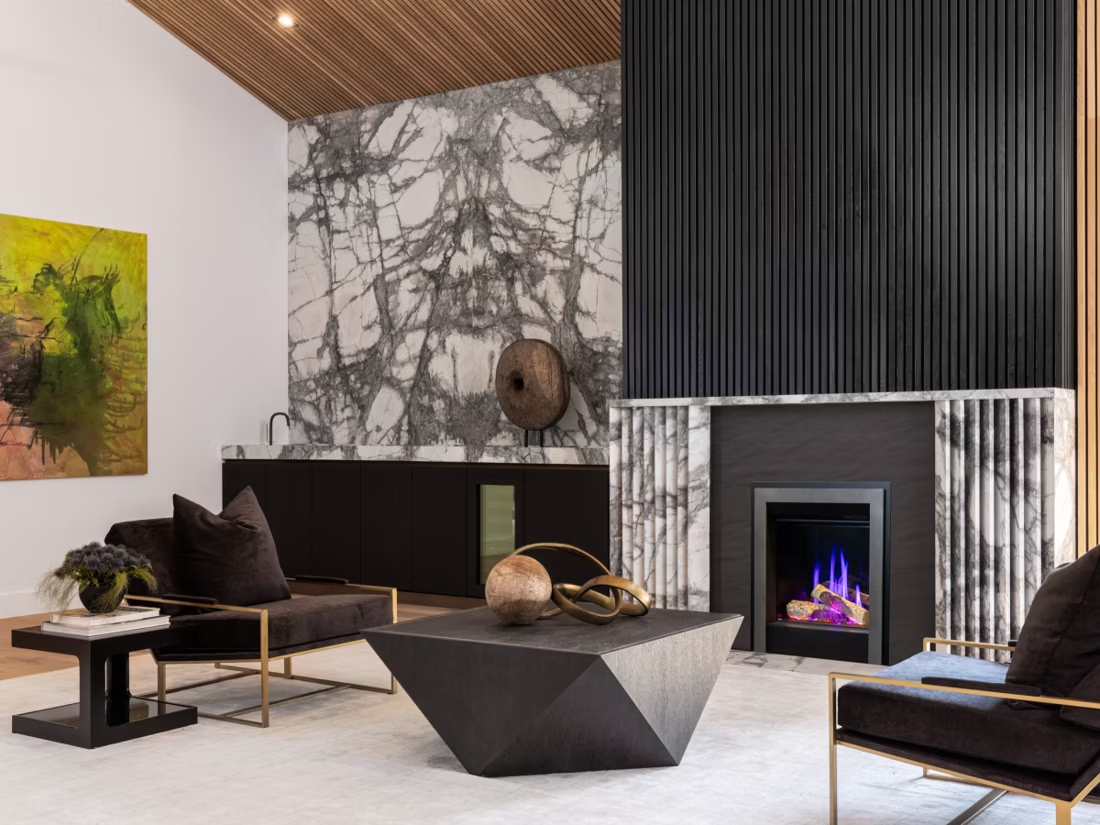
A lot of Oak Brook housing stock—from the condominiums near Oakbrook Center to newer construction in the estate neighborhoods off 31st Street—either has no chimney to work with or has HOA covenants that make wood-burning impractical. Electric sidesteps both problems entirely. A unit can drop into an existing masonry firebox as an insert, mount flush on a wall in a finished basement, or slide into a custom mantel surround, all without a gas line, venting, or a call to the fire marshal. Commonwealth Edison serves the area at roughly 13.4 cents per kWh, which keeps day-to-day operating costs predictable for a supplemental heat source you'll run on cold evenings rather than around the clock.
Three steps. No salesperson until you're ready.
Tell us about your project
Your zip code, your situation, and the fuel you're leaning toward—or let the answers point you to one.
See what's actually available
The brands dealers within 100 miles genuinely carry—real options, never a catalog mirage.
Get your dealer & Project Guide
A trusted local dealer, plus the free Project Guide & Parts List that names every component of the job.
Frequently Asked Questions
How much does an electric fireplace installation cost in Oak Brook?
Costs in Oak Brook typically run $300 to $2,500 depending on the unit and how it's installed. A plug-in freestanding or wall-mount unit on the low end can be set up by a homeowner in an afternoon. A built-in linear electric fireplace with a custom surround, hardwired to a dedicated circuit, sits at the higher end once an electrician and finish carpentry are factored in. Dropping an electric insert into an existing masonry firebox—common in the older homes around Oak Brook Farms—usually lands in the middle, since there's no venting to deal with, just the insert and a nearby outlet or new circuit.
What types of electric fireplaces are available for Oak Brook homes?
Four styles cover most Oak Brook installs: wall-mount units that hang like a flat-screen TV and need only a standard outlet; inserts that slide into an existing wood-burning firebox and instantly convert it to electric without touching the chimney; built-in linear models framed into a wall or custom surround for a true fireplace look; and freestanding stove-style units for a room that has no existing fireplace at all. Local dealers can walk through which fits a given wall, room size, and whether you're retrofitting an old masonry fireplace or starting from scratch.
Do I need a permit to install an electric fireplace in Oak Brook?
A simple plug-in unit generally doesn't require a permit. If your installer is running a new dedicated circuit for a hardwired built-in or insert, that electrical work needs a permit through the Village of Oak Brook's Development Services Department and must be pulled by a licensed electrician. Most hearth dealers who handle built-in electric installs coordinate this permit as part of the job, so it's rarely something you have to manage yourself.
Will an electric fireplace actually heat a room, or is it just for looks?
Most residential electric fireplaces put out around 4,600–5,200 BTU (roughly 1,500 watts) of heat, enough to noticeably warm a 400 to 1,000 square foot room depending on insulation and ceiling height. In Oak Brook's climate—average winter lows near 17°F—that makes an electric unit a solid choice for zone heating a family room, basement, or den, but it isn't sized to replace a furnace on the coldest nights. Homeowners generally use it as supplemental heat paired with central HVAC, plus year-round ambiance since the flame effect runs independently of the heater.
How much does it cost to run an electric fireplace in Oak Brook?
At ComEd's residential rate of about 13.4 cents per kWh, a typical 1,500-watt unit costs roughly 20 cents an hour to run on heat mode. Used for a few hours most evenings through a DuPage County winter, that works out to somewhere around $20–$40 a month—far less than most homeowners expect, and a fraction of what a wood or gas installation costs to maintain. Running the flame effect alone without heat draws only a small fraction of that, often just a few watts.
What are the best electric fireplace brands for a home like mine?
For built-in linear installs and inserts, Dimplex, Napoleon, Amantii, and SimpliFire are the brands most local Oak Brook dealers carry and stand behind—they hold up well with daily use and have realistic flame technology that looks convincing even in bright rooms. For a lower-cost wall-mount option, Touchstone is a common pick for basements or secondary living spaces. A local dealer can match wattage and flame style to your specific wall and room rather than guessing from a big-box display.
Can I convert my existing wood-burning fireplace to electric?
Yes, and it's a common project in Oak Brook's older neighborhoods where homes have an existing masonry firebox that's rarely used for real wood fires anymore. An electric insert slides into that opening, needs only a nearby outlet or a new dedicated circuit, and requires no chimney relining, no venting, and no ongoing ash or creosote cleanup. You keep the existing mantel and surround while gaining a flame effect and heat you can run at the flip of a switch, which is often the appeal for homeowners who inherited a fireplace but never wanted to deal with firewood.
Electric vs. gas fireplace—which is right for my Oak Brook home?
Gas fireplaces deliver a more authentic flame and higher heat output, but they require a gas line, venting, and a building permit through the Village—real considerations in condos or homes without existing gas service. Electric units skip all of that: no venting, no gas line, and typically no permit beyond electrical work for a hardwired install. For a condo near Oakbrook Center or a finished basement with no chimney access, electric is usually the simpler and faster path. For a primary living space where you want stronger heat output and don't mind the added infrastructure, gas remains the standard choice in this area.
Why don't more Oak Brook homes use wood-burning fireplaces?
Wood heat isn't a natural fit for much of Oak Brook's housing stock—many properties are newer construction, condominiums, or part of HOA communities where wood-burning appliances are restricted or simply weren't built in. A handful of older estate homes do have working masonry fireplaces and burn local oak, hickory, or walnut occasionally for atmosphere, but it's the exception rather than the norm here. That's part of why electric has become the practical alternative: it delivers the same visual warmth and supplemental heat without a chimney, firewood storage, or air-quality concerns.
Can I put a TV above my fireplace?
Yes—with an asterisk. Fireplaces are hot and TVs don't like heat. Either put a mantel between them to deflect rising warmth, or choose a fireplace with heat-management technology that creates a cool zone on the wall above—the wall stays around 125 degrees, barely warm, while the room still gets full heat. If you like clean lines and don't want a mantel, heat management is the answer.
Do electric fireplaces actually produce heat?
Yes—most put out around 4,800–5,000 BTUs from a standard outlet, which comfortably warms a bedroom, office, or den as a comfort-zone heater. What they won't do is carry a whole house the way wood, gas, or pellet can. Think of electric as ambiance-first with honest supplemental heat: flames on with no heat in July, flames plus warmth in January.
Does a fireplace add value to my home?
On average, a fireplace adds back to the home about the same amount you spent installing it. Add the monthly savings from heating the rooms you actually use instead of the whole house—often hundreds of dollars a year—and the value case is strong before you even count what a fire does for how your family uses the room.
Can a fireplace actually lower my heating bill?
Yes—by creating a comfort zone. A furnace heats every square foot of the house just to warm the one room you're in; a gas fireplace on low burns roughly a sixth of the gas a typical furnace does. Set the furnace around 55–60 degrees as a baseline, then heat the rooms your family actually uses. Families who heat this way commonly save $20–$60 a month.
Nearby Dealers
Hearth shops serving Oak Brook and the surrounding area. Every listing shows whether it is a WhyFire partner, a dealer we have verified as authorized for the brands we recommend, or a local business carrying hearth products. No manufacturer pays for placement. How we verify dealers →
A Fireplace Store And More
Ember Glow
A Cozy Fireplace
Urban Rooftops
General Masonry Supply
A Cozy Fireplace
Electric Service in Oak Brook
An electric fireplace's heater draws about 1,500 watts—pennies per hour at local rates.
Commonwealth Edison Co
Find your electric fireplace in Oak Brook.
Tell us a bit about your home and we'll put together a free Project Guide & Parts List—the right unit, the exact parts, and a trusted local Oak Brook dealer to install it.
Find Your Fireplace →