
Warm, Reliable Heat for Niles' Long Winters.
Gas fireplaces deliver instant, clean heat well suited to Niles' dense residential lots and cold Cook County winters. Find the right unit and connect with a trusted local dealer.
Every Project Starts From One of These Five Situations
The practical, code-friendly choice for Cook County homes.
Niles sits in Cook County at roughly 646 feet in elevation, in climate zone 5A, where winters average a low of 19°F and the area logs a heating season in the same range as Madison, Wisconsin. But Niles is also a fully built-out, densely platted Chicago suburb: most residential lots are small, homes sit close together, and there's no nearby public land for cutting firewood the way there is in more rural parts of the Midwest. That combination makes gas the dominant hearth fuel choice for local homeowners.
Natural gas infrastructure runs throughout Niles and the surrounding North Shore suburbs, making a direct-vent gas fireplace or insert straightforward to install in most homes with an existing gas meter. For condos, townhomes, or homes without a gas line, an electric fireplace is often the practical fallback—Commonwealth Edison serves the area at a residential rate around 13.4 cents per kWh, so running an electric unit for supplemental heat is inexpensive even if it isn't a whole-room heat source. Either way, gas delivers instant warmth, clean glass-front styling, and heat you can flip on during a February cold snap without hauling wood through a snowy driveway.
Three steps. No salesperson until you're ready.
Tell us about your project
Your zip code, your situation, and the fuel you're leaning toward—or let the answers point you to one.
See what's actually available
The brands dealers within 100 miles genuinely carry—real options, never a catalog mirage.
Get your dealer & Project Guide
A trusted local dealer, plus the free Project Guide & Parts List that names every component of the job.
Frequently Asked Questions
How much does a gas fireplace installation cost in Niles?
Most gas fireplace installations in Niles run $3,500 to $9,000, depending on whether you're installing a direct-vent insert into an existing masonry fireplace, a new built-in unit as part of a remodel, or a stand-alone gas stove. Homes with an existing gas line nearby and a fireplace opening already in place land on the lower end; installations that require running new gas line from the meter, framing a chase for venting, or building out a hearth from scratch push toward the higher end. A local hearth dealer can give you a firm number after seeing your fireplace opening and gas service in person.
Can I convert my existing wood-burning fireplace to gas?
Yes, and it's a common project in Niles' older housing stock—a lot of the ranch and split-level homes built in the 1950s through 1970s have a traditional masonry fireplace that rarely gets used. A gas insert slides into that existing firebox, uses a stainless liner run up the existing chimney (or new direct-vent piping through the wall), and typically costs $4,000 to $7,500 installed. It keeps the look of your original fireplace surround while giving you instant, thermostat-controlled heat instead of a fireplace that mostly sits cold.
Do I need natural gas service, or can I use propane or electric instead?
Niles is well served by natural gas infrastructure, so most homes already have a gas meter and can add a fireplace with a relatively short line run from an existing gas appliance. Propane is rarely used inside village limits since natural gas is so widely available—it's really only a fallback for detached structures or properties just outside typical service areas. For condos, townhomes, or rooms where running gas line isn't practical, an electric fireplace is a solid alternative; ComEd's residential rate runs about 13.4 cents per kWh, so an electric insert costs relatively little to operate for ambiance or zone heat, even though it won't match the BTU output of a gas unit.
Will my gas fireplace still work if the power goes out?
Most modern gas fireplaces with IPI (intermittent pilot ignition) include a battery backup that keeps the unit operational during a power outage—useful in Niles when a winter ice storm knocks out ComEd service. Valor fireplaces take a different approach: their pilot assembly generates its own electricity through a thermocouple, so there's no battery to remember or replace. If backup heat during outages matters to you, ask your local dealer which ignition system a given model uses before you buy.
What's the difference between a gas fireplace, insert, and stove?
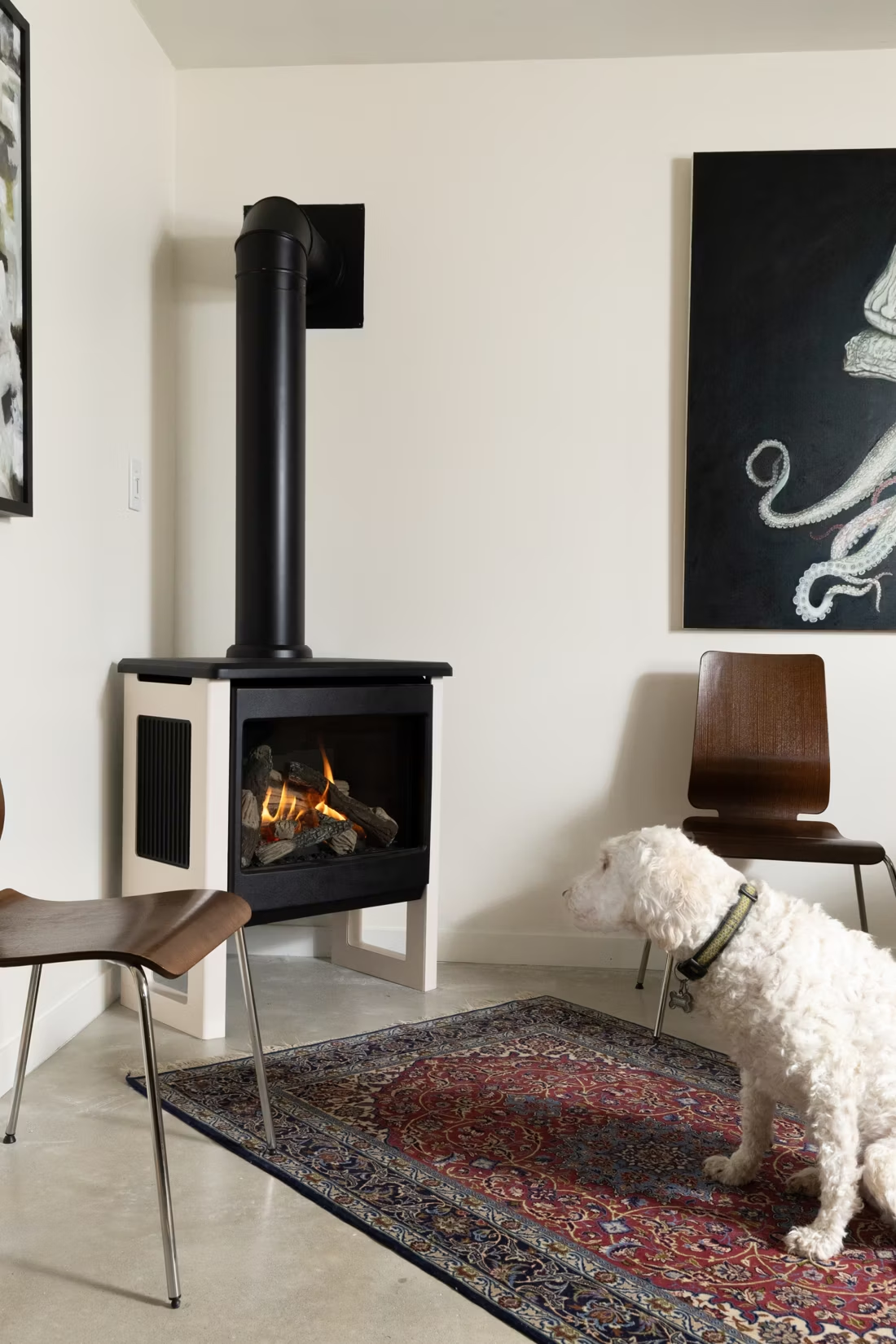
A gas fireplace is a fully built-in unit framed into a wall, typically chosen for new construction or a full remodel. A gas insert is sized to slide into an existing masonry firebox, which is the more common route in Niles given how many homes already have a wood-burning fireplace that's underused. A gas stove is a freestanding, cast-iron-style unit that sits on the floor and vents through a wall or existing chimney—a good fit for a den, basement, or room without an existing fireplace opening. Local dealers can walk you through which format fits your specific opening and floor plan.
Do I need a permit to install a gas fireplace in Niles?
Yes. The Village of Niles Building Department requires a permit for new gas fireplace installations, along with inspection of the gas line connection and venting termination clearances. Most licensed hearth dealers and gas-fitters in the area pull the permit and schedule the inspection as part of the installation, so you generally don't have to coordinate it yourself—just confirm with your installer that it's included in the quote.
Should I choose a vented or vent-free gas fireplace?
Direct-vent gas fireplaces draw combustion air from outside and exhaust combustion gases back outside through a sealed pipe—they're the standard choice for Niles homes and work in nearly any room regardless of size. Vent-free units burn without external venting and release some combustion byproducts into the room; Illinois permits them but with strict room-volume and ventilation requirements, and many local dealers steer customers toward direct-vent instead simply because it's a cleaner, more flexible install with no size restrictions on the room. If indoor air quality is a concern, direct-vent is the safer, more universally recommended option.
How often does a gas fireplace need to be serviced?
Plan on an annual inspection, ideally in early fall before the heating season ramps up. A technician will check the burner and pilot assembly, clean the glass, inspect the venting for blockages, and test the gas connections—routine maintenance that typically runs $150 to $250. It's a much smaller lift than wood-stove chimney sweeping, but skipping it is still the most common cause of pilot and ignition failures once the weather turns cold.
Why don't more homes in Niles use wood stoves instead of gas?
Wood stoves are unusual in Niles, mostly because of the built environment rather than climate—winter lows near 19°F and a heating season in the same range as Madison, Wisconsin would support wood heat just fine. But Niles is a dense, fully developed Cook County suburb with small lots, no nearby public land for cutting firewood, and village codes that make new wood-burning chimney installations a much bigger project than a gas retrofit. Gas fireplaces and inserts fit the existing housing stock, need far less maintenance, and don't require a wood supply chain in a suburb where almost nobody has a place to store or season a cord of oak or hickory. For most homeowners here, gas is simply the more practical fit.
Why is my open fireplace making my house colder?
Open fireplaces suck—literally. As the fire burns, it consumes air your furnace already paid to heat and pulls it out through the chimney, so the house is actually colder after the fire goes out than before you lit it. An insert fixes this: it seals the chimney, puts fixed glass across the front, and turns that hole in your house into a real heat source.
Why is a fireplace insert so efficient?
An insert does two things: it seals the chimney completely, so you stop losing air you already paid to heat, and it radiates warmth into the room through the firebox and glass. Most add a heat-exchange fan that pulls cool room air underneath, wraps it around the hot firebox, and pushes it back out warm. Your home is more efficient before you've even lit the first fire.
What is an in-home preview and do I need one?
It's a visit where a hearth professional measures your space, confirms the model you picked actually works in your home, and walks the specs—framing, gas line, venting, finish work—before anything is ordered. Some details you just can't know until you see the house. Never make a down payment without one; it's the single most-skipped step that burns buyers.
How much should I budget for a fireplace?
For an average home—covering the fireplace, the vent pipe, and basic installation—a budget between $3,900 and $5,500 gives you a lot of options across wood, gas, and pellet. By the time you add finish work, gas line, and electrical, the average complete installation lands between $5,000 and $12,000 all-in. In a remodel or new build, a good rule is to put about 2.5% of the total project cost toward the fireplace.
Nearby Dealers
Hearth shops serving Niles and the surrounding area.
Fireside Collection By Fireplaces Plus
Find your gas fireplace in Niles.
Tell us about your home and we'll put together a free Project Guide & Parts List—the right gas fireplace or insert, the exact venting parts needed, and a trusted local dealer to install it.
Find Your Fireplace →