
Reliable gas heat for Morton Grove's cold Cook County winters.
Instant, even heat for a dense Chicago suburb where lot size and village code favor gas over wood. Find the right fireplace or insert and connect with a trusted local dealer.
Every Project Starts From One of These Five Situations
Convenient heat for a dense Chicago suburb.
Morton Grove sits in Cook County just northwest of Chicago, with winter lows averaging 16°F and a winter heating load about as demanding as Madison, Wisconsin, cold enough to rival that city for sustained winter heating demand. Most of the village was built out in the ranch, split-level, and Cape Cod boom of the 1950s and 60s, and a good number of those homes still have the original masonry wood fireplace tucked into the living room. Given the tight lots, attached garages, and close-set neighbors typical of the village, wood-burning setups are rare here—there's no public land nearby for cutting permits and no real firewood culture to speak of. Gas is the default upgrade.
Nicor Gas serves most of Cook County's suburbs, including Morton Grove, so natural gas service is standard on nearly every block. That makes converting an old wood fireplace to a direct-vent gas insert one of the most common projects local hearth dealers handle here—you keep the existing chimney, add a stainless liner, and get instant, thermostat-controlled heat instead of tending a fire in a house with a two-car driveway and a neighbor twelve feet away. For condos, townhomes, or additions without a gas line nearby, an electric fireplace on ComEd power is often the simpler fallback.
Three steps. No salesperson until you're ready.
Tell us about your project
Your zip code, your situation, and the fuel you're leaning toward—or let the answers point you to one.
See what's actually available
The brands dealers within 100 miles genuinely carry—real options, never a catalog mirage.
Get your dealer & Project Guide
A trusted local dealer, plus the free Project Guide & Parts List that names every component of the job.
Frequently Asked Questions
How much does a gas fireplace installation cost in Morton Grove?
Most gas fireplace installations in the Morton Grove area run $4,000 to $10,000, depending on the unit, the venting path, and whether new gas line work from Nicor Gas is needed. A direct-vent insert dropped into an existing masonry fireplace with gas already run to the chimney sits at the lower end. A new built-in gas fireplace for a remodel or room addition—with framing, venting through an exterior wall, and a fresh gas line—lands in the middle to upper range. Local dealers will give you a firm number after seeing the space in person.
Can I convert my existing wood fireplace to gas?
Yes, and it's the most common gas project in Morton Grove given how many 1950s and 60s homes here still have their original masonry fireplace. A gas insert typically drops in using the existing chimney with a new stainless liner, and the project usually runs $4,500 to $9,000 depending on the insert and whether new gas piping is required. Since wood cutting and burning has never really been practical in a village this dense—no forest land, small lots, close neighbors—most homeowners with an old wood fireplace choose gas over trying to keep a wood-burning setup running.
Do I need natural gas, or is propane an option in Morton Grove?
Nicor Gas serves natural gas throughout Morton Grove, so nearly every home in the village already has a gas line for the furnace, water heater, or stove—adding a fireplace is usually a simple tap-in. Propane isn't common inside the village limits and generally isn't necessary here the way it is in unincorporated or rural parts of Cook County. Most fireplace models sold locally are set up for natural gas by default, which keeps installation straightforward.
Will my gas fireplace work during a power outage?
Most modern gas fireplaces will, as long as they use intermittent pilot ignition (IPI) with a battery backup—typically AA batteries built into the unit that take over automatically when ComEd power drops during a summer storm or winter ice event. The fireplace lights and runs normally off the batteries until power returns; just remember to swap batteries occasionally so they're fresh when you need them. Valor fireplaces skip batteries entirely—their pilot's thermocouple generates the electricity the unit needs to fire on demand, no backup power required. Ask your local dealer about the ignition system on any model you're considering.
What's the difference between a gas fireplace, gas insert, and gas stove?
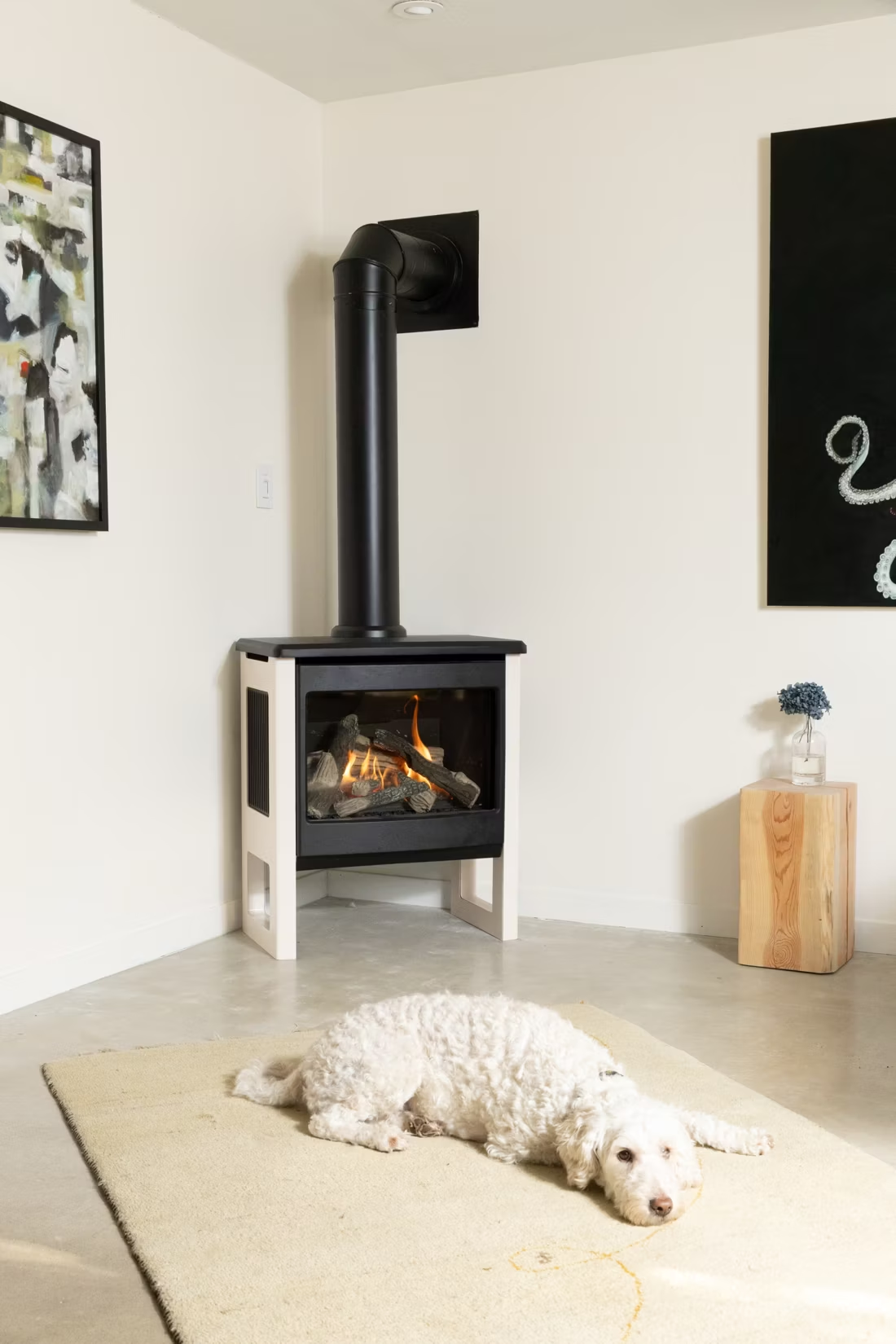
A gas fireplace is a fully built-in unit framed into a wall—the right choice for new construction, additions, or a remodel without an existing chimney. A gas insert slides into an existing masonry firebox and uses your current chimney (relined) as the vent path, which fits most of Morton Grove's older ranch and split-level homes with an original wood fireplace. A gas stove is a freestanding unit that sits on the floor like a wood stove but runs on gas—a good fit for a room with no fireplace at all where a built-in isn't practical.
Do I need a permit to install a gas fireplace in Morton Grove?
Yes—the Village of Morton Grove Building & Inspectional Services Department requires a building permit for new gas fireplace and insert installations, and any new gas line work needs to be done by a licensed fitter and inspected. Most established local hearth dealers handle the permit filing and coordinate the gas line and inspection as part of the install, so you're not left managing separate trades yourself.
What's the difference between vented and vent-free gas fireplaces?
Vented (direct-vent or B-vent) fireplaces pull combustion air from outside and exhaust the byproducts back outside through a sealed pipe—they're the cleanest and most universally code-compliant option. Vent-free units burn without any external venting, releasing water vapor and small amounts of combustion byproducts into the room, and they require strict room-size and ventilation compliance to install legally. Illinois permits vent-free units within those limits, but for Morton Grove's smaller, tightly-built homes, direct-vent is the far more common recommendation from local dealers—it delivers real heat without any indoor air quality trade-offs.
How often should my gas fireplace be serviced?
Plan on an annual inspection, ideally before the first cold stretch each fall. A technician checks the burner, pilot assembly, venting, and gas connections, and cleans the glass and interior—a much shorter visit than a wood chimney sweep, but just as important for safe operation. Local service providers typically charge $150 to $250 for this annual visit.
Gas vs. electric—which fireplace makes more sense for my home?
Gas delivers real heat output—enough to noticeably warm a room on a 16°F Morton Grove night—and most units run on the natural gas line Nicor Gas already has installed at your home. Electric fireplaces need no venting or gas line at all, run on standard household power through ComEd (residential rates run around 13.4 cents per kWh here), and install in an afternoon, which makes them a strong fit for condos, townhomes, or upper-floor rooms where running gas or a flue isn't practical. Wood and pellet units are essentially off the table in Morton Grove—there's no wood-cutting land nearby and no local pellet supply infrastructure built for residential use, so most homeowners are choosing between these two.
Is my gas fireplace wasting gas?
If it was installed more than 15 years ago, probably. Older gas fireplaces keep a standing pilot light burning all the time, and that little flame can cost a couple hundred dollars a year. Newer models use pilot-on-demand ignition—the pilot lights only when you use the fireplace and goes out when you turn it off.
What's the difference between an insert and a zero-clearance fireplace?
An insert is a fireplace that slides into a pre-existing wood-burning fireplace—if you don't have one, there's nothing to insert it into. A zero-clearance fireplace is built into a framed wall, which makes it the answer for remodels and new construction. Simple test: existing masonry fireplace means insert; blank or framed wall means zero-clearance.
Can a fireplace actually lower my heating bill?
Yes—by creating a comfort zone. A furnace heats every square foot of the house just to warm the one room you're in; a gas fireplace on low burns roughly a sixth of the gas a typical furnace does. Set the furnace around 55–60 degrees as a baseline, then heat the rooms your family actually uses. Families who heat this way commonly save $20–$60 a month.
What is an in-home preview and do I need one?
It's a visit where a hearth professional measures your space, confirms the model you picked actually works in your home, and walks the specs—framing, gas line, venting, finish work—before anything is ordered. Some details you just can't know until you see the house. Never make a down payment without one; it's the single most-skipped step that burns buyers.
Nearby Dealers
Hearth shops serving Morton Grove and the surrounding area.
Fireside Collection By Fireplaces Plus
Find your gas fireplace in Morton Grove.
Tell us a bit about your home and we'll match you with the right gas fireplace or insert, plus a free Project Guide & Parts List with the exact parts—including the vent kit—and your recommended local dealer.
Find Your Fireplace →