
Find the right pellet stove for Morgan County winters.
Consistent, thermostat-controlled heat for the roughly 5,549 heating degree days Morgan County sees each year—from Jacksonville to Waverly to the farm roads in between. I'll match you with a trusted local dealer who can size and install it right.
Every Project Starts From One of These Five Situations
Steady, low-maintenance heat for a hardwood-rich county.
Morgan County sits in climate zone 5A, with average winter lows around 18°F and no significant air quality restrictions on solid-fuel burning—unlike parts of the West where winter inversions limit wood and pellet use. That combination makes pellet stoves a genuinely practical option here, not a compromise. Jacksonville and the surrounding farm communities see real cold, comparable in degree-day terms to a mild Midwest winter closer to Madison, WI than to the Deep South, but without the extreme lows that push some homeowners toward wood as a backup necessity.
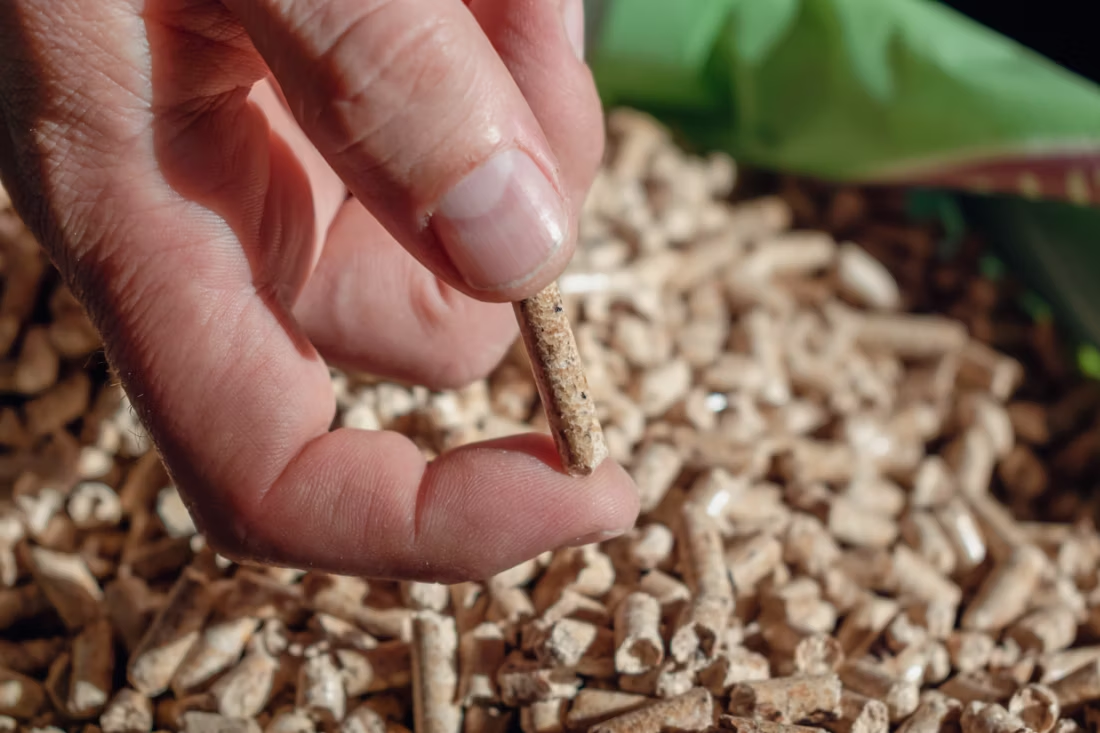
Morgan County's timber is mostly oak, hickory, walnut, and maple—hardwoods that translate into a healthy regional supply chain for hardwood pellets. Indeck Energy Services and Lignetics both distribute into this part of Illinois, alongside Somerset Pellet Fuel, so homeowners aren't stuck hauling pellets in from out of state or stockpiling in the fall out of fear of shortages. For a household in Jacksonville or out toward Meredosia, a pellet stove offers thermostat-set heat, a hopper that only needs loading once or twice a day, and a much lighter workload than splitting and stacking cordwood—while still delivering real supplemental or primary heat through a central Illinois winter.
Three steps. No salesperson until you're ready.
Tell us about your project
Your zip code, your situation, and the fuel you're leaning toward—or let the answers point you to one.
See what's actually available
The brands dealers within 100 miles genuinely carry—real options, never a catalog mirage.
Get your dealer & Project Guide
A trusted local dealer, plus the free Project Guide & Parts List that names every component of the job.
Frequently Asked Questions
How much does a pellet stove installation cost in Morgan County?
Pellet stove and insert installations in this part of Illinois typically run in the $2,500 to $6,000 range depending on the unit, whether it's a freestanding stove or an insert going into an existing fireplace, and how much venting work is required. A pellet insert going into an existing masonry fireplace in Jacksonville is usually on the lower end since it reuses the chimney chase for the vent pipe. New installations in homes without an existing fireplace—common in some of the newer construction around Morgan County—run a bit higher once wall penetration and venting are factored in. A local dealer will give you a firm number after seeing the space.
How much pellet fuel will I need for a Morgan County winter?
With roughly 5,549 heating degree days, a typical central Illinois home using a pellet stove for primary heat in a well-insulated 1,500 to 2,000 square foot space burns through somewhere between 2 and 3.5 tons of pellets over a full heating season, generally running from late October through March. Homes using the stove for supplemental heat only—say, in the main living area of a house that's otherwise on a furnace—often get by on 1 to 2 tons. Regional suppliers tied to Indeck Energy Services and Lignetics keep hardwood pellets reasonably available locally, so most Morgan County homeowners aren't ordering a full season's supply in September out of scarcity concerns the way some rural western customers do.
What size pellet stove do I need for my home?
Sizing depends on square footage, ceiling height, insulation quality, and whether the stove is your primary or supplemental heat source. Smaller units (rated for up to around 1,000-1,200 sq ft) suit a single room, a bonus room, or a smaller Jacksonville bungalow. Mid-size units (1,200-2,000 sq ft) cover most main living areas in Morgan County's farmhouses and ranch-style homes. Larger units (2,000+ sq ft) can carry a well-insulated whole home through an 18°F average winter low without much trouble. Local dealers size these for free during an in-home visit, and it's worth doing—an undersized stove will run flat-out on the coldest nights and still fall short, while an oversized one short-cycles and burns fuel inefficiently.
Do pellet stoves work during a power outage?
Not without a backup power source. Pellet stoves rely on an electric auger to feed fuel from the hopper and a blower to circulate combustion air and distribute heat, so a standard unit goes dark the moment the power does. Some Morgan County homeowners pair a pellet stove with a small battery backup or a portable generator specifically for this reason, especially given the ice storms and summer-thunderstorm-driven outages that hit central Illinois. If uninterrupted heat during outages is a top priority, that's worth discussing with a local dealer before you buy—a wood stove or a specific pellet model with lower power draw may be a better fit for your situation.
Do I need a permit to install a pellet stove in Morgan County?
In most cases, yes—a building permit is typically required for a new pellet stove installation, whether it's in Jacksonville proper or unincorporated Morgan County, since the work involves a wall or roof penetration for venting and sometimes new electrical for the stove's power draw. The local jurisdiction reviewing the permit will want to confirm clearances to combustibles and proper venting termination. Most established hearth dealers handle this paperwork as part of the installation, so it's rarely something the homeowner has to navigate solo. It's worth confirming with your specific installer that the permit is included in their quoted price.
What's the difference between a pellet stove and a pellet insert?
A pellet stove is a freestanding unit that sits on its own hearth pad and can be placed almost anywhere in a room with the right clearances and venting run—a good option if you don't already have a fireplace. A pellet insert is built to slide into an existing masonry fireplace opening, using the existing chimney chase to route a smaller vent pipe. For Morgan County homes with an older fireplace that's rarely used because it's inefficient, an insert is often the more practical upgrade—it keeps the existing hearth look while turning a heat-losing opening into a real heat source.
How often does a pellet stove need cleaning and maintenance?
Pellet stoves need more frequent light maintenance than wood stoves but far less deep cleaning. The ash pan typically needs emptying every few days to weekly depending on use, the burn pot needs scraping every week or two to keep the flame consistent, and the glass benefits from a quick wipe-down periodically. A full professional service—checking the auger motor, exhaust blower, gaskets, and venting—is recommended once a year, usually before the heating season starts in early fall. This is lighter work than sweeping a wood-burning chimney, which is one of the trade-offs homeowners in Morgan County weigh when choosing between the two fuels.
Where can I buy pellets locally in Morgan County?
Hardwood pellets in this part of Illinois typically come through regional distribution tied to Indeck Energy Services, Lignetics, and Somerset Pellet Fuel, and are commonly stocked at farm supply stores, hardware stores, and some hearth dealers around Jacksonville and the wider county. Bags typically run in 40-pound increments, and buying by the ton (usually delivered as a pallet of 50 bags) tends to be more economical for anyone burning through a full heating season. Prices fluctuate with hardwood supply and demand, so it's worth checking with a couple of local suppliers each fall rather than assuming last year's price holds.
Pellet stove vs. wood stove—which is right for my Morgan County home?
Wood stoves run on split cordwood—plentiful in Morgan County given the local oak, hickory, walnut, and maple supply—and keep working with no electricity at all, which matters during the ice storms that occasionally take out power here. Pellet stoves trade that off for real convenience: load the hopper, set the thermostat, and let the auger do the rest, with less ash and a cleaner overall burn. Since Morgan County has no air quality restrictions limiting either fuel, the choice mostly comes down to lifestyle—if you want low-maintenance, consistent heat and don't mind depending on grid power, pellet usually wins; if backup heat during an outage matters more than convenience, wood is the safer bet. Some homeowners here split the difference and run wood in a bonus room or shop while keeping a pellet unit in the main living space.
Why is a fireplace insert so efficient?
An insert does two things: it seals the chimney completely, so you stop losing air you already paid to heat, and it radiates warmth into the room through the firebox and glass. Most add a heat-exchange fan that pulls cool room air underneath, wraps it around the hot firebox, and pushes it back out warm. Your home is more efficient before you've even lit the first fire.
What do I measure to size a fireplace insert?
Four numbers tell you what fits: the front width, the front height, the back width, and the overall depth of your existing fireplace opening. Grab a tape measure, jot those down, and snap a photo of the wall—those two things do more to move your project forward than anything else you can do today.
Can I install a fireplace myself?
If you're putting a fire in your house on purpose, it's best to work with an expert. Unless you're genuinely experienced in framing, gas line, vent pipe, and the national code on clearances to combustibles, have a professional do it—and ideally the same company that sells you the fireplace, so warranty, service, and liability all live under one roof.
Does a fireplace add value to my home?
On average, a fireplace adds back to the home about the same amount you spent installing it. Add the monthly savings from heating the rooms you actually use instead of the whole house—often hundreds of dollars a year—and the value case is strong before you even count what a fire does for how your family uses the room.
Pellet Brands Stocked Around Morgan County
Manufacturers will point you to the nearest stocking dealer.
Get your free Morgan County pellet Project Guide & Parts List.
Tell me a bit about your home and I'll match you with a trusted local dealer and send a free Project Guide & Parts List—the exact parts, vent kit included, and the right pellet stove or insert for your Morgan County home.
Find Your Fireplace →