
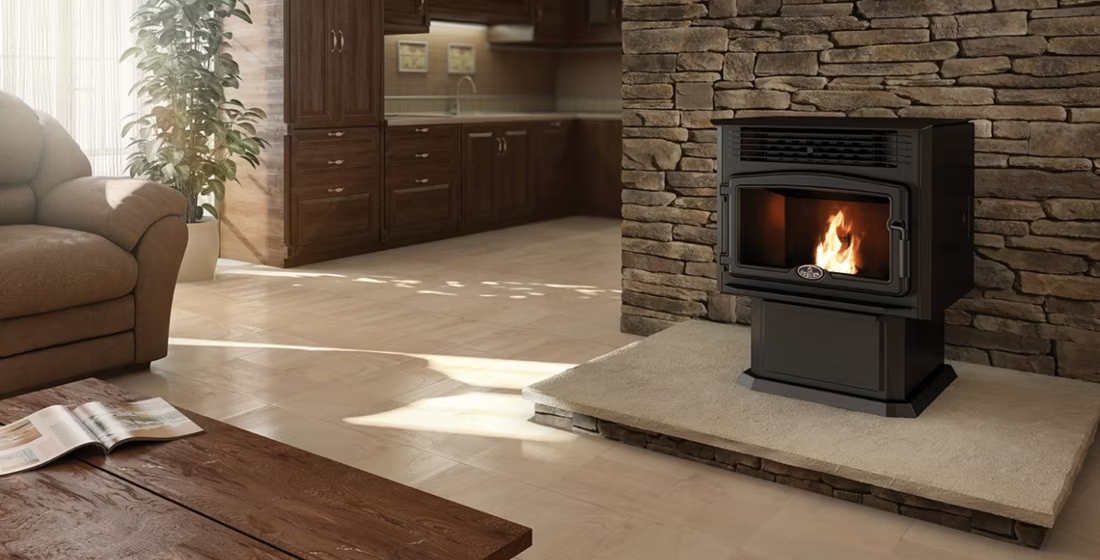
A pellet stove in Moline is the exception, not the rule.
Natural gas heats most homes across Rock Island County, but a small number of Moline homeowners still choose pellet for supplemental warmth, storm backup, or the look of a real flame without a chimney. We'll connect you with a trusted local dealer who'll tell you honestly whether it fits your house.
Every Project Starts From One of These Five Situations
Gas dominates the Quad Cities heating market.
Moline sits in the Mississippi River valley at about 628 feet of elevation, with roughly 6,024 heating degree days a year and winter lows averaging 15°F—a genuine Midwest heating season, though nowhere near as brutal as Fargo, ND. That moderate cold, paired with widespread natural gas service across Rock Island County, means most Moline homes heat primarily with a gas furnace and add a gas fireplace or insert for zone heat and ambiance. Pellet stoves, which tend to catch on in regions with heavier local wood supply or less reliable gas infrastructure, fill a much smaller niche here.
Rock Island County is farmland, not national forest, so there's no public-land permit office issuing cutting permits the way there is in timber country—the self-sufficient wood-and-pellet culture common in parts of the Pacific Northwest or northern New England never really took root in the Quad Cities. That said, pellets aren't unavailable: regional producers including Indeck Energy Services, Lignetics, and Somerset Pellet Fuel supply the upper Midwest, and a handful of Moline homeowners do run a pellet stove or insert for supplemental heat, power-outage backup, or the appeal of real flame without cordwood or a masonry chimney. If that's you, a local dealer can walk through whether the numbers and the lifestyle actually make sense for your home.
Three steps. No salesperson until you're ready.
Tell us about your project
Your zip code, your situation, and the fuel you're leaning toward—or let the answers point you to one.
See what's actually available
The brands dealers within 100 miles genuinely carry—real options, never a catalog mirage.
Get your dealer & Project Guide
A trusted local dealer, plus the free Project Guide & Parts List that names every component of the job.
Frequently Asked Questions
How much does a pellet stove installation cost in Moline?
Because pellet stoves are installed far less often here than gas units, there isn't the same depth of local pricing data you'd find in a pellet-heavy market like the Pacific Northwest. As a general guide, a freestanding pellet stove with venting typically runs $3,000 to $6,000 installed nationally, and a pellet insert into an existing masonry fireplace runs similarly once the liner and venting are accounted for. A local dealer serving Moline can give you a firm number once they've seen your home, since venting path and electrical access (pellet stoves need a standard outlet for the auger and blower) both affect the final cost.
Why don't more people in Moline use pellet stoves?
Two things work against pellet adoption here. First, natural gas service is widely available across the city, and a gas furnace or gas fireplace delivers comparable convenience without the need to buy and store fuel by the bag or ton. Second, Rock Island County is agricultural land rather than forest, so there's no national forest permit office or cutting-permit season driving the kind of wood-and-pellet self-sufficiency culture you see in places like the Rockies or northern Wisconsin. Pellet stoves still work fine in a climate like Moline's—they're just competing against an easier, already-installed alternative in most homes.
Where can I buy pellets near Moline?
Regional pellet producers that supply the upper Midwest, including Indeck Energy Services, Lignetics, and Somerset Pellet Fuel, distribute through farm-supply and hearth retailers across the Quad Cities area. Expect to pay in the neighborhood of $250 to $300 per ton, sold in 40-pound bags, with a typical heating season running 2 to 3 tons for a home using pellet as supplemental heat. Because demand is lower here than in pellet-heavy regions, it's worth confirming with a local dealer that a given brand is stocked reliably through the winter rather than special-ordered.
Is a pellet stove a good backup heat source during a power outage?
Only with a plan for backup power. Pellet stoves rely on an electric auger to feed fuel and a blower to move heat into the room, so a standard unit shuts down the moment MidAmerican Energy service drops. Some models accept a small battery backup or can run off a portable generator, which is worth asking about if outages are a real concern for your household. A wood stove or vented gas unit with a standing pilot will keep working through an outage without any of that extra equipment—something to weigh if backup heat is your main reason for considering pellet.
What size pellet stove do I need for my Moline home?
Sizing depends on square footage, insulation, and whether the stove is supplemental or primary heat—which is uncommon for pellet in this market. For a typical Moline home built before modern energy codes, a small to mid-size pellet stove (rated for 1,000 to 1,800 square feet) is usually enough to heat a living area or open main floor as a supplement to the furnace. Very few local homes lean on pellet as sole heat source given how accessible gas service already is, so oversizing for whole-home coverage is rarely the goal. A local dealer can size the room correctly during an in-home visit.
Pellet vs. gas fireplace—which is right for my Moline home?
For most Moline homeowners, gas wins on convenience: natural gas service is already common throughout Rock Island County, a direct-vent gas fireplace or insert lights instantly, and there's no fuel to haul or hopper to load. Pellet makes more sense in specific situations—a home without gas service, a homeowner who wants a real flame and the smell of a wood fire without cordwood, or someone supplementing an all-electric house where MidAmerican's residential rate (currently around 11 cents per kWh) makes electric resistance heat expensive to run constantly. If neither of those describes your situation, gas is the more common and typically more cost-effective path here.
Do I need a permit to install a pellet stove in Moline?
Yes—a new solid-fuel appliance installation, including a pellet stove or insert, typically requires a building permit through the City of Moline's building and inspection department, covering venting, clearances, and hearth pad requirements. Most established hearth dealers pull this permit as part of the installation rather than leaving it to the homeowner. Given how infrequently pellet installs happen locally compared to gas, it's worth confirming with your dealer that they're familiar with the current local code before work begins.
How does a pellet stove compare to my existing gas furnace on efficiency and running cost?
Modern pellet stoves run 70-83% efficient, which is competitive with a mid-efficiency gas furnace, though most Moline homes already have a higher-efficiency gas furnace installed as primary heat. The pellet stove's real running cost includes both the fuel—roughly $250 to $300 per ton, with a ton covering several weeks of regular use—and a modest amount of electricity for the auger and blower, billed at MidAmerican Energy's residential rate of about 11 cents per kWh. For most households here, pellet ends up being a supplemental cost layered on top of an already-installed gas furnace rather than a replacement for it.
Pellet vs. wood stove—which works better in a Moline home?
Both are relatively uncommon here, but for different reasons. A wood stove needs a steady cordwood supply—locally available species include oak, hickory, walnut, and maple—but because Rock Island County is farmland rather than public forest, there's no cutting-permit season to source wood cheaply; you're generally buying full-price cordwood from a local supplier. A pellet stove trades that for bagged fuel from regional producers like Lignetics or Somerset Pellet Fuel, easier loading, and cleaner burns, but it depends on electricity to run. If you want a fire that works through a power outage and don't mind buying firewood, wood edges out. If convenience and lower ash matter more and you have reliable power, pellet is the better fit.
What's the difference between an insert and a zero-clearance fireplace?
An insert is a fireplace that slides into a pre-existing wood-burning fireplace—if you don't have one, there's nothing to insert it into. A zero-clearance fireplace is built into a framed wall, which makes it the answer for remodels and new construction. Simple test: existing masonry fireplace means insert; blank or framed wall means zero-clearance.
Can a pellet stove heat a whole house?
It genuinely can. I burned a pellet stove as my only heat source for years after a furnace died, and it kept the entire house warm. Pellets feed automatically from a hopper, so you get wood-heat economics with thermostat-style control. Two honest caveats: it needs weekly cleaning during the season, and most models need electricity to run—ask about battery backup if outages are a concern.
How much should I budget for a fireplace?
For an average home—covering the fireplace, the vent pipe, and basic installation—a budget between $3,900 and $5,500 gives you a lot of options across wood, gas, and pellet. By the time you add finish work, gas line, and electrical, the average complete installation lands between $5,000 and $12,000 all-in. In a remodel or new build, a good rule is to put about 2.5% of the total project cost toward the fireplace.
Can a fireplace actually lower my heating bill?
Yes—by creating a comfort zone. A furnace heats every square foot of the house just to warm the one room you're in; a gas fireplace on low burns roughly a sixth of the gas a typical furnace does. Set the furnace around 55–60 degrees as a baseline, then heat the rooms your family actually uses. Families who heat this way commonly save $20–$60 a month.
Nearby Dealers
Hearth shops serving Moline and the surrounding area.
Pellet Brands Stocked Around Moline
Manufacturers will point you to the nearest stocking dealer.
Find your pellet stove fit in Moline.
Tell us about your home and heating goals, and we'll match you with a trusted local dealer who can tell you honestly whether pellet makes sense here—plus a free Project Guide & Parts List with the exact venting and parts your Moline installation needs.
Find Your Fireplace →