
Find your pellet stove in Menard County.
Thermostat-set, hopper-fed heat for the farmhouses and small towns between Petersburg and the Sangamon River—matched with a local dealer who can size and install it right.
Every Project Starts From One of These Five Situations
Convenient heat for Menard County's farmhouses and small towns.
Menard County is small—about 7,362 people spread across Petersburg, Athens, Greenview, Oakford, Tallula, and the farmland in between, much of it within sight of the Sangamon River and Lincoln's New Salem. Winters here sit in climate zone 5A, with average lows around 17°F and roughly 5,644 heating degree days a year—colder than a mild Midwest winter, but nowhere near what places like Duluth or International Falls see. That's exactly the range where pellet stoves make the most sense: enough cold to want real supplemental or zone heat, not so extreme that you need a 20-hour catalytic wood burn to survive the night.
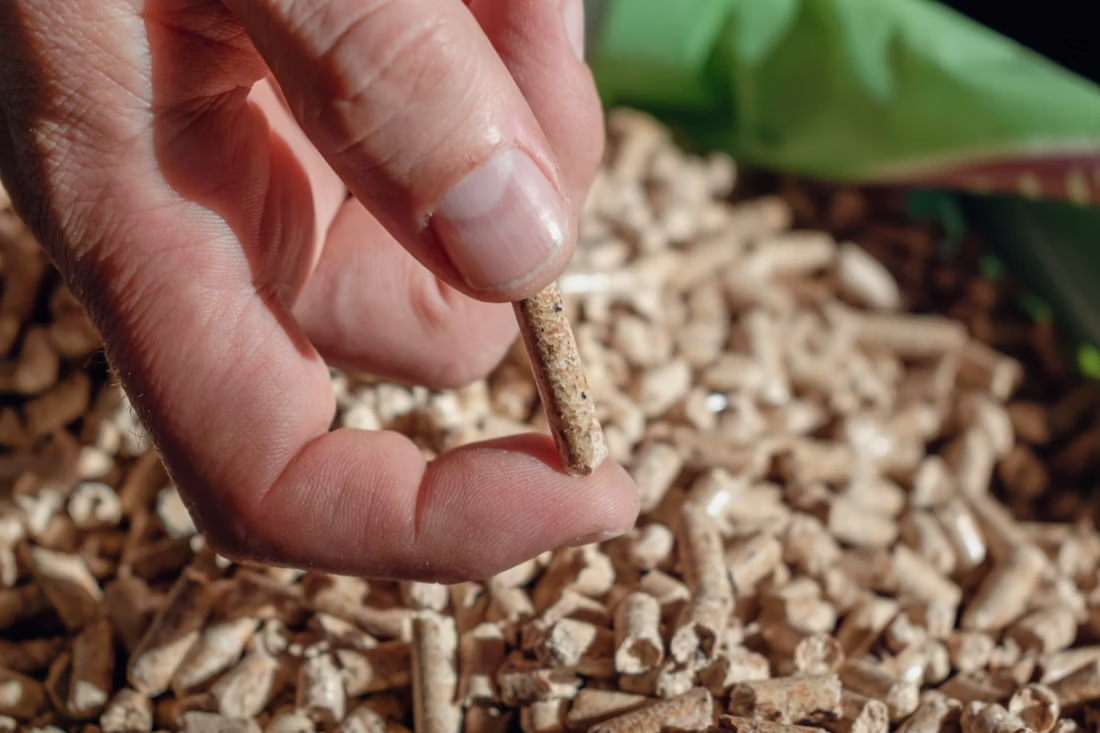
With no local air quality restrictions or wood-burning curfews in Menard County, homeowners here choose pellet largely for convenience rather than to work around a burn ban—set the thermostat, fill the hopper every day or two, and let the auger do the rest. Regional pellet supply is solid: brands like Indeck Energy Services, Lignetics, and Somerset Pellet Fuel are common on shelves at farm and hardware stores throughout central Illinois, so keeping a stove fed through a Menard County winter isn't a logistics problem the way firewood seasoning can be for households without a woodlot along the Sangamon.
Three steps. No salesperson until you're ready.
Tell us about your project
Your zip code, your situation, and the fuel you're leaning toward—or let the answers point you to one.
See what's actually available
The brands dealers within 100 miles genuinely carry—real options, never a catalog mirage.
Get your dealer & Project Guide
A trusted local dealer, plus the free Project Guide & Parts List that names every component of the job.
Frequently Asked Questions
How much does a pellet stove installation cost in Menard County?
Most pellet stove installations in Menard County run in the $3,000 to $6,000 range, depending on the unit and whether the vent path is a straightforward through-wall run or something longer. A freestanding pellet stove placed near an exterior wall—common in the older farmhouses around Petersburg and Athens—is typically on the lower end, since the vent kit is short and simple. Converting an existing masonry fireplace to a pellet insert usually costs more because the installer has to run a liner and adapt the hopper and auger housing to fit the firebox opening. Ask your local dealer for a firm quote after they've seen your fireplace or the wall you're venting through.
What size pellet stove do I need for a Menard County home?
For most single-family homes in Menard County—many of them older farmhouses with less insulation than newer construction—a stove rated for 1,200 to 1,800 square feet handles a main living area comfortably given average winter lows around 17°F. Smaller pellet stoves (under 1,000 sq ft) work well for a den, sunroom, or as supplemental heat alongside a furnace, while larger units make sense if you're trying to offset propane or electric heat costs across most of the house. A local dealer will look at your square footage, ceiling height, and how open your floor plan is before recommending a specific model—oversizing leads to a stove that short-cycles constantly, which wastes pellets and wears out the igniter faster.
Where can I find certified pellet stove installers near me?
Look for NFI (National Fireplace Institute)-certified technicians, who are trained specifically on pellet appliance venting, electrical hookup, and clearance requirements. Given Menard County's population, most homeowners end up working with a hearth dealer based in or near Springfield or Jacksonville who covers Petersburg, Athens, Greenview, and the surrounding townships—expect a modest travel charge on top of the install quote for rural addresses. Because pellet stoves run on electricity (auger motor, igniter, combustion blower), it's worth confirming your installer also checks that your outlet and circuit meet the manufacturer's electrical spec, not just the venting.
What's the difference between a pellet stove and a pellet insert?
A pellet stove is a freestanding unit that sits on its own hearth pad and vents through a wall or existing chimney—it can go almost anywhere with a nearby exterior wall, which fits a lot of the ranch and farmhouse layouts common in Menard County. A pellet insert is built to slide into an existing masonry fireplace opening, using a stainless liner run up the old chimney for venting. If you already have a fireplace you rarely use, an insert converts it into an efficient, thermostat-controlled heat source without changing the room's layout. If you don't have an existing fireplace, a freestanding stove is generally the simpler and less expensive path.
Do I need a permit to install a pellet stove in Menard County?
Most pellet stove installations require a building permit through Menard County's building department, since the work involves a wall penetration for venting and, in some cases, new electrical wiring for the unit's blower and igniter. Requirements can differ slightly for incorporated Petersburg or Athens versus unincorporated county land, so it's worth confirming with the local jurisdiction before work starts. Most hearth dealers who install pellet appliances regularly in the area handle the permit paperwork as part of the installation, so it's rarely something the homeowner has to manage alone.
What's the best pellet stove for Menard County's climate?
With winter lows averaging around 17°F and roughly 5,644 heating degree days a year, Menard County doesn't demand the largest or most extreme-duty pellet stove on the market—mid-size units in the 40,000 to 50,000 BTU range from established brands cover most homes here comfortably. What matters more locally is hopper capacity and pellet sourcing: a larger hopper (60+ lbs) means fewer refills during the coldest stretches, and since brands like Indeck Energy Services, Lignetics, and Somerset Pellet Fuel are all readily stocked in central Illinois, fuel availability generally isn't a limiting factor when choosing a model. Ask your local dealer which units they've serviced the fewest warranty claims on—that track record tends to matter more than the spec sheet.
How often does a pellet stove need to be cleaned and serviced?
Pellet stoves need more frequent attention than gas but less than wood: plan on emptying the ash pan every few days during regular winter use, cleaning the burn pot weekly to keep the igniter working properly, and scheduling a full professional cleaning and inspection once a year—typically late summer before the heating season ramps up in Menard County. That annual service should include checking the exhaust fan, combustion blower, and vent pipe for ash buildup, since a partially blocked vent is one of the more common reasons a pellet stove starts smoking back into the room.
Where can I buy pellets locally in Menard County?
Bagged pellets from brands like Indeck Energy Services, Lignetics, and Somerset Pellet Fuel are widely available at farm supply and hardware stores throughout central Illinois, and most Menard County households buy by the ton—typically 50 forty-pound bags—either picked up over the season or delivered by a local dealer ahead of winter. Buying early in fall, before the first cold snap drives up demand, is the most reliable way to get the pellet grade you want at the best price. If you're heating a farmhouse as a primary heat source rather than supplemental warmth, plan on roughly 2 to 3 tons for a typical winter given the county's average heating load.
Pellet stove vs. wood stove—which is right for my Menard County home?
Wood stoves burn cordwood—oak, hickory, walnut, and maple are all common locally along the Sangamon River bottomlands—and keep working with no electricity, which matters if you're out in the county and a winter storm knocks out power. Pellet stoves are easier to run day to day (fill the hopper, set the thermostat, empty the ash pan every few days) and burn cleaner, but the auger, igniter, and blower all need electricity, so they go dark in an outage unless you add a battery backup. For Menard County homes with a reliable electric supply and no interest in splitting or stacking wood, pellet is usually the more convenient choice. For rural properties where storm-related outages are a real concern, many homeowners keep a wood stove as backup even if pellet is their daily driver.
Why is a fireplace insert so efficient?
An insert does two things: it seals the chimney completely, so you stop losing air you already paid to heat, and it radiates warmth into the room through the firebox and glass. Most add a heat-exchange fan that pulls cool room air underneath, wraps it around the hot firebox, and pushes it back out warm. Your home is more efficient before you've even lit the first fire.
What's the difference between an insert and a zero-clearance fireplace?
An insert is a fireplace that slides into a pre-existing wood-burning fireplace—if you don't have one, there's nothing to insert it into. A zero-clearance fireplace is built into a framed wall, which makes it the answer for remodels and new construction. Simple test: existing masonry fireplace means insert; blank or framed wall means zero-clearance.
Can I install a fireplace myself?
If you're putting a fire in your house on purpose, it's best to work with an expert. Unless you're genuinely experienced in framing, gas line, vent pipe, and the national code on clearances to combustibles, have a professional do it—and ideally the same company that sells you the fireplace, so warranty, service, and liability all live under one roof.
What is an in-home preview and do I need one?
It's a visit where a hearth professional measures your space, confirms the model you picked actually works in your home, and walks the specs—framing, gas line, venting, finish work—before anything is ordered. Some details you just can't know until you see the house. Never make a down payment without one; it's the single most-skipped step that burns buyers.
Pellet Brands Stocked Around Menard County
Manufacturers will point you to the nearest stocking dealer.
Find your pellet stove in Menard County.
Tell us a bit about your home and we'll match you with the right pellet stove or insert, plus a free Project Guide & Parts List—the vent kit and parts you'll need, and the local dealer we recommend for your Menard County install.
Find Your Fireplace →