
Reliable Pellet Heat for Mason County's Long Winters.
Thermostat-controlled warmth for the farmhouses and small towns along the Illinois River—from Havana to Easton and Kilbourne. Find the right pellet stove or insert, and connect with a trusted local dealer.
Every Project Starts From One of These Five Situations
Consistent warmth without the wood-splitting labor.
Mason County is farm country—sandy Illinois River bottomland around Havana, small unincorporated communities spread across roughly 9,000 residents, and winters that run cold enough to matter. With 5,686 heating degree days and winter lows averaging 16°F, the county sits noticeably milder than places like Madison, WI or Fargo, ND, but it's still a real six-month heating season, and plenty of local households—especially those on rural acreage without easy access to natural gas—lean on supplemental heat to keep utility bills down through January and February.
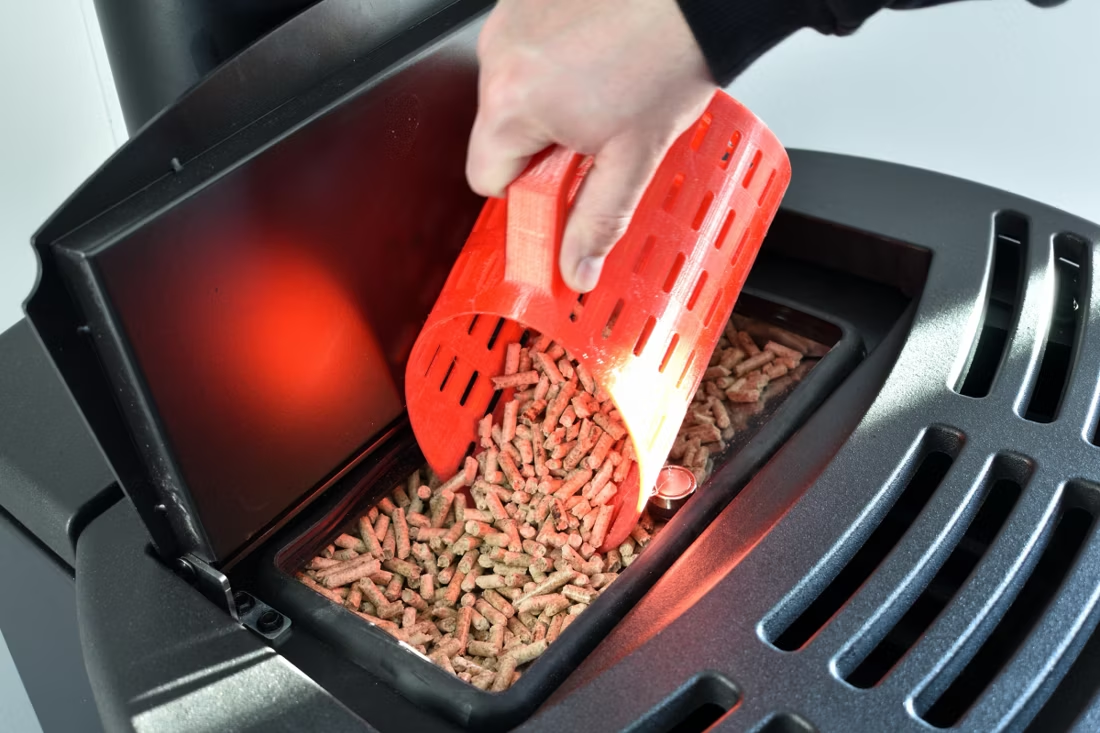
Pellet stoves have carved out a solid niche here because they solve a real problem: you get dense, radiant heat without felling and splitting the oak, hickory, walnut, and maple that grow throughout the county's woodlots, and without the daily tending a wood stove demands. Load the hopper, set the thermostat, and the auger does the rest. With pellet mills like Indeck Energy Services, Lignetics, and Somerset Pellet Fuel supplying the broader central Illinois market, fuel supply here is stable and doesn't depend on a single retailer having stock.
Three steps. No salesperson until you're ready.
Tell us about your project
Your zip code, your situation, and the fuel you're leaning toward—or let the answers point you to one.
See what's actually available
The brands dealers within 100 miles genuinely carry—real options, never a catalog mirage.
Get your dealer & Project Guide
A trusted local dealer, plus the free Project Guide & Parts List that names every component of the job.
Frequently Asked Questions
How much does a pellet stove installation cost in Mason County?
Most freestanding pellet stove installations in this part of central Illinois run in the $3,000 to $6,000 range, including the vent kit, once you factor in the model, any electrical work needed for the hopper motor and combustion blower, and whether you're venting through an existing chimney or a new wall penetration. A pellet insert that drops into an existing masonry fireplace using a liner typically lands in a similar band. Because exact pricing depends on your home's setup—and Mason County doesn't have a large concentration of dealers, so travel from the installer can factor in—a firm number really requires an in-home look. That's the kind of detail your matched dealer will nail down before you commit to anything.
What size pellet stove do I need for my home?
For a typical Mason County home—often an older farmhouse with some drafty spots, or a newer build on a rural lot—a small pellet stove (rated for 1,000-1,300 sq ft) works well for a single large living space or supplemental heat. A medium stove (1,300-2,000 sq ft) covers most main-floor living areas in this climate, and a large stove (2,000+ sq ft) can serve as primary heat in a well-insulated home given the county's 5,686 heating degree days. Homes with open floor plans or high ceilings—common in older farmhouses around Havana and Bath—often need to size up from the square-footage chart alone. A local dealer will walk your space before recommending a model.
Where can I buy pellet fuel near me in Mason County?
Pellets are widely available through farm supply stores and hearth dealers serving the county, and the regional supply chain is solid—Indeck Energy Services, Lignetics, and Somerset Pellet Fuel all distribute into central Illinois, so you're not dependent on one manufacturer having stock during a cold stretch. Most homeowners buy in 40-lb bags by the pallet (a ton is 50 bags) either picked up locally or delivered. Buying your season's supply in late summer or early fall—before the first cold snap drives up local demand—is the standard move here, and it also means you're not hunting for pellets during a January cold spell when everyone else is buying too.
Will my pellet stove work during a power outage?
Not without a backup power source—this is the one honest tradeoff of pellet heat. Pellet stoves rely on an electric auger to feed fuel and a blower to move heat into the room, so a power outage stops the stove even with a full hopper. For rural Mason County homes where ice storms or summer storm outages can knock out power for hours, some owners pair their pellet stove with a small battery backup (UPS) or a portable generator sized to handle the stove's modest draw (typically under 120 watts). If uninterrupted heat during outages is a top priority, a wood stove that needs no electricity is worth comparing against—your dealer can walk through both.
Do I need a permit to install a pellet stove in Mason County?
Most jurisdictions require a building permit for a new pellet stove installation, particularly when it involves a new wall penetration for venting or new electrical circuit work for the unit. Mason County's building department is the place to check for unincorporated areas; if you're inside Havana or another incorporated town, the local building office handles it instead. Most established hearth dealers pull the permit as part of the installation, so in practice you're rarely the one filing paperwork—but it's worth confirming before work starts, since an uninspected install can complicate insurance claims down the road.
Pellet stove vs. wood stove—which is right for me?
Wood stoves burn free or low-cost fuel if you have access to a woodlot—and Mason County has plenty of oak, hickory, walnut, and maple around—work with zero electricity, and give you the radiant heat and visual character of a real fire. Pellet stoves trade the wood-splitting labor for convenience: load a hopper instead of feeding logs every few hours, get more consistent output, and produce far less ash and creosote. The catch is pellet stoves need electricity to run, so they're not a fallback during outages the way a wood stove is. For a lot of households here, the choice comes down to whether you already have a reliable wood supply and don't mind the physical work, or would rather buy pellets by the pallet and set a thermostat.
How often does a pellet stove need cleaning and maintenance?
Plan on cleaning the burn pot and ash pan every few days to weekly during regular use, and a full deep clean—including the exhaust fan, hopper, and venting—once a season, usually done by a technician before or after peak heating months. Pellet stoves don't generate creosote the way wood stoves do, so the fire-safety stakes around chimney fires are lower, but a clogged burn pot or dirty exhaust fan will hurt efficiency and can trigger the stove's safety shutoffs. A local dealer or hearth service technician can handle the annual service call if you'd rather not do it yourself.
What's the difference between a pellet stove and a pellet insert?
A pellet stove is a freestanding unit that sits on its own hearth pad and vents through a wall or existing chimney chase—it can go almost anywhere with the right clearances. A pellet insert is built to slide into an existing masonry fireplace opening, using a vent liner run up the old chimney, which is a common upgrade for older Mason County farmhouses that already have a wood-burning fireplace sitting mostly unused. If you have an existing fireplace you want to put back into service, an insert is usually the more cost-effective route since it reuses the chimney chase you already have.
How much pellet fuel will I need for a Mason County winter?
With 5,686 heating degree days and a heating season that runs roughly November through March, a pellet stove used as a primary or heavy supplemental heat source in an average-sized, reasonably insulated home typically burns through 2 to 3 tons of pellets over the winter—more if the stove is your only heat source or the house is older and drafty, which describes a fair number of farmhouses in the county. Buying your season's supply early from a dealer sourcing through Indeck Energy Services, Lignetics, or Somerset Pellet Fuel avoids the scramble—and often the price bump—that happens once a cold spell hits and everyone's calling around for pellets at once.
What's the difference between an insert and a zero-clearance fireplace?
An insert is a fireplace that slides into a pre-existing wood-burning fireplace—if you don't have one, there's nothing to insert it into. A zero-clearance fireplace is built into a framed wall, which makes it the answer for remodels and new construction. Simple test: existing masonry fireplace means insert; blank or framed wall means zero-clearance.
How often does a pellet stove need cleaning?
A clean pellet stove is a happy pellet stove. Plan on cleaning the burn pot about once a week when you're burning regularly—ash and clinkers gum up the air holes just like a pellet barbecue. Most pellet stove problems trace back to skipped cleaning that nobody explained up front. Some designs make it easy with a trapdoor burn pot: pull a lever and the gunk drops into the ash pan.
Can a fireplace actually lower my heating bill?
Yes—by creating a comfort zone. A furnace heats every square foot of the house just to warm the one room you're in; a gas fireplace on low burns roughly a sixth of the gas a typical furnace does. Set the furnace around 55–60 degrees as a baseline, then heat the rooms your family actually uses. Families who heat this way commonly save $20–$60 a month.
How much should I budget for a fireplace?
For an average home—covering the fireplace, the vent pipe, and basic installation—a budget between $3,900 and $5,500 gives you a lot of options across wood, gas, and pellet. By the time you add finish work, gas line, and electrical, the average complete installation lands between $5,000 and $12,000 all-in. In a remodel or new build, a good rule is to put about 2.5% of the total project cost toward the fireplace.
Pellet Brands Stocked Around Mason County
Manufacturers will point you to the nearest stocking dealer.
Find your pellet stove in Mason County.
Tell us a bit about your home and heating goals, and we'll match you with a trusted local dealer and send over a free Project Guide & Parts List—sized right for your space, with the vent kit and parts you'll actually need.
Find Your Fireplace →