
Steady, efficient heat for Marshall County's cold farm winters.
From Lacon and Henry to Varna, Wenona, and the farmland in between, Marshall County sees average winter lows around 18°F and roughly 5,600 heating degree days a year. A pellet stove delivers thermostat-like, clean-burning heat without a woodpile—find the right unit and connect with a trusted local dealer.
Every Project Starts From One of These Five Situations
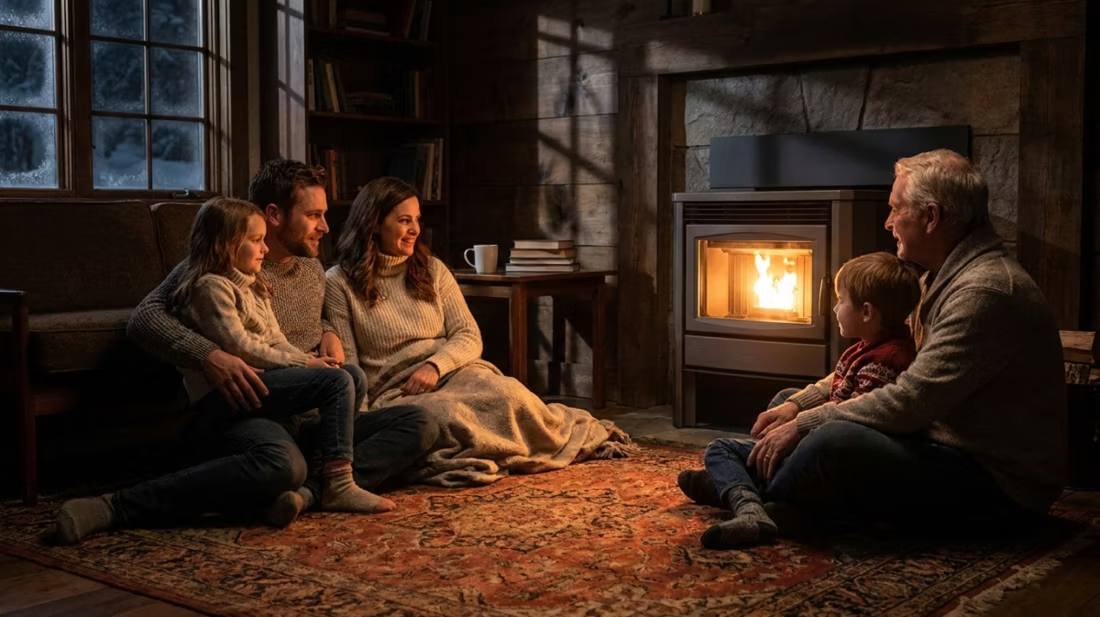
Efficient warmth without the woodpile.
Marshall County is small—about 7,900 people spread across a strip of farmland and river towns along the Illinois River, from Lacon and Henry down through Sparland, Varna, Wenona, and Toluca. Sitting in climate zone 5A with roughly 5,603 heating degree days a year and average winter lows near 18°F, the county's winters are colder and longer than Chicago's collar counties but nowhere near what places like Fargo, ND or Duluth, MN see. That's a good middle ground for pellet heat: cold enough to matter for months at a stretch, but mild enough that a mid-sized pellet stove or insert can genuinely carry a room, or a whole modest farmhouse, through the season.
Marshall County has no air quality non-attainment issues or wood-burning restrictions on the books, so there's nothing local standing in the way of a pellet appliance—it's simply about finding the right size and the right dealer. The county sits in hardwood country, with oak, hickory, walnut, and maple common on the wooded ridges above the river bottoms, but pellet fuel here comes bagged rather than self-cut, sourced through regional suppliers like Indeck Energy Services, Lignetics, and Somerset Pellet Fuel. For homeowners who like the idea of a real, visible flame but don't want to split, stack, and haul oak and hickory all winter, that's the appeal: load the hopper, set the thermostat, and let the auger do the work.
Three steps. No salesperson until you're ready.
Tell us about your project
Your zip code, your situation, and the fuel you're leaning toward—or let the answers point you to one.
See what's actually available
The brands dealers within 100 miles genuinely carry—real options, never a catalog mirage.
Get your dealer & Project Guide
A trusted local dealer, plus the free Project Guide & Parts List that names every component of the job.
Frequently Asked Questions
How much does a pellet stove installation cost in Marshall County?
A freestanding pellet stove installation in Marshall County typically runs $2,500 to $5,500, depending on the unit, whether new venting is needed, and any hearth pad or floor protection required for code clearances. A pellet insert going into an existing masonry fireplace usually costs a bit more once the vent liner and surround are factored in—often $4,000 to $7,000. Rural properties out toward Camp Grove or La Rose may see a modest travel charge added to the install quote simply due to distance from the nearest dealer.
What size pellet stove do I need for my home?
Sizing depends on square footage, ceiling height, and how airtight the house is—older farmhouses around Lacon and Henry with less insulation generally need more heating capacity than a newer, tighter build of the same size. As a rough guide: smaller stoves suit a single room or a 1,000-square-foot home, mid-size units handle 1,000 to 1,800 square feet, and larger pellet stoves can carry a well-insulated home up to around 2,200 square feet as a primary heat source. Given Marshall County's roughly 5,600 heating degree days a year, it's worth sizing toward the higher end of a range rather than the low end—a local dealer will walk the house and size it properly rather than guess off square footage alone.
Where can I buy pellets locally in Marshall County?
Regional pellet brands like Indeck Energy Services, Lignetics, and Somerset Pellet Fuel supply dealers across central Illinois, and most hearth retailers serving Marshall County either stock bags directly or can point you to a nearby supplier. Buying a season's supply—typically 2 to 4 tons for a home using a pellet stove as primary heat through a Marshall County winter—ahead of the cold months usually gets better pricing than buying bag by bag as you go. Ask your dealer whether they offer seasonal delivery, since hauling multiple tons of 40-pound bags from town yourself gets old fast.
What's the difference between a pellet stove and a pellet insert?
A pellet stove is a freestanding unit that sits on its own hearth pad and vents through a wall or existing chimney—it can go almost anywhere in the house with the right clearances. A pellet insert is built to slide into an existing masonry fireplace opening, turning a drafty, rarely-used wood fireplace into an efficient, thermostat-controlled heat source using the existing chimney as the vent path. For the older homes common around Lacon and Henry with an existing brick fireplace, an insert is usually the more natural fit. Homes without an existing fireplace generally do better with a freestanding stove.
Do I need a permit to install a pellet stove in Marshall County?
Most pellet stove and insert installations require a building permit, issued through the Marshall County Zoning Office in Lacon for unincorporated areas, or through the local village office if you're inside city limits like Henry or Wenona. Because pellet stoves vent through smaller-diameter pipe than wood stoves and burn far cleaner, the permitting process is usually simpler and faster than a wood-burning install. Most hearth dealers handle the permit paperwork as part of the installation, so this typically isn't something you have to manage yourself.
What's the best pellet stove for Marshall County's climate?
With roughly 5,600 heating degree days a year and winter lows regularly in the teens, look for a pellet stove with a wide BTU range and a reliable auger and hopper system rated for extended, continuous burns—you'll be running it most days from November through March. Larger hopper capacities (40 pounds or more) mean fewer refills during the coldest stretches. If the home has drafty older construction, common in the county's farmhouses, size toward a mid-to-large unit rather than the smallest model on the showroom floor. A local dealer can match specific models to your square footage and insulation level.
How often does a pellet stove need to be cleaned and serviced?
Pellet stoves need more frequent light maintenance than wood stoves, but far less than a full chimney sweep. Plan to empty the ash pan and clean the burn pot every few days to weekly depending on use, and have the exhaust venting, hopper, and auger system professionally inspected once a year—typically before the heating season starts in early fall. Regular ash removal matters more in Marshall County's long burn season, since a stove running daily from November through March will accumulate ash faster than one used only occasionally.
Will my pellet stove work if the power goes out?
No—unlike a wood stove, a pellet stove depends on electricity to run the auger that feeds pellets and the blower that distributes heat, so it will shut down in a power outage. That's worth weighing carefully for rural parts of Marshall County, where farm-area power lines can go down in winter storms and restoration can take longer than in town. Some homeowners pair a pellet stove with a small battery backup or generator specifically to keep it running during outages; others keep a wood stove or fireplace as backup heat for exactly this reason. Ask your local dealer about battery backup options if reliable power is a concern at your address.
Pellet stove vs. wood stove—which is right for my home?
Wood stoves work without electricity, which matters if outages are a concern on your stretch of county road, and pair well with the oak, hickory, and walnut that grow throughout the area—but they require cutting, splitting, stacking, and regular chimney sweeping. Pellet stoves are far more convenient: load the hopper, set the thermostat, and get consistent heat with minimal ash and no chimney creosote buildup, but they need electricity and a steady bagged-pellet supply from suppliers like Lignetics or Somerset Pellet Fuel. For most in-town homes in Lacon, Henry, or Wenona with reliable power, pellet is the lower-hassle choice. For rural properties where backup heat during outages matters most, wood remains the more resilient option—and some households keep both.
Why is a fireplace insert so efficient?
An insert does two things: it seals the chimney completely, so you stop losing air you already paid to heat, and it radiates warmth into the room through the firebox and glass. Most add a heat-exchange fan that pulls cool room air underneath, wraps it around the hot firebox, and pushes it back out warm. Your home is more efficient before you've even lit the first fire.
How often does a pellet stove need cleaning?
A clean pellet stove is a happy pellet stove. Plan on cleaning the burn pot about once a week when you're burning regularly—ash and clinkers gum up the air holes just like a pellet barbecue. Most pellet stove problems trace back to skipped cleaning that nobody explained up front. Some designs make it easy with a trapdoor burn pot: pull a lever and the gunk drops into the ash pan.
What is an in-home preview and do I need one?
It's a visit where a hearth professional measures your space, confirms the model you picked actually works in your home, and walks the specs—framing, gas line, venting, finish work—before anything is ordered. Some details you just can't know until you see the house. Never make a down payment without one; it's the single most-skipped step that burns buyers.
Can I install a fireplace myself?
If you're putting a fire in your house on purpose, it's best to work with an expert. Unless you're genuinely experienced in framing, gas line, vent pipe, and the national code on clearances to combustibles, have a professional do it—and ideally the same company that sells you the fireplace, so warranty, service, and liability all live under one roof.
Pellet Brands Stocked Around Marshall County
Manufacturers will point you to the nearest stocking dealer.
Find your pellet stove in Marshall County.
Tell us a bit about your home and we'll match you with the right pellet stove or insert, plus a free Project Guide & Parts List—the exact parts, including the vent kit, and our recommended local dealer for your Marshall County installation.
Find Your Fireplace →