
Instant heat, zero mess, for Macoupin County homes.
From Carlinville to Gillespie, Staunton, Virden, and the smaller towns between, electric fireplaces give Macoupin County homeowners real zone heat and ambiance without a chimney, gas line, or permit hassle. Find the right unit and connect with a trusted local dealer.
Every Project Starts From One of These Five Situations
Electric heat that fits any room, any budget.
Macoupin County sits in climate zone 4A, with an average winter low around 19°F and a heating season about as demanding as a solid Illinois winter brings—a real Illinois winter, though nowhere near the extremes of Duluth or Fargo. Heating season stretches from late October into April across the county's farm towns and former coal communities, from Carlinville and Gillespie out to Staunton, Virden, Girard, and Mount Olive. Many of the county's older farmhouses and Main Street storefronts converted from coal to other fuels decades ago, and a lot of that housing stock still runs on propane, wood, or electric baseboard rather than natural gas.
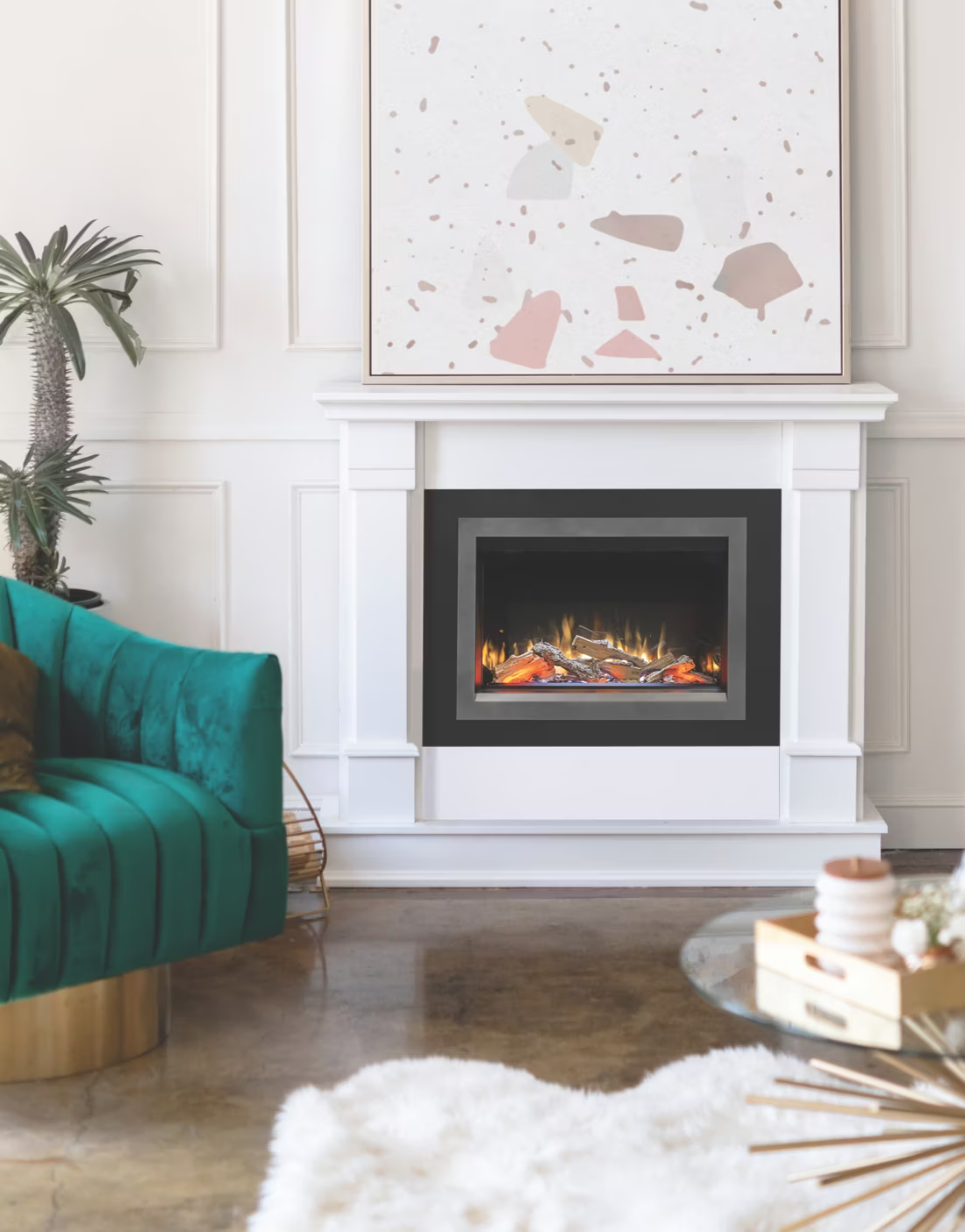
That's where electric fireplaces do their best work in Macoupin County—as a fast, code-simple way to add heat and ambiance to a specific room without opening a wall for venting or running new gas line. Most of the county is served by Ameren Illinois, with Southwestern Electric Cooperative and Illinois Rural Electric Cooperative covering large stretches of the rural townships. Electric units plug into a standard outlet or a dedicated 240V circuit, install in an afternoon, and give you supplemental warmth in a bedroom, sunroom, or finished basement—while your furnace or propane system keeps handling the whole-house load through the coldest stretches of the winter.
Three steps. No salesperson until you're ready.
Tell us about your project
Your zip code, your situation, and the fuel you're leaning toward—or let the answers point you to one.
See what's actually available
The brands dealers within 100 miles genuinely carry—real options, never a catalog mirage.
Get your dealer & Project Guide
A trusted local dealer, plus the free Project Guide & Parts List that names every component of the job.
Frequently Asked Questions
How much does it cost to install an electric fireplace in Macoupin County?
Most electric fireplace and insert installations in Macoupin County run $300 to $1,200. A plug-in insert dropped into an existing fireplace opening or a wall-mount unit on a standard 120V outlet sits at the low end—often a DIY-friendly project. Built-in units that require a dedicated 240V circuit, an electrician to run new wiring, or custom mantel and surround carpentry push toward the higher end. Because there's no venting or gas line involved, electric is consistently the least expensive fireplace fuel to install countywide, whether you're in a Carlinville subdivision or an older farmhouse outside Girard.
Do I need a permit to install an electric fireplace in Macoupin County?
In most cases, no. A plug-in electric fireplace or insert that uses an existing outlet typically doesn't require a permit through Macoupin County Building and Zoning. If your installer needs to run a new dedicated circuit or add a sub-panel to handle a larger built-in unit, that electrical work generally does need to be pulled by a licensed electrician and may require an inspection. Local dealers who handle electric installs regularly can tell you upfront whether your specific unit and wiring situation crosses that line.
Will an electric fireplace actually heat my house through a Macoupin County winter?
Not as a whole-home solution—and any honest dealer will tell you that. With a heating season that runs from late October into April, Macoupin County winters put real, sustained demand on a heating system, and electric resistance heat is more expensive per BTU than propane, natural gas, or wood. Where electric fireplaces earn their keep is zone heating: taking the chill off a bonus room, sunroom, or finished basement so you can turn down the thermostat elsewhere, or adding backup warmth in a room that's hard to heat well with the main system. For primary heat in an older Macoupin County farmhouse, most homeowners still lean on propane, wood, or a furnace.
What size electric fireplace do I need?
Electric fireplace heaters are typically rated up to about 5,000-9,000 BTU, which is enough to comfortably supplement heat in a single room of 300 to 500 square feet with reasonable insulation—think a bedroom addition in Staunton or a finished basement rec room in Virden. Larger or drafty spaces, common in the county's older two-story homes, may need a higher-output unit or won't feel the heating effect much beyond ambiance. Local dealers will ask about your room's square footage, ceiling height, and window exposure before recommending a specific model.
Electric vs. wood—which makes more sense for my Macoupin County home?
Wood is the better choice if you want real heat output, lower ongoing fuel cost, and a heat source that still works during a power outage—a genuine consideration in the rural townships served by co-op lines, where storm-related outages can run longer than in town. Local hardwoods like oak, hickory, walnut, and maple are all common and split well. Electric wins on simplicity: no chimney, no ash, no wood storage, and it can go virtually anywhere in the house, including upstairs bedrooms or condos where a wood stove isn't practical. Many Macoupin County households end up with both—wood or propane for real heat, electric for a low-maintenance secondary room.
Insert, wall-mount, or freestanding electric fireplace—what's the difference?
An electric insert drops into an existing fireplace opening—a common upgrade for older masonry fireplaces in Carlinville's historic homes that are no longer used for wood burning. A wall-mount unit hangs like a flat-screen TV and needs no hearth or existing opening, which makes it popular in newer builds and remodels. A freestanding electric stove or mantel-style unit sits on the floor and can be relocated, which suits renters and manufactured homes across the county's smaller towns. All three plug into standard household current or a dedicated circuit depending on wattage, with no venting required for any of them.
How much does an electric fireplace add to my electric bill?
A typical 1,500-watt electric fireplace heater run for several hours a day during heating season adds roughly $20 to $40 a month to an Ameren Illinois or rural co-op bill, depending on your rate and how often the heater element runs versus just the flame effect. Running the flame visual alone without the heater draws very little power—a fraction of what the heating element uses. For homes on Southwestern Electric Cooperative or Illinois Rural Electric Cooperative service, it's worth checking your specific kWh rate, since co-op rates can differ from Ameren's standard residential rate.
How does electric compare to pellet stoves for supplemental heat here?
Pellet stoves, using bagged fuel from regional suppliers like Indeck Energy Services, Lignetics, or Somerset Pellet Fuel, put out considerably more heat than an electric fireplace and can realistically supplement or replace furnace heat in a well-sized room or open floor plan. But they require a hopper to load, periodic ash cleanout, and electricity to run the auger and blower—so they go down in a power outage just like electric fireplaces do. Electric fireplaces are simpler and cheaper to install, with none of the fuel handling, but produce far less actual heat. If your goal is genuine supplemental heat for a larger space, a pellet stove is usually the stronger performer; if your goal is ambiance plus modest warmth in a small room, electric is the easier, lower-cost route.
Are electric fireplaces safe to run unattended, and do they need maintenance?
Electric fireplaces are among the lowest-maintenance heating appliances you can install—there's no flue to sweep, no gas line to inspect, and most units are cool to the touch on the exterior, which matters in households with kids or pets. Because there's no open flame or combustion byproducts, many homeowners run them unattended more comfortably than a wood or gas unit, though it's still smart to plug directly into a wall outlet rather than an extension cord and to keep the unit clear of dust and furniture. Maintenance is generally limited to occasionally cleaning the vents and, on older units, replacing the heating element or LED light strip after years of use—something any local dealer who sold you the unit can typically handle.
Does an electric fireplace need a vent or chimney?
No—that's its superpower. An electric fireplace needs a wall and an outlet, period. No vent pipe, no gas line, no clearances to design around, which is why it works in bedrooms, offices, apartments, and walls where venting a gas or wood unit would be impractical or impossible. Installation is typically the simplest and least expensive of any fireplace type.
Can I put a TV above my fireplace?
Yes—with an asterisk. Fireplaces are hot and TVs don't like heat. Either put a mantel between them to deflect rising warmth, or choose a fireplace with heat-management technology that creates a cool zone on the wall above—the wall stays around 125 degrees, barely warm, while the room still gets full heat. If you like clean lines and don't want a mantel, heat management is the answer.
What is an in-home preview and do I need one?
It's a visit where a hearth professional measures your space, confirms the model you picked actually works in your home, and walks the specs—framing, gas line, venting, finish work—before anything is ordered. Some details you just can't know until you see the house. Never make a down payment without one; it's the single most-skipped step that burns buyers.
Can a fireplace actually lower my heating bill?
Yes—by creating a comfort zone. A furnace heats every square foot of the house just to warm the one room you're in; a gas fireplace on low burns roughly a sixth of the gas a typical furnace does. Set the furnace around 55–60 degrees as a baseline, then heat the rooms your family actually uses. Families who heat this way commonly save $20–$60 a month.
Find your electric fireplace in Macoupin County.
Tell us a bit about your home and we'll match you with the right electric fireplace, insert, or wall-mount unit—and connect you with a trusted local dealer for a free Project Guide & Parts List.
Find Your Fireplace →