
Find the right fireplace for your Macoupin County home.
Wood, gas, pellet, and electric fireplace resources for every town in Macoupin County—from Carlinville to Mount Olive to Virden. Pick your fuel and get matched with a trusted local hearth retailer.
Every Project Starts From One of These Five Situations
Steady four-season heating in west-central Illinois.
Macoupin County sits in the farmland between Springfield and St. Louis, with the county seat in Carlinville and old coal-mining towns like Gillespie, Staunton, and Mount Olive scattered across roughly 860 square miles. Winters here average a low around 19°F—a real four-month heating season, though far milder than the brutal winters up in Duluth, MN or International Falls. The creek bottoms and farm woodlots that thread through the county produce oak, hickory, walnut, and maple—the exact hardwoods that make for long, hot burns in a wood stove or insert.
What you'll find on this hub: hearth retailers, service technicians, and fuel suppliers covering every community in the county—Carlinville, Gillespie, Staunton, Virden, Bunker Hill, Mount Olive, Girard, and the smaller towns between them. Pick your fuel below to get into specifics—local dealers, installation costs, recommended units, and the resources that fit your project. Whether you're heating a farmhouse outside Girard or a brick two-story in Carlinville, this is the starting point.
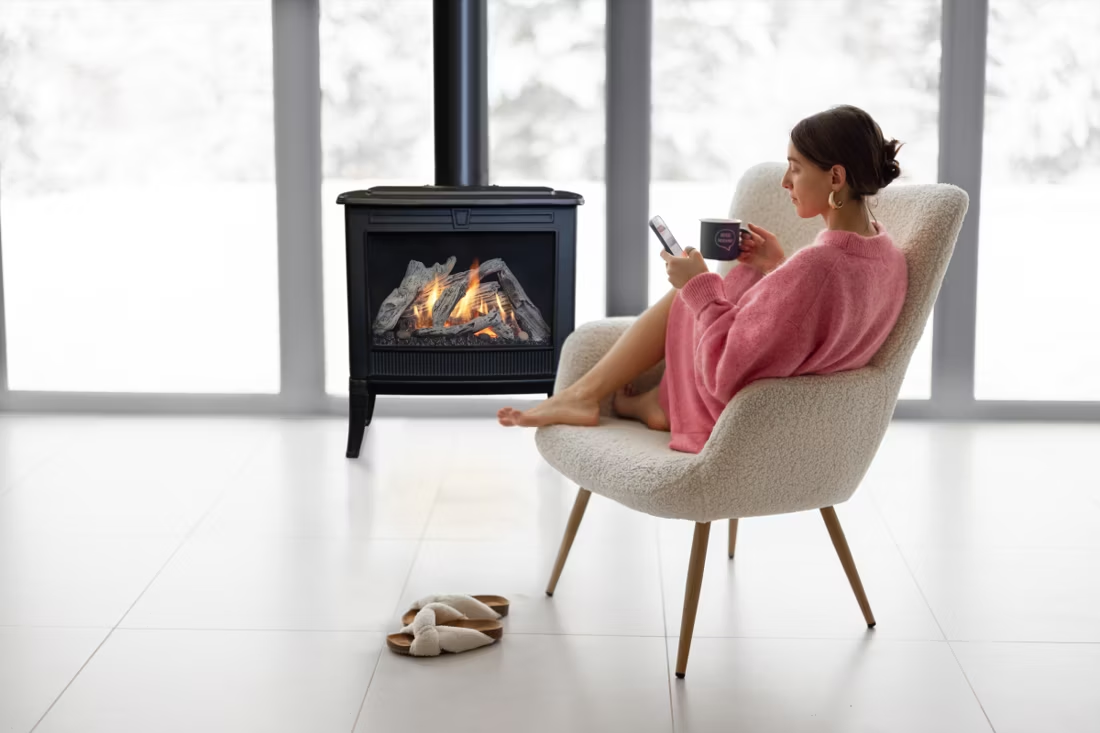
Four fuels. One honest answer for Macoupin County.
Three steps. No salesperson until you're ready.
Tell us about your project
Your zip code, your situation, and the fuel you're leaning toward—or let the answers point you to one.
See what's actually available
The brands dealers within 100 miles genuinely carry—real options, never a catalog mirage.
Get your dealer & Project Guide
A trusted local dealer, plus the free Project Guide & Parts List that names every component of the job.
Frequently Asked Questions
Which fuel works best in Macoupin County?
It depends on the house and how you use it. Wood is a natural fit here—the county's creek-bottom timber and farm woodlots produce oak, hickory, walnut, and maple, all dense hardwoods that hold a fire well through a 19°F overnight low. A lot of rural Macoupin County households already have access to their own firewood or know someone who does, which keeps wood heat cheap. Gas is the convenience option—natural gas service reaches most of the incorporated towns (Carlinville, Gillespie, Staunton, Virden), while propane covers the more rural stretches; either way it's push-button heat with no wood-hauling. Pellet splits the difference—you get wood-style ambiance and heat output without splitting logs, and regional supply from brands like Indeck Energy Services and Lignetics keeps bags affordable. Electric is best treated as supplemental—good for a den or finished basement, but not something to lean on through a full Illinois winter. Plenty of homes here run a wood or pellet stove as the workhorse and gas or electric for secondary rooms.
Do I need a permit to install a fireplace in Macoupin County?
In most cases, yes. New wood stoves, wood inserts, gas fireplaces, gas inserts, gas stoves, and pellet stoves typically require a building permit through the local municipal building department if you're inside Carlinville, Gillespie, Staunton, or another incorporated town, or through Macoupin County's building/zoning office if you're in an unincorporated area. Gas installations also need a separate gas-line permit and a licensed installer for the actual gas hookup, whether you're on natural gas in town or running off a propane tank in the country. Electric fireplace inserts usually skip the permit unless you're hardwiring a built-in unit into a new circuit. Most local hearth retailers pull the permit as part of the installation, so you're rarely doing the paperwork yourself.
Are there air quality restrictions on wood burning in Macoupin County?
No—Macoupin County doesn't fall under any air quality non-attainment designation or wood-burning advisory program, unlike some western states with basin inversions or wildfire-smoke concerns. That means there's no seasonal curtailment on wood stove use here. That said, EPA emissions standards still apply to newly manufactured stoves and inserts, so any new install will be a certified, cleaner-burning unit regardless of local air rules. If you're burning your own oak or hickory cordwood, the main practical consideration is making sure it's seasoned—green firewood burns dirtier and less efficiently no matter where you live.
Can one local hearth retailer handle all four fuel types?
Many hearth retailers serving Macoupin County carry at least three of the four fuel types—wood, gas, and pellet are the common combination, with electric fireplaces stocked as a smaller product line since they're simpler to install. If you're cross-shopping fuels, a multi-fuel dealer based in or near Carlinville or Gillespie can usually show you working displays of wood, gas, and pellet units side by side and talk through the trade-offs for your specific house. Some smaller operations specialize—a stove shop that focuses heavily on wood and pellet, for instance, may point you elsewhere for a full gas-line install. Ask what a retailer stocks and installs before assuming they cover everything.
How does service work in the rural parts of Macoupin County?
Most service technicians covering Macoupin County are based near Carlinville or Gillespie and drive out to the smaller towns—Mount Olive, Bunker Hill, Girard, Virden, and the farm roads between them. Because the county is only around 860 square miles, most service calls are same-day or next-day without a heavy travel surcharge, though some techs do add a modest trip fee for the farthest-flung addresses. Fall (September–November) is the easiest window to book annual chimney sweeps and gas inspections before the cold sets in; waiting until a hard freeze hits means longer lead times. If you're heating with wood as backup for a pellet or gas system, keep dry, seasoned oak or hickory on hand—it's the most reliable fallback during an ice-storm power outage.
What's the typical cost range for fireplace installation across all fuel types in Macoupin County?
Costs vary by fuel and by how much existing infrastructure a home already has. Wood stove or insert installation: roughly $3,800–$8,500 for a typical retrofit into an existing chimney, more if new masonry or a full liner is needed. Gas fireplace, insert, or stove: roughly $4,000–$10,000 depending on whether gas line work is required—lower if the home already has service nearby. Pellet stove or insert: roughly $4,200–$7,000 for most installs. Electric fireplace: $200–$2,800 for the unit itself, plus $300–$1,000 in labor for anything beyond a plug-and-play wall unit. These are general county ranges—the county + fuel pages above break down local retailer pricing in more detail.
Wood, gas, pellet, or electric—how do I choose?
Match the fuel to your life, not the other way around. Wood: lowest fuel cost and total power-outage independence, but you're hauling and stacking. Gas: press a button, set a thermostat, no maintenance to speak of. Pellet: wood economics with automatic feeding, in exchange for weekly cleaning and a need for electricity. Electric: plugs in anywhere with honest supplemental heat. Nobody regrets the fuel that fits how they actually live.
Does a fireplace add value to my home?
On average, a fireplace adds back to the home about the same amount you spent installing it. Add the monthly savings from heating the rooms you actually use instead of the whole house—often hundreds of dollars a year—and the value case is strong before you even count what a fire does for how your family uses the room.
Can a fireplace actually lower my heating bill?
Yes—by creating a comfort zone. A furnace heats every square foot of the house just to warm the one room you're in; a gas fireplace on low burns roughly a sixth of the gas a typical furnace does. Set the furnace around 55–60 degrees as a baseline, then heat the rooms your family actually uses. Families who heat this way commonly save $20–$60 a month.
What is an in-home preview and do I need one?
It's a visit where a hearth professional measures your space, confirms the model you picked actually works in your home, and walks the specs—framing, gas line, venting, finish work—before anything is ordered. Some details you just can't know until you see the house. Never make a down payment without one; it's the single most-skipped step that burns buyers.
Stove and Fireplace Dealers in Macoupin County
Listings include WhyFire partner dealers, dealers we have verified as authorized for the brands we recommend, and established local businesses that carry hearth products. Every listing shows which one it is. The ones marked Preferred run on WhyFire's software, so they can show you real pricing and book your appointment right here. No manufacturer pays for placement. How we verify dealers →
Suhre'S Gas Co.
Quality Lighting
Marx Fireplaces & Lighting
Bel-O Fireplaces & More
Villa Lighting Supply
Gas Appliance Service LLC
Savvy Surroundings
Hearthside Grill & Fireplace
Forshaws
Fireside Hearth & Grill Center
Fireplace And Grill Center
English Sweep
C Bennett Building Supply
Brighthouse Living
Summer Classics By Forshaw
Hearth & Home Service & Construction
Arnold Stove & Fireplace Center
Get matched with a Macoupin County hearth dealer.
Tell us your fuel and your town, and we'll send a free Project Guide & Parts List—the exact parts, including the vent kit, and our recommended local dealer for your project.
Find Your Fireplace →