
Pellet stoves are rare in Logan County—but not impossible.
Around Lincoln and the farmland that makes up most of Logan County, natural gas and propane do the heavy lifting for home heat. Pellet stoves still have a place for specific homes and situations—we'll help you figure out if yours is one of them, and connect you with a local dealer who actually carries and installs them.
Every Project Starts From One of These Five Situations
Most Logan County homes heat with gas—pellet fills a narrow gap.
Logan County sits in central Illinois farm country, population just under 20,000 spread across Lincoln and a handful of smaller towns and unincorporated farmsteads along the I-55 and I-72 corridors. The climate is Zone 5A, with average winter lows around 18°F and a heating season comparable to what a home in Madison, Wisconsin, deals with—cold enough to demand real heat for five or six months, but not the kind of extreme cold that drives homeowners toward niche heating equipment out of necessity.
That's a big part of why pellet stoves haven't caught on broadly here: incorporated towns are well served by natural gas, and rural properties typically run on propane, so most homeowners already have a reliable, low-maintenance heat source. Pellet appliances still show up occasionally—usually in older farmhouses looking for supplemental zone heat, in homes without an easy natural gas hookup, or from people who like the clean-burning convenience over splitting the oak, hickory, walnut, and maple that grow throughout the county. If that's your situation, a local hearth dealer can tell you honestly whether pellet makes sense for your home or whether gas or electric would serve you better.
Three steps. No salesperson until you're ready.
Tell us about your project
Your zip code, your situation, and the fuel you're leaning toward—or let the answers point you to one.
See what's actually available
The brands dealers within 100 miles genuinely carry—real options, never a catalog mirage.
Get your dealer & Project Guide
A trusted local dealer, plus the free Project Guide & Parts List that names every component of the job.
Frequently Asked Questions
Are pellet stoves actually common in Logan County?
Not really, and it's worth saying plainly: natural gas and propane cover the vast majority of home heating in Logan County, from Lincoln into the surrounding farm townships. Pellet stoves are a specialty purchase here, not a mainstream one. That doesn't mean they're a bad choice—a handful of homeowners install them each year for supplemental heat in a sunroom, a converted outbuilding, or a farmhouse where running new gas line isn't practical. But you should expect fewer local dealers to stock them compared to gas fireplace equipment, and expect the person selling you one to talk you through whether it genuinely fits your home before they sell you anything.
How much does a pellet stove installation cost in Logan County?
Nationally, a pellet stove installation typically runs $3,000 to $6,500 depending on the unit, whether you need a new vent run through an exterior wall, and any hearth pad or clearance work. Because pellet stoves are a smaller category of business for hearth dealers in a gas-dominant market like Logan County, you may get fewer competing quotes than you would for a gas insert—it's worth calling more than one installer. A trusted local dealer will walk your home and give you a firm number rather than a phone estimate, since venting length and wall type change the price quickly.
Will a pellet stove keep working if the power goes out?
Not on its own. Pellet stoves rely on an electric auger to feed fuel and a blower to distribute heat, so a standard unit stops running the moment the power drops—which matters in a farming county like Logan where summer storms and winter ice can knock out rural power lines for hours at a stretch. Some homeowners pair a pellet stove with a small battery backup or a generator sized to run the auger and blower motors. If backup heat during outages is your main concern, a vented gas fireplace with battery-backed ignition, or a wood-burning unit, will serve you more reliably than pellet.
What's the difference between a pellet stove and a wood stove?
A wood stove burns cordwood—split logs you load by hand—and runs with zero electricity, which is its main advantage during outages. A pellet stove burns compressed hardwood pellets fed automatically by an electric auger, so you get more consistent heat and less mess, but it needs power to operate. In Logan County, both fall into the same category: niche choices in a market where gas heat dominates. If you're weighing the two, wood stoves suit homeowners who want an off-grid backup and don't mind splitting and stacking cordwood from local oak or hickory; pellet suits homeowners who want set-it-and-forget-it convenience and don't need outage independence.
Where can I buy wood pellets in Logan County?
Regional pellet brands available through hearth dealers and farm supply retailers in central Illinois include Indeck Energy Services, Lignetics, and Somerset Pellet Fuel. Because pellet stoves are uncommon here, pellets aren't stocked at every hardware store the way they are in states with heavier pellet-stove adoption—expect to buy by the ton from a dealer who special-orders, or through a farm supply chain that carries a pallet or two seasonally. If you're considering a pellet stove, it's worth confirming with your installer that a consistent local pellet supply exists before you commit, since running out mid-winter isn't a minor inconvenience.
Do I need a permit to install a pellet stove in Logan County?
Yes—a building permit is generally required for a new pellet stove installation, handled through the Logan County Building & Zoning Department for unincorporated areas or through the City of Lincoln's building department if you're inside city limits. Any pellet stove sold today also has to meet EPA emissions certification standards as a matter of federal law, regardless of county. Most hearth dealers who install pellet equipment will pull the permit for you as part of the job—worth confirming up front given how few installers in this market handle pellet work regularly.
What size pellet stove do I need for a Logan County home?
With winter lows averaging around 18°F and a heating season comparable to Madison, Wisconsin, Logan County sits in a moderately cold Midwest climate—not extreme, but enough that undersizing leaves a room cold on the worst nights of January. For a single room or small addition, a compact pellet stove rated for a few hundred to 1,000 square feet is usually enough. For supplemental heat in a larger farmhouse living area, look at mid-size units rated for 1,000 to 1,800 square feet. Older, leakier farmhouses common outside Lincoln often need to size up compared to a newer, tightly built home of the same square footage—a local dealer can confirm sizing during an in-home visit.
Pellet vs. gas—which makes more sense for my Logan County home?
For most homes in Logan County, gas wins on practicality: natural gas service reaches most of Lincoln and the incorporated towns, propane covers the rest, and a gas fireplace or insert gives you instant, thermostat-controlled heat with none of the fuel-supply questions that come with pellets in a market where pellets aren't widely stocked. Pellet stoves make more sense in narrower cases—a room with no easy gas access, or a homeowner who specifically wants the pellet-burning experience over gas flame. If you're not already committed to pellet, it's worth having a local dealer walk you through both options honestly before you decide.
Pellet vs. electric—which is right for supplemental heat?
Electric fireplaces and heaters need no venting, no fuel storage, and no auger maintenance—you plug them in and they work, which is a real advantage in a county where pellet supply isn't guaranteed year-round. Pellet stoves put out more sustained heat for a similar cost per hour and give you a real flame, which some homeowners want for a den or converted outbuilding. If low-maintenance simplicity matters more than heat output or ambiance, electric is usually the easier fit for a Logan County home. If you specifically want a wood-look flame with real heat output and are comfortable managing a pellet supply, pellet remains a reasonable—if uncommon—choice here.
How often does a pellet stove need cleaning?
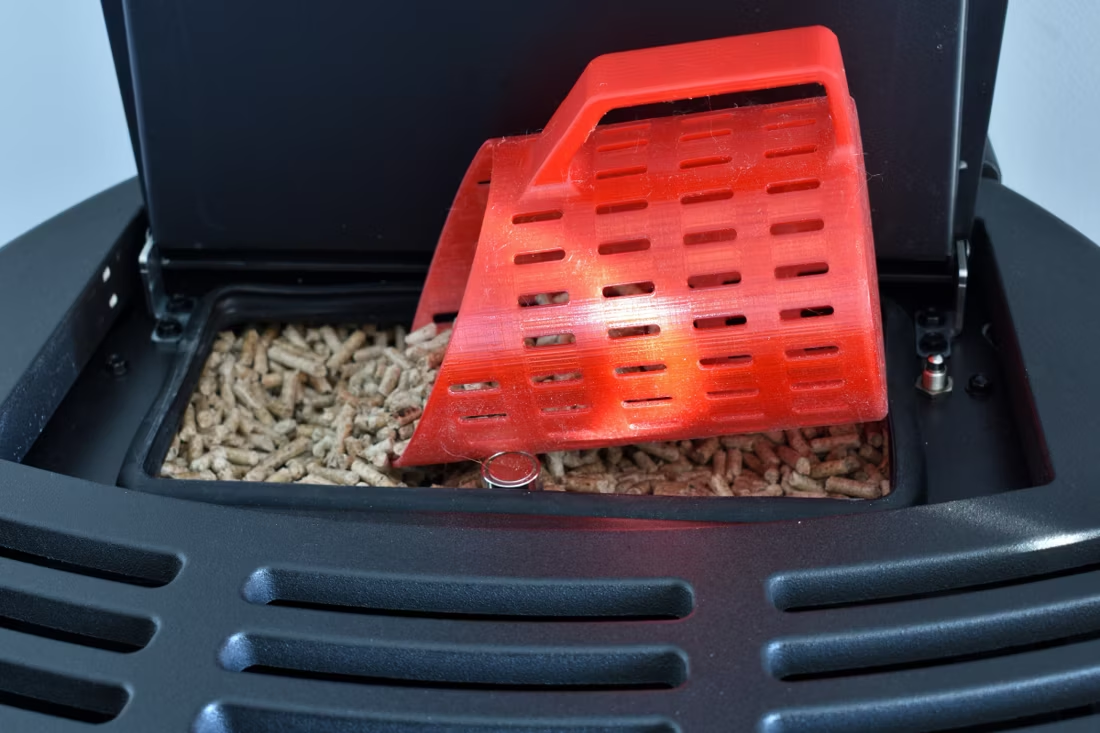
A clean pellet stove is a happy pellet stove. Plan on cleaning the burn pot about once a week when you're burning regularly—ash and clinkers gum up the air holes just like a pellet barbecue. Most pellet stove problems trace back to skipped cleaning that nobody explained up front. Some designs make it easy with a trapdoor burn pot: pull a lever and the gunk drops into the ash pan.
What do I measure to size a fireplace insert?
Four numbers tell you what fits: the front width, the front height, the back width, and the overall depth of your existing fireplace opening. Grab a tape measure, jot those down, and snap a photo of the wall—those two things do more to move your project forward than anything else you can do today.
Can I install a fireplace myself?
If you're putting a fire in your house on purpose, it's best to work with an expert. Unless you're genuinely experienced in framing, gas line, vent pipe, and the national code on clearances to combustibles, have a professional do it—and ideally the same company that sells you the fireplace, so warranty, service, and liability all live under one roof.
What is an in-home preview and do I need one?
It's a visit where a hearth professional measures your space, confirms the model you picked actually works in your home, and walks the specs—framing, gas line, venting, finish work—before anything is ordered. Some details you just can't know until you see the house. Never make a down payment without one; it's the single most-skipped step that burns buyers.
Pellet Brands Stocked Around Logan County
Manufacturers will point you to the nearest stocking dealer.
Find your pellet stove in Logan County.
Tell us about your home and we'll be straight with you about whether pellet is the right fit—then match you with a trusted local dealer and send over a free Project Guide & Parts List with the exact equipment, vent kit, and installer recommended for your Logan County project.
Find Your Fireplace →