
Add a Fireplace Without Adding a Chimney.
No flue, no gas line, no permit headaches—just a real hearth look for Lincolnshire's long, gray winters. Find the right unit and connect with a trusted local dealer.
Every Project Starts From One of These Five Situations
The convenience of heat without the venting.
Lincolnshire is a small, densely built North Shore village in Lake County—a mix of townhomes, corporate campuses near the Marriott Lincolnshire Resort, and newer single-family lots that leave little room for a masonry chimney or a cord of firewood. Winters here are genuinely cold, with average lows around 18°F and a winter heating load closer to Madison, Wisconsin than to milder parts of Illinois. That cold is handled by the home's furnace; the fireplace question in Lincolnshire is almost always about ambiance and zone heat in a specific room, not primary survival heat.
That's exactly the job an electric fireplace is built for. A plug-in insert or wall-mounted linear unit runs on a standard outlet, produces zero emissions, and can go into a condo, a finished basement, or a bedroom where a gas line or chimney was never an option. Commonwealth Edison serves electric service here at roughly $0.1339 per kWh, so running a typical 1,500-watt heater costs about 20 cents an hour—cheap enough to leave on flame-only mode for ambiance without worrying about the bill. For a village where large lots, wood permits, and solid-fuel venting simply aren't part of the local infrastructure, electric is often the least complicated way to get a real fireplace feature.
Three steps. No salesperson until you're ready.
Tell us about your project
Your zip code, your situation, and the fuel you're leaning toward—or let the answers point you to one.
See what's actually available
The brands dealers within 100 miles genuinely carry—real options, never a catalog mirage.
Get your dealer & Project Guide
A trusted local dealer, plus the free Project Guide & Parts List that names every component of the job.
Frequently Asked Questions
How much does an electric fireplace installation cost in Lincolnshire?
A plug-in electric insert or freestanding stove that uses an existing outlet typically runs $300 to $1,500 installed, since there's no venting or gas line to run. A built-in linear wall unit or a full mantel package that requires a dedicated 20-amp circuit and an electrician usually lands between $1,800 and $3,500, depending on the unit size and any surround carpentry. Because Lincolnshire homes are often townhomes or newer construction with finished walls, the bulk of the cost difference comes down to whether the electrician has to open drywall to run new wiring.
How much does it cost to run an electric fireplace in Lincolnshire?
At ComEd's residential rate of about $0.1339 per kWh, a standard 1,500-watt heater setting costs roughly 20 cents per hour to run. Most owners use the heater only when they want supplemental warmth in a specific room and switch to flame-only mode the rest of the time, which draws a fraction of that—often under 100 watts—so the visual effect can run for pennies a day. Compared to firing up the furnace to heat a whole zone, an electric fireplace in a home office or bedroom is a cheap way to take the edge off without touching the thermostat.
Do I need a permit to install an electric fireplace in Lincolnshire?
A plug-in electric insert or freestanding unit doesn't require a permit—it's treated like any other appliance you plug into the wall. If you're installing a built-in unit that needs a new dedicated circuit, the electrical work itself requires a permit through the Village of Lincolnshire Building Department, and it needs to be pulled by a licensed electrician. Most local dealers who sell built-in electric fireplaces either employ a licensed electrician or coordinate directly with one, so this is usually handled as part of the installation rather than something you manage yourself.
Should I get an electric fireplace or a gas fireplace instead?
Many Lincolnshire homes already have natural gas service for the furnace and water heater, which makes a direct-vent gas fireplace a realistic option if you want more heat output and the look of a real flame. Electric wins on flexibility, though—it goes anywhere with an outlet, works in condos and rented townhomes where venting a gas line isn't possible, and needs no annual gas appliance service. If you're set on a specific room that has no nearby gas line and no interest in running one, electric is the simpler, lower-cost path. If you want the fireplace to meaningfully heat the room during a cold snap, gas has more capacity.
What size electric fireplace do I need for my room?
Electric fireplaces are sized by BTU output and viewing width rather than square footage of coverage the way a wood stove is. A 26 to 40-inch insert with a 4,000 to 5,000 BTU heater comfortably supplements a bedroom or home office. A 50 to 60-inch linear unit with 5,000 BTU output can take the chill off a living room while central heat handles the rest of the house. Because most Lincolnshire installs are supplemental rather than whole-home heat, sizing is more about matching the visual scale of the wall or mantel than heating capacity—a local dealer can walk through both during an in-home or virtual consult.
Can I install a wood-burning fireplace in Lincolnshire instead?
It's uncommon. Lincolnshire's lot sizes, HOA covenants common in its townhome and condo developments, and lack of any nearby cutting-permit infrastructure mean wood heat never really took hold here the way it has in more rural parts of Lake County. A handful of older single-family homes still have a traditional masonry fireplace used occasionally, but new wood stove or insert installations are rare in the village. Electric and gas make up the overwhelming majority of new fireplace installs in Lincolnshire.
What are the best electric fireplace brands to look for?
Dimplex and Napoleon both make well-regarded linear and insert models with realistic flame technology and reliable heaters, and SimpliFire is a common choice for built-in wall units in newer construction. For plug-in freestanding stoves, brands like ClassicFlame and Duraflame cover the lower end of the price range without sacrificing much on flame realism. A trusted local dealer will know which models are actually stocked and serviced in the Chicago area, which matters more than the spec sheet if you ever need a warranty repair.
Will my electric fireplace work if the power goes out?
No—unlike a wood stove, an electric fireplace stops working the moment ComEd service drops, since both the flame effect and any heater function run on household current. For most Lincolnshire homeowners this is an acceptable tradeoff, since the electric unit is supplemental rather than the home's primary heat source and the furnace is already out during an outage too. If backup heat during winter power outages is a real concern for your household, that's a conversation to have with a local dealer about pairing the electric fireplace with a generator circuit or considering a vented gas unit with battery ignition elsewhere in the home.
Why not a pellet stove instead of electric?
Pellet stoves need a vent through an exterior wall or roof and a spot to store bags of fuel, which doesn't fit well with Lincolnshire's townhome and smaller-lot housing stock—it's part of why pellet installs are essentially nonexistent in the village even though regional pellet suppliers like Lignetics and Indeck Energy Services serve the broader Chicago market. Electric skips the venting question entirely and installs in rooms a pellet stove never could, which is the main reason it's the far more common choice here for anyone not already set up with a gas line.
Can I put a TV above my fireplace?
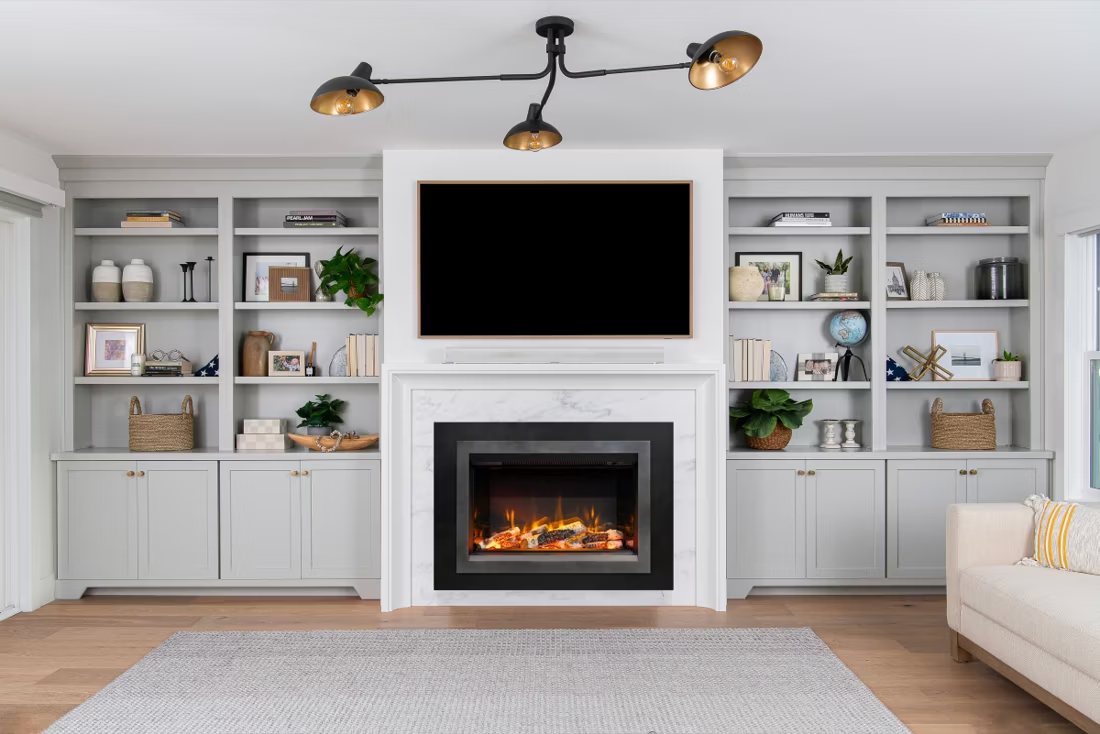
Yes—with an asterisk. Fireplaces are hot and TVs don't like heat. Either put a mantel between them to deflect rising warmth, or choose a fireplace with heat-management technology that creates a cool zone on the wall above—the wall stays around 125 degrees, barely warm, while the room still gets full heat. If you like clean lines and don't want a mantel, heat management is the answer.
Do electric fireplaces actually produce heat?
Yes—most put out around 4,800–5,000 BTUs from a standard outlet, which comfortably warms a bedroom, office, or den as a comfort-zone heater. What they won't do is carry a whole house the way wood, gas, or pellet can. Think of electric as ambiance-first with honest supplemental heat: flames on with no heat in July, flames plus warmth in January.
How much should I budget for a fireplace?
For an average home—covering the fireplace, the vent pipe, and basic installation—a budget between $3,900 and $5,500 gives you a lot of options across wood, gas, and pellet. By the time you add finish work, gas line, and electrical, the average complete installation lands between $5,000 and $12,000 all-in. In a remodel or new build, a good rule is to put about 2.5% of the total project cost toward the fireplace.
What is an in-home preview and do I need one?
It's a visit where a hearth professional measures your space, confirms the model you picked actually works in your home, and walks the specs—framing, gas line, venting, finish work—before anything is ordered. Some details you just can't know until you see the house. Never make a down payment without one; it's the single most-skipped step that burns buyers.
Nearby Dealers
Hearth shops serving Lincolnshire and the surrounding area. Every listing shows whether it is a WhyFire partner, a dealer we have verified as authorized for the brands we recommend, or a local business carrying hearth products. No manufacturer pays for placement. How we verify dealers →
Fireplaces Plus
Smokin' Deal Bbq
General Masonry Supply
Ember Glow
Fireplace And Patio
Jhb Group, Inc.
Urban Rooftops
Electric Service in Lincolnshire
An electric fireplace's heater draws about 1,500 watts—pennies per hour at local rates.
Commonwealth Edison Co
Find your electric fireplace in Lincolnshire.
Tell us a bit about your room and budget, and we'll match you with a trusted local dealer and send over a free Project Guide & Parts List for your Lincolnshire electric fireplace project.
Find Your Fireplace →