
Warm your home without hauling firewood.
From Jerseyville to the river bluffs at Grafton and Elsah, Jersey County winters bring nearly 5,350 heating degree days and lows around 19°F. Find the right gas fireplace or insert and get matched with a trusted local dealer who can actually install it.
Every Project Starts From One of These Five Situations
Convenient heat that keeps up with river valley winters.
Jersey County sits at the confluence of the Mississippi and Illinois Rivers, with Jerseyville as the county seat and smaller river towns like Grafton, Elsah, Fieldon, and Otterville tucked against the bluffs. It's a small county—just over 9,200 residents—but the climate is squarely cold-climate Midwest: Zone 5A, roughly 5,350 heating degree days a season, and average winter lows near 19°F, putting Jersey County's winter heating load in the same range as Madison, Wisconsin. Plenty of homes here still burn oak, hickory, and walnut cut from bottomland timber, but gas has become the default choice for main living areas, weekend river houses near Grafton, and newer builds where residents want heat without the woodpile.
Ameren Illinois provides natural gas service through Jerseyville and the more built-up parts of the county, while propane remains the standard fuel out along the bluffs, in unincorporated farmland, and in river towns like Elsah and Grafton where gas mains don't reach every address. Either fuel path gets you the same result: a fireplace or insert that lights instantly, holds a steady temperature through an ice storm, and doesn't require splitting or stacking a single log—a real advantage for the second-home owners and retirees who make up a good share of the county's river bluff properties.
Three steps. No salesperson until you're ready.
Tell us about your project
Your zip code, your situation, and the fuel you're leaning toward—or let the answers point you to one.
See what's actually available
The brands dealers within 100 miles genuinely carry—real options, never a catalog mirage.
Get your dealer & Project Guide
A trusted local dealer, plus the free Project Guide & Parts List that names every component of the job.
Frequently Asked Questions
How much does a gas fireplace installation cost in Jersey County?
Most gas fireplace and insert installations in Jersey County run somewhere between $4,000 and $9,500, depending on the unit, whether you're converting an existing masonry fireplace or building new, and how far the gas or propane line has to travel. A direct-vent insert going into an existing Jerseyville fireplace with gas already run to the house sits at the lower end. New construction or a propane tank installation for a bluff property near Grafton or Elsah—where lines have to be run further and a tank has to be set—pushes toward the higher end. Rural addresses outside Jerseyville may also see a modest travel charge added to the estimate.
Can I convert my existing wood fireplace to gas?
Yes, and it's a common project in the older farmhouses and river-town homes scattered through Jersey County. A gas insert typically drops into your existing masonry fireplace opening, using a stainless liner run up your current chimney for venting, so you don't lose the look of the original hearth. Homes already on natural gas through Ameren Illinois in Jerseyville tend to see lower costs since a line is usually nearby; homes relying on propane out toward Fieldon or Otterville may need new line work run from the tank, which adds to the project.
Do I need natural gas, or can I use propane?
Either works, and which one you use mostly comes down to where your house sits. Ameren Illinois runs natural gas service through Jerseyville and the more developed pockets of the county. Outside that footprint—including much of the bluff country around Grafton and Elsah and the farmland toward Fieldon and Otterville—propane from a local supplier is the standard setup, either with an existing tank or a new one installed alongside the fireplace project. Nearly every gas fireplace model on the market can be configured for either fuel; your installer sets the orifice and regulator to match.
Will my gas fireplace work during a power outage?
Most will, if you choose the right ignition system. Units with IPI (intermittent pilot ignition) run on a battery backup that kicks in automatically when the power goes out, so the fireplace still lights on demand. That matters in Jersey County, where ice storms along the river bluffs can knock out power for a day or more at a time. Valor fireplaces take a different route—their pilot assembly generates its own electricity through the thermocouple, so there's no battery to remember at all. Ask your local dealer which ignition system is on any unit you're considering.
What's the difference between a gas fireplace, gas insert, and gas stove?
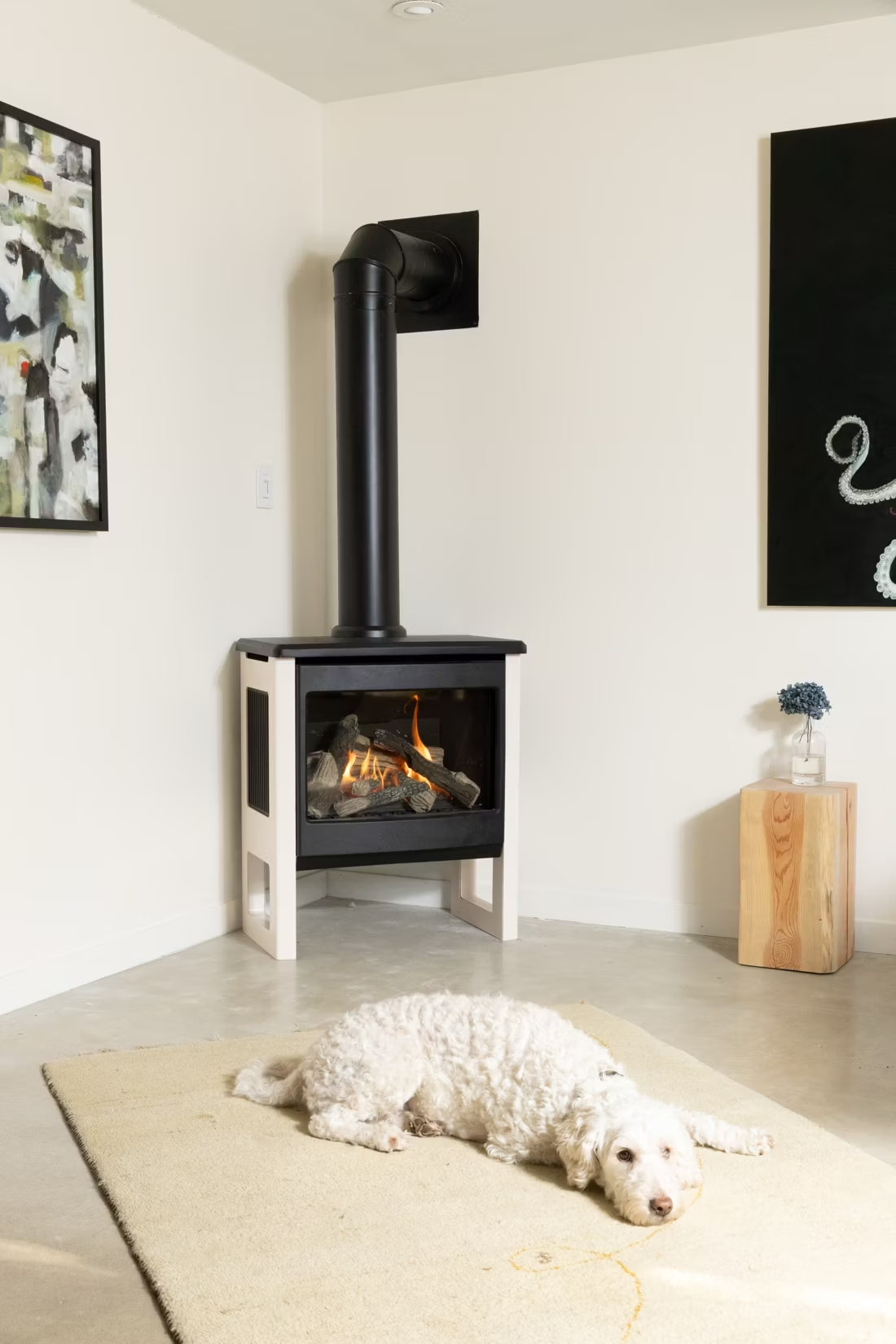
A gas fireplace is a fully built-in unit framed into a wall—the right call for new construction or a remodel without an existing hearth. A gas insert is built to slide into an existing masonry fireplace opening and vent through the current chimney, which is the most common upgrade for older Jerseyville and river-town homes. A gas stove is a freestanding cast-iron or steel unit that sits on the floor like a wood stove but burns gas, and it works well in smaller rooms or cabins along the bluffs where there's no existing fireplace to build around.
Do I need a permit to install a gas fireplace in Jersey County?
In most cases, yes—a building permit and a gas line permit are both required for new gas fireplace installations, whether you're inside Jerseyville city limits or in unincorporated Jersey County. Local hearth dealers who handle gas installs regularly know which office to file with—the City of Jerseyville for in-town projects, the county for everything outside it—and they typically pull the permits as part of the job. Because a licensed gas-fitter has to handle the fuel line itself, working with an established dealer keeps the gas work, venting, and inspection sign-off coordinated instead of split across separate trades.
What's the difference between vented and vent-free gas fireplaces?
Vented gas fireplaces—direct-vent or B-vent—pull combustion air from outside and exhaust the byproducts back outside through sealed venting. Vent-free (or ventless) units burn directly into the room with no outside venting at all, which makes installation simpler but releases some water vapor and trace combustion gases into your living space, so room-size and ventilation rules apply. Illinois permits vent-free units within those limits, but for Jersey County's older farmhouses and river cottages, direct-vent units are the far more common choice locally—real heat output, no indoor air tradeoffs, and no restrictions on where they can go in the house.
How often should my gas fireplace be serviced?
Plan on an annual inspection, ideally before the first cold snap arrives in late fall. A technician checks the burner, pilot assembly, gas connections, and venting, and cleans the glass and firebox interior—a much lighter job than a wood chimney sweep, but just as important for safe operation. Local gas appliance service providers in the Jerseyville area typically charge in the $150 to $250 range for a standard annual visit.
Gas vs. wood—which is right for my home?
Wood still has a real following in Jersey County—oak, hickory, walnut, and maple are all common in the bottomland timber along the rivers, and plenty of residents cut and split their own supply. Wood also keeps working with the power out, which matters during bluff-country ice storms. Gas trades that self-sufficiency for convenience: instant on-off heat, no ash or creosote to manage, and steadier output for a main living room that gets used daily. A lot of Jersey County households end up running both—gas for the family room, wood or a wood insert elsewhere for backup heat and the atmosphere of a real fire.
Is my gas fireplace wasting gas?
If it was installed more than 15 years ago, probably. Older gas fireplaces keep a standing pilot light burning all the time, and that little flame can cost a couple hundred dollars a year. Newer models use pilot-on-demand ignition—the pilot lights only when you use the fireplace and goes out when you turn it off.
Are new gas fireplaces really better than old ones?
Two ways, and they're both big. Looks: modern gas fireplaces are realistic enough that it's hard to believe they aren't burning wood. Cost: old units burn a standing pilot year-round (roughly $200 a year), while new ones use pilot-on-demand ignition and modern burners. Add remote controls and thermostat operation, and the day-to-day experience isn't close.
Can I install a fireplace myself?
If you're putting a fire in your house on purpose, it's best to work with an expert. Unless you're genuinely experienced in framing, gas line, vent pipe, and the national code on clearances to combustibles, have a professional do it—and ideally the same company that sells you the fireplace, so warranty, service, and liability all live under one roof.
How much should I budget for a fireplace?
For an average home—covering the fireplace, the vent pipe, and basic installation—a budget between $3,900 and $5,500 gives you a lot of options across wood, gas, and pellet. By the time you add finish work, gas line, and electrical, the average complete installation lands between $5,000 and $12,000 all-in. In a remodel or new build, a good rule is to put about 2.5% of the total project cost toward the fireplace.
Find your gas fireplace in Jersey County.
Tell us a bit about your home in Jerseyville, Grafton, Elsah, or elsewhere in Jersey County, and we'll match you with a trusted local dealer and send over your free Project Guide & Parts List—the exact parts, including the vent kit, for your gas fireplace project.
Find Your Fireplace →