
Heat your home right, from Grafton to Jerseyville.
Wood, gas, pellet, and electric fireplace resources for every town along the Jersey County bluffs—from the Mississippi River confluence at Grafton to the county seat in Jerseyville. Find the right unit and connect with a trusted local hearth retailer.
Every Project Starts From One of These Five Situations
Warming the river bluffs of Jersey County, Illinois.
Jersey County sits at the confluence of the Mississippi and Illinois Rivers, with limestone bluffs rising above Pere Marquette State Park in Grafton. It's climate zone 5A—about 5,348 heating degree days a year and winter lows averaging 19°F, a solid but not extreme heating season that typically runs late October through April. The bluffs and bottomland timber here are thick with oak, hickory, walnut, and maple, hardwoods that split well and burn hot and long—a big reason wood heat has stayed common in this county of roughly 9,200 people, where many homes still back up to family woodlots. There's no nonattainment designation or winter air-quality advisory tied to this county, so wood burning isn't subject to the curtailment restrictions you'd find in a smoke-prone basin or valley.
What you'll find on this hub: hearth retailers, service technicians, and fuel suppliers serving every community in the county—Jerseyville, Grafton, Elsah, Fieldon, Fidelity, Otterville, and Delhi. Pick your fuel below to drill into specifics—local dealers, installation costs, recommended units, and the resources that match your project. Whether you're heating a farmhouse outside Jerseyville or a weekend place near the Great River Road, this is the starting point.
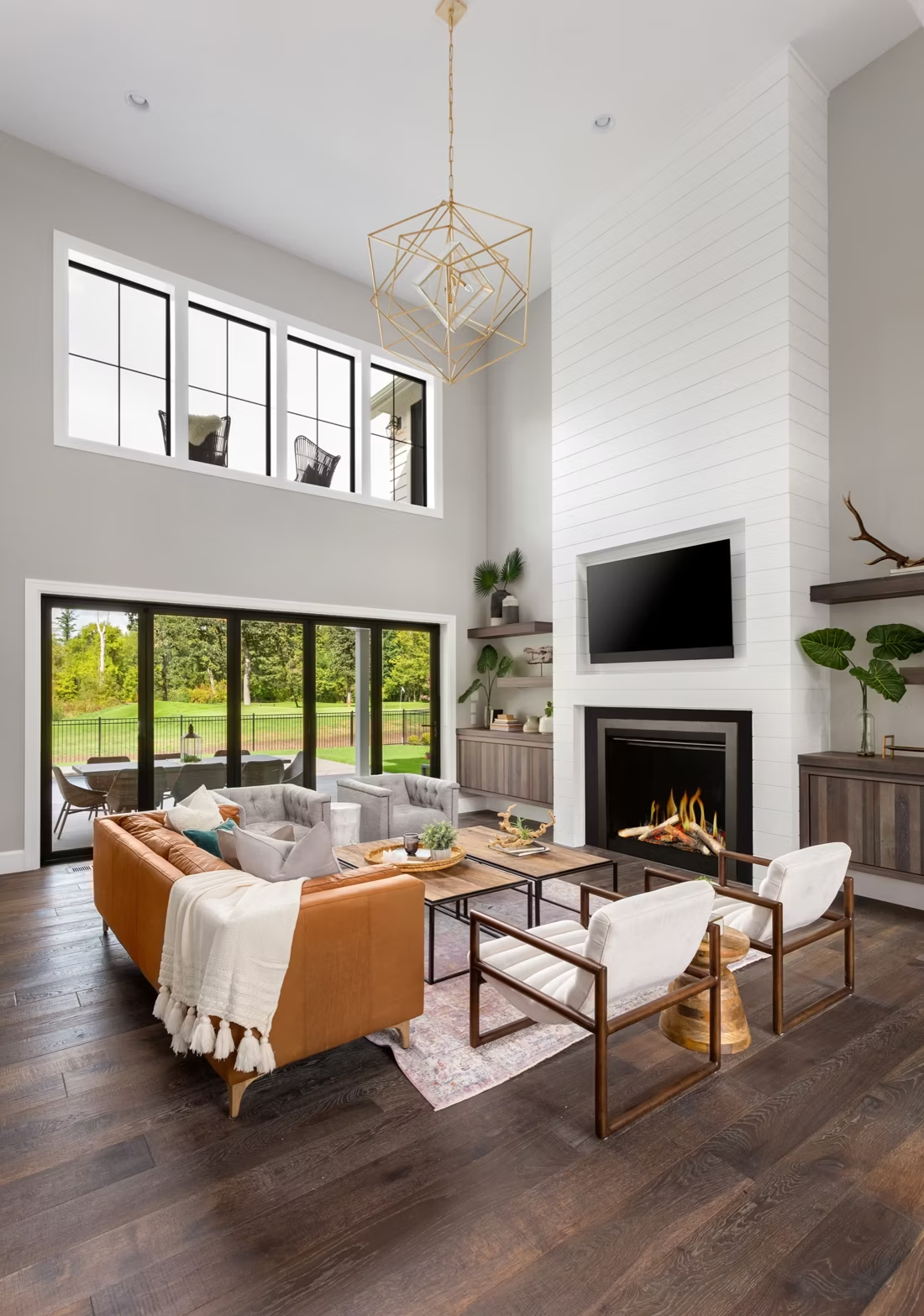
Four fuels. One honest answer for Jersey County.
Three steps. No salesperson until you're ready.
Tell us about your project
Your zip code, your situation, and the fuel you're leaning toward—or let the answers point you to one.
See what's actually available
The brands dealers within 100 miles genuinely carry—real options, never a catalog mirage.
Get your dealer & Project Guide
A trusted local dealer, plus the free Project Guide & Parts List that names every component of the job.
Frequently Asked Questions
Which fuel works best in Jersey County?
All four fuels have a real place here, and the right one depends on the home. Wood is the traditional choice on the bluffs and in the bottomland around Grafton and Fieldon—with oak, hickory, walnut, and maple in the local woodlots, cordwood is abundant, and a good stove can carry a farmhouse through the 19°F overnight lows that show up most winters. Gas is the convenience pick in and around Jerseyville, where natural gas service through Ameren Illinois makes push-button heat straightforward; propane fills the same role for homes further out. Pellet stoves are a solid middle ground—you get wood-style ambiance without splitting logs, and bags from Indeck Energy Services, Lignetics, and Somerset Pellet Fuel are all sold regionally. Electric works well as a supplemental unit in a bedroom, sunroom, or finished basement, but with 5,348 heating degree days a year, it's rarely someone's only heat source. Plenty of Jersey County homes run two fuels—wood or pellet as the workhorse, gas or electric for the rooms that don't get a chimney run.
Do I need a permit to install a fireplace in Jersey County?
In most cases, yes. New wood stoves, wood inserts, gas fireplaces, gas inserts, gas stoves, and pellet inserts typically require a building permit through the Jersey County Building & Zoning Department (or through the applicable municipal office if you're inside Jerseyville or Grafton city limits). Wood-burning appliances need to meet current EPA emissions standards, and any gas connection work should go through a licensed gas-fitter with its own permit. Freestanding electric fireplaces usually skip the permit process, but built-in electric units that require new wiring or a dedicated circuit generally do not. Most local hearth retailers pull the permit as part of the installation, so it's rarely something the homeowner has to manage solo.
Are there air quality restrictions on wood burning in Jersey County?
No—Jersey County isn't a nonattainment area and doesn't have the winter inversion problems that trigger burn advisories in places like the Klamath Basin or Salt Lake Valley. There's no curtailment program here, so wood stoves and inserts can be run on the schedule that makes sense for your home. That said, an EPA 2020 NSPS-certified stove still burns cleaner and gets more heat out of the same cord of oak or hickory than an older uncertified unit, so it's worth asking your dealer about certification even without a regulatory requirement pushing you there.
Can one local hearth retailer handle all four fuel types?
It varies by dealer. Given Jersey County's small population—around 9,200 people spread across Jerseyville, Grafton, and the rural townships between—most local retailers carry two or three of the four fuel types rather than a full lineup of all four. A dealer that stocks wood, gas, and pellet is common; electric is often the fuel that gets less floor space, or is available special-order. Some homeowners cross the river to Alton or Godfrey for a broader selection, particularly if they're comparing electric units or higher-end gas fireplaces side by side. If you're not sure which fuel fits your home, ask a local dealer directly—most will walk you through wood, gas, and pellet trade-offs even if their floor doesn't carry all three in stock.
How does fireplace service work in rural parts of Jersey County?
Most chimney sweeps and gas technicians serving the county are based near Jerseyville and travel out to Fieldon, Fidelity, Otterville, Delhi, and the river towns along Route 3. Expect to schedule a bit further ahead than you would inside town limits, and a modest trip charge is common for the more remote farm properties. Fall—September through October—is the easiest window to book annual service before the cold sets in; waiting until a hard freeze hits often means a longer wait for a mid-winter appointment. For wood-burning households, an annual chimney sweep matters more than it might seem: oak and hickory burn hot and clean, but the volume many rural households go through still builds creosote over a season.
What's the typical cost range for fireplace installation across all fuel types in Jersey County?
Costs track pretty closely with what you'd see across rural Illinois. Wood stove or insert installation: roughly $4,000–$8,500 for a typical retrofit, more if new masonry or a full chimney liner is needed. Gas fireplace, insert, or stove: about $4,000–$10,000, with the gas line work and venting type driving most of the spread—conversions where a gas line already runs to the home land on the lower end. Pellet stove or insert: generally $4,200–$7,000 installed. Electric fireplace: $200–$2,800 for the unit itself, plus $300–$1,000 in labor for anything beyond a plug-and-play wall unit. The county + fuel pages above break these down further with local retailer pricing.
Can a fireplace actually lower my heating bill?
Yes—by creating a comfort zone. A furnace heats every square foot of the house just to warm the one room you're in; a gas fireplace on low burns roughly a sixth of the gas a typical furnace does. Set the furnace around 55–60 degrees as a baseline, then heat the rooms your family actually uses. Families who heat this way commonly save $20–$60 a month.
What is an in-home preview and do I need one?
It's a visit where a hearth professional measures your space, confirms the model you picked actually works in your home, and walks the specs—framing, gas line, venting, finish work—before anything is ordered. Some details you just can't know until you see the house. Never make a down payment without one; it's the single most-skipped step that burns buyers.
Wood, gas, pellet, or electric—how do I choose?
Match the fuel to your life, not the other way around. Wood: lowest fuel cost and total power-outage independence, but you're hauling and stacking. Gas: press a button, set a thermostat, no maintenance to speak of. Pellet: wood economics with automatic feeding, in exchange for weekly cleaning and a need for electricity. Electric: plugs in anywhere with honest supplemental heat. Nobody regrets the fuel that fits how they actually live.
Does a fireplace add value to my home?
On average, a fireplace adds back to the home about the same amount you spent installing it. Add the monthly savings from heating the rooms you actually use instead of the whole house—often hundreds of dollars a year—and the value case is strong before you even count what a fire does for how your family uses the room.
Stove and Fireplace Dealers in Jersey County
Listings include WhyFire partner dealers, dealers we have verified as authorized for the brands we recommend, and established local businesses that carry hearth products. Every listing shows which one it is. The ones marked Preferred run on WhyFire's software, so they can show you real pricing and book your appointment right here. No manufacturer pays for placement. How we verify dealers →
Hechler's Mainstreet Hearth & Home
Gas Appliance Service LLC
Suhre'S Gas Co.
C Bennett Building Supply
Forshaws
Savvy Surroundings
Villa Lighting Supply
Brighthouse Living
Hechler Hardware
Fireside Hearth & Grill Center
Fireplace And Grill Center
Summer Classics By Forshaw
English Sweep
Find your fireplace fit in Jersey County.
Pick your fuel below and we'll match you with a trusted local dealer and a free Project Guide & Parts List—the exact parts, vent kit included, for your Jersey County home.
Find Your Fireplace →