
Reliable pellet heat for Jefferson County's long heating season.
Thermostat-controlled warmth for the moderate winter heating season Mount Vernon and the rest of Jefferson County see each year—find the right pellet stove and connect with a trusted local dealer.
Every Project Starts From One of These Five Situations
Consistent warmth without the daily wood-splitting.
Jefferson County sits in Illinois's climate zone 4A, with average winter lows around 22°F and a heating season on the moderate side—a real but moderate heating season, noticeably milder than what homes in Madison, WI or Minneapolis contend with each winter. Mount Vernon, the county seat and crossroads of Interstate 57 and 64, anchors a mostly rural county where oak, hickory, walnut, and maple woodlots are common on the land—the same hardwoods that made this part of southern Illinois wood-heating country for generations.
With no air quality non-attainment designation and no winter inversion concerns in Jefferson County, pellet stoves here aren't a regulatory workaround—they're a convenience choice. A hopper load of pellets from Lignetics, Somerset Pellet Fuel, or regionally sourced Indeck Energy Services product burns cleaner and more consistently than cordwood, needs no splitting or seasoning, and lets a homeowner set a thermostat and walk away. For a county with plenty of homegrown hardwood but plenty of homeowners who'd rather not stack it, pellet heat splits the difference nicely.
Three steps. No salesperson until you're ready.
Tell us about your project
Your zip code, your situation, and the fuel you're leaning toward—or let the answers point you to one.
See what's actually available
The brands dealers within 100 miles genuinely carry—real options, never a catalog mirage.
Get your dealer & Project Guide
A trusted local dealer, plus the free Project Guide & Parts List that names every component of the job.
Frequently Asked Questions
How much does a pellet stove installation cost in Jefferson County?
Most pellet stove installations in Jefferson County run in the $3,000 to $6,500 range, depending on the unit, whether you need a hearth pad, and how far the vent run has to travel through an exterior wall. Pellet stoves vent through a simple PL-rated pipe rather than a full masonry chimney, which keeps installation costs well below a comparable wood stove project. You'll also need a standard 120V outlet nearby to run the auger and combustion blower—something worth flagging for older Mount Vernon homes where outlet placement near the hearth wasn't always planned for. Local dealers will confirm exact pricing after an in-home look at your space.
What size pellet stove do I need for my Jefferson County home?
Because Jefferson County's winters are moderate compared to the upper Midwest—average lows around 22°F rather than the sub-zero stretches Fargo or Duluth see—most homes here don't need to size up as aggressively as colder-climate buyers. A small pellet stove (up to about 1,000 sq ft) handles a single room or a well-insulated ranch addition; a medium unit (1,000–2,000 sq ft) covers most of the county's typical single-family homes; larger units make sense mainly for open floor plans or homes using pellet heat as a primary source rather than a supplement to a furnace. A local dealer can size it precisely based on your square footage and insulation.
Where can I buy pellet fuel in Jefferson County?
Regional pellet brands including Lignetics and Somerset Pellet Fuel are carried by hearth retailers and farm/ag supply stores throughout southern Illinois, and Indeck Energy Services—which operates biomass facilities in the state—supplies pellet product to the regional market as well. Pellets are typically sold in 40-lb bags by the ton pallet, and buying a full ton (usually 50 bags) ahead of the season is the most economical way to stock up before winter demand pushes prices up. Ask your dealer about pre-season pricing, since pellet costs can rise noticeably once cold weather hits and demand spikes.
What's the difference between a pellet stove and a wood stove?
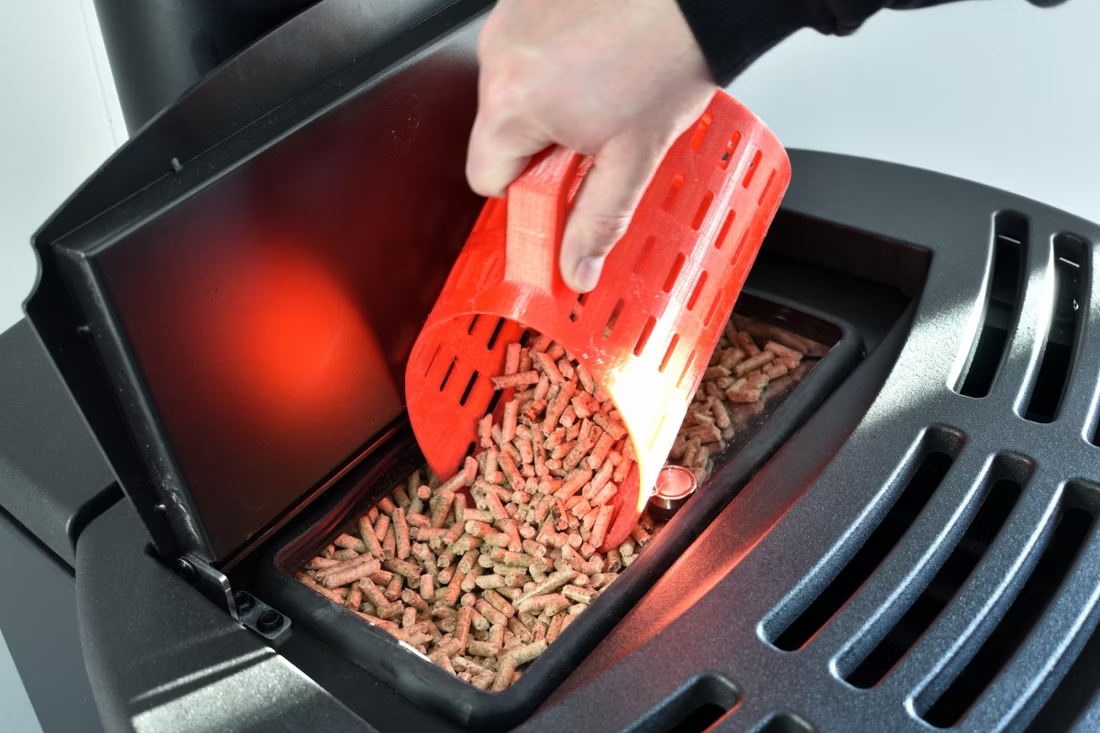
A wood stove burns cordwood, needs a full chimney or Class A pipe, and runs entirely without electricity—a real advantage during a storm-related power outage. A pellet stove burns compressed hardwood pellets fed automatically from a hopper, vents through a much simpler wall-through pipe, and runs cleaner with far less ash—but it needs electricity to run the auger and blower, so it stops working in an outage unless you have a battery backup or generator. For Jefferson County homeowners with oak and hickory on their own property, a wood stove can mean essentially free fuel. For homeowners who'd rather not cut, split, and stack, a pellet stove trades that labor for the cost of bagged fuel and a small amount of electricity.
Do I need a permit to install a pellet stove in Jefferson County?
Most new pellet stove installations require a building permit through the Jefferson County Building & Zoning office, or through the City of Mount Vernon if the home is within city limits. The permit process typically confirms clearances, venting termination points, and hearth pad requirements. Most hearth retailers who sell and install pellet stoves in the county handle the permit paperwork as part of the job, so it's worth asking upfront whether that's included in your installation quote.
What's the best pellet stove for Jefferson County's climate?
Because Jefferson County's winters are moderate—a noticeably lighter heating season than what you'd see in Madison, WI—most homeowners here do well with a mid-size, non-catalytic pellet stove rated for whole-house or large-zone heating rather than the largest hopper-capacity units built for extreme cold. Look for a unit with a variable-speed auger and a thermostat or remote control, which lets the stove modulate output rather than running full-blast on mild days. A local dealer familiar with Jefferson County's building stock—a mix of older farmhouses and newer ranch-style homes—can match hopper size and BTU output to your actual square footage rather than guessing high.
How often does a pellet stove need to be cleaned and serviced?
Pellet stoves need more frequent attention than gas but far less than wood. Plan on emptying the ash pan every few days to weekly depending on use, cleaning the burn pot every one to two weeks to keep airflow consistent, and vacuuming the hopper and exhaust venting at least once a season. A full professional service—checking the auger motor, blower, gaskets, and venting—once a year, ideally before the start of the heating season in early fall, keeps the stove running efficiently through Jefferson County's full winter stretch.
Is pellet heat cheaper than heating with wood in Jefferson County?
It depends on whether you're cutting your own wood. Jefferson County's oak, hickory, walnut, and maple woodlots mean plenty of homeowners have access to free or low-cost cordwood, which usually beats pellet fuel on straight cost per BTU. But that math changes once you factor in the labor of cutting, splitting, hauling, and seasoning wood for a year before it's ready to burn. Pellet fuel from suppliers like Lignetics or Somerset Pellet Fuel costs more per ton but requires none of that labor and burns more consistently load to load. For a household with the land, time, and equipment to process their own hardwood, wood often wins on cost. For a household that wants heat without the woodpile, pellet is usually worth the premium.
Pellet vs. wood—which is right for my Jefferson County home?
Wood stoves work without electricity, pair well with the abundant oak and hickory around Jefferson County, and offer the lowest fuel cost if you're willing to cut and season your own supply. Pellet stoves are easier to operate day to day—load the hopper, set the thermostat—burn cleaner with less ash, and don't require any wood-handling equipment, but they go dark in a power outage unless you've got a backup power source. Since Jefferson County doesn't face the air quality restrictions that push some regions toward pellet as a compliance necessity, the choice here really comes down to how much hands-on involvement you want from your heat source. Local dealers carry both and can walk through the tradeoffs based on your home and how you plan to use it.
How often does a pellet stove need cleaning?
A clean pellet stove is a happy pellet stove. Plan on cleaning the burn pot about once a week when you're burning regularly—ash and clinkers gum up the air holes just like a pellet barbecue. Most pellet stove problems trace back to skipped cleaning that nobody explained up front. Some designs make it easy with a trapdoor burn pot: pull a lever and the gunk drops into the ash pan.
What's the difference between an insert and a zero-clearance fireplace?
An insert is a fireplace that slides into a pre-existing wood-burning fireplace—if you don't have one, there's nothing to insert it into. A zero-clearance fireplace is built into a framed wall, which makes it the answer for remodels and new construction. Simple test: existing masonry fireplace means insert; blank or framed wall means zero-clearance.
What is an in-home preview and do I need one?
It's a visit where a hearth professional measures your space, confirms the model you picked actually works in your home, and walks the specs—framing, gas line, venting, finish work—before anything is ordered. Some details you just can't know until you see the house. Never make a down payment without one; it's the single most-skipped step that burns buyers.
Does a fireplace add value to my home?
On average, a fireplace adds back to the home about the same amount you spent installing it. Add the monthly savings from heating the rooms you actually use instead of the whole house—often hundreds of dollars a year—and the value case is strong before you even count what a fire does for how your family uses the room.
Pellet Brands Stocked Around Jefferson County
Manufacturers will point you to the nearest stocking dealer.
Find your pellet stove in Jefferson County.
Tell us a bit about your home and heating goals, and we'll match you with a trusted local dealer and a free Project Guide & Parts List—the exact parts, vent kit, and installer recommendation for your Jefferson County pellet project.
Find Your Fireplace →