
Steady pellet heat for Jackson County winters.
With a heating season that stretches from late October through March and winter lows in the low 20s, Jackson County gets a real heating season—from Carbondale to Murphysboro to the river towns along the Mississippi bluffs. A pellet stove gives you thermostat-controlled, low-maintenance heat without the splitting and stacking. We'll match you with a trusted local dealer who can size and install it right.
Every Project Starts From One of These Five Situations
Automated warmth built for Southern Illinois winters.
Jackson County sits in the Shawnee Hills of southern Illinois, where oak, hickory, walnut, and maple forests cover the ridges around Giant City State Park and stretch toward the Shawnee National Forest boundary. Climate zone 4A means winters here are real but not extreme—average lows hover around 23°F, with a heating season that typically runs from late October through March. That's colder than most of the Deep South but noticeably milder than the upper Midwest, which puts most Jackson County homes squarely in pellet-stove territory: enough cold to justify a dedicated heat source, without the sub-zero stretches that push some households toward wood as an emergency backup.
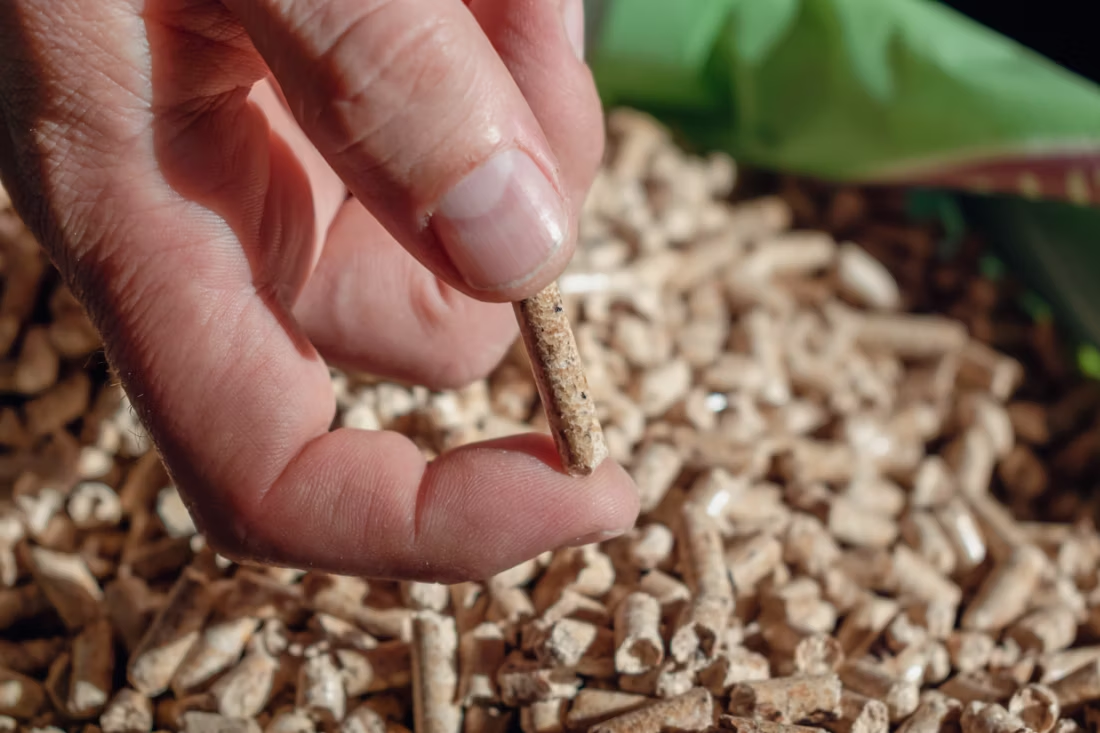
Jackson County has no air quality non-attainment designation and no winter burn-curtailment program, which matters for anyone weighing pellet against wood: there are no yellow-alert burn bans to work around here. On the supply side, the region's hardwood industry—the same oak and hickory that fills local mills—feeds regional pellet production from brands like Indeck Energy Services, Lignetics, and Somerset Pellet Fuel, all commonly stocked at hearth and farm supply retailers around Carbondale and Murphysboro. For SIU-area households, commuters, and rural property owners alike, a pellet stove offers set-it-and-forget-it heat: load the hopper, set the thermostat, and let the auger do the rest.
Three steps. No salesperson until you're ready.
Tell us about your project
Your zip code, your situation, and the fuel you're leaning toward—or let the answers point you to one.
See what's actually available
The brands dealers within 100 miles genuinely carry—real options, never a catalog mirage.
Get your dealer & Project Guide
A trusted local dealer, plus the free Project Guide & Parts List that names every component of the job.
Frequently Asked Questions
How much does a pellet stove installation cost in Jackson County?
Pellet stove installations are generally less expensive than wood stove installs because venting runs through a small-diameter PL (pellet-listed) pipe rather than a full masonry chimney or Class A pipe run. Most installations in Jackson County fall in the $3,000–$6,000 range for the unit, venting, and a basic hearth pad, with the lower end applying to straightforward through-wall vents and the higher end reserved for longer vent runs or homes needing electrical work for the auger and blower circuit. A local dealer can give you a firm number after seeing your home.
What size pellet stove do I need for a Jackson County home?
With Jackson County's winter lows around 23°F and a heating season that runs from late October through March, most homes fall into the medium-stove range—units rated for 1,200 to 2,000 square feet cover a main living area comfortably as either primary or serious supplemental heat. Older farmhouses around Ava, Vergennes, or De Soto with less insulation may need to size up, while a well-sealed newer home in Carbondale or Murphysboro can often get by with a smaller unit for zone heating. A local dealer will walk your space and factor in ceiling height, insulation, and floor plan before recommending a size—oversizing a pellet stove wastes fuel and leads to short-cycling, so this is worth getting right rather than guessing from square footage alone.
Where can I buy hardwood pellets in Jackson County?
Regional brands including Indeck Energy Services, Lignetics, and Somerset Pellet Fuel are commonly stocked at hearth shops and farm supply stores around Carbondale and Murphysboro, often sold in 40-pound bags or by the ton for bulk buyers. Because southern Illinois has an active hardwood mill industry—oak, hickory, and walnut byproduct feeds several regional pellet operations—supply is generally steady, but bags can run low during hard cold snaps or ahead of deer season when demand spikes. Buying a season's worth (roughly 2-3 tons for a primary-heat household) before November avoids the scramble.
Will my pellet stove work during a power outage?
No—pellet stoves rely on electricity to run the auger that feeds fuel and the blower that pushes heat into the room, so a standard unit shuts down when the power does. This is worth planning around in rural stretches of Jackson County where ice storms and summer line damage occasionally knock out power for a day or more. Some homeowners pair a pellet stove with a small backup generator or battery inverter sized to the stove's low wattage draw (most pellet stoves use well under 500 watts). If reliable heat during outages is the priority, a wood stove or a battery-backed gas unit is worth discussing with a local dealer alongside the pellet option.
Do I need a permit to install a pellet stove in Jackson County?
Yes—a building permit is typically required whether you're inside Carbondale or Murphysboro city limits or in unincorporated Jackson County, and most local installers handle that paperwork as part of the job. Unlike some western states, Jackson County has no air quality non-attainment designation and no winter burn-curtailment program, so there's no risk of your stove being restricted on high-pollution days—a real advantage over regions where burn bans complicate wood or even pellet appliance use. The permit process here is mainly about venting clearances and electrical hookup for the auger and blower.
Pellet stove or wood stove—which fits my Jackson County property better?
With abundant oak, hickory, walnut, and maple in the region, wood heat has deep roots here, especially for property owners with acreage near the Shawnee National Forest who can source their own firewood. But pellet stoves win on convenience: no splitting, stacking, or seasoning wood, more consistent heat output, and less ash and cleanup. For households in town—Carbondale, Murphysboro, Elkville—without easy access to a woodlot, pellet is usually the simpler choice. For rural homeowners who already have a chainsaw and a wood supply, a wood stove may still make more economic sense, particularly as a power-outage backup.
How often does a pellet stove need to be cleaned and serviced?
Pellet stoves need less maintenance than wood stoves but aren't maintenance-free. Plan on cleaning the burn pot and ash pan every few days during heavy use, a deeper interior cleaning monthly, and a full annual service—checking the auger motor, exhaust blower, gaskets, and venting—before each heating season starts. Because Jackson County's heating season runs roughly late October through March, scheduling that annual service in September gives you time to fix anything before the first cold snap.
How should I store pellets, and how many do I need for a season?
A primary-heat household in Jackson County typically burns 2 to 3 tons of pellets over a full season, given the winter here running from late October through March; a supplemental-heat setup might use half that. Pellets need to stay bone dry—even brief exposure to southern Illinois humidity or a damp basement can cause bags to swell and pellets to crumble into unusable sawdust. Store bags on pallets off a concrete floor, in a garage or dry outbuilding, and keep them off the ground if there's any flood risk, which matters for homes closer to the Mississippi River bottoms around Grand Tower.
What's the best pellet stove for Jackson County's climate?
For a climate zone 4A location with moderate but genuine cold—average winter lows around 23°F rather than the deep sub-zero stretches seen farther north—a mid-size pellet stove with a reliable auger feed and a decent hopper capacity (40-plus pounds, for longer unattended burns overnight) covers most Jackson County homes well. Look for units with a good ash-pan capacity if you want to minimize cleaning during the coldest months. A local dealer can match hopper size and BTU output to your specific square footage and insulation level rather than relying on generic ratings.
How often does a pellet stove need cleaning?
A clean pellet stove is a happy pellet stove. Plan on cleaning the burn pot about once a week when you're burning regularly—ash and clinkers gum up the air holes just like a pellet barbecue. Most pellet stove problems trace back to skipped cleaning that nobody explained up front. Some designs make it easy with a trapdoor burn pot: pull a lever and the gunk drops into the ash pan.
Why is a fireplace insert so efficient?
An insert does two things: it seals the chimney completely, so you stop losing air you already paid to heat, and it radiates warmth into the room through the firebox and glass. Most add a heat-exchange fan that pulls cool room air underneath, wraps it around the hot firebox, and pushes it back out warm. Your home is more efficient before you've even lit the first fire.
How much should I budget for a fireplace?
For an average home—covering the fireplace, the vent pipe, and basic installation—a budget between $3,900 and $5,500 gives you a lot of options across wood, gas, and pellet. By the time you add finish work, gas line, and electrical, the average complete installation lands between $5,000 and $12,000 all-in. In a remodel or new build, a good rule is to put about 2.5% of the total project cost toward the fireplace.
Does a fireplace add value to my home?
On average, a fireplace adds back to the home about the same amount you spent installing it. Add the monthly savings from heating the rooms you actually use instead of the whole house—often hundreds of dollars a year—and the value case is strong before you even count what a fire does for how your family uses the room.
Stove and Fireplace Dealers in Jackson County
Pellet Brands Stocked Around Jackson County
Manufacturers will point you to the nearest stocking dealer.
Find your pellet stove in Jackson County.
Tell us about your home and heating goals, and we'll match you with a trusted local dealer and send over a free Project Guide & Parts List—a plan for your pellet stove project in Jackson County, including the exact parts, vent kit, and our recommended local installer.
Find Your Fireplace →