
Electric heat and ambiance for Hinsdale's historic homes.
No flue, no gas line, no masonry work—just a real local dealer who can size the right unit for your Hinsdale home and get it installed correctly.
Every Project Starts From One of These Five Situations
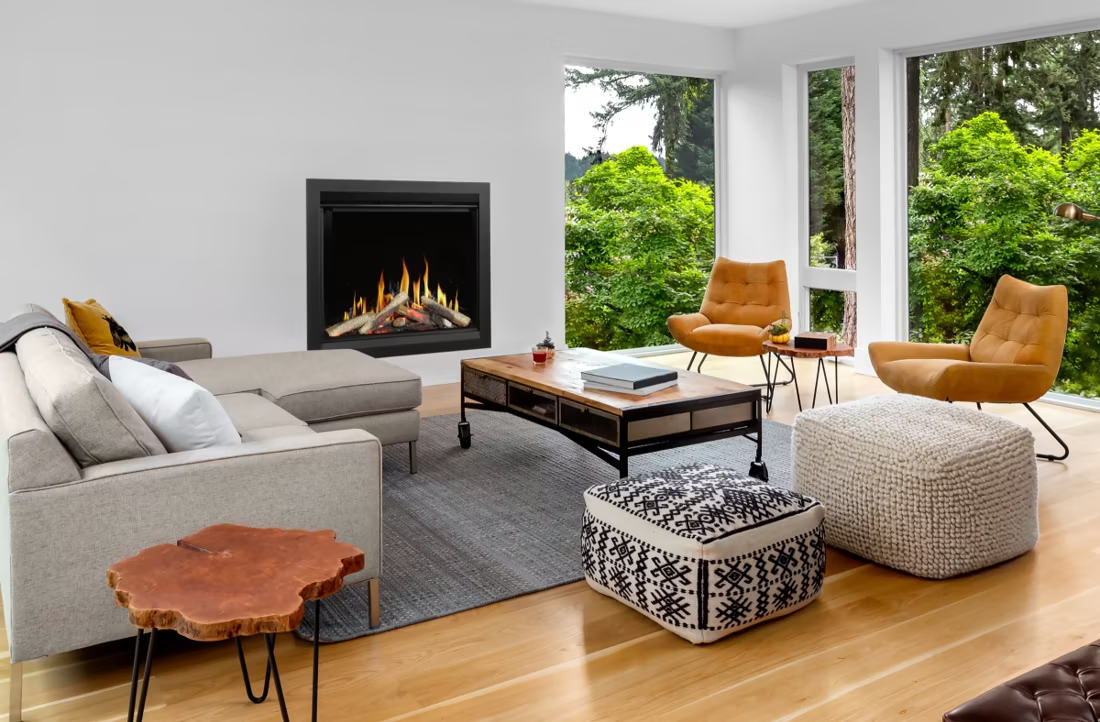
Ambiance without the chimney.
Hinsdale sits in DuPage County at roughly 720 feet, in climate zone 5A with average winter lows near 15°F and a long, cold heating season stretching from fall into spring—a genuinely cold Chicago-suburb winter, closer in feel to Madison or Fargo than to anywhere mild. That said, an electric fireplace here is almost never the sole heat source; it's chosen for supplemental warmth and real flame-look ambiance in rooms where a furnace vent already handles the heavy lifting. That's a good fit for Hinsdale's stock of Tudor and Colonial Revival homes, many inside the village's designated Historic District, where altering an existing masonry chimney or cutting new venting through a period façade is either restricted or simply not worth the disruption.
Electric units solve that problem cleanly: a linear built-in or insert runs on a standard or dedicated 120V/240V circuit, needs no chimney, no gas line, and no combustion air intake, and can go into a finished basement, a condo near the downtown Metra stop, or a room addition where running new gas piping isn't practical. Commonwealth Edison serves Hinsdale at a residential rate of about $0.1339 per kWh, so running costs are predictable and low compared with whole-home heating. The tradeoff is honest: electric units supplement, they don't replace, a furnace during a January cold snap—which is exactly why most Hinsdale installs pair one with existing forced-air heat rather than trying to replace it.
Three steps. No salesperson until you're ready.
Tell us about your project
Your zip code, your situation, and the fuel you're leaning toward—or let the answers point you to one.
See what's actually available
The brands dealers within 100 miles genuinely carry—real options, never a catalog mirage.
Get your dealer & Project Guide
A trusted local dealer, plus the free Project Guide & Parts List that names every component of the job.
Frequently Asked Questions
How much does an electric fireplace installation cost in Hinsdale?
Plug-in freestanding or wall-mount electric fireplaces typically run $300 to $1,200 installed, since most just need an existing outlet and minimal mounting work. Built-in linear electric fireplaces and inserts set into an existing opening—the more common choice in Hinsdale's older homes with existing fireplace surrounds—run higher, typically $2,000 to $4,500, once you factor in a licensed electrician running a dedicated circuit, custom framing or trim work, and finish carpentry to match existing millwork. A local dealer will give you a firm number after seeing the space.
Do I need a permit to install an electric fireplace in Hinsdale?
A simple plug-in unit generally doesn't require a permit. A built-in electric fireplace that needs a new dedicated circuit or any electrical panel work typically does require an electrical permit through the Village of Hinsdale Building & Zoning Department, and homes inside the Hinsdale Historic District may also need a review if the installation changes an exterior-visible feature or an existing masonry opening. Most local dealers coordinate the permit and inspection as part of the installation, so you're not chasing paperwork yourself.
What does it cost to run an electric fireplace in Hinsdale?
At ComEd's residential rate of roughly $0.1339 per kWh, a typical 1,500-watt heater setting costs about 20 cents an hour to run. Used a few hours a night for ambiance and supplemental warmth in one room, that's usually just a few dollars a month added to your electric bill—far less than running a whole-home furnace harder to compensate for a cold room. Flame-only mode with the heater off uses only a few watts and costs next to nothing.
Can an electric fireplace actually heat a room during a Hinsdale winter?
It can meaningfully warm a single room, but it won't replace your furnace on a 15°F morning. Most electric fireplaces are rated for 400 to 1,500 square feet of supplemental heat, which works well for a family room, finished basement, or converted den. With DuPage County's long, cold heating season stretching from fall into spring, Hinsdale homeowners generally use electric units to take the edge off a room the furnace doesn't reach evenly, or to add zone heat without running ductwork.
Electric vs. gas fireplace—which is right for my Hinsdale home?
Natural gas service is standard and widely available throughout Hinsdale, so gas fireplaces remain a strong option for real, higher-output heat with a similar flame appearance, and gas inserts are common in the village's older homes with existing masonry fireplaces. Electric is the better fit when you want zero venting, zero gas line work, and installation flexibility—a condo, a historic home where the Historic Preservation Commission limits chimney or venting changes, or a room with no practical path for gas piping. Many Hinsdale homeowners choose gas for a primary living room and electric for a secondary space like a basement or bedroom.
What type of electric fireplace fits best in Hinsdale's older homes?
For homes with an existing but rarely-used masonry fireplace—common in Hinsdale's Tudor and Colonial Revival housing stock—an electric insert that slides into the existing opening is usually the cleanest option, since it keeps the original surround and mantel intact. For rooms without an existing fireplace, a linear built-in framed into a wall gives a modern look, while a freestanding or wall-mount unit is the fastest and least invasive option for a condo or rental. A local dealer can walk your specific opening dimensions before recommending a model.
Are electric fireplaces allowed in Hinsdale condos and townhomes?
Generally yes, and it's one of the main reasons electric fireplaces are popular in Hinsdale's condo and townhome buildings near the downtown Metra corridor. Because there's no venting, no chimney, and no combustion byproducts, most HOA and condo association rules that restrict wood or gas installations don't apply to electric units. It's still worth checking your specific building's electrical load rules if you're adding a dedicated circuit, but the fireplace itself rarely triggers association pushback the way a gas or wood installation would.
Will my electric fireplace work during a power outage?
No—electric fireplaces require power to run both the flame-effect display and the heater, so they'll shut off during an outage along with the rest of your home's electrical system. If backup heat during winter storm outages is a priority in Hinsdale, a gas fireplace with a battery-backed ignition system is the better option for that specific need. Electric units are best understood as an ambiance and supplemental-heat choice, not an emergency heat source.
Why don't more Hinsdale homes use wood-burning fireplaces?
Wood-burning installations are uncommon in Hinsdale—many of the village's historic homes have retired or capped their original masonry fireplaces rather than maintain them, and new wood-burning installations face more scrutiny where a home falls within the Hinsdale Historic District. Where an old wood fireplace already exists, homeowners are more likely to convert it to a gas or electric insert than to keep it burning cordwood. Electric fills that gap well: it can drop into the existing opening without touching the chimney or requiring any burn permit.
Can I put a TV above my fireplace?
Yes—with an asterisk. Fireplaces are hot and TVs don't like heat. Either put a mantel between them to deflect rising warmth, or choose a fireplace with heat-management technology that creates a cool zone on the wall above—the wall stays around 125 degrees, barely warm, while the room still gets full heat. If you like clean lines and don't want a mantel, heat management is the answer.
Does an electric fireplace need a vent or chimney?
No—that's its superpower. An electric fireplace needs a wall and an outlet, period. No vent pipe, no gas line, no clearances to design around, which is why it works in bedrooms, offices, apartments, and walls where venting a gas or wood unit would be impractical or impossible. Installation is typically the simplest and least expensive of any fireplace type.
How much should I budget for a fireplace?
For an average home—covering the fireplace, the vent pipe, and basic installation—a budget between $3,900 and $5,500 gives you a lot of options across wood, gas, and pellet. By the time you add finish work, gas line, and electrical, the average complete installation lands between $5,000 and $12,000 all-in. In a remodel or new build, a good rule is to put about 2.5% of the total project cost toward the fireplace.
Does a fireplace add value to my home?
On average, a fireplace adds back to the home about the same amount you spent installing it. Add the monthly savings from heating the rooms you actually use instead of the whole house—often hundreds of dollars a year—and the value case is strong before you even count what a fire does for how your family uses the room.
Nearby Dealers
Hearth shops serving Hinsdale and the surrounding area. Every listing shows whether it is a WhyFire partner, a dealer we have verified as authorized for the brands we recommend, or a local business carrying hearth products. No manufacturer pays for placement. How we verify dealers →
A Fireplace Store And More
Ember Glow
A Cozy Fireplace
Urban Rooftops
A Cozy Fireplace
General Masonry Supply
Electric Service in Hinsdale
An electric fireplace's heater draws about 1,500 watts—pennies per hour at local rates.
Commonwealth Edison Co
Find your electric fireplace in Hinsdale.
Tell us about your home and we'll match you with a trusted local Hinsdale dealer and send you a free Project Guide & Parts List—the exact unit, circuit requirements, and install plan for your space.
Find Your Fireplace →