
Warm up Hancock County without splitting a single log.
Hopper-fed, thermostat-controlled heat for Hancock County's cold Mississippi River-valley winters—from Carthage to Nauvoo to Warsaw. Find the right pellet stove or insert, and connect with a trusted local dealer.
Every Project Starts From One of These Five Situations
Hardwood country meets modern convenience.
Hancock County sits along the Mississippi River in west-central Illinois, home to about 12,400 residents spread across Carthage, Nauvoo, Warsaw, La Harpe, and the farmland between them. Winters here are genuinely cold—climate zone 5A, average lows near 17°F, and roughly 5,775 heating degree days a season, a stretch of cold that runs shorter and milder than upper-Midwest cities like Madison, Wisconsin, but still cold enough to demand a serious heat source from November through March. The county's timbered river bottoms and upland woodlots are thick with oak, hickory, walnut, and maple—the same hardwoods that have fueled wood stoves in this region for generations, and that now supply much of the raw material behind the pellet industry.
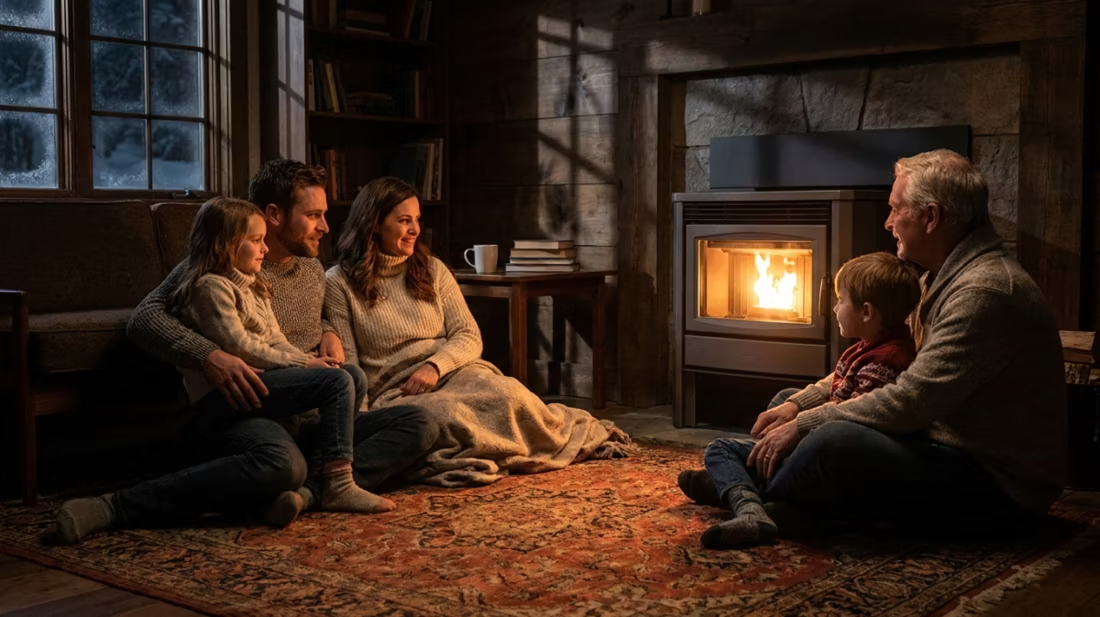
Pellet stoves have caught on across Hancock County's small towns and rural properties because they deliver hardwood heat without the splitting, stacking, and daily tending that cordwood requires—you load the hopper, set the thermostat, and the auger does the rest. Regional pellet brands like Indeck Energy Services, Lignetics, and Somerset Pellet Fuel are readily available through local dealers, and with no air quality non-attainment concerns in the county, there's no curtailment schedule or burn-ban worry that pellet owners in some western states have to track. For farmhouses, acreage properties, and in-town homes alike, a pellet stove is a practical answer to a real Illinois winter.
Three steps. No salesperson until you're ready.
Tell us about your project
Your zip code, your situation, and the fuel you're leaning toward—or let the answers point you to one.
See what's actually available
The brands dealers within 100 miles genuinely carry—real options, never a catalog mirage.
Get your dealer & Project Guide
A trusted local dealer, plus the free Project Guide & Parts List that names every component of the job.
Frequently Asked Questions
How much does a pellet stove installation cost in Hancock County?
Pellet stove installations in Hancock County typically run $3,000 to $6,500 depending on whether you're installing a freestanding stove or a pellet insert into an existing fireplace, the hopper capacity, and whether an exterior vent kit and hearth pad need to be added. A straightforward freestanding stove on a new hearth pad sits toward the lower end; an insert conversion into an existing masonry fireplace with a liner and through-wall vent runs higher. Because pellet stoves vent horizontally through an exterior wall rather than up a full chimney, installation is often simpler and less expensive than a comparable wood stove project. Local dealers will size up your home and give a firm quote after an in-home look.
What size pellet stove do I need for my home?
Sizing depends on square footage, insulation quality, and whether the stove is your primary or supplemental heat. With Hancock County averaging around 5,775 heating degree days a season and winter lows near 17°F, most in-town homes on a standard lot do well with a mid-size unit rated for 1,200–1,800 square feet, while larger farmhouses or older homes with less insulation often need a bigger hopper and higher BTU output to keep up on the coldest nights. Older farmhouses along the river bottoms tend to be drafty, which pushes sizing up a notch compared to a newer, tighter-built home of the same square footage. A local dealer can walk your home and recommend hopper size and BTU output based on your specific layout.
Where can I find certified pellet stove installers near me?
Look for installers with NFI (National Fireplace Institute) certification, which covers pellet-specific venting, clearances, and electrical requirements that differ from wood stove installs. Certified hearth dealers serving Hancock County typically cover Carthage, Nauvoo, Warsaw, and the smaller towns in between, and most handle the sale and installation as a single package—which matters for warranty coverage since pellet stoves have more moving parts (auger motor, igniter, blower) than a wood stove. Avoid handyman installs for pellet units; improper venting or clearance work is the most common cause of callback service issues.
What's the difference between a pellet stove and a pellet insert?
A pellet stove is a freestanding unit that sits on a hearth pad and vents horizontally through an exterior wall—it can go almost anywhere with access to an outside wall and an electrical outlet. A pellet insert is built to slide into an existing masonry fireplace opening, using a vent kit run through the old chimney or out a nearby wall, and it converts a drafty open fireplace into an automated, thermostat-controlled heat source. For Hancock County homes with an existing fireplace—common in the older housing stock around Carthage and Warsaw—an insert is often the better fit since it reuses the opening you already have. Homes without an existing fireplace typically go with a freestanding stove instead.
Do I need a permit to install a pellet stove in Hancock County?
Most new pellet stove installations require a building permit through the Hancock County Building Department, or through your municipality's permitting office if you're inside city limits in Carthage, Nauvoo, or Warsaw. Since Hancock County has no air quality non-attainment designation, there are no seasonal burn curtailment periods to worry about—unlike some western counties where certified stoves are restricted during inversion events. Most local dealers pull the permit as part of the installation, so you generally don't have to navigate it yourself.
What's the best pellet stove for Hancock County's climate?
For Hancock County's winters—cold but not extreme, with lows commonly in the teens and occasional single-digit nights—a mid-size pellet stove with a large hopper (40–60 pounds) is usually the sweet spot, since it reduces how often you need to refill during the coldest stretches. Homes using pellet heat as a primary source in older farmhouses should look for higher BTU output and a bigger hopper than homes using it for supplemental zone heat in a newer, well-insulated house in town. Regional pellet supply from brands like Lignetics and Somerset Pellet Fuel is generally reliable in this part of Illinois, so fuel availability isn't the constraint—sizing the unit to your specific home is what a local dealer can help nail down.
How much maintenance does a pellet stove need?
Pellet stoves need more routine attention than a wood stove but less than a full chimney sweep. Plan on emptying and cleaning the burn pot every few days to weekly depending on use, a deeper cleaning of the exhaust fan, hopper, and auger every few weeks during heavy winter use, and an annual professional inspection of the venting, gaskets, and electronic components—ideally scheduled in late summer before Hancock County's heating season starts in earnest. Skipping the burn pot cleaning is the most common cause of poor ignition or reduced heat output, so it's worth building into a weekly routine during the coldest months.
Where can I buy pellet fuel in Hancock County?
Local hearth dealers and farm supply stores throughout Hancock County typically stock hardwood pellets by the 40-pound bag or by the pallet (a ton per pallet), including regional brands like Indeck Energy Services, Lignetics, and Somerset Pellet Fuel. Pricing fluctuates seasonally, but Midwest hardwood pellets generally run in the $250 to $300 per ton range—buying a full season's supply early, before cold weather drives up demand, is the usual strategy locally. Given the oak, hickory, walnut, and maple stands throughout the county, hardwood-blend pellets are the standard choice and burn cleanly with low ash.
Pellet stove vs. wood stove—which is right for my Hancock County home?
Wood stoves burn cordwood cut from the oak, hickory, and walnut common throughout the county, run without electricity (a real advantage during ice storms, which do knock out rural power here), and offer the lowest fuel cost if you're cutting your own. Pellet stoves are more automated—load the hopper, set the thermostat, and walk away—burn cleaner with far less ash, and don't require splitting or stacking, but they need continuous electricity to run the auger and blower, so they go dark in an outage unless you add a battery backup. For Hancock County homes on the grid in town, where power is generally reliable, pellet is often the more convenient daily-use choice. For rural properties where outages are a real concern and firewood is already on hand, wood remains a strong option—and plenty of local homes keep both.
Why is my open fireplace making my house colder?
Open fireplaces suck—literally. As the fire burns, it consumes air your furnace already paid to heat and pulls it out through the chimney, so the house is actually colder after the fire goes out than before you lit it. An insert fixes this: it seals the chimney, puts fixed glass across the front, and turns that hole in your house into a real heat source.
How often does a pellet stove need cleaning?
A clean pellet stove is a happy pellet stove. Plan on cleaning the burn pot about once a week when you're burning regularly—ash and clinkers gum up the air holes just like a pellet barbecue. Most pellet stove problems trace back to skipped cleaning that nobody explained up front. Some designs make it easy with a trapdoor burn pot: pull a lever and the gunk drops into the ash pan.
Can I install a fireplace myself?
If you're putting a fire in your house on purpose, it's best to work with an expert. Unless you're genuinely experienced in framing, gas line, vent pipe, and the national code on clearances to combustibles, have a professional do it—and ideally the same company that sells you the fireplace, so warranty, service, and liability all live under one roof.
How much should I budget for a fireplace?
For an average home—covering the fireplace, the vent pipe, and basic installation—a budget between $3,900 and $5,500 gives you a lot of options across wood, gas, and pellet. By the time you add finish work, gas line, and electrical, the average complete installation lands between $5,000 and $12,000 all-in. In a remodel or new build, a good rule is to put about 2.5% of the total project cost toward the fireplace.
Stove and Fireplace Dealers in Hancock County
Pellet Brands Stocked Around Hancock County
Manufacturers will point you to the nearest stocking dealer.
Find your pellet stove in Hancock County.
Tell us a bit about your home and we'll match you with the right pellet stove or insert, plus a free Project Guide & Parts List—the vent kit and parts you need, and a trusted local Hancock County dealer to install it.
Find Your Fireplace →