
Steady, low-maintenance heat for Hamilton County winters.
A hopper-fed pellet stove gives rural Hamilton County homes thermostat-like heat without a chimney to maintain or a gas line to run. Find the right unit and connect with a trusted local dealer near McLeansboro.
Every Project Starts From One of These Five Situations
Convenient heat for a small, rural county.
Hamilton County sits in southern Illinois around McLeansboro, with a population of just 3,668 spread across mostly farmland and small towns. The county falls in climate zone 4A, with an average winter low around 22 degrees and a solid Midwest winter heating season—not the deep-cold extremes you'd find farther north. Oak, hickory, walnut, and maple are the common hardwoods across the county, and there are no air quality non-attainment issues or winter burn restrictions here, which gives pellet appliances a straightforward path to install and operate without the smoke-management concerns that complicate wood burning in some counties.
With a population this small, Hamilton County doesn't have a full-service hearth shop on every corner, and a lot of homes in the county are outside any natural gas service area. That combination is exactly where pellet stoves earn their keep—no gas line to run, no wood to split and stack, and a hopper you load every day or two instead of tending a fire every few hours. Regional pellet supply comes through brands like Indeck Energy Services, Lignetics, and Somerset Pellet Fuel, which keep bagged fuel reasonably accessible even in a rural county like this. Find My Fireplace matches Hamilton County homeowners with a trusted local dealer who can size the right unit, handle the install correctly, and tell you honestly what pellet supply and service actually look like in your part of the county.
Three steps. No salesperson until you're ready.
Tell us about your project
Your zip code, your situation, and the fuel you're leaning toward—or let the answers point you to one.
See what's actually available
The brands dealers within 100 miles genuinely carry—real options, never a catalog mirage.
Get your dealer & Project Guide
A trusted local dealer, plus the free Project Guide & Parts List that names every component of the job.
Frequently Asked Questions
How much does a pellet stove installation cost in Hamilton County?
Pellet stove and insert installations typically run in the $3,000–$6,500 range for most Hamilton County homes, with the final number depending on the unit, the venting path, and whether you're installing into an existing fireplace opening versus a fresh wall or floor location. Pellet venting is simpler and cheaper than wood—it uses a smaller-diameter pipe and doesn't require a full masonry chimney—which keeps costs down compared to a wood stove install in the same house. A local dealer will give you a firm number after seeing your home, since travel distance can matter in a county this rural.
What size pellet stove do I need for my Hamilton County home?
Sizing comes down to square footage, insulation, and whether the stove is your primary heat or a supplement to a furnace. Given Hamilton County's solid Midwest winter heating season and average winter lows in the low 20s, most homes don't need the largest hopper units sold—a mid-size pellet stove (rated for 1,200–2,000 sq ft) handles the main living area of a typical farmhouse or ranch here, while a smaller unit works fine for a single room or a supplemental setup alongside central heat. Older, less-insulated farmhouses common in the county may need to size up slightly. A local dealer can walk your space and size it for free.
Where can I find a certified pellet stove installer near Hamilton County?
With a population under 4,000, Hamilton County itself may not have a dedicated hearth shop, so it's common for installers serving McLeansboro and the surrounding townships to be based in a neighboring county and travel in. Look for NFI-certified technicians regardless of where they're headquartered—certification means they're trained specifically on pellet appliance venting, electrical hookups, and clearance requirements, not just general handyman work. Expect a modest travel charge built into quotes for rural addresses, which is normal in a county this size.
What's the difference between a pellet stove and a pellet insert?
A pellet stove is a freestanding unit that sits on its own hearth pad and vents through a wall or existing chimney—it can go almost anywhere in the house with the right clearances. A pellet insert is built to slide into an existing masonry fireplace opening, converting an old wood-burning fireplace into an automated, thermostat-controlled heat source while reusing the chimney chase for venting. For Hamilton County homes with an older fireplace already in place, an insert is often the cleaner-looking upgrade; homes without an existing fireplace opening are better suited to a freestanding stove.
Do I need a permit to install a pellet stove in Hamilton County?
Most pellet stove and insert installations require a building permit through your local township or the county building office, largely to confirm the venting and electrical work meet code. Most installers handle this paperwork as part of the job, so it's rarely something homeowners have to manage on their own. Since Hamilton County has no air quality non-attainment designation or seasonal burn restrictions, there's no curtailment schedule to worry about once the unit is installed and permitted—you can run it whenever you want heat.
What's the best pellet stove for Hamilton County's climate?
Because winter lows here average around 22 degrees rather than sub-zero extremes, Hamilton County homes generally don't need the largest, longest-burning pellet units on the market. A mid-size hopper stove with a 40–60 lb capacity is usually enough to run most nights without a refill, and models with a simple auger feed and easy-clean ash pan hold up well for everyday use. If the stove is your primary heat source rather than a backup to a furnace, ask your local dealer about units with a slightly larger hopper so you're not reloading twice a day during a cold stretch.
Where can I buy pellet fuel near Hamilton County?
Regional pellet brands like Indeck Energy Services, Lignetics, and Somerset Pellet Fuel supply much of the bagged pellet fuel sold through dealers and farm supply stores in this part of southern Illinois. Because Hamilton County is rural with a small population, it's worth ordering by the pallet (roughly 50 bags, or one ton) ahead of the season rather than counting on picking up a few bags at a time—local retailers can often arrange delivery for a full pallet order. Buying early in the fall, before demand peaks, also helps avoid the supply crunches that can hit small-town retailers during a hard winter.
Will my pellet stove work if the power goes out?
No—pellet stoves rely on electricity to run the auger that feeds fuel and the blower that distributes heat, so a power outage stops the stove even with a full hopper. For rural Hamilton County homes where outages can happen with winter storms, a small battery backup or a basic generator sized for the stove's low wattage draw is worth discussing with your installer. If uninterrupted heat during outages is a priority, a wood stove using the county's plentiful oak and hickory is worth comparing before you commit to pellet.
Pellet stove vs. wood stove—which makes more sense in Hamilton County?
Wood is abundant here—oak, hickory, walnut, and maple are common across Hamilton County's farmland and woodlots, and a wood stove keeps working through a power outage without any electrical dependence. Pellet stoves trade that off for real convenience: no splitting or stacking, a thermostat-controlled burn, and a cleaner-burning, lower-maintenance appliance overall—but they need electricity and a steady pellet supply from brands like Lignetics or Somerset Pellet Fuel. For a household without easy access to wood or the time to process it, pellet is usually the better fit. For a farmstead with woodlots already on the property, wood heat often remains the more practical choice.
How often does a pellet stove need cleaning?
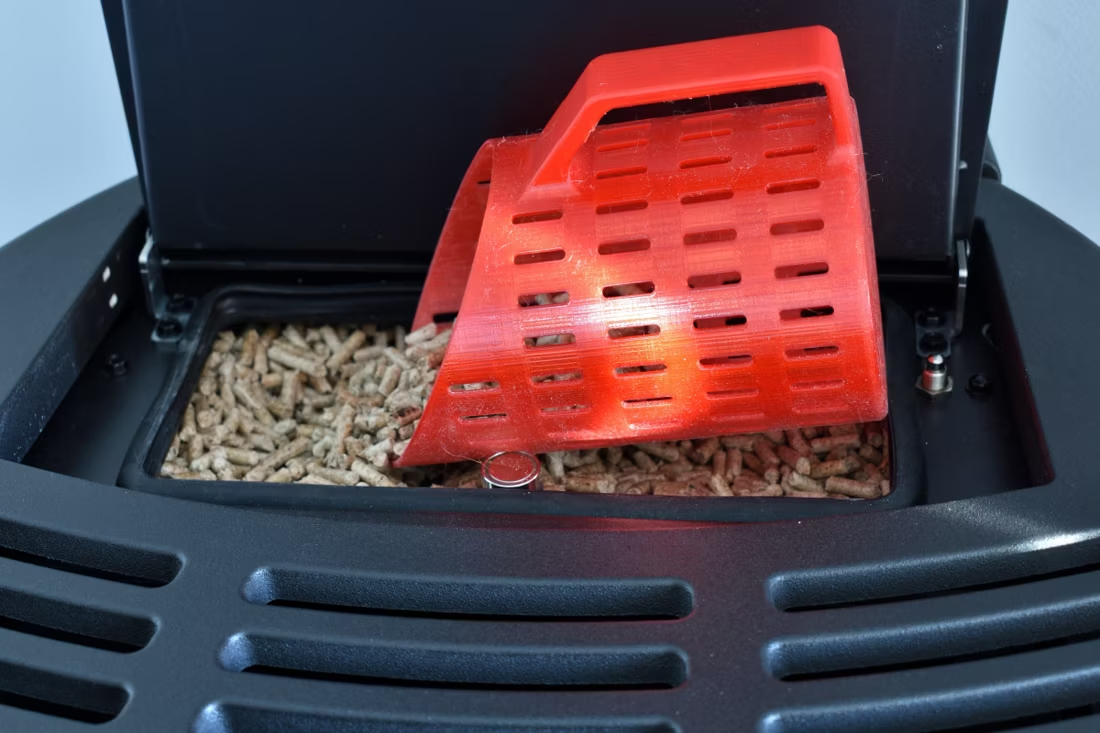
A clean pellet stove is a happy pellet stove. Plan on cleaning the burn pot about once a week when you're burning regularly—ash and clinkers gum up the air holes just like a pellet barbecue. Most pellet stove problems trace back to skipped cleaning that nobody explained up front. Some designs make it easy with a trapdoor burn pot: pull a lever and the gunk drops into the ash pan.
Why is a fireplace insert so efficient?
An insert does two things: it seals the chimney completely, so you stop losing air you already paid to heat, and it radiates warmth into the room through the firebox and glass. Most add a heat-exchange fan that pulls cool room air underneath, wraps it around the hot firebox, and pushes it back out warm. Your home is more efficient before you've even lit the first fire.
Can I install a fireplace myself?
If you're putting a fire in your house on purpose, it's best to work with an expert. Unless you're genuinely experienced in framing, gas line, vent pipe, and the national code on clearances to combustibles, have a professional do it—and ideally the same company that sells you the fireplace, so warranty, service, and liability all live under one roof.
Does a fireplace add value to my home?
On average, a fireplace adds back to the home about the same amount you spent installing it. Add the monthly savings from heating the rooms you actually use instead of the whole house—often hundreds of dollars a year—and the value case is strong before you even count what a fire does for how your family uses the room.
Pellet Brands Stocked Around Hamilton County
Manufacturers will point you to the nearest stocking dealer.
Find your pellet stove in Hamilton County.
Tell us a bit about your home and we'll match you with the right pellet stove or insert, plus a free Project Guide & Parts List—the exact parts, vent kit, and a recommended local Hamilton County dealer for your project.
Find Your Fireplace →