
Set-It-and-Forget-It Heat for Granite City Winters.
Thermostat-controlled warmth for the Mississippi River floodplain—no splitting, no stacking. Find the right pellet stove and connect with a trusted local dealer.
Every Project Starts From One of These Five Situations
Consistent warmth without the woodpile.
Granite City sits at just 422 feet in the American Bottom floodplain across the Mississippi from St. Louis, in climate zone 4A with a moderate winter heating load and average winter lows around 22°F. That's a real heating season—November through March—but nothing like the sub-zero stretches homeowners deal with in Duluth or Fargo. It's the kind of moderate, steady cold where a pellet stove's thermostat-controlled, hands-off heat makes a lot of sense: set it, load the hopper every day or two, and let it run without the chainsaw, splitting maul, and woodshed that oak, hickory, walnut, and maple firewood demand from Madison County homeowners who still burn cordwood.
Fuel supply is a real advantage here. Indeck Energy Services, Lignetics, and Somerset Pellet Fuel all produce hardwood pellets in the region, so Granite City homeowners aren't relying on cross-country shipping to keep a hopper full through winter. Electrically, a pellet stove's auger and combustion blower sip power—pennies a day whether you're served by Ameren Illinois or Southwestern Electric Cooperative, both of which serve homes in the 62040 and 62048 zip codes at rates in the 11.76–13.68 cents per kWh range. And with no regional air quality non-attainment designation or winter inversion concerns in Madison County, there's no curtailment schedule to plan burns around—just load the hopper and go.
Three steps. No salesperson until you're ready.
Tell us about your project
Your zip code, your situation, and the fuel you're leaning toward—or let the answers point you to one.
See what's actually available
The brands dealers within 100 miles genuinely carry—real options, never a catalog mirage.
Get your dealer & Project Guide
A trusted local dealer, plus the free Project Guide & Parts List that names every component of the job.
Frequently Asked Questions
How much does a pellet stove installation cost in Granite City?
Most pellet stove installations in Granite City run $3,500 to $6,500, depending on the unit and the venting path. Because pellet stoves use PL (pellet vent) pipe rather than a full masonry chimney, a through-the-wall installation on an exterior wall is usually the fastest and least expensive option—often on the lower end of that range. Installations that route vertically through an existing chimney chase, or that require a new hearth pad and electrical outlet run for the unit, land toward the higher end. A local dealer will confirm exact pricing after seeing your wall layout and where the stove will sit.
Pellet stove vs. wood stove—which makes more sense for a Granite City home?
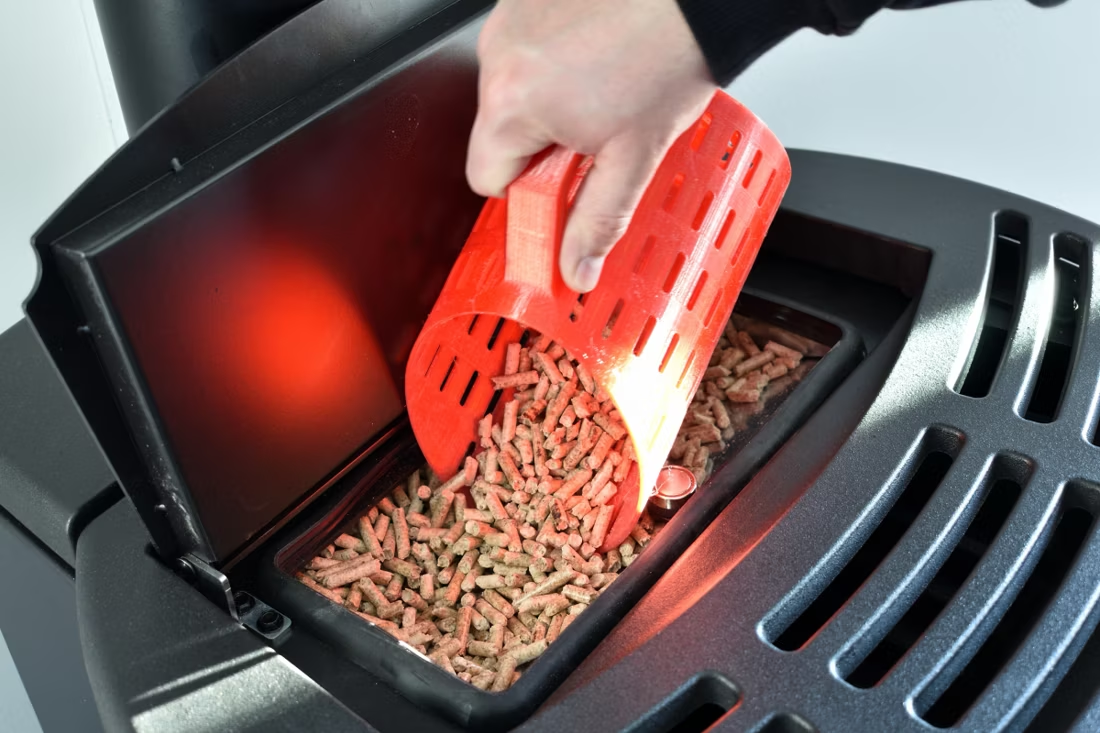
Madison County has plenty of oak, hickory, walnut, and maple available for homeowners who want to burn cordwood, and a wood stove will out-heat a pellet stove on a BTU-for-BTU cost basis if you're cutting or buying firewood cheaply. But wood means splitting, stacking, seasoning, and hauling ash from a firebox. A pellet stove trades some of that fuel-cost advantage for real convenience: pour bagged pellets into a hopper, set a thermostat, and let the auger feed the fire automatically. For Granite City's moderate winter heating load, where you're not fighting extreme cold for months on end, that convenience is often worth more than the fuel savings—especially in a household where nobody wants to manage a woodpile.
What size pellet stove do I need for my home?
Because Granite City's winters are moderate compared to the northern Midwest, most homes here don't need the largest pellet stoves on the market. A stove rated for 1,000–1,500 square feet handles a typical ranch or bungalow as supplemental or zone heat, while a 2,000+ square foot rated unit can serve as primary heat in an average-sized Granite City home with reasonable insulation. Older homes near the Granite City Works area with less insulation may want to size up slightly. A local dealer will walk your floor plan and give you an exact recommendation rather than relying on square footage alone.
Where can I buy pellets in Granite City?
Regional producers including Indeck Energy Services, Lignetics, and Somerset Pellet Fuel supply hardwood pellets throughout the Metro East, and most local hearth dealers, hardware stores, and farm supply retailers carry bagged pellets seasonally. Typical pricing in this region runs roughly $230 to $300 per ton, cheaper than what homeowners pay in areas that have to ship pellets in from farther away. Buying a season's supply—usually 2 to 3 tons for an average home—in late summer or early fall, before demand spikes, is the standard way to lock in the lower end of that range.
Do pellet stoves work during a power outage?
No—pellet stoves rely on electricity to run the auger that feeds fuel and the blower that circulates heat, so a power outage shuts them down unlike a standard wood stove. This is worth planning for in Madison County, where ice storms occasionally knock out Ameren Illinois or Southwestern Electric Cooperative service for a day or more. Many pellet stove owners here pair their unit with a small battery backup or a portable generator sized to handle the stove's modest draw, which keeps the auger and igniter running through an outage. Ask your local dealer about backup options when you're sizing your system.
Do I need a permit to install a pellet stove in Granite City?
Most pellet stove installations require a building permit through the City of Granite City or Madison County, depending on your address, along with confirmation that the unit is UL-listed for the installation type. Because pellet stoves vent through smaller PL pipe rather than a full chimney system, the permitting and inspection process is typically simpler and faster than a wood stove install. Local dealers who install pellet stoves regularly usually pull the permit and schedule the inspection as part of the job, so you're not coordinating it yourself.
Does a pellet stove need a chimney?
No. Pellet stoves vent through smaller-diameter PL (pellet vent) pipe rather than a masonry or Class A chimney, which is one of the reasons they're often cheaper and faster to install than a wood stove. Most Granite City installations run the vent straight through an exterior wall to a termination cap outside, avoiding roof penetrations entirely. Homes with an existing masonry chimney can still use it as a chase for the vent pipe if that's the preferred look, but it isn't required the way it is for a traditional wood-burning fireplace.
How much maintenance does a pellet stove need?
Pellet stoves need more routine attention than a gas appliance but less than a wood stove. Plan on emptying the ash pan every few days to weekly depending on use, wiping the glass as needed, and vacuuming the burn pot and hopper area periodically through the season. Most manufacturers also recommend an annual professional cleaning of the exhaust venting, combustion blower, and auger system—typically done in late summer before the next heating season starts. Skipping this can lead to feed jams or reduced burn efficiency, so it's not a step to put off in a Granite City winter.
Pellet stove vs. electric fireplace—which is right for my Granite City home?
An electric fireplace or heater plugs into a standard outlet and produces real, if modest, supplemental heat—at Ameren Illinois or Southwestern Electric Cooperative rates of roughly 12 to 14 cents per kWh, running one for several hours a day adds up in a way that's noticeable but manageable. A pellet stove costs more upfront to install but produces significantly more heat output for a similar or lower operating cost, since bagged pellets are cheaper per BTU than electric resistance heat. For a single room or occasional-use space, electric is simpler and requires zero venting. For a Granite City homeowner looking to meaningfully offset a gas or electric heating bill through the winter, a pellet stove does more work.
Why is a fireplace insert so efficient?
An insert does two things: it seals the chimney completely, so you stop losing air you already paid to heat, and it radiates warmth into the room through the firebox and glass. Most add a heat-exchange fan that pulls cool room air underneath, wraps it around the hot firebox, and pushes it back out warm. Your home is more efficient before you've even lit the first fire.
Why is my open fireplace making my house colder?
Open fireplaces suck—literally. As the fire burns, it consumes air your furnace already paid to heat and pulls it out through the chimney, so the house is actually colder after the fire goes out than before you lit it. An insert fixes this: it seals the chimney, puts fixed glass across the front, and turns that hole in your house into a real heat source.
Can a fireplace actually lower my heating bill?
Yes—by creating a comfort zone. A furnace heats every square foot of the house just to warm the one room you're in; a gas fireplace on low burns roughly a sixth of the gas a typical furnace does. Set the furnace around 55–60 degrees as a baseline, then heat the rooms your family actually uses. Families who heat this way commonly save $20–$60 a month.
Can I install a fireplace myself?
If you're putting a fire in your house on purpose, it's best to work with an expert. Unless you're genuinely experienced in framing, gas line, vent pipe, and the national code on clearances to combustibles, have a professional do it—and ideally the same company that sells you the fireplace, so warranty, service, and liability all live under one roof.
Nearby Dealers
Hearth shops serving Granite City and the surrounding area.
Pellet Brands Stocked Around Granite City
Manufacturers will point you to the nearest stocking dealer.
Find your pellet stove in Granite City.
Tell us a bit about your home and we'll put together a free Project Guide & Parts List for your Granite City pellet project—the right stove, the exact vent kit, and a trusted local dealer to install it.
Find Your Fireplace →