
Real Heat, Fast, Right Here in Glenview.
Instant, reliable warmth for North Shore winters—find the right gas fireplace or insert and get matched with a trusted local dealer who can actually install it.
Every Project Starts From One of These Five Situations
Clean heat built for Cook County winters.
Glenview sits along Chicago's North Shore at just under 640 feet in elevation, but the region has a long, cold heating season—comparable to Buffalo, NY—with average winter lows around 16°F and plenty of lake-effect wind off Michigan. Wood-burning setups are effectively off the table here: dense suburban lots, village ordinances limiting open burning, and the practical reality of storing cordwood on a quarter-acre lot mean almost nobody in Glenview heats with wood. Gas has filled that role instead, and it's the dominant hearth fuel across the village's ranch, colonial, and split-level housing stock.
Nicor Gas serves nearly all of Glenview, so most homes already have a gas line running to the furnace or water heater—which makes adding a direct-vent gas fireplace or converting an existing wood-burning fireplace a relatively straightforward project. A gas fireplace gives you instant, thermostat-controlled heat that pairs well with central forced-air systems, zone-heats a family room without running the furnace harder, and in many models keeps working through a Commonwealth Edison power outage during a winter storm.
Three steps. No salesperson until you're ready.
Tell us about your project
Your zip code, your situation, and the fuel you're leaning toward—or let the answers point you to one.
See what's actually available
The brands dealers within 100 miles genuinely carry—real options, never a catalog mirage.
Get your dealer & Project Guide
A trusted local dealer, plus the free Project Guide & Parts List that names every component of the job.
Frequently Asked Questions
How much does a gas fireplace installation cost in Glenview?
In the Chicago suburbs, a gas fireplace or insert installation typically runs $4,500 to $12,000 depending on the unit, the venting path, and whether new gas line work is needed. A direct-vent insert dropped into an existing masonry fireplace with gas already run to that wall sits toward the lower end. A new built-in gas fireplace as part of a remodel—with framing, exterior venting through brick or siding, and a fresh gas line from the meter—lands toward the higher end. Local dealers will size the job and give you a firm number after seeing the space in person.
Can I convert my existing wood fireplace to gas in Glenview?
Yes, and it's one of the most common projects among Glenview's older housing stock—plenty of the split-levels and colonials built in the 1950s through 1970s came with a wood-burning masonry fireplace that homeowners now want without the mess. A gas insert typically slides into the existing firebox, running a stainless liner up the original chimney for venting. Because Nicor Gas already serves most Glenview blocks, the gas line work is often a short run from an existing appliance rather than a new service connection, which keeps the project on the lower end of the cost range.
Do I need natural gas service to install a gas fireplace, or can I use propane?
Nearly every home in Glenview already has natural gas service through Nicor Gas, so propane is rarely necessary here—unlike more rural parts of Cook County where propane tanks are common. If your home already runs a gas furnace, water heater, or range, adding a fireplace usually just means extending an existing line to the new location. Ask your installer to confirm your home's existing gas capacity, especially in older houses where the original line was sized for fewer appliances.
Will my gas fireplace work during a power outage?
Most modern gas fireplaces will, which matters in Glenview when a winter storm knocks out ComEd service along with everyone else on the block. Units with IPI (intermittent pilot ignition) run on AA battery backup that kicks in automatically when the power drops, so the fireplace still lights on demand. Valor fireplaces go a step further—their pilot assembly generates its own electricity through the thermocouple, so there are no batteries to remember at all. If backup heat during outages matters to you, ask your local dealer about the ignition system before you choose a model.
What's the difference between a gas fireplace, gas insert, and gas stove?
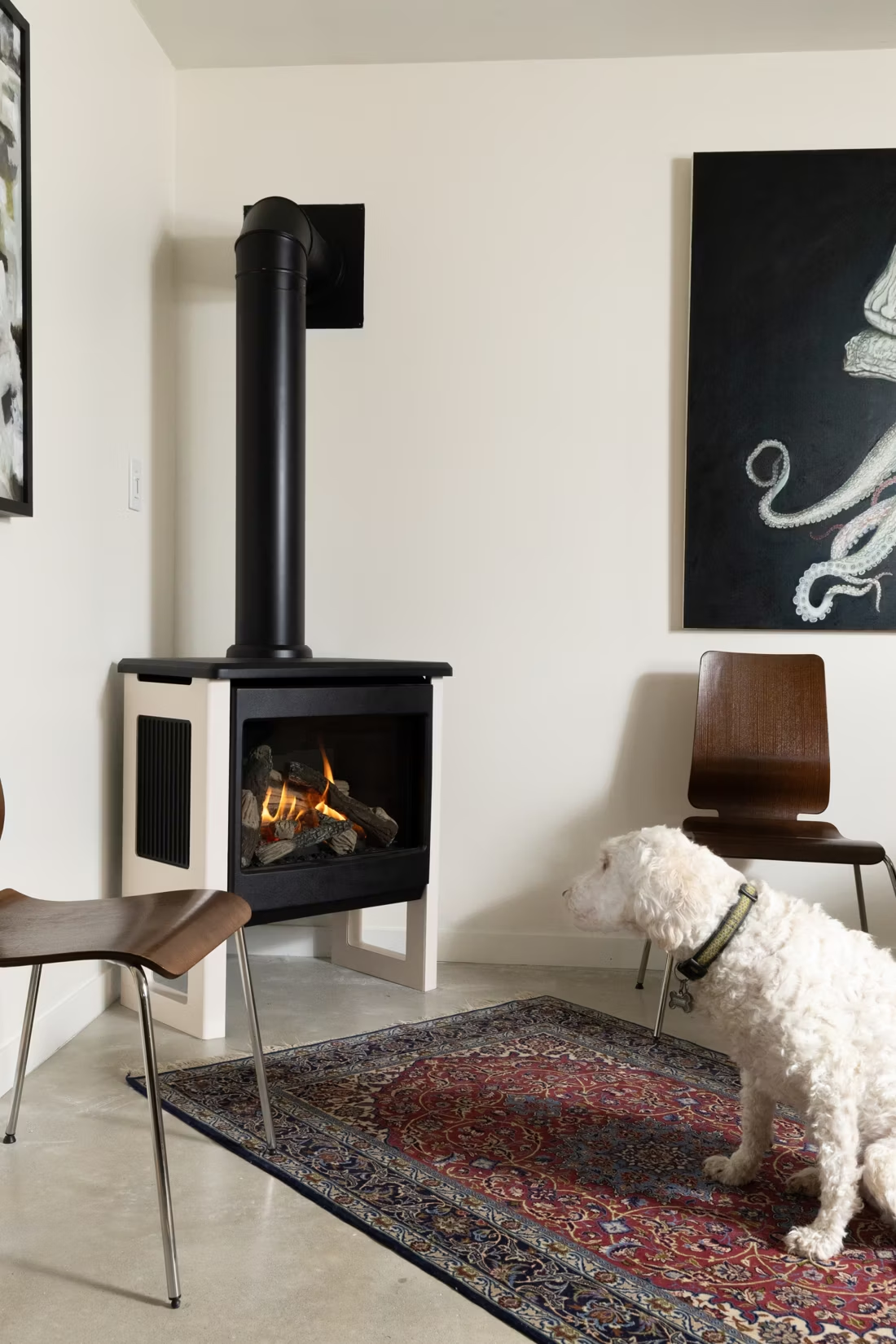
A gas fireplace is a fully built-in unit framed into a wall—the right choice for new construction or a room without an existing fireplace. A gas insert is built to slide into an existing masonry firebox, sealing it up and venting through the original chimney with a liner, which is the common route for Glenview's older wood-burning fireplaces. A gas stove is a freestanding cabinet-style unit that sits on the floor and vents through a wall or existing chimney, often used in basements or additions where there's no fireplace opening at all.
Do I need a permit to install a gas fireplace in Glenview?
Yes. The Village of Glenview Building Division requires a building permit for gas fireplace installations, and any new or extended gas line work has to be done by a licensed gas-fitter and inspected before it's closed up. Most established local hearth dealers pull the permit and schedule the inspection as part of the installation, so you're not coordinating multiple trades yourself. It's worth confirming this is included before you sign a contract, since it affects both timeline and final cost.
What's the difference between vented and vent-free gas fireplaces?
Vented (direct-vent) gas fireplaces draw combustion air from outside and exhaust exhaust gases back outside through a sealed pipe—they're the standard choice and produce real, substantial heat output. Vent-free units burn gas directly into the room with no external venting, which is more efficient on paper but releases water vapor and trace combustion byproducts into the living space, and comes with strict room-size and ventilation requirements. Vent-free is legal in Illinois but several suburbs, including Glenview, restrict where it can be installed—bedrooms in particular are commonly off-limits. For most Glenview homes, a direct-vent unit is the simpler and more broadly recommended path.
How often should my gas fireplace be serviced?
Plan on an annual inspection, ideally in early fall before the heating season starts in earnest. A certified technician checks the burner, pilot assembly, venting, and any electronic ignition components, and cleans the glass and interior. This runs far less involved than wood chimney sweeping, but it matters—a dirty burner or a degraded gasket is the kind of thing that shows up as a service call in January instead of a five-minute fix in September. Expect to pay somewhere in the $150 to $250 range for a standard annual visit from a local service provider.
Gas vs. electric fireplace—which is right for my Glenview home?
Gas gives you a real flame, substantial radiant heat output, and the ability to keep running during a ComEd outage with a battery-backup or self-powered ignition system—genuinely useful during a North Shore ice storm. Electric fireplaces plug into a standard outlet, need no venting or gas line at all, and cost far less to install, but they produce mostly ambiance and modest supplemental heat rather than whole-room warmth, and they go dark the moment the power does. At Commonwealth Edison's residential rate of roughly 13.4 cents per kWh, electric units are cheap to run for occasional use but aren't a substitute for a heating appliance. Given that wood isn't a realistic option on most Glenview lots, the practical choice for most homeowners comes down to gas for real heat and backup capability, or electric for a lower-cost, no-venting supplemental unit.
Why is a fireplace insert so efficient?
An insert does two things: it seals the chimney completely, so you stop losing air you already paid to heat, and it radiates warmth into the room through the firebox and glass. Most add a heat-exchange fan that pulls cool room air underneath, wraps it around the hot firebox, and pushes it back out warm. Your home is more efficient before you've even lit the first fire.
Is my gas fireplace wasting gas?
If it was installed more than 15 years ago, probably. Older gas fireplaces keep a standing pilot light burning all the time, and that little flame can cost a couple hundred dollars a year. Newer models use pilot-on-demand ignition—the pilot lights only when you use the fireplace and goes out when you turn it off.
What is an in-home preview and do I need one?
It's a visit where a hearth professional measures your space, confirms the model you picked actually works in your home, and walks the specs—framing, gas line, venting, finish work—before anything is ordered. Some details you just can't know until you see the house. Never make a down payment without one; it's the single most-skipped step that burns buyers.
How much should I budget for a fireplace?
For an average home—covering the fireplace, the vent pipe, and basic installation—a budget between $3,900 and $5,500 gives you a lot of options across wood, gas, and pellet. By the time you add finish work, gas line, and electrical, the average complete installation lands between $5,000 and $12,000 all-in. In a remodel or new build, a good rule is to put about 2.5% of the total project cost toward the fireplace.
Nearby Dealers
Hearth shops serving Glenview and the surrounding area.
Fireside Collection By Fireplaces Plus
Get your Glenview gas fireplace Project Guide & Parts List.
Tell us about your home and your existing fireplace, and we'll match you with a trusted local Glenview-area dealer and send a free Project Guide & Parts List—the exact venting, insert or fireplace, and parts your installer will need.
Find Your Fireplace →