
Warm, wired, and ready for DuPage County winters.
No chimney, no gas line, no permit headaches—just a fireplace that plugs in and works. Find the right unit and connect with a trusted local dealer.
Every Project Starts From One of These Five Situations
The convenience play for DuPage County's condos and townhomes.
Glendale Heights sits about 25 miles west of downtown Chicago in DuPage County, at roughly 800 feet elevation with climate zone 5A conditions—average winter lows near 17°F and a winter heating load about like Madison, WI. A meaningful share of the village's housing stock is condos, townhomes, and multi-family buildings built through the 1960s-80s boom along Army Trail and North Avenue, plus rental apartments where a masonry chimney or gas line simply isn't an option.
That's exactly where electric fireplaces earn their keep. There's no venting to run, no gas permit to pull, and no combustion byproducts to worry about—just a 120V outlet or a licensed electrician's dedicated circuit for larger built-ins. Commonwealth Edison serves electric service throughout Glendale Heights at a residential rate around $0.1339/kWh, cheap enough to run a unit as evening zone heat in a family room or finished basement without a big utility bill surprise. For renters, HOA-restricted properties, and anyone who wants real flame-look ambiance without the maintenance of wood or the install cost of gas, electric is often the practical, honest answer.
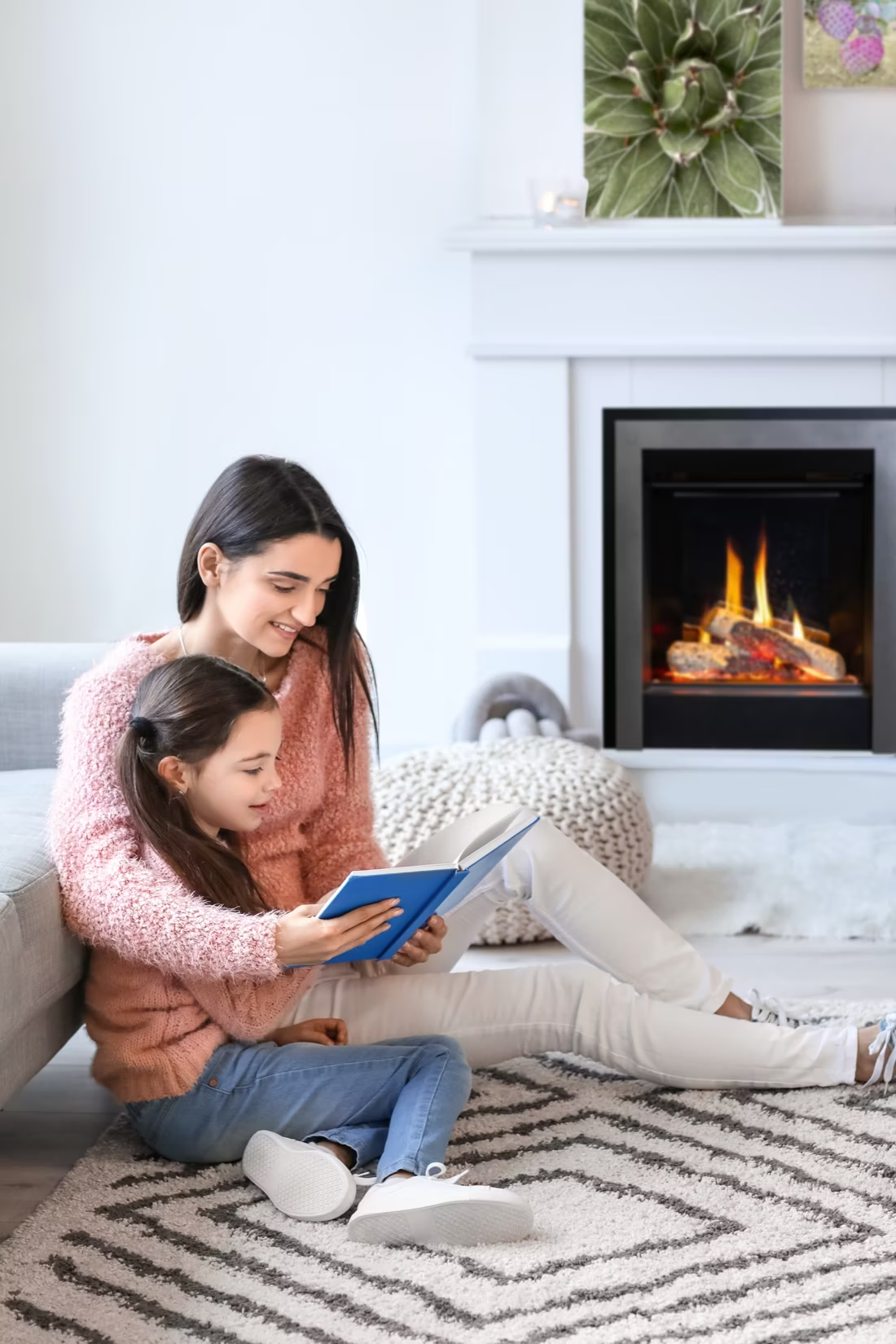
Three steps. No salesperson until you're ready.
Tell us about your project
Your zip code, your situation, and the fuel you're leaning toward—or let the answers point you to one.
See what's actually available
The brands dealers within 100 miles genuinely carry—real options, never a catalog mirage.
Get your dealer & Project Guide
A trusted local dealer, plus the free Project Guide & Parts List that names every component of the job.
Frequently Asked Questions
How much does it cost to install an electric fireplace in Glendale Heights?
Most of the cost is the unit itself, not the installation—that's the advantage of electric. A quality built-in or wall-mount from Dimplex, Napoleon, or Touchstone typically runs $300 to $3,000 depending on size and features, and if it plugs into a standard outlet, that's often the entire cost. Larger built-ins that need a dedicated 120V or 240V circuit usually add $150 to $600 for a licensed electrician. Compare that to a gas insert install in this area, which commonly runs into the thousands once gas line work and venting are involved—electric skips both of those steps entirely.
Do I need a permit to install an electric fireplace in Glendale Heights?
A plug-in electric fireplace that draws from an existing outlet needs no permit at all—it's treated like any other appliance. If you're adding a hardwired built-in unit that requires a new circuit or breaker, the Village of Glendale Heights Building & Code Enforcement Department typically requires an electrical permit for that circuit work, and most licensed electricians pull it as part of the job. There's no fire marshal review or venting inspection involved, which is a big part of why electric installs move faster than wood or gas.
Can an electric fireplace actually heat a room during a Chicago-area winter?
Honestly, it's a zone heater, not a furnace replacement. Most units are rated around 1,500 watts (roughly 4,600–5,200 BTU), which comfortably supplements a room of 400 to 1,000 square feet—but it won't carry a whole house through Glendale Heights's coldest January stretches, when lows regularly sit near 17°F and colder. Think of it as the same role a space heater plays: warming the room you're actually in, while your gas forced-air furnace handles the rest of the house. That's the honest use case, and it's a very good one for a den, bedroom, or finished basement.
What does it cost to run an electric fireplace on ComEd's rates?
At Commonwealth Edison's residential rate of about $0.1339 per kWh, a typical 1,500-watt heater element uses 1.5 kWh per hour. Run it 5 hours an evening and you're looking at roughly 7.5 kWh, or about $1 a day—call it $25 to $30 a month if you run it most evenings through the winter. Many units let you run the flame effect without the heater on at all, which drops the draw to well under 100 watts, essentially pennies a day, for ambiance-only use in the off-season.
Are electric fireplaces a good fit for condos and rentals in Glendale Heights?
Yes, and it's one of the main reasons they're popular here. Glendale Heights has a lot of condos, townhomes, and rental apartments where a chimney or gas line was never built in and HOA rules or lease terms rule out anything involving venting or combustion. An electric fireplace sidesteps all of that—it's a wall-mount or a freestanding unit that plugs in, no structural changes, no landlord approval for gas work, and it can move with you if you relocate.
What's the difference between a built-in, wall-mount, and insert electric fireplace?
A built-in is designed to be framed into a wall or media console, giving a finished, flush look—this is the most common choice for a family room renovation. A wall-mount hangs directly on the wall like a large TV, with minimal footprint and no framing required, popular in condos and apartments. An electric insert is sized to slide into an existing masonry fireplace opening, letting you convert an old wood-burning fireplace to electric without touching the chimney structurally. For Glendale Heights homes with an existing fireplace that's rarely used, an insert is often the simplest upgrade.
Electric vs. gas—which is right for my Glendale Heights home?
Gas fireplaces deliver more real heat output and a more authentic flame, and they're a common choice here for homes with existing gas service and a masonry fireplace to convert. But gas installs involve line work, venting, and a bigger project cost. Electric fireplaces cost far less to install, need no gas line or venting at all, and are the only realistic option in most condos and rental units in the village. If you want genuine supplemental heat in a detached single-family home with gas already run to it, gas is worth considering. If you want low-cost, low-hassle ambiance and light zone heat—especially in an attached or rented property—electric is usually the better fit.
What electric fireplace brands do local Glendale Heights dealers carry?
Local hearth dealers serving the DuPage County area typically stock Dimplex, Napoleon, Touchstone, and SimpliFire—all well-regarded for realistic flame technology and reliable heater elements. Higher-end built-ins from Amantii show up in remodel and new-construction projects. A trusted local dealer can walk you through the flame-effect differences (ember bed vs. water-vapor vs. LED) in person, which matters more than it sounds like for how convincing the fire looks in your actual room lighting.
Why don't more homes in Glendale Heights use wood or pellet stoves?
Glendale Heights is a built-out, largely attached and multi-family suburb—there's no national forest land nearby for cutting permits, and village and DuPage County fire codes make solid-fuel appliances impractical or outright prohibited in most condos and rental buildings. Local wood species like oak, hickory, walnut, and maple are still sold at area hearth shops mainly for the smaller number of detached homes with existing masonry fireplaces, but new wood or pellet stove installs are genuinely rare here. Electric and gas are the mainstream, practical choices for this housing stock.
Can I put a TV above my fireplace?
Yes—with an asterisk. Fireplaces are hot and TVs don't like heat. Either put a mantel between them to deflect rising warmth, or choose a fireplace with heat-management technology that creates a cool zone on the wall above—the wall stays around 125 degrees, barely warm, while the room still gets full heat. If you like clean lines and don't want a mantel, heat management is the answer.
Do electric fireplaces actually produce heat?
Yes—most put out around 4,800–5,000 BTUs from a standard outlet, which comfortably warms a bedroom, office, or den as a comfort-zone heater. What they won't do is carry a whole house the way wood, gas, or pellet can. Think of electric as ambiance-first with honest supplemental heat: flames on with no heat in July, flames plus warmth in January.
How much should I budget for a fireplace?
For an average home—covering the fireplace, the vent pipe, and basic installation—a budget between $3,900 and $5,500 gives you a lot of options across wood, gas, and pellet. By the time you add finish work, gas line, and electrical, the average complete installation lands between $5,000 and $12,000 all-in. In a remodel or new build, a good rule is to put about 2.5% of the total project cost toward the fireplace.
Does a fireplace add value to my home?
On average, a fireplace adds back to the home about the same amount you spent installing it. Add the monthly savings from heating the rooms you actually use instead of the whole house—often hundreds of dollars a year—and the value case is strong before you even count what a fire does for how your family uses the room.
Nearby Dealers
Hearth shops serving Glendale Heights and the surrounding area. Every listing shows whether it is a WhyFire partner, a dealer we have verified as authorized for the brands we recommend, or a local business carrying hearth products. No manufacturer pays for placement. How we verify dealers →
Ember Glow
A Cozy Fireplace
A Fireplace Store And More
General Masonry Supply
Urban Rooftops
Smokin' Deal Bbq
Fireplaces Plus
Jhb Group, Inc.
Electric Service in Glendale Heights
An electric fireplace's heater draws about 1,500 watts—pennies per hour at local rates.
Commonwealth Edison Co
Find your electric fireplace in Glendale Heights.
Tell us a bit about your home and we'll match you with a trusted local dealer and a free Project Guide & Parts List—the exact unit, circuit requirements, and install plan for your Glendale Heights space.
Find Your Fireplace →