
Real heat, no wood pile, for Evanston winters.
Instant, reliable warmth for Evanston's cold lakefront winters—whether you're converting an old masonry fireplace or starting from scratch. Get matched with a trusted local dealer.
Every Project Starts From One of These Five Situations
The default heat source for a cold, built-out city.
Evanston sits right on Lake Michigan at just under 600 feet of elevation, in climate zone 5A with a long, cold heating season—a cold, humid Midwest winter not far off from Madison, Wisconsin, except with more lake-effect wind coming off the water. Winter lows average around 16°F, and a January gust off the lake can make that feel considerably colder. Evanston is also a city built up over more than a century, full of century-old brick two-flats, Victorian single-families near downtown, and courtyard apartments ringing Northwestern University—housing stock where an open masonry fireplace was standard long before reliable central heating existed.
Today, gas is the default choice here for both zone heat and fireplace ambiance. North Shore Gas serves natural gas throughout the city, and Commonwealth Edison runs the electric grid at roughly 13.4 cents per kWh—plenty reliable for the battery-backup ignition systems that keep a gas fireplace running through a Cook County ice storm. Full-time wood heat is essentially absent in Evanston: there's no nearby cut-your-own forest land, no permit office issuing cords, and the dense residential grid isn't built for daily wood smoke. In practice, nearly every fireplace project we see here is either a gas insert dropped into an existing masonry firebox or a new direct-vent gas fireplace built into a remodel.
Three steps. No salesperson until you're ready.
Tell us about your project
Your zip code, your situation, and the fuel you're leaning toward—or let the answers point you to one.
See what's actually available
The brands dealers within 100 miles genuinely carry—real options, never a catalog mirage.
Get your dealer & Project Guide
A trusted local dealer, plus the free Project Guide & Parts List that names every component of the job.
Frequently Asked Questions
How much does a gas fireplace installation cost in Evanston?
A gas fireplace or insert installation in Evanston typically runs $4,500 to $11,000, depending on the unit and how much venting and gas line work is involved. An insert going into an existing masonry fireplace in one of the city's older brick two-flats or Victorians—with a gas line already run to the room—lands toward the lower end. A new direct-vent fireplace built into a remodel, especially in a condo or courtyard building where the vent run has to clear multiple floors, pushes toward the higher end. A local hearth dealer will give you a firm number after seeing the actual space.
Can I convert my existing wood fireplace to gas?
Yes, and it's one of the most common projects in Evanston's older housing stock. Many of the city's pre-1930s homes near downtown and Northwestern already have a working masonry chimney attached to an open wood fireplace that's rarely used. A gas insert with a stainless liner run up that existing chimney converts it into a real heat source with the flip of a switch, without any structural changes to the room. Cost depends on whether the flue needs relining and whether a new gas line has to be run from the meter, but most of these conversions land in the $4,500–$9,500 range.
Do I need natural gas, or can I use propane in Evanston?
Almost every Evanston address has natural gas service through North Shore Gas, so propane is rarely the right call inside city limits. The only exceptions tend to be detached structures without an existing gas line—a converted garage or a lakefront cottage-style outbuilding—where running new gas main service isn't practical and a small propane tank is simpler. If you already have gas appliances (a furnace, water heater, or range), adding a fireplace to that same line is the straightforward path.
Will my gas fireplace work if the power goes out?
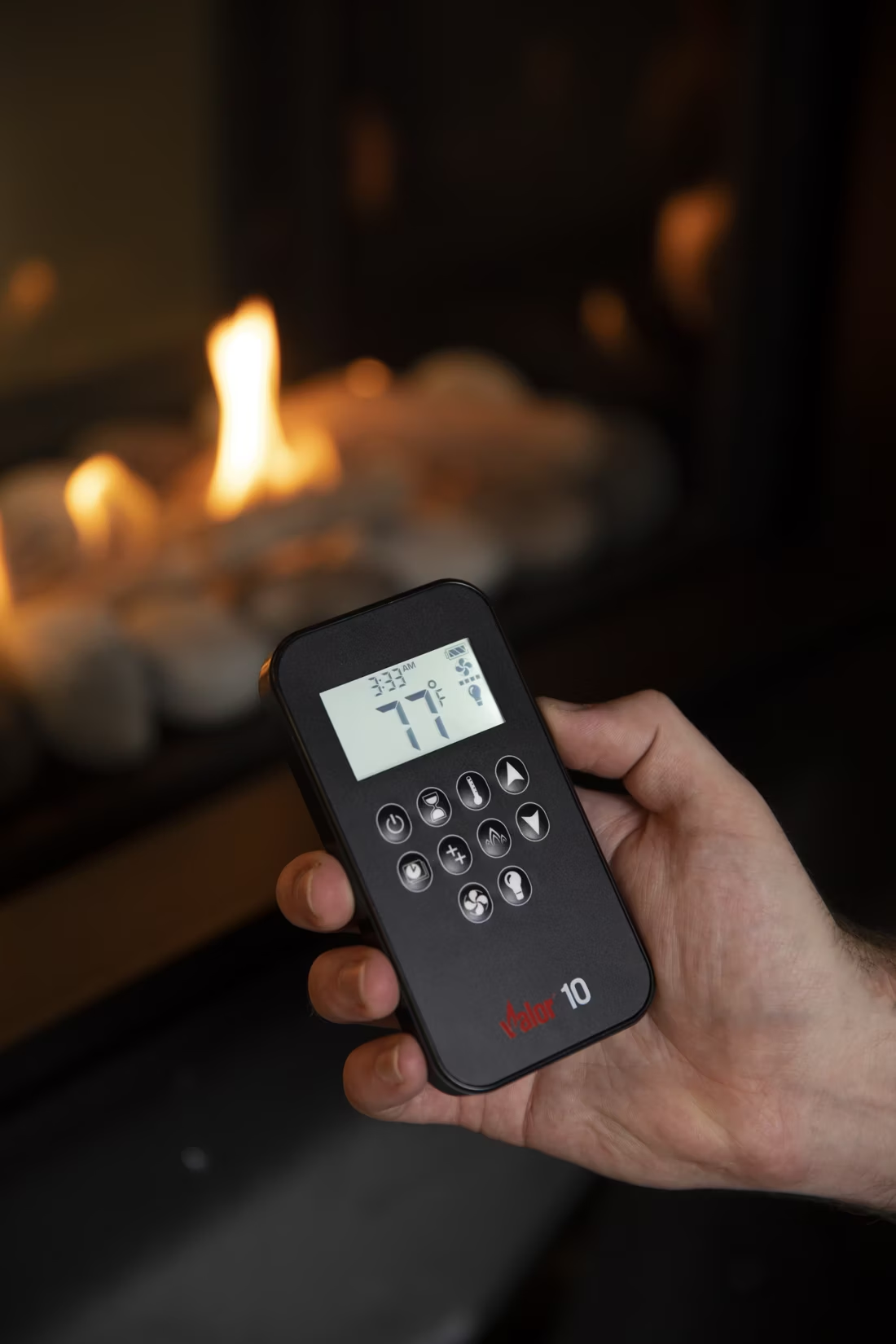
Most modern gas fireplaces will, and that matters in Evanston, where ComEd outages tend to cluster around lake-effect ice storms and high-wind events off Lake Michigan. Units with IPI (intermittent pilot ignition) run on AA battery backup that kicks in automatically when the power drops, so the fireplace still lights on demand. Valor fireplaces take it a step further—their pilot's thermocouple generates its own electricity, so there's no battery to check or replace at all. Ask your local dealer about the ignition system on any unit you're considering if outage backup matters to you.
What's the difference between a gas fireplace, gas insert, and gas stove?
A gas fireplace is a fully built-in unit framed into a wall—the right call for new construction or a gutted remodel. A gas insert slides into an existing masonry firebox, which describes a huge share of Evanston's greystones, two-flats, and pre-war single-families with a fireplace that came with the house. A gas stove is a freestanding cast-iron or steel unit that sits on the floor, useful in a condo or smaller room where there's no existing chimney to work with. For most Evanston homeowners with an inherited masonry fireplace, an insert is the natural upgrade.
Do I need a permit to install a gas fireplace in Evanston?
Yes. The City of Evanston's Building & Inspection Services division requires a building permit for the installation and a separate permit for any new gas line work, which has to be pulled by a licensed plumber or gas-fitter. Most established hearth dealers handle this paperwork as part of the install, coordinating the gas line, venting, and inspection sign-off so you're not managing multiple trades yourself—worth confirming before you sign a contract with anyone doing the work.
What's the difference between vented and vent-free gas fireplaces?
Vented (direct-vent) gas fireplaces pull combustion air from outside and exhaust it back outside through sealed venting—cleaner, safer, and universally code-compliant. Vent-free units burn directly into the room with no external venting; they're legal in Illinois but come with strict room-sizing and ventilation requirements, and quite a few of Evanston's condo and co-op associations near downtown and Northwestern prohibit them outright in their bylaws. Given the city's smaller, older room footprints and how common HOA restrictions are here, direct-vent units are what most local dealers install and recommend by default.
How often should my gas fireplace be serviced?
Plan on an annual inspection, ideally before the coldest months set in. A certified technician checks the burner, pilot, gas connections, and venting, and cleans the glass and firebox interior—a much smaller job than a wood chimney sweep, but still important given how many Evanston units are running daily zone heat through a Cook County winter. Local gas appliance service providers typically charge $150 to $250 for this annual visit.
Should I go with gas, or keep my fireplace wood-burning?
For most Evanston homes, gas wins by default rather than by close comparison. Real wood heat needs a supply chain of cut, seasoned firewood, and Evanston has no nearby cutting permits or rural woodlot access the way a forested Midwest town might—most owners burning wood here are buying bundled cordwood at a premium for occasional ambiance, not heat. Gas, by contrast, runs off the same North Shore Gas line already feeding your furnace, lights with a switch, and needs no ash cleanup or chimney fuel storage. If your home already has an old masonry fireplace, converting it to a gas insert is almost always the better fit for how people actually use a fireplace in this city.
Why is my open fireplace making my house colder?
Open fireplaces suck—literally. As the fire burns, it consumes air your furnace already paid to heat and pulls it out through the chimney, so the house is actually colder after the fire goes out than before you lit it. An insert fixes this: it seals the chimney, puts fixed glass across the front, and turns that hole in your house into a real heat source.
What's the difference between an insert and a zero-clearance fireplace?
An insert is a fireplace that slides into a pre-existing wood-burning fireplace—if you don't have one, there's nothing to insert it into. A zero-clearance fireplace is built into a framed wall, which makes it the answer for remodels and new construction. Simple test: existing masonry fireplace means insert; blank or framed wall means zero-clearance.
What is an in-home preview and do I need one?
It's a visit where a hearth professional measures your space, confirms the model you picked actually works in your home, and walks the specs—framing, gas line, venting, finish work—before anything is ordered. Some details you just can't know until you see the house. Never make a down payment without one; it's the single most-skipped step that burns buyers.
Can I install a fireplace myself?
If you're putting a fire in your house on purpose, it's best to work with an expert. Unless you're genuinely experienced in framing, gas line, vent pipe, and the national code on clearances to combustibles, have a professional do it—and ideally the same company that sells you the fireplace, so warranty, service, and liability all live under one roof.
Nearby Dealers
Hearth shops serving Evanston and the surrounding area.
Fireside Collection By Fireplaces Plus
Find your gas fireplace in Evanston.
Tell us about your home and your existing fireplace or venting situation, and we'll match you with a trusted local Evanston dealer plus a free Project Guide & Parts List—the exact parts, vent kit, and recommended dealer for your project.
Find Your Fireplace →