
Steady gas heat for Elk Grove Village's long, cold winters.
With a long, demanding winter heating season and winter lows averaging 19°F, Elk Grove Village homes lean hard on their heating systems from November through March. I'll match you with a trusted local dealer who knows Nicor Gas service, ComEd backup considerations, and what actually fits your home.
Every Project Starts From One of These Five Situations
Gas heat that's on before your coffee's done.
At 685 feet in Cook County's northwest suburbs, Elk Grove Village sits in climate zone 5A with a winter profile closer to Madison, Wisconsin than to downtown Chicago eleven miles southeast—average lows near 19°F and a long, cold winter heating season lasting nearly the whole year. A lot of the village's housing stock dates to the ranch and split-level boom of the 1960s and 70s, many built with a wood-burning masonry fireplace as a living-room centerpiece rather than a real heat source. Decades later, plenty of those owners are ready to trade the ash bucket for a switch-flip flame.
Elk Grove Village has no air quality non-attainment designation and no winter inversion pattern to manage, so unlike parts of the West, there's no curtailment schedule or smoke-season restriction shaping the decision here—it comes down to convenience and reliability. Nicor Gas serves most of the village's natural gas needs, and Commonwealth Edison handles electric at roughly 13.4 cents per kWh, which matters when you're comparing a gas fireplace's battery-backup ignition against a fully electric unit. A properly vented gas insert or fireplace gives you real, on-demand heat through a long Chicago-area winter without the wood supply, splitting, or chimney upkeep that the village's oak, hickory, walnut, and maple trees used to require of homeowners who burned wood.
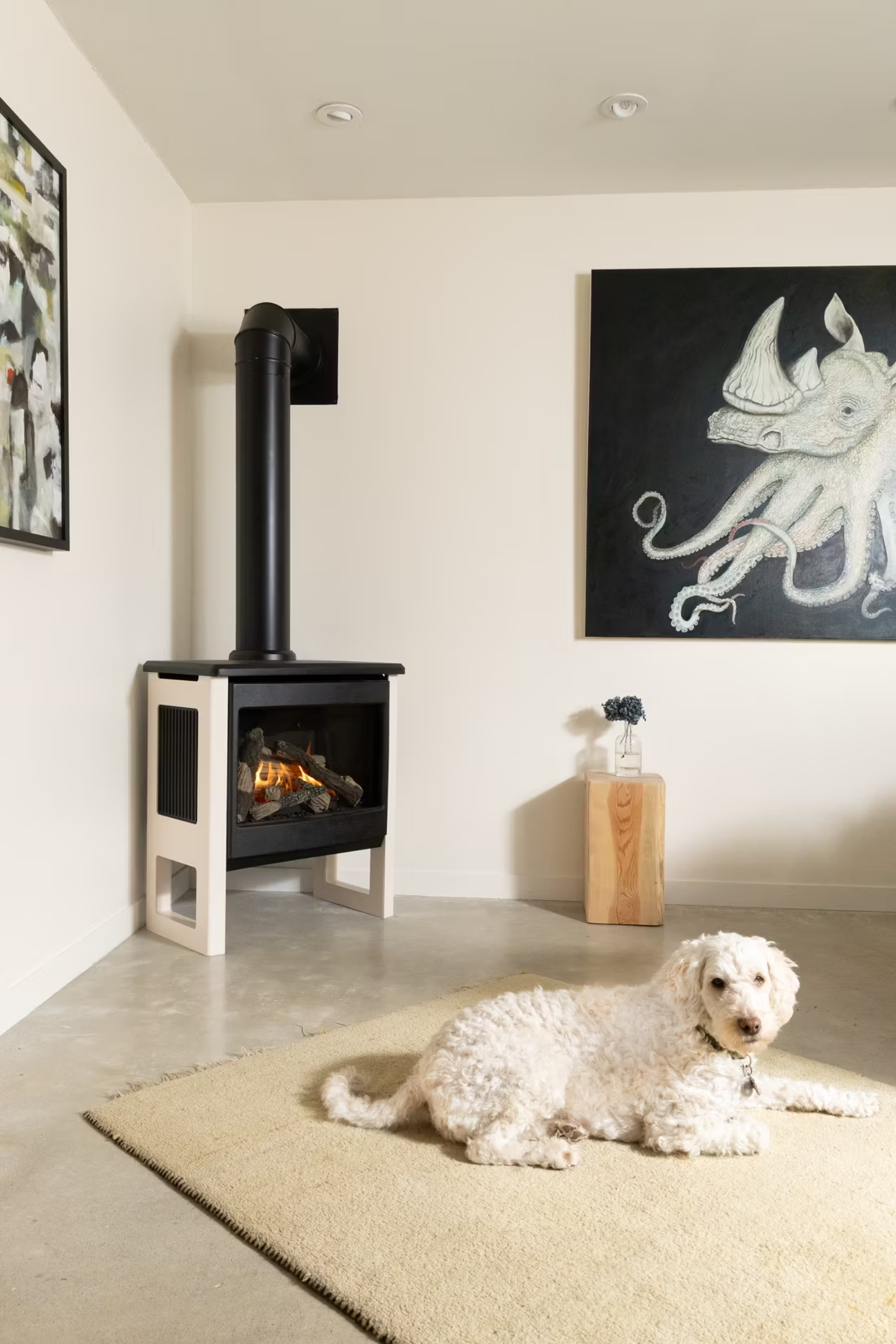
Three steps. No salesperson until you're ready.
Tell us about your project
Your zip code, your situation, and the fuel you're leaning toward—or let the answers point you to one.
See what's actually available
The brands dealers within 100 miles genuinely carry—real options, never a catalog mirage.
Get your dealer & Project Guide
A trusted local dealer, plus the free Project Guide & Parts List that names every component of the job.
Frequently Asked Questions
How much does a gas fireplace installation cost in Elk Grove Village?
Most Elk Grove Village installs land between roughly $4,000 and $10,500, with the spread coming down to scope. A direct-vent gas insert dropped into one of the village's existing 1960s or 70s masonry fireboxes, with a Nicor Gas line already nearby, sits toward the lower end. A new built-in gas fireplace for a remodel or addition—with fresh framing, a new gas line run, and venting through an exterior wall—runs toward the upper end. Homes on the edges of the village near the industrial park that fall outside Nicor's service area may need propane tank setup added to the estimate. A local dealer will quote a firm number after seeing your space.
Can I convert my existing wood-burning fireplace to gas?
Yes, and it's one of the most common projects we see in Elk Grove Village, especially in the split-levels and ranches where the original owners burned oak, hickory, or walnut in an open masonry fireplace that's now more hassle than it's worth. A gas insert typically slides into that existing firebox with a stainless liner run up the current chimney, which keeps costs down since the structure is already in place. Expect somewhere in the $4,000-$8,500 range depending on whether new gas line work is needed to reach the firebox.
Do I need Nicor Gas service, or should I plan for propane?
Most of Elk Grove Village falls within Nicor Gas territory, which covers the bulk of Chicago's northwest suburbs, so if your furnace or water heater already runs on natural gas, adding a fireplace is a straightforward tie-in. A smaller number of properties near the village's edges or newer industrial-adjacent parcels may sit outside convenient gas line access, in which case propane with a tank is the standard fallback. Either fuel works in the same fireplace models—your installer configures the burner and orifice for whichever service reaches your address.
Will my gas fireplace still work if the power goes out?
Most will, which is worth knowing given how Chicago-area ice storms and summer derechos can knock out ComEd service for hours at a time. Units with IPI (intermittent pilot ignition) run on AA battery backup that kicks in automatically the moment power drops. Valor fireplaces skip the battery question entirely—their pilot's thermocouple generates its own electricity to run the valve. If you want a fireplace that doubles as real backup heat during a winter outage, ask your local dealer which ignition system is on the model you're considering.
What's the difference between a gas fireplace, insert, and stove?
A gas fireplace is a built-in unit framed into a wall, typically used in new construction or when remodeling a room that never had a hearth. A gas insert fits inside an existing masonry firebox, which is the common route in Elk Grove Village's older ranch and split-level homes that already have a chimney chase built for wood. A gas stove is freestanding on a hearth pad, similar in footprint to a wood stove but running on a gas line instead of cordwood. For most village homeowners with an existing fireplace, an insert is the simpler, less invasive upgrade.
Do I need a permit to install a gas fireplace in Elk Grove Village?
Yes. You'll need a building permit through the Village of Elk Grove Village Building Division, plus a separate gas line permit since any new gas piping has to be run by a licensed gas fitter and inspected before it's covered up. Most established hearth dealers in the area handle the permit filing, the gas line coordination, and the final inspection as part of the installation, so you're not managing three different trades on your own.
Should I get a vented or vent-free gas fireplace?
Direct-vent units draw combustion air from outside and exhaust it back outside through sealed pipe, which makes them the safer, more broadly recommended option and code-compliant everywhere in Illinois. Vent-free units are legal in the state but come with strict room-size and ventilation requirements, and they release combustion byproducts and moisture directly into the living space. Elk Grove Village doesn't have the outdoor air quality concerns some Western cities do, but many of the village's homes were built or retrofitted with tighter insulation and updated windows over the years, and that tighter envelope is exactly why most local dealers still steer homeowners toward direct-vent units for indoor air quality.
How often should a gas fireplace be serviced?
Plan on an annual inspection, ideally in September or October before the long Chicago-area heating season really starts. A technician checks the burner, pilot or ignition assembly, gas connections, and venting, and cleans the glass—a much lighter job than a wood chimney sweep, but skipping it on a unit that may run daily from November through March is how an ignition system fails on the night you need it most. Expect to pay somewhere in the $150-$225 range for a standard visit.
Gas vs. wood or pellet—what makes more sense for an Elk Grove Village home?
Wood—oak, hickory, walnut, or maple, whatever a homeowner has stacked from a downed tree or a local supplier—still has fans in the village's older homes with an original masonry fireplace, and it works without electricity during an outage. Pellet stoves running regional fuel from Indeck Energy Services, Lignetics, or Somerset Pellet Fuel burn cleaner and need less tending than a wood fire, but the auger and blower depend on power. Gas wins on pure convenience—instant heat with a Nicor Gas hookup and none of the loading, ash, or storage that wood and pellets require—which is why it's become the default choice for most main living areas here, with wood or pellet often kept as a secondary or backup option.
What's the difference between an insert and a zero-clearance fireplace?
An insert is a fireplace that slides into a pre-existing wood-burning fireplace—if you don't have one, there's nothing to insert it into. A zero-clearance fireplace is built into a framed wall, which makes it the answer for remodels and new construction. Simple test: existing masonry fireplace means insert; blank or framed wall means zero-clearance.
Why is my open fireplace making my house colder?
Open fireplaces suck—literally. As the fire burns, it consumes air your furnace already paid to heat and pulls it out through the chimney, so the house is actually colder after the fire goes out than before you lit it. An insert fixes this: it seals the chimney, puts fixed glass across the front, and turns that hole in your house into a real heat source.
How much should I budget for a fireplace?
For an average home—covering the fireplace, the vent pipe, and basic installation—a budget between $3,900 and $5,500 gives you a lot of options across wood, gas, and pellet. By the time you add finish work, gas line, and electrical, the average complete installation lands between $5,000 and $12,000 all-in. In a remodel or new build, a good rule is to put about 2.5% of the total project cost toward the fireplace.
Can I install a fireplace myself?
If you're putting a fire in your house on purpose, it's best to work with an expert. Unless you're genuinely experienced in framing, gas line, vent pipe, and the national code on clearances to combustibles, have a professional do it—and ideally the same company that sells you the fireplace, so warranty, service, and liability all live under one roof.
Nearby Dealers
Hearth shops serving Elk Grove Village and the surrounding area.
Fireside Collection By Fireplaces Plus
Get your free Project Guide & Parts List for a gas fireplace in Elk Grove Village.
Tell me about your home and gas access—Nicor Gas or propane—and I'll match you with a trusted local dealer and send a free Project Guide & Parts List with the exact vent kit and parts your project needs.
Find Your Fireplace →