
Effortless Heat for Every Room in Elburn.
No chimney, no gas line, no venting—just plug in or wire up and get instant warmth for Elburn's long Kane County winters. Find the right unit and connect with a trusted local dealer.
Every Project Starts From One of These Five Situations
Zero-clearance heat that fits any wall.
Elburn sits in climate zone 5A with a winter heating load roughly comparable to Madison, Wisconsin, and winter lows that average around 15°F—not far off from what homes there deal with each January. But unlike a lot of that cold-climate housing stock, much of Elburn's newer construction—subdivisions built out over the last two decades as the village grew along the Union Pacific line—was never built with a masonry chimney or a gas line stubbed in for a fireplace. That's exactly the gap electric fireplaces fill.
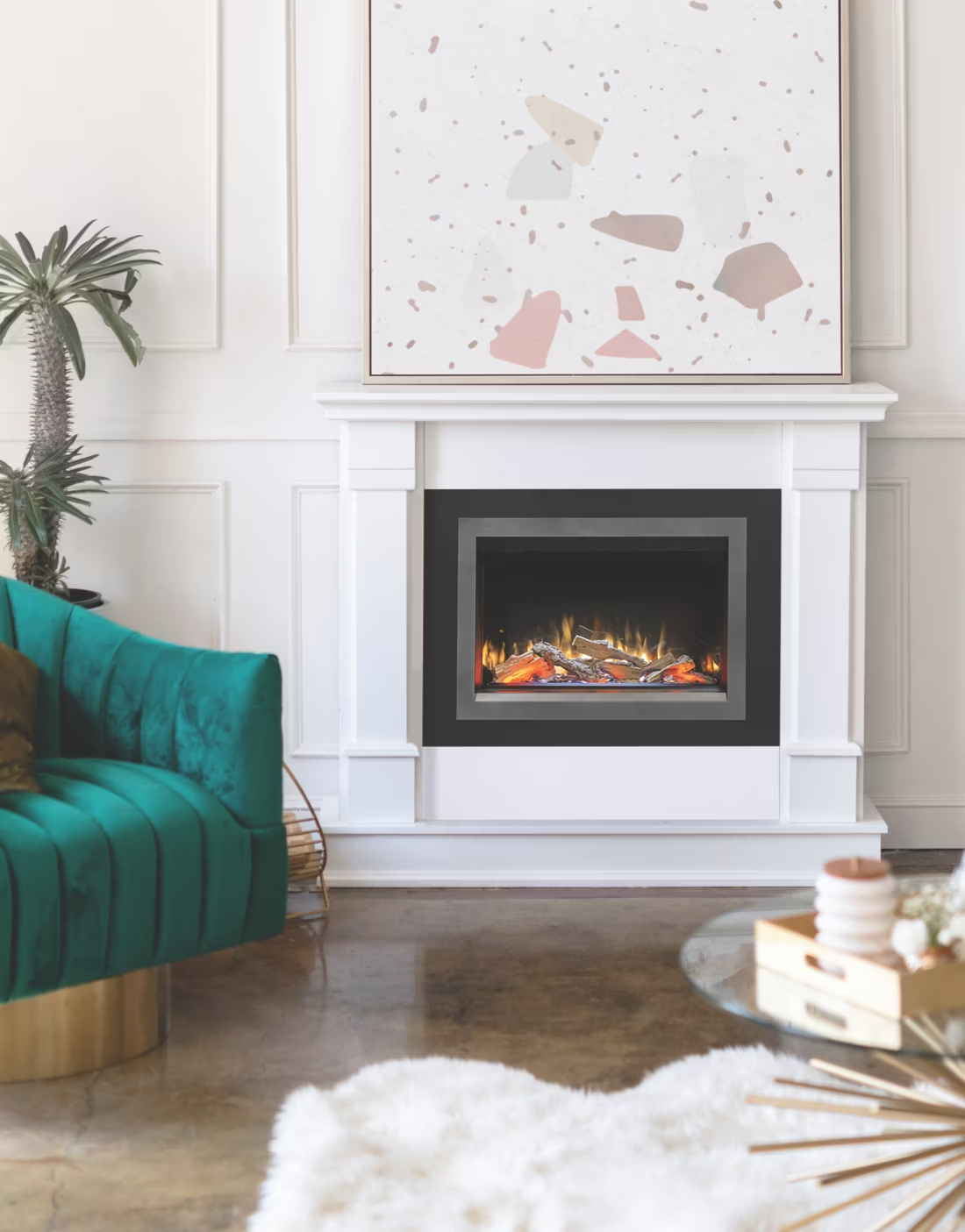
ComEd (Commonwealth Edison) serves Elburn homes at a residential rate around $0.134 per kWh, which keeps day-to-day operating costs for a zone-heating electric unit modest even through a full Illinois winter. Because there's no combustion, no flue, and no clearance-to-combustibles chimney work, electric fireplaces and inserts install almost anywhere—a family room wall, a finished basement, a primary bedroom—often in an afternoon rather than a multi-day project. For Elburn homeowners who want the look and ambiance of a fireplace without adding masonry or running new gas piping, electric is usually the fastest and least invasive path to get there.
Three steps. No salesperson until you're ready.
Tell us about your project
Your zip code, your situation, and the fuel you're leaning toward—or let the answers point you to one.
See what's actually available
The brands dealers within 100 miles genuinely carry—real options, never a catalog mirage.
Get your dealer & Project Guide
A trusted local dealer, plus the free Project Guide & Parts List that names every component of the job.
Frequently Asked Questions
How much does an electric fireplace installation cost in Elburn?
A plug-in electric insert or freestanding unit that drops into an existing opening or sits against a wall typically runs $300 to $900 including delivery and setup—no electrician required if it uses a standard outlet. A built-in linear electric fireplace set into new framing, with a dedicated 120V or 240V circuit run by a licensed electrician, generally lands between $1,500 and $4,000 depending on the unit size, wall construction, and whether trim or a mantel surround is added. Local dealers can walk you through both paths during an in-home or video consultation.
What does an electric fireplace cost to run in Elburn?
At ComEd's residential rate of roughly $0.134 per kWh, a typical 1,500-watt electric fireplace heater costs about 20 cents an hour to run at full heat output, or a bit less if you're running flame effect only with the heater off. Used for a few hours most winter evenings, that adds up to a modest monthly add-on to your electric bill—far less than most homeowners expect, and nothing close to the cost of heating a whole house with electric resistance heat.
Do I need a permit to install an electric fireplace in Elburn?
A plug-in unit that uses an existing outlet generally doesn't require a permit. A built-in electric fireplace that needs a new dedicated circuit does typically require an electrical permit, since it's new wiring work—your electrician or installer usually pulls this through the Village of Elburn or Kane County building department as part of the job. Because there's no venting or gas line involved, the permitting process for electric is simpler and faster than it is for wood or gas installations.
What's the difference between an electric fireplace, insert, and mantel package?
An electric fireplace is a self-contained unit, freestanding or built into a wall, with its own housing and trim. An electric insert is designed to slide into an existing fireplace opening—useful if a home has an old, unused wood-burning firebox that's never going to be used for actual wood burning again. A mantel package pairs a smaller electric insert or built-in unit with a surrounding mantel and shelf, giving you a complete fireplace look in a room that never had one. For Elburn's newer homes without existing masonry openings, mantel packages and built-in linear units are the most common choices.
Will my electric fireplace work during a power outage?
No—electric fireplaces require power to run both the heater and any flame-effect lighting, so they'll go dark along with everything else during an outage. This is the main tradeoff against wood or gas heat, which is a reason some Elburn homeowners with electric fireplaces also keep a battery backup or portable generator on hand for winter storms, particularly given how far ComEd crews sometimes have to travel to restore service in rural Kane County after an ice storm.
What's the best electric fireplace for Elburn's winters?
Since Elburn's electric fireplaces are almost always supplemental or ambiance heat rather than a home's primary heat source, look for a unit rated between 4,600 and 9,000 BTU with a built-in thermostat, which lets it cycle on and off automatically to hold a set room temperature rather than running constantly. Linear models with adjustable flame color and heat-independent operation are popular for family rooms and finished basements, letting you run the flame effect on mild days without adding heat you don't need.
Electric vs. gas fireplace—which is right for my Elburn home?
Gas is available through much of Elburn and delivers real heat output—enough to serve as genuine supplemental heat on the coldest days—along with the option to keep running during a power outage on models with battery-backup ignition. Electric skips the gas line and venting entirely, installs almost anywhere in a matter of hours, and costs less upfront and to maintain, but it's ambiance-plus-light-heat rather than a serious BTU source, and it goes dark in an outage. For a primary living space where you want real warmth on a February evening, gas is usually the stronger pick; for a bedroom, basement, or accent wall where looks and quick installation matter most, electric tends to win.
Are wood-burning fireplaces or pellet stoves an option in Elburn?
They're uncommon here. Elburn's housing stock is largely newer subdivision construction without masonry chimneys, and Kane County doesn't have the kind of accessible public timberland or cutting-permit infrastructure you'd find further north or west, so wood heat never became part of the local building tradition the way it has in more rural or forested parts of the Midwest. A small number of Elburn homeowners with older farmhouses or acreage still burn oak, hickory, or walnut cut on their own property, but for most homes here, gas and electric are the practical hearth options.
What size electric fireplace do I need for my room?
For zone heating a single room, match the unit's BTU rating loosely to square footage: a 4,600 BTU unit comfortably supplements a room up to about 400 square feet, while units in the 7,000-9,000 BTU range can take the edge off larger open-concept spaces common in Elburn's newer builds. Keep in mind the heater is meant to work alongside your furnace, not replace it—on the coldest days near Elburn's 15°F average winter low, even a well-sized electric unit is a comfort boost for the room you're in, not a whole-house heating solution. A local dealer can size the unit to your specific room during a quick consultation.
Do electric fireplaces actually produce heat?
Yes—most put out around 4,800–5,000 BTUs from a standard outlet, which comfortably warms a bedroom, office, or den as a comfort-zone heater. What they won't do is carry a whole house the way wood, gas, or pellet can. Think of electric as ambiance-first with honest supplemental heat: flames on with no heat in July, flames plus warmth in January.
Does an electric fireplace need a vent or chimney?
No—that's its superpower. An electric fireplace needs a wall and an outlet, period. No vent pipe, no gas line, no clearances to design around, which is why it works in bedrooms, offices, apartments, and walls where venting a gas or wood unit would be impractical or impossible. Installation is typically the simplest and least expensive of any fireplace type.
How much should I budget for a fireplace?
For an average home—covering the fireplace, the vent pipe, and basic installation—a budget between $3,900 and $5,500 gives you a lot of options across wood, gas, and pellet. By the time you add finish work, gas line, and electrical, the average complete installation lands between $5,000 and $12,000 all-in. In a remodel or new build, a good rule is to put about 2.5% of the total project cost toward the fireplace.
What is an in-home preview and do I need one?
It's a visit where a hearth professional measures your space, confirms the model you picked actually works in your home, and walks the specs—framing, gas line, venting, finish work—before anything is ordered. Some details you just can't know until you see the house. Never make a down payment without one; it's the single most-skipped step that burns buyers.
Nearby Dealers
Hearth shops serving Elburn and the surrounding area. Every listing shows whether it is a WhyFire partner, a dealer we have verified as authorized for the brands we recommend, or a local business carrying hearth products. No manufacturer pays for placement. How we verify dealers →
A Cozy Fireplace
Ember Glow
Jhb Group, Inc.
Electric Service in Elburn
An electric fireplace's heater draws about 1,500 watts—pennies per hour at local rates.
Commonwealth Edison Co
Find your electric fireplace in Elburn.
Tell us a bit about your home and we'll match you with the right electric fireplace or insert, plus a free Project Guide & Parts List covering the exact unit, electrical requirements, and your recommended local Elburn-area dealer.
Find Your Fireplace →