
Pellet Heat Has a Place in Deerfield—Just Not the Usual One.
Most Deerfield homes heat with natural gas, but a small number of homeowners still choose pellet stoves for basements, garages, and backup warmth. Find out if it fits your space, and get matched with a trusted local dealer.
Every Project Starts From One of These Five Situations
In a gas-first suburb, pellet stoves fill a narrow gap.
Deerfield sits about 25 miles north of Chicago in Lake County, where winters average a 16-degree low and the region has a long, demanding heating season—comparable to Madison, Wisconsin. That's real cold-climate heating demand. But unlike more rural pockets of the Midwest, Deerfield's housing stock is almost universally served by natural gas through Nicor Gas territory, and most homes already run a gas furnace and, often, a gas fireplace or insert. That infrastructure is a big reason pellet stoves never gained the foothold here that they have in areas without easy gas access.
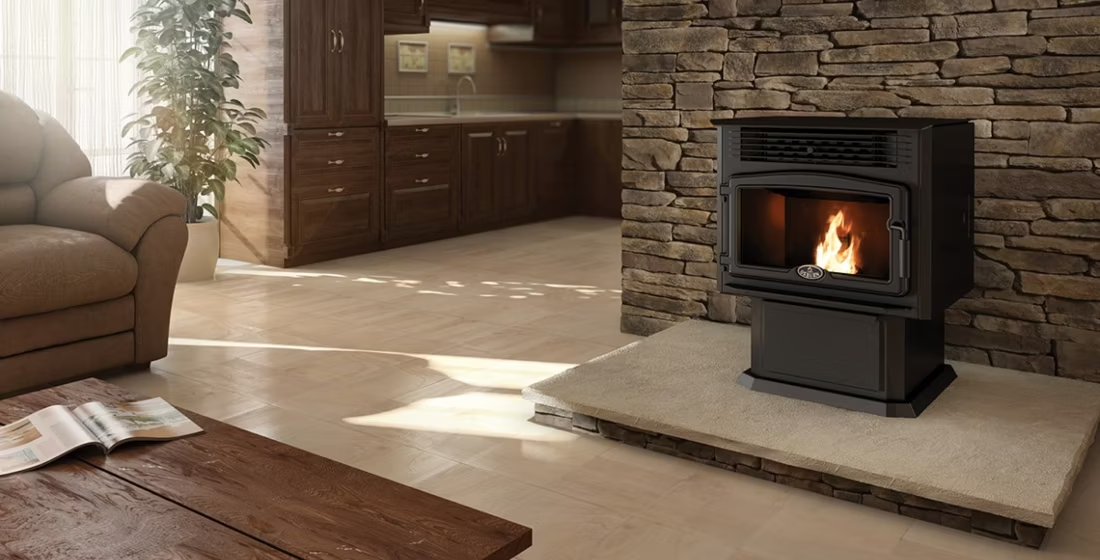
That doesn't mean pellet heat has no place in Deerfield. A handful of homeowners install pellet stoves in finished basements, detached garages, workshops, or three-season rooms that sit outside the reach of the home's gas line—spaces where running new gas service is expensive but a pellet stove's simpler vent-through-wall installation is not. Bagged pellets from regional producers like Indeck Energy Services, Lignetics, and Somerset Pellet Fuel are easy enough to find at hearth shops and farm-supply stores around the Chicago area, even if the stoves themselves are a specialty item locally.
Three steps. No salesperson until you're ready.
Tell us about your project
Your zip code, your situation, and the fuel you're leaning toward—or let the answers point you to one.
See what's actually available
The brands dealers within 100 miles genuinely carry—real options, never a catalog mirage.
Get your dealer & Project Guide
A trusted local dealer, plus the free Project Guide & Parts List that names every component of the job.
Frequently Asked Questions
Are pellet stoves actually a good fit for a home in Deerfield?
For most Deerfield homes, no—not as a primary heat source. With Nicor Gas service reaching nearly every block in the village, a gas furnace already handles the bulk of winter heating, and gas fireplaces or inserts cover the ambiance side. Pellet stoves make more sense as a targeted solution: heating a finished basement, a detached garage workshop, or an addition that's expensive to tie into the existing gas line. If that describes your situation, a pellet stove can be a genuinely good fit—just don't expect it to be the default choice your neighbors made.
How much does a pellet stove installation cost in Deerfield?
Because pellet stoves are a specialty request in this market rather than a routine one, pricing varies more than it would for a gas insert. Expect the unit itself, venting, and a hearth pad if needed to make up the bulk of the bid, plus permit fees through the Village of Deerfield's building department. Since so few local dealers stock pellet stoves as their bread-and-butter product, it's worth getting quotes from more than one hearth retailer across the broader Chicago area—pricing and lead times can differ significantly between shops that specialize in pellet appliances and those that carry them only occasionally.
Where can I buy pellet fuel near Deerfield?
Bagged pellets are easier to find than pellet stoves themselves. Regional producers like Indeck Energy Services, Lignetics, and Somerset Pellet Fuel supply the Chicago-area market, and their bags typically show up at hearth shops, farm-supply stores, and some hardware chains throughout Lake County. Pricing tracks with the broader Midwest pellet market, so it's worth buying a season's supply early—demand and price tend to spike during hard winters when everyone's stove is running at once.
Do I need a permit for a pellet stove in Deerfield, and does my HOA matter?
Yes to both, potentially. The Village of Deerfield requires a building permit for any new solid-fuel or pellet-burning appliance, covering both the unit and the exterior venting. On top of that, many Deerfield subdivisions carry HOA or architectural review guidelines that regulate what's visible on the outside of a home, including vent pipes—so it's worth checking your covenants before committing to a wall location. A local installer who's worked in the village before can usually tell you quickly whether your street has additional review requirements.
Will a pellet stove keep my house warm during a power outage?
Not without help. Pellet stoves rely on an electric auger to feed fuel and a blower to push heat into the room, so a ComEd outage shuts the stove down along with everything else, even with a full hopper of pellets sitting right there. If backup heat during outages is the priority, either pair the pellet stove with a battery backup or small generator, or look at a gas fireplace with a standing pilot, which can run without electricity. It's one of the bigger trade-offs to weigh before choosing pellet in a Midwest climate where ice storms do occasionally knock out power for a day or two.
Pellet stove or gas fireplace—which makes more sense in Deerfield?
For most homes here, gas wins on convenience: Nicor Gas service is already at the house, installation is more straightforward for local dealers, and instant on-off operation fits how most people actually use a fireplace day to day. Pellet stoves win in specific scenarios—spaces without gas service, homeowners who want a solid-fuel appliance without wood's mess and permitting complexity, or anyone drawn to a lower cost-per-BTU than natural gas during a hard Illinois winter. If your home already has gas at the wall, that's usually the simpler and cheaper path.
How does a pellet stove compare to an electric fireplace for supplemental heat?
Electric fireplaces plug into a standard outlet, need no venting or permit in most cases, and are far simpler to install—but they top out around 5,000 to 7,000 BTU of real heat, more ambiance than warmth, and running one steadily adds up at ComEd's residential rate of roughly 13.4 cents per kWh. A pellet stove costs more upfront and requires venting, but delivers real heating capacity, often 40,000 to 60,000 BTU, at a lower cost per unit of heat. For a three-season room or bonus space you want genuinely warm rather than just glowing, pellet has the edge; for pure ambiance with zero installation hassle, electric is hard to beat.
What size pellet stove do I need for a Deerfield home?
Sizing depends on the specific space you're heating, since most Deerfield pellet installs are supplemental rather than whole-home. A finished basement or garage workshop in the 500 to 1,200 sq ft range typically pairs well with a small to mid-size pellet stove, while larger bonus rooms or additions may need a bigger unit—especially given the area's long, demanding heating season and 16-degree average winter low. A local dealer will want to know square footage, insulation quality, and ceiling height before recommending a specific model.
What are the most common reasons Deerfield homeowners install a pellet stove?
The projects we see most often here are finished basements that get cold in January, detached garages used as workshops or hobby space, and additions or three-season rooms built without a gas line nearby. In each case, running new gas service would mean trenching and permitting costs that make a pellet stove's simpler wall-vent installation look attractive by comparison. It's a smaller slice of the local hearth market than gas, but for the right space, it solves a real problem.
What's the difference between an insert and a zero-clearance fireplace?
An insert is a fireplace that slides into a pre-existing wood-burning fireplace—if you don't have one, there's nothing to insert it into. A zero-clearance fireplace is built into a framed wall, which makes it the answer for remodels and new construction. Simple test: existing masonry fireplace means insert; blank or framed wall means zero-clearance.
Why is a fireplace insert so efficient?
An insert does two things: it seals the chimney completely, so you stop losing air you already paid to heat, and it radiates warmth into the room through the firebox and glass. Most add a heat-exchange fan that pulls cool room air underneath, wraps it around the hot firebox, and pushes it back out warm. Your home is more efficient before you've even lit the first fire.
What is an in-home preview and do I need one?
It's a visit where a hearth professional measures your space, confirms the model you picked actually works in your home, and walks the specs—framing, gas line, venting, finish work—before anything is ordered. Some details you just can't know until you see the house. Never make a down payment without one; it's the single most-skipped step that burns buyers.
Can a fireplace actually lower my heating bill?
Yes—by creating a comfort zone. A furnace heats every square foot of the house just to warm the one room you're in; a gas fireplace on low burns roughly a sixth of the gas a typical furnace does. Set the furnace around 55–60 degrees as a baseline, then heat the rooms your family actually uses. Families who heat this way commonly save $20–$60 a month.
Nearby Dealers
Hearth shops serving Deerfield and the surrounding area. Every listing shows whether it is a WhyFire partner, a dealer we have verified as authorized for the brands we recommend, or a local business carrying hearth products. No manufacturer pays for placement. How we verify dealers →
General Masonry Supply
Fireplaces Plus
Smokin' Deal Bbq
Ember Glow
Urban Rooftops
Fireplace And Patio
Jhb Group, Inc.
Pellet Brands Stocked Around Deerfield
Manufacturers will point you to the nearest stocking dealer.
Find your pellet stove in Deerfield.
Tell us about your space—basement, garage, or addition—and we'll match you with a trusted local dealer and send over a free Project Guide & Parts List with the exact parts, including the vent kit, for your Deerfield pellet stove project.
Find Your Fireplace →