
Reliable pellet heat for Cumberland County's cold winters.
With roughly 5,173 heating degree days and winter lows averaging 19°F, Cumberland County sees a long, steady heating season. A pellet stove gives farmhouses and in-town homes alike a thermostat-controlled, hands-off alternative to tending a woodstove through an east-central Illinois winter.
Every Project Starts From One of These Five Situations
Consistent heat without babysitting a fire.
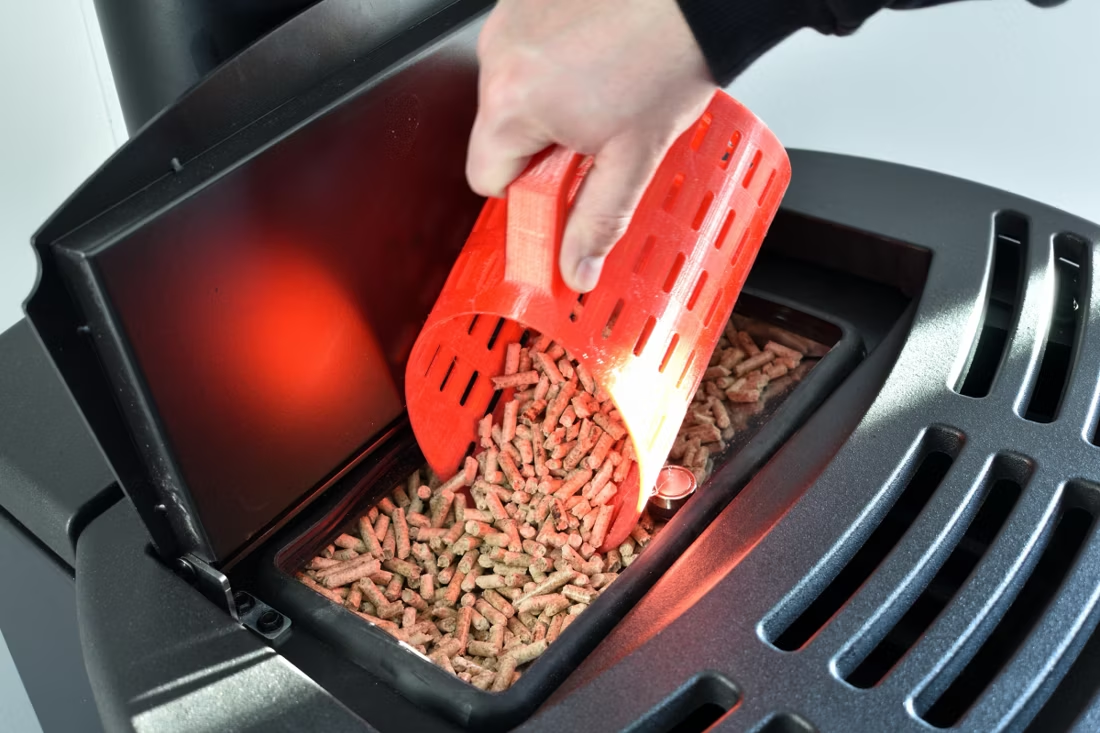
Cumberland County is farm country—around 4,500 people spread across Toledo, Greenup, Neoga, and the surrounding township land, with oak, hickory, walnut, and maple timber lining the creek bottoms and windbreaks. Wood heat has deep roots here, but a lot of households, especially retirees, rental properties, and folks who don't want to split and stack cordwood every fall, have shifted toward pellet stoves. A hopper-fed pellet stove can run 24 to 40 hours unattended on a full load, holding a set temperature through a stretch of single-digit nights without anyone getting up to reload it at 2 a.m.
Cumberland County has no reported air quality non-attainment issues, so pellet adoption here isn't driven by burn restrictions the way it is in some western counties—it's mostly about convenience, cleaner ash output, and simpler venting than a masonry chimney requires. Regional pellet supply is solid: Indeck Energy Services and Lignetics both distribute into this part of Illinois, and Somerset Pellet Fuel is within reasonable trucking distance, so bag pellets are generally available through farm supply and hardware retailers in the Charleston, Effingham, and Mattoon area rather than something you have to special-order.
Three steps. No salesperson until you're ready.
Tell us about your project
Your zip code, your situation, and the fuel you're leaning toward—or let the answers point you to one.
See what's actually available
The brands dealers within 100 miles genuinely carry—real options, never a catalog mirage.
Get your dealer & Project Guide
A trusted local dealer, plus the free Project Guide & Parts List that names every component of the job.
Frequently Asked Questions
How much does a pellet stove installation cost in Cumberland County?
Most pellet stove installations run in the $2,500 to $5,500 range for a freestanding unit with straightforward wall venting, and somewhat more for a pellet insert into an existing fireplace where a liner and hopper clearance need to be worked out. Because Cumberland County is a small, rural county without a large concentration of hearth retailers, expect your installer to be based out of Charleston, Mattoon, or Effingham—a short drive that occasionally shows up as a modest trip charge on the quote. Ask a local dealer for a firm number after they see your venting path and electrical setup.
What size pellet stove do I need for my home?
Sizing comes down to square footage, ceiling height, and how well-insulated the house is—and a lot of Cumberland County's housing stock is older farmhouses with less insulation than newer construction, which pushes sizing up a notch. A small pellet stove (under 1,000 sq ft) suits a single large room or a well-sealed smaller home; a medium unit (1,000-1,800 sq ft) covers most main living areas; larger stoves handle open-concept farmhouses or homes used for primary heat through the full 5,173-degree-day season. A local dealer will walk the space before recommending a model rather than sizing off square footage alone.
Where can I buy pellets in Cumberland County?
Bag pellets from Lignetics and similar regional producers are typically stocked at farm supply and hardware stores in the Charleston, Effingham, and Mattoon area, with Indeck Energy Services and Somerset Pellet Fuel supplying the broader east-central Illinois market. Rural King locations in this part of the state commonly carry pellets seasonally, and some hearth dealers sell pallets (roughly 50 bags) directly, which is often the better move if you're heating through a full winter rather than buying bag by bag.
Pellet stove vs. wood stove—which makes more sense in Cumberland County?
With oak, hickory, walnut, and maple readily available across the county, plenty of households still burn cordwood, and it remains the cheaper fuel if you're cutting and splitting your own. But pellet stoves win on convenience: no splitting, stacking, or hauling ash by the wheelbarrow, more consistent heat output through the burn, and thermostat control that a wood stove can't match. The tradeoff is that pellet stoves need electricity to run the auger and combustion blower, so they go dark in a power outage—something to weigh given how many rural Cumberland County homes rely on wood as backup heat during ice storms.
Do I need a permit to install a pellet stove in Cumberland County?
Most jurisdictions require a building permit for a new pellet stove installation, particularly when it involves cutting a new wall penetration for venting or adding a dedicated electrical circuit. Rules vary between incorporated towns like Toledo and Greenup and unincorporated parts of the county, so confirm requirements with the Cumberland County building office before work starts. A reputable local installer will typically handle the permit paperwork as part of the job rather than leaving it to the homeowner.
Will my pellet stove work during a power outage?
No—this is the one honest limitation to plan around. Pellet stoves rely on an electric auger to feed fuel and a blower to distribute heat, so they shut down when the power does. For Cumberland County homes where winter ice storms can knock out power for a day or more, a battery backup (a small UPS unit sized for the stove's draw) will keep it running for several hours, and some households keep a wood stove or fireplace as backup heat specifically for outages. Ask your dealer about backup power options when you're selecting a model.
How often does a pellet stove need to be cleaned and serviced?
Plan on a full cleaning of the burn pot, ash pan, and exhaust venting roughly every 40 to 60 bags of pellets burned, with a complete annual service—including the combustion blower, gaskets, and vent pipe—done before the heating season starts. Cumberland County's long season, running from roughly October through April given the 5,173 heating degree days, means a heavy-use stove may need a mid-winter ash and burn pot cleaning in addition to the seasonal service.
What's a good pellet stove for Cumberland County's climate?
With winter lows averaging 19°F and a heating season that runs the better part of seven months, look for a stove with a large hopper (40+ lb capacity) so it can run overnight without a reload, and a firebox rated for your square footage with some room to spare for the coldest stretches. Models that burn cleanly on standard softwood pellets from suppliers like Lignetics or Somerset Pellet Fuel are the safer bet than units that demand a premium low-ash pellet that may not be reliably stocked locally. A local dealer can match hopper size and BTU output to your specific home.
Pellet stove vs. propane or gas—which is right for my home?
In parts of rural Cumberland County without natural gas service, propane is the common alternative fuel, and a propane fireplace or stove offers instant on-off convenience without needing to keep pellets on hand. Pellet stoves generally cost less to run per BTU than propane, burn a domestically sourced fuel from regional producers rather than a delivered tank fuel, and give more of a real-fire look and feel. If year-round reliability and simplicity matter most, propane may win; if lower fuel cost and a live flame matter more, pellet is usually the better fit. Either way, a local dealer can walk through the real cost difference for your specific home.
What's the difference between an insert and a zero-clearance fireplace?
An insert is a fireplace that slides into a pre-existing wood-burning fireplace—if you don't have one, there's nothing to insert it into. A zero-clearance fireplace is built into a framed wall, which makes it the answer for remodels and new construction. Simple test: existing masonry fireplace means insert; blank or framed wall means zero-clearance.
Why is a fireplace insert so efficient?
An insert does two things: it seals the chimney completely, so you stop losing air you already paid to heat, and it radiates warmth into the room through the firebox and glass. Most add a heat-exchange fan that pulls cool room air underneath, wraps it around the hot firebox, and pushes it back out warm. Your home is more efficient before you've even lit the first fire.
Does a fireplace add value to my home?
On average, a fireplace adds back to the home about the same amount you spent installing it. Add the monthly savings from heating the rooms you actually use instead of the whole house—often hundreds of dollars a year—and the value case is strong before you even count what a fire does for how your family uses the room.
What is an in-home preview and do I need one?
It's a visit where a hearth professional measures your space, confirms the model you picked actually works in your home, and walks the specs—framing, gas line, venting, finish work—before anything is ordered. Some details you just can't know until you see the house. Never make a down payment without one; it's the single most-skipped step that burns buyers.
Pellet Brands Stocked Around Cumberland County
Manufacturers will point you to the nearest stocking dealer.
Find your pellet stove in Cumberland County.
Tell us about your home and heating goals, and we'll match you with a trusted local dealer and send over a free Project Guide & Parts List—a plan for your pellet stove project in Cumberland County with the exact parts, including the vent kit, and a recommended installer.
Find Your Fireplace →