
In Chicago, a pellet stove is the exception, not the rule.
With 8.4 million residents packed into high-rises, courtyard condos, and brick two-flats, most of Chicago heats with a gas furnace, and pellet stoves stay a niche choice. If you've got a detached house, a garage, or a workshop where one actually fits, I'll match you with a trusted local dealer who can tell you the truth about what's installable.
Every Project Starts From One of These Five Situations
Why pellet stoves stay rare in a city of high-rises and two-flats.
Chicago's housing stock works against pellet stoves in a way that has nothing to do with climate. At 576 feet in elevation with winter lows averaging 20°F and just over 6,000 heating degree days a year, the winters here are real but unremarkable for the Midwest—closer to Madison or Milwaukee than to anything extreme. The obstacle is density: a huge share of the city's homes are condos, co-ops, and multi-unit two- and three-flats where a solid-fuel appliance needs exterior wall or roof venting that shared walls, party lines, and condo association rules often don't allow. Natural gas is the default heat source across nearly every neighborhood, and it's hard to compete with a furnace that's already piped in.
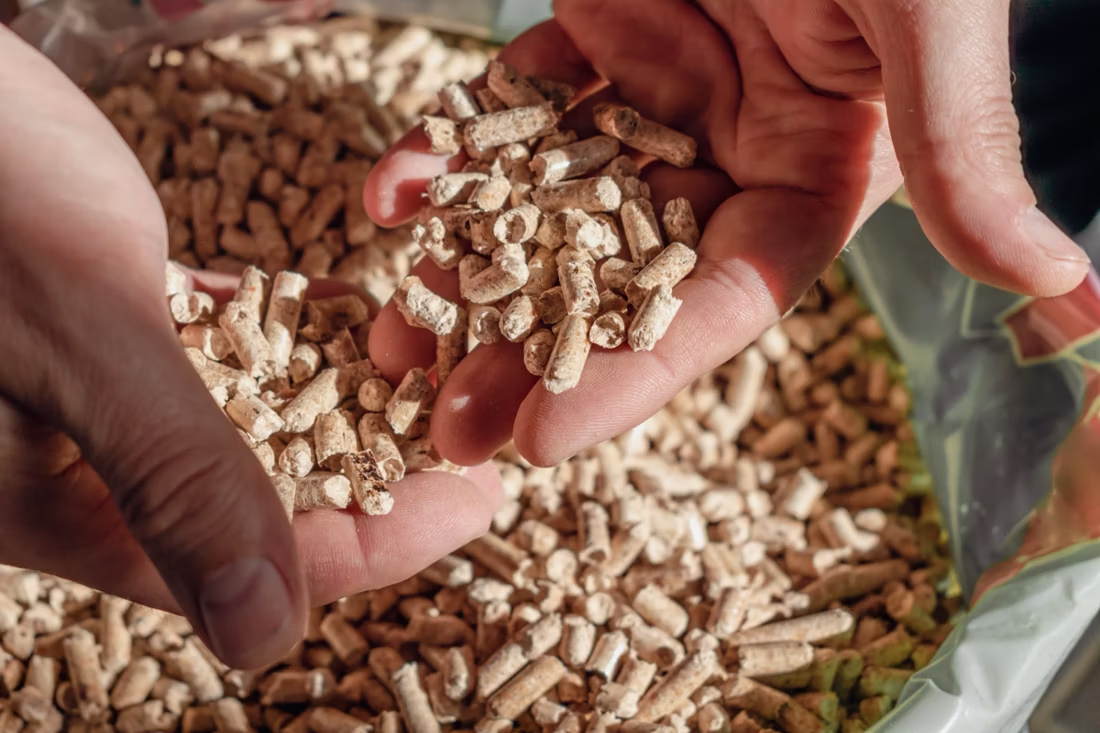
That doesn't mean pellet stoves are unheard of—they show up in detached bungalows and single-family homes on the far southwest and south sides, in zip codes like 60655 and 60643 around Beverly and Mount Greenwood, and in garages or basement workshops where a homeowner wants zone heat without running ductwork. Regional pellet supply comes through producers like Indeck Energy Services, Lignetics, and Somerset Pellet Fuel, though bagged fuel is easier to find at a suburban feed store or home center than inside city limits, so storage and hauling become part of the planning. Anyone going this route in Chicago is doing it deliberately, not defaulting to it.
Three steps. No salesperson until you're ready.
Tell us about your project
Your zip code, your situation, and the fuel you're leaning toward—or let the answers point you to one.
See what's actually available
The brands dealers within 100 miles genuinely carry—real options, never a catalog mirage.
Get your dealer & Project Guide
A trusted local dealer, plus the free Project Guide & Parts List that names every component of the job.
Frequently Asked Questions
Are pellet stoves actually available for installation in Chicago?
They're available, but the installer base is thin compared to gas fireplace specialists, because demand is low across most of the city. If you're in a condo, co-op, or multi-unit building, the honest answer is usually no—shared walls and building association rules typically block the exterior venting a pellet stove needs. If you own a detached single-family home, a bungalow on the southwest side, or a standalone garage or workshop, a pellet stove is genuinely installable, and a local dealer familiar with Chicago's building stock can tell you quickly whether your specific structure qualifies.
How much does a pellet stove installation cost in Chicago?
Because so few Chicago homes are set up for one, pricing here tends to sit at or above typical national ranges, roughly $3,000 to $6,500 depending on the unit and venting scope. A detached home with a straightforward exterior wall for the vent pipe runs toward the lower end. Older masonry two- and three-flats or homes without a good exterior wall option for venting push costs up, sometimes requiring more creative routing than a suburban installer would ever need to consider. Get a firm quote from a dealer who's actually worked in Chicago housing stock rather than a generalist.
Can I put a pellet stove in my Chicago condo or co-op unit?
In almost all cases, no. Condo and co-op buildings across Chicago typically prohibit solid-fuel appliances outright, or make exterior venting through a shared wall practically impossible without board approval that rarely comes through. Even where it's technically allowed, running vent pipe through a party wall in a vintage courtyard building or high-rise is a nonstarter for most building engineers. If you live in one of these buildings and want supplemental heat, gas or electric options are far more realistic than pellet.
Where do I buy pellet fuel if I install a stove in Chicago?
Bagged hardwood pellets aren't a common sight at city grocery or hardware stores, so most Chicago pellet stove owners buy by the pallet from a suburban home center or feed store and store it in a garage or basement. Regional producers like Indeck Energy Services, Lignetics, and Somerset Pellet Fuel supply much of the Midwest, and a local dealer who sells you the stove can usually point you toward a reliable seasonal supplier rather than leaving you to hunt one down after the first cold snap.
What happens to a pellet stove during a ComEd power outage?
It stops working. Pellet stoves rely on an electric auger to feed fuel and a blower to move heat, so unlike a wood stove, they go cold the moment power drops—a real consideration in a city served by Commonwealth Edison, where summer storms and the occasional derecho have caused multi-day outages in some neighborhoods. Homeowners who want a pellet stove as backup heat, not just supplemental warmth, often pair it with a small battery backup or a generator sized to keep the auger and blower running through an outage.
Pellet stove vs. pellet insert—which fits a Chicago bungalow better?
A freestanding pellet stove sits on a hearth pad and vents through a wall, which works well in a detached Chicago bungalow's basement or family room where there's no existing masonry fireplace. A pellet insert drops into an existing wood-burning fireplace and uses the chimney chase that's already there—more common in older brick homes in neighborhoods like Beverly or Mount Greenwood where a fireplace was original to the house. Since wood-burning fireplaces are uncommon citywide to begin with, most Chicago pellet installs end up being freestanding stoves rather than inserts.
Do I need a permit to install a pellet stove in Chicago?
Yes. Any new solid-fuel appliance installation requires a permit through the Chicago Department of Buildings, covering the appliance placement, clearances, and the exterior venting run. Given how much of the city's housing stock is multi-unit, plan-checkers here are used to reviewing gas fireplace permits far more than pellet stove permits, so working with a dealer who has actually pulled a pellet permit in the city before will save you back-and-forth.
Would a gas insert make more sense than a pellet stove for my Chicago home?
For most Chicago homes, yes. Gas is the default heating fuel across the city, the piping is usually already in place, and a gas insert or fireplace doesn't require the electric auger and blower a pellet stove needs to run. Pellet stoves make sense in narrower situations—a detached home or garage where someone specifically wants to burn a renewable fuel, avoid gas entirely, or heat a space that's off the main gas line. If you're simply looking for reliable supplemental heat in a typical city home, a local dealer will likely steer you toward gas first.
Is a pellet stove a good fit for a garage workshop or a detached Chicago home?
This is where pellet stoves in Chicago make the most practical sense. A detached bungalow, a standalone garage, or a workshop with its own exterior wall avoids the venting restrictions that rule out condos and attached two-flats, and a mid-size pellet stove can hold a comfortable temperature through a Chicago winter's 20°F average lows without you running gas line to an outbuilding. It's a smaller, more specific use case than in a rural Midwest town, but for the right property it's a legitimate option—a local dealer can confirm your structure works before you commit.
What's the difference between an insert and a zero-clearance fireplace?
An insert is a fireplace that slides into a pre-existing wood-burning fireplace—if you don't have one, there's nothing to insert it into. A zero-clearance fireplace is built into a framed wall, which makes it the answer for remodels and new construction. Simple test: existing masonry fireplace means insert; blank or framed wall means zero-clearance.
Why is a fireplace insert so efficient?
An insert does two things: it seals the chimney completely, so you stop losing air you already paid to heat, and it radiates warmth into the room through the firebox and glass. Most add a heat-exchange fan that pulls cool room air underneath, wraps it around the hot firebox, and pushes it back out warm. Your home is more efficient before you've even lit the first fire.
What is an in-home preview and do I need one?
It's a visit where a hearth professional measures your space, confirms the model you picked actually works in your home, and walks the specs—framing, gas line, venting, finish work—before anything is ordered. Some details you just can't know until you see the house. Never make a down payment without one; it's the single most-skipped step that burns buyers.
Does a fireplace add value to my home?
On average, a fireplace adds back to the home about the same amount you spent installing it. Add the monthly savings from heating the rooms you actually use instead of the whole house—often hundreds of dollars a year—and the value case is strong before you even count what a fire does for how your family uses the room.
Nearby Dealers
Hearth shops serving Chicago and the surrounding area. Every listing shows whether it is a WhyFire partner, a dealer we have verified as authorized for the brands we recommend, or a local business carrying hearth products. No manufacturer pays for placement. How we verify dealers →
Urban Rooftops
A Fireplace Store And More
Ember Glow
General Masonry Supply
Pellet Brands Stocked Around Chicago
Manufacturers will point you to the nearest stocking dealer.
Get your free Project Guide & Parts List for a pellet stove in Chicago.
Tell me about your home—detached house, garage, or workshop—and I'll be upfront about whether a pellet stove actually fits, then match you with a trusted local dealer and send a free Project Guide & Parts List with the exact vent kit and parts your project needs.
Find Your Fireplace →