
Warmth that works in Chicago's condos, high-rises, and vintage two-flats.
No chimney, no gas line, no condo board fight—just real supplemental heat for a Chicago winter. Find the right electric fireplace and connect with a trusted local dealer.
Every Project Starts From One of These Five Situations
No flue required. No rooftop retrofit.
Chicago's housing stock is exactly the kind of building environment where electric fireplaces make the most sense. Between Loop and River North high-rises, Lincoln Square and Logan Square two-flats, and greystones across the South and West Sides, a huge share of the city's homes either have no chimney at all or are governed by a condo association that won't approve open-flame appliances. At 6,018 heating degree days, Chicago sits in the same cold-climate bracket as Madison, Wisconsin—winters here are genuinely long, with average lows around 20°F from December through February—but the housing form factor, not the climate, is what drives so many Chicagoans toward electric.
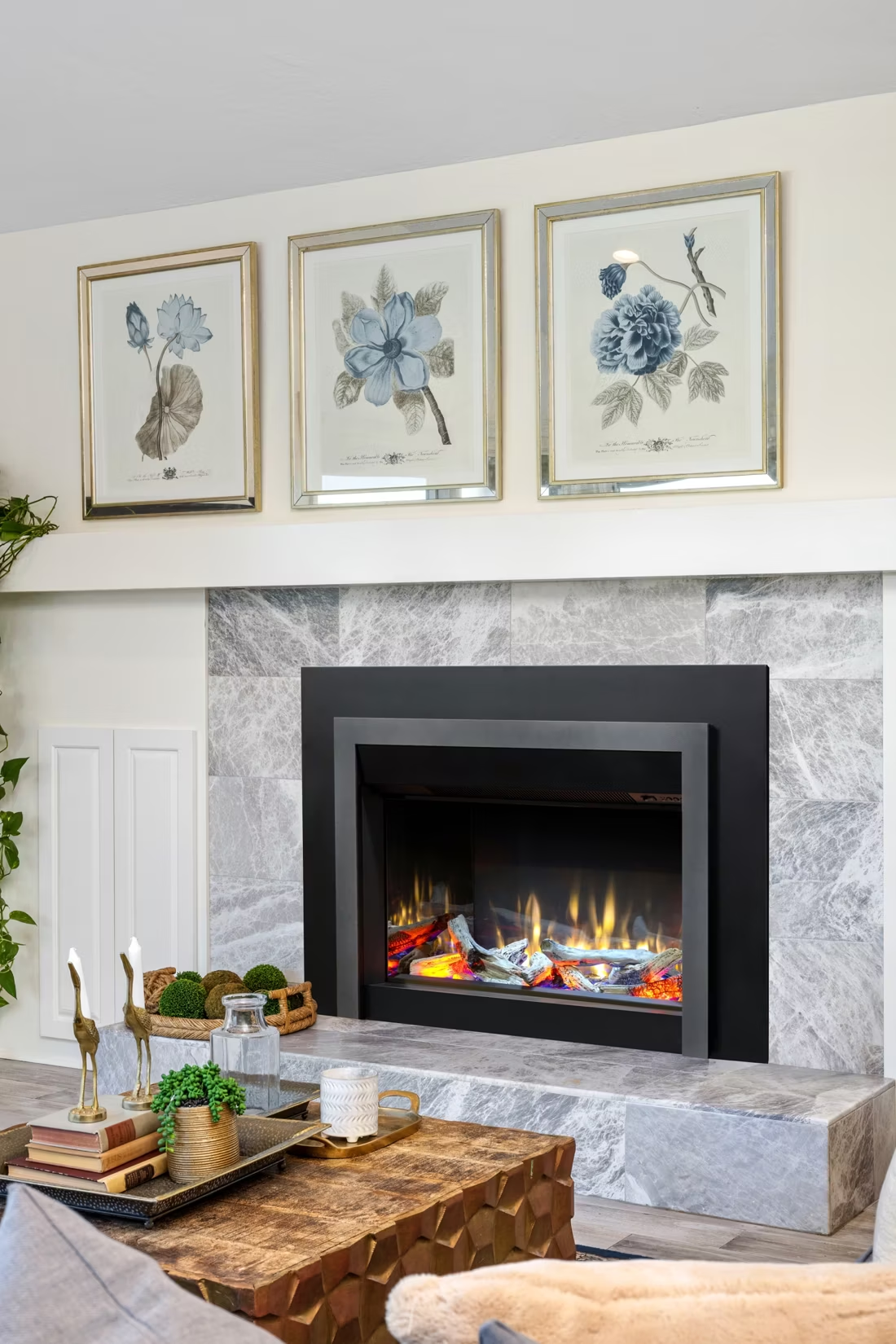
Electric inserts, mantel packages, and wall-mount units run on standard 120V outlets or a dedicated 240V circuit, need no venting, and can go into an existing masonry fireplace opening in a Bronzeville greystone or a bare wall in a West Loop condo with equal ease. Commonwealth Edison serves the entire city at a residential rate around 13.4 cents per kWh, which keeps day-to-day operating costs modest for a unit that's realistically used as supplemental or ambiance heat rather than a whole-home furnace replacement. A trusted local dealer can tell you in minutes whether your unit needs a licensed electrician and a City of Chicago Department of Buildings permit, or whether it's a straightforward plug-and-play install.
Three steps. No salesperson until you're ready.
Tell us about your project
Your zip code, your situation, and the fuel you're leaning toward—or let the answers point you to one.
See what's actually available
The brands dealers within 100 miles genuinely carry—real options, never a catalog mirage.
Get your dealer & Project Guide
A trusted local dealer, plus the free Project Guide & Parts List that names every component of the job.
Frequently Asked Questions
How much does it cost to install an electric fireplace in Chicago?
Plug-in electric inserts and freestanding units that use a standard 120V outlet typically run $300 to $1,200 installed, since there's no venting or gas line to run—most of the cost is the unit itself plus a hearth pad or surround if you want one. Built-in wall units or larger inserts that require a dedicated 240V circuit push higher, often $1,000 to $2,500, because you'll need a licensed electrician to run new wiring, especially common in older Chicago two-flats and greystones with older panels. Condo installations sometimes add cost if the building requires drawings for association approval before work starts.
Will an electric fireplace actually heat a Chicago-sized room in January?
Most electric fireplaces top out around 5,000 BTU (roughly 1,500 watts), which is enough to noticeably warm a bedroom, den, or open living area but isn't designed to replace central heat during Chicago's coldest stretches—the city averages a 20°F overnight low across winter and regularly drops well below that during arctic outbreaks. Think of electric as effective zone heat: it lets you turn down the thermostat in the room you're using and get supplemental warmth, ambiance, and instant on-off control, while your furnace or boiler still carries the load on the coldest nights.
Do I need a permit to install an electric fireplace in Chicago?
A plug-in unit that uses an existing 120V outlet generally doesn't require a permit—it's no different than plugging in a space heater. A hardwired 240V built-in unit is a different story: Chicago's electrical code requires the new circuit to be run by a licensed electrician, and larger jobs typically need a permit through the City of Chicago Department of Buildings. If you live in a condo or co-op, check your association's alteration rules too—many buildings require board sign-off on any in-wall electrical work even when the city itself wouldn't require a permit.
Can I put an electric insert into my existing masonry fireplace?
Yes, and it's one of the most common electric fireplace projects in Chicago's older housing stock. Many two-flats, greystones, and pre-war courtyard buildings have a decorative masonry fireplace that hasn't been used for real wood burning in decades. An electric insert slides into that existing opening, replaces the gas log set or empty firebox, and gives you flame effect and heat without touching the chimney, which is often capped, deteriorated, or simply not up to current venting code anyway.
Electric vs. gas fireplace—which is right for my Chicago home?
Gas is the more common choice where it's available and permitted, since natural gas service is standard across the city and gas units produce more heat output for supplemental use. But gas requires a gas line and venting path, which many high-rise units and some historic buildings simply can't accommodate, and condo associations are often stricter about approving gas work than electrical work. Electric wins on install simplicity, flexibility of placement, and lower upfront cost, though ComEd's per-kWh rate makes it somewhat more expensive to run than gas for the same heat output. If your building or association rules out gas, electric is usually the practical answer rather than a compromise.
My condo association won't allow a gas or wood fireplace—is electric my only option?
In a lot of Chicago buildings, yes, and that's not a bad outcome. Many high-rise and mid-rise condo associations restrict or outright prohibit open-flame gas fireplaces and wood-burning units due to fire code, insurance, and shared-flue concerns, but electric units generally fall outside those restrictions since there's no combustion, no flue, and no fuel line involved. Local dealers who work regularly in Chicago high-rises can usually tell you which wall-mount or insert models clear association review the fastest, since they've been through the approval process before.
How much does it cost to run an electric fireplace with ComEd rates?
At Commonwealth Edison's residential rate of about 13.4 cents per kWh, a typical 1,500-watt electric fireplace costs roughly 20 cents per hour to run on full heat. Used for supplemental heat a few hours a night through a Chicago winter—say 4 hours a day—that works out to around $24 to $30 a month, noticeably less than running a space heater of the same wattage continuously, since most electric fireplace models let you run the flame effect alone (a few watts) without the heater engaged.
What's the best electric fireplace style for a Chicago two-flat or greystone?
For homes with an existing masonry fireplace opening—common in Chicago's classic two-flats and greystones—an electric insert that slides into that opening is usually the cleanest fit, since it preserves the mantel and surround you already have. For condos and newer construction without an existing fireplace, a wall-mount unit or a linear built-in framed into a media wall is the more popular route, especially in open-concept renovated units across neighborhoods like Wicker Park and the South Loop. A local dealer can measure your specific opening or wall and steer you toward a model that fits without custom framing.
Why don't more Chicago homes use wood or pellet stoves instead of electric?
Wood and pellet stoves are rare to nonexistent in Chicago, and it's a building-stock issue more than a climate one. Most of the city's housing—high-rises, mid-rise condos, and even many older two-flats—either lacks a functioning chimney suitable for solid-fuel venting or is governed by association rules that prohibit combustion appliances in shared buildings. Where a masonry chimney does exist, it's usually decades out of use and would need significant work to meet current code for wood burning. Electric sidesteps all of that: no flue, no combustion byproducts, and no association fight, which is a big part of why it's the standard choice here rather than a fallback.
Does an electric fireplace need a vent or chimney?
No—that's its superpower. An electric fireplace needs a wall and an outlet, period. No vent pipe, no gas line, no clearances to design around, which is why it works in bedrooms, offices, apartments, and walls where venting a gas or wood unit would be impractical or impossible. Installation is typically the simplest and least expensive of any fireplace type.
Can I put a TV above my fireplace?
Yes—with an asterisk. Fireplaces are hot and TVs don't like heat. Either put a mantel between them to deflect rising warmth, or choose a fireplace with heat-management technology that creates a cool zone on the wall above—the wall stays around 125 degrees, barely warm, while the room still gets full heat. If you like clean lines and don't want a mantel, heat management is the answer.
How much should I budget for a fireplace?
For an average home—covering the fireplace, the vent pipe, and basic installation—a budget between $3,900 and $5,500 gives you a lot of options across wood, gas, and pellet. By the time you add finish work, gas line, and electrical, the average complete installation lands between $5,000 and $12,000 all-in. In a remodel or new build, a good rule is to put about 2.5% of the total project cost toward the fireplace.
Does a fireplace add value to my home?
On average, a fireplace adds back to the home about the same amount you spent installing it. Add the monthly savings from heating the rooms you actually use instead of the whole house—often hundreds of dollars a year—and the value case is strong before you even count what a fire does for how your family uses the room.
Nearby Dealers
Hearth shops serving Chicago and the surrounding area. Every listing shows whether it is a WhyFire partner, a dealer we have verified as authorized for the brands we recommend, or a local business carrying hearth products. No manufacturer pays for placement. How we verify dealers →
Urban Rooftops
A Fireplace Store And More
Ember Glow
General Masonry Supply
Electric Service in Chicago
An electric fireplace's heater draws about 1,500 watts—pennies per hour at local rates.
Commonwealth Edison Co
Find your electric fireplace in Chicago.
Tell us a bit about your home—condo, two-flat, or high-rise—and we'll put together a free Project Guide & Parts List with the right electric fireplace or insert and a trusted local Chicago dealer to install it.
Find Your Fireplace →